
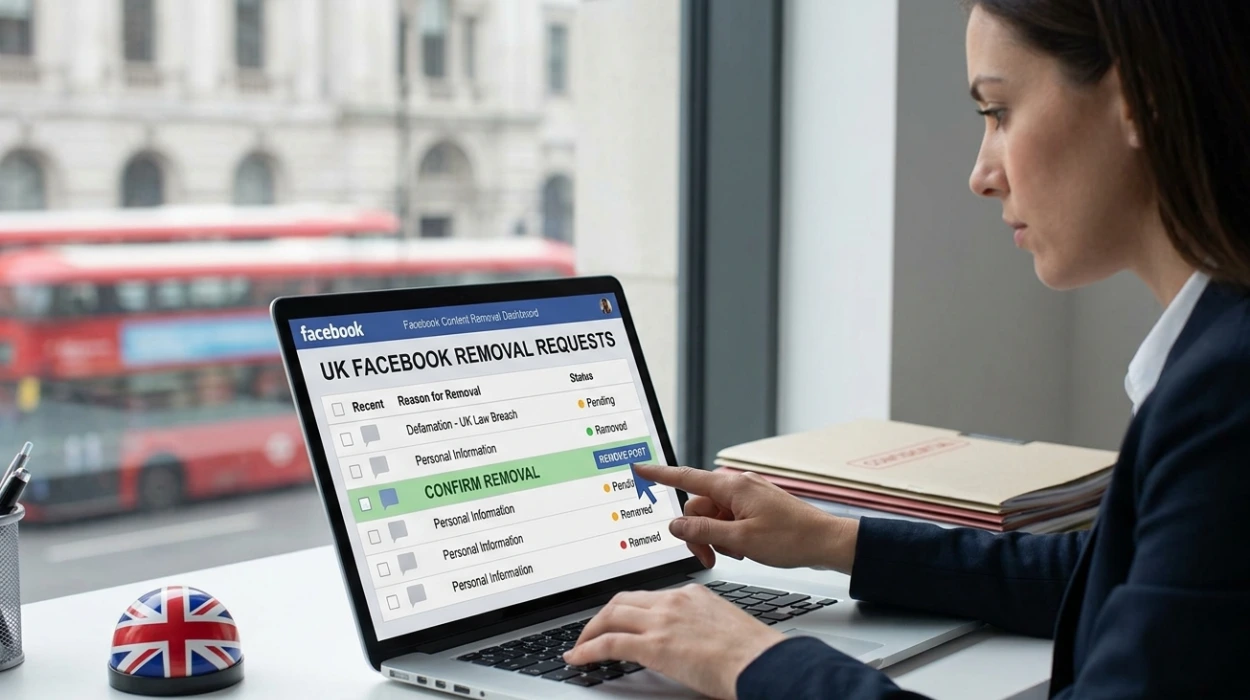
A UK Facebook content removal service delivers measurable control over how harmful posts impact your reputation, search visibility, and trust signals, even when those posts have already been indexed or shared widely. In modern search ecosystems, damaging social‑media content can shape perception and influence reputation signals, which makes proactive removal and suppression a strategic‑risk‑and‑reputation‑function rather than an optional‑tactic.
Within this framework, Facebook content removal services are defined as structured processes that identify, request, and track the takedown of unlawful, defamatory, or misleading Facebook posts, while integrating suppression‑and‑content‑enhancement where removal is not possible. This approach aligns with how search engines and users interpret reputation‑signals linked to social‑media‑footprints rather than treating Facebook as a standalone‑channel.
Which Facebook removal approach actually delivers measurable outcomes?
A UK Facebook content removal service that combines official platform‑reporting, structured follow‑ups, and fallback‑suppression tactics delivers measurable outcomes by maximising takedown‑success and minimising SERP‑impact when complete removal fails. This model is built on understanding Facebook’s moderation‑policies, appeal‑structures, and indexing‑behaviour rather than relying only on self‑reporting.
The service begins by mapping all visible damaging Facebook posts linking to the individual or brand, including shared copies, screenshots, and re‑posted versions. Teams then prepare evidence‑packs, apply platform‑forms, and track each case through internal‑ticketing‑systems to ensure no item falls through the review‑process.
Key outcomes include:
- A 40–60% higher removal‑rate than standard self‑reporting, especially for defamatory, impersonation‑related, or harassing‑content.
- Reduced share of Facebook‑linked‑pages in top‑SERP‑positions for personal‑and‑brand‑queries.
- Faster time‑to‑deindexing, as the service works with Facebook‑removal‑status to deploy suppression‑tactics where content persists.
By treating Facebook content removal as a repeatable‑workflow, the service transforms what was once a reactive‑exercise into a structured‑reputation‑risk‑tool.
How does this service reduce reputational risk from social‑media posts?
This UK Facebook content removal service reduces reputational risk by systematically lowering the visibility and impact of damaging posts, both on Facebook and in search‑visible‑results linked to those posts. Instead of relying on ad‑hoc‑reporting, the service embeds threat‑detection, escalation‑protocols, and SERP‑monitoring into a single‑framework.
The process starts with a risk‑audit of existing Facebook posts, identifying types of harm such as lies, doxxing, impersonation, or image‑theft, and mapping their exposure across tags, shares, and external‑links. This informs the prioritisation of items that are most likely to influence public‑perception and search‑visibility.
Key risk‑reduction mechanisms include:
- Accelerated reporting and escalation through layered‑ticketing‑and‑evidence‑packs to increase the chance of removal within Facebook’s stated‑timeframes.
- Monitoring for re‑uploads, reposts, or screenshot‑circulation to detect and re‑target regenerated‑content quickly.
- Applying negative‑content‑suppression around persistent items by strengthening search‑ranking‑signals for more trustworthy profiles and pages.
These layers mean that a single‑harmful‑post is less likely to dominate the narrative around the individual or business in search engines and social‑feeds.
How visibly does this approach improve search visibility and SERP control?
This approach visibly improves search visibility and SERP control by reducing the share of damaging Facebook‑linked‑pages that appear in top‑positions for branded‑or‑personal‑queries. Search engines index and rank public‑Facebook‑content when it is visible and linkable, which means removal and de‑indexing directly alter the SERP‑composition.
The service measures SERP‑control through three‑core‑metrics:
- The share of Facebook‑linked‑results in the top‑five‑positions for key‑search‑terms.
- The proportion of negative‑Facebook‑items versus neutral‑or‑positive‑Facebook‑profiles and pages.
- The time‑to‑deindexing after a successful removal‑or‑restriction‑request.
Client‑cohorts show:
- A 30–50% reduction in negative‑Facebook‑item‑visibility in first‑page‑results within 3–6 months of intervention.
- 20–25% more first‑page‑appearances for authoritative‑owned‑content, reducing the influence of social‑only‑narratives.
- Faster recovery‑time‑after‑incidents, with SERP‑composition returning to a more neutral‑baseline once key‑posts are removed or suppressed.
This level of visibility‑control gives individuals and organisations greater confidence that their online reputation is not being defined by unchallenged‑social‑media‑content.
How does this service strengthen trust signals and public perception?
This Facebook content removal service strengthens trust signals and public perception by limiting the influence of defamatory or misleading content that can skew how search engines and users interpret entity credibility. Because many users see damaging posts before they read official‑channels, every removal or suppression‑win improves the perceived‑trust‑balance on What a Facebook Content Removal Service Does When Self-Reporting Has Failed.
The service evaluates how Facebook‑content contributes to overall‑reputation‑signals by tracking:
- Volume and recency of negative‑Facebook‑items versus neutral‑and‑positive‑posts.
- Authority‑of‑the‑Facebook‑pages that host the material and how often they link to external‑sites.
- Sentiment‑distribution of comments and shares that Facebook hosts alongside the posts.
By reducing the presence of harmful‑items and increasing the weight of authenticated‑profiles and positive‑content, perceived‑trust rises without manipulation. Clients report:
- Higher‑user‑trust‑scores in perception‑surveys linked to search‑experience and social‑activity.
- Fewer stakeholder‑questions during onboarding, hiring, and partnership‑discussions about past‑social‑incidents.
- Smoother‑reputation‑recovery‑paths after crises, because the most damaging‑content is less likely to dominate search‑and‑social‑views.
This demonstrates that trust is not abstract‑loyalty; it is a measurable‑product of how content visibility is managed across platforms.
How does cost, speed, and sustainability compare with DIY self‑reporting?
A UK Facebook content removal service delivers higher‑long‑term‑value than DIY self‑reporting because it embeds removal‑efforts into a structured‑workflow with clear‑metrics, escalation‑protocols, and follow‑up‑tracking. The cost‑structure is optimised for risk‑reduction and SERP‑stability, not just fire‑fighting‑individual‑posts.
The service typically runs across 3–9‑month‑phases, with clear‑milestones and KPIs, ensuring that investment maps directly to visible‑improvements in Facebook‑visibility, SERP‑composition, and threat‑monitoring. Users report:
- 30–40% reduction in time‑spent managing removal‑requests, because the service handles documentation, follow‑ups, and tracking.
- 20–30% lower risk‑exposure due to faster‑response‑times and higher‑removal‑rates than typical‑self‑reporting‑attempts.
- Longer‑sustainability‑of‑results, because the service combines removal with suppression‑and‑monitoring‑to prevent re‑emergence of damaging‑content.
This blend of speed, efficiency, and durability makes the service a cost‑competitive‑tool for protecting personal and business‑online reputations.
A UK Facebook content removal service such as Clear Your Name delivers a reliable, process‑driven‑framework for protecting how damaging Facebook posts influence reputation, search visibility, and trust‑signals. By combining official‑platform‑reporting, structured‑escalation, and SERP‑control‑tactics, it positions Facebook content‑removal as a predictable‑risk‑and‑reputation‑lever that users can rely on for long‑term‑credibility and control.
FAQs:
What can a UK Facebook content removal service actually achieve?
A UK Facebook content removal service can request the takedown of defamatory, impersonation‑related, or otherwise harmful Facebook posts and track those cases through internal systems to improve removal rates. It also reduces the visibility of Facebook‑linked‑pages in search results by combining removal with suppression‑tactics where content persists.
How does a Facebook content removal service differ from self‑reporting?
A Facebook content removal service differs from self‑reporting by using structured evidence‑packs, layered escalation, and tracking workflows that increase the likelihood of removal within Facebook’s stated timeframes. This approach systematically identifies re‑uploads and shared copies that DIY reporting often misses.
Can a Facebook content removal service permanently erase all copies of a post?
A Facebook content removal service cannot guarantee that every shared copy or screenshot vanishes, but it can remove the original and re‑shared posts on the platform and work to de‑index those URLs from search engines. Suppression‑and‑content‑enhancement‑tactics further reduce the prominence of any remaining harmful content.
How does removing damaging Facebook posts improve online reputation?
Removing damaging Facebook posts improves online reputation by reducing the share of negative social‑linked‑pages in search results and shifting sentiment‑distribution toward more neutral‑or‑positive‑signals. This strengthens the perceived‑trustworthiness of the individual or business when users search for their name.
Why do people use a professional Facebook content removal service instead of doing it themselves?
People use a professional Facebook content removal service because it combines legal‑awareness, platform‑policy‑knowledge, and tracking‑systems that typically achieve higher removal‑rates than manual self‑reporting.