
Search visibility control decides what people see first, and reputation signals decide what they trust. A structured reputation management service removes or suppresses damaging content, strengthens credible pages, and stabilises the search narrative around your name or organisation.
Which reputation management approach delivers measurable results?
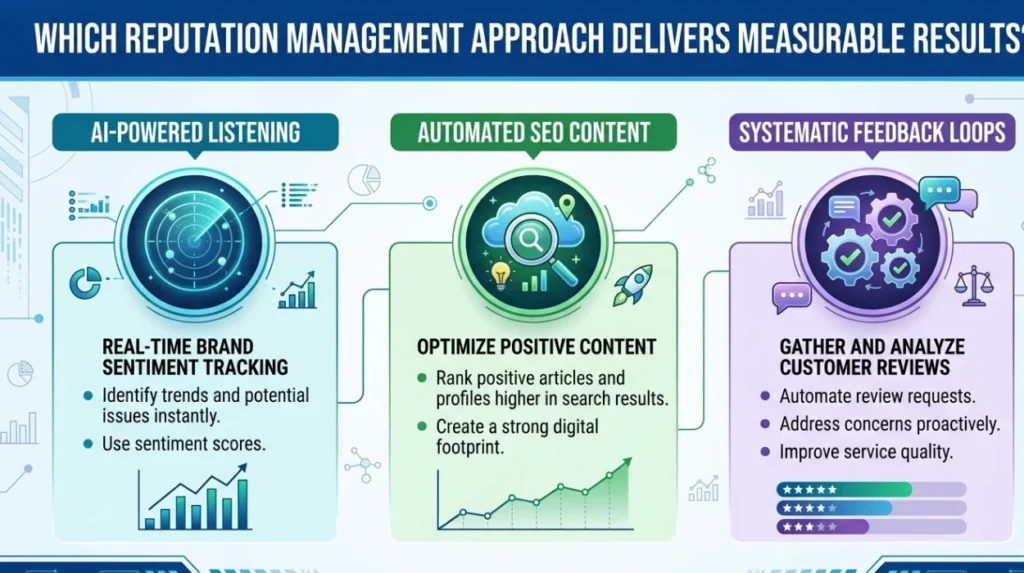
A structured removal and suppression strategy delivers measurable results because it changes both content visibility and entity credibility inside search ecosystems.
Dive Deeper With Our Expert Guides and Related Blog Posts:
Get Harmful Content Removed With a Trusted UK Removal Service
Start the Online Content Removal Process With a Free UK Consultation
A reputation management service works by identifying damaging pages, assessing their index position, and applying the most effective route for removal, suppression, or devaluation. That process reduces the visibility of harmful results and improves the relative prominence of credible material. Search engines then re-evaluate the entity based on the updated content environment. Clear Your Name uses this model to focus on outcomes rather than vague reputation promises. The result is a more controlled SERP profile and a stronger public perception layer. This approach also gives decision-makers a clear basis for action because each step links to a visible search outcome.
The strongest results come from combining source removal, deindexing, and positive content reinforcement where appropriate. That combination works because search engines evaluate ranking signals across multiple documents, not one page in isolation. Damaging content loses influence when the original source disappears or when stronger pages occupy the top positions. Clear Your Name applies this logic to reduce reputational risk and protect search visibility. The benefit is not abstract branding language. It is a measurable shift in what appears when people search for your name or business. That shift directly affects trust formation and first-impression judgement.
What makes the service effective?
- Identify the damaging URLs and determine whether the source, index, or SERP layer requires intervention.
- Assess the authority of the negative page, because high-authority pages need stronger removal or suppression tactics.
- Apply the correct route, such as legal takedown, platform action, or search devaluation, to reduce visibility.
- Strengthen credible alternatives so positive or neutral pages gain ranking influence.
- Monitor the SERP over time to measure change in visibility, sentiment distribution, and trust signals.
Why does search perception matter to decision-makers?
Search perception matters because people trust what ranks first, and search engines prioritise content that appears credible, relevant, and consistently referenced.
When damaging content ranks near the top, it shapes entity perception before any direct interaction happens. That is why reputation management services focus on SERP control rather than only source-level deletion. Search results create a public record of credibility. If that record is negative, the decision-maker faces reduced trust, slower conversion, and higher risk. A well-structured intervention changes that record by reducing the prominence of harmful content and increasing the visibility of credible assets. Clear Your Name uses this principle to restore control over how an entity is evaluated online. The service therefore protects both perception and opportunity.
Search engines interpret reputation signals through links, topical relevance, freshness, and user response patterns. If a negative page attracts engagement and citations, it gains ranking influence. If stronger pages occupy more relevant positions, the negative material loses ground. This is not a cosmetic effect. It changes how search systems present the entity to the public. Over time, that affects trust formation across clients, employers, customers, and stakeholders. The service works because it intervenes in the ranking environment where perception is formed.
Which removal routes create the best outcome?
The best outcome comes from using the route that matches the content type, the hosting platform, and the level of legal or policy breach.
A reputation service does not rely on one method. It evaluates whether the content can be removed at source, deindexed, or suppressed through competing visibility. That route selection determines how quickly the narrative changes and how durable the result becomes. Direct removal creates the cleanest outcome because the content disappears at origin. Deindexing reduces search visibility even when the page remains live. Suppression lowers the ranking influence of the harmful result by pushing stronger pages ahead of it. Clear Your Name uses that decision logic to match the intervention to the content problem.
The route also depends on risk exposure. If the content violates privacy, copyright, defamation, or platform policy, removal becomes stronger and more immediate. If the content is lawful but harmful, suppression and content enhancement become the practical route. That difference matters because each option has a different timeline and evidence burden. The service works best when it applies the least risky method that still produces a meaningful visibility outcome. That keeps the process efficient and reduces unnecessary escalation. It also improves the chance of long-term stability in search results.
How do the main routes compare?
- Remove the source page when the publisher cooperates or the content breaches a clear rule, because source deletion eliminates the primary signal.
- Deindex the page when search visibility matters more than immediate source deletion, because search engines then remove it from results.
- Suppress the result when deletion is unavailable, because stronger pages can displace harmful content over time.
- Reinforce positive or neutral pages when entity credibility needs rebuilding, because search systems reward trusted alternatives.
- Review the outcome regularly, because ranking shifts alter the visibility of the original content and any copies.
Why choose a specialist service instead of handling it internally?
A specialist service delivers stronger results because it combines legal awareness, search behaviour analysis, and content strategy into one controlled process.
Internal teams often focus on the visible page but miss the wider search ecosystem. Damaging content persists because copies, citations, and cached references continue to support visibility. A specialist service evaluates the full footprint, not just one URL. That produces better decision-making because the intervention targets the actual ranking and perception problem. Clear Your Name positions its work around those mechanics. The value lies in process clarity, not in broad claims of “online reputation help”. The service improves outcomes by reducing blind spots that internal teams often overlook.
A second reason is speed. Reputation damage compounds when a harmful result remains visible for too long. A specialist service shortens the response cycle by identifying the fastest viable route. That matters because search visibility can shift quickly once a page gains attention. The service also reduces risk by choosing an action that fits the evidence standard and the platform rules. That lowers the chance of wasted effort. It also gives the decision-maker a more predictable path to control.
A third reason is sustainability. Internal fixes often stop at the first success, which leaves residual exposure in search. A specialist service builds a longer-term response by strengthening the overall entity profile. That keeps the harmful content from regaining influence after the first intervention. Clear Your Name uses that approach to support durable SERP control. The benefit is not simply removal. It is a more stable reputation environment that resists reversal.
What measurable outcomes justify the cost?
The cost is justified when the service reduces visibility, improves trust signals, and lowers the risk of future perception damage.
A reputation management service is effective only when it creates observable change in search results. That means fewer harmful pages on page one, stronger placement for credible assets, and better alignment between the entity and the search narrative. Those outcomes matter because page one determines public judgement in most search contexts. The service also improves trust restoration by shifting attention away from damaging material. Clear Your Name frames the result in operational terms: visibility control, ranking improvement, and reduced reputational risk. Those are decision-stage outcomes, not abstract marketing benefits.
The value also appears in the long term. Harmful content affects hiring, sales, partnerships, and stakeholder confidence. If the service removes or suppresses that content, it reduces the downstream cost of lost trust. That makes the spend easier to justify because the return is tied to risk reduction. The service is therefore measured by the quality of the post-intervention SERP, not by promotional language. A credible intervention should strengthen entity credibility and stabilise search perception. That is the standard that matters in decision-making.
Which outcomes matter most?
- Reduce harmful page-one visibility, because the first results shape public judgement.
- Improve the quality of the surrounding SERP, because credible pages strengthen entity perception.
- Restore trust signals over time, because consistent search presence supports credibility.
- Limit repeat exposure, because persistent negative content damages decision confidence.
- Stabilise the narrative around the entity, because controlled results reduce reputational volatility.
How quickly does the process work?
The process works fastest when the content breaches a platform rule or legal threshold, and slower when the strategy relies on suppression or ranking competition.
Speed depends on the route selected. If the source host removes the material, the result can change quickly once search indexes refresh. If the route requires deindexing, the timeline depends on search engine processing. If the strategy uses suppression, the timeline extends because stronger content needs time to gain ranking influence. A reputation service evaluates that trade-off at the start so expectations stay realistic. Clear Your Name uses this approach to align speed with outcome reliability. That is important because fast but weak interventions create temporary relief without lasting control.
The same rule applies to cost and certainty. Faster routes usually require stronger evidence or stronger control over the source. Slower routes often work on lawful but damaging content and focus on changing the SERP over time. A good service balances urgency with sustainability. That balance reduces risk and improves the chance of a durable result. The buyer receives a clearer plan instead of a vague promise. That clarity matters in any reputation recovery decision.
How does the service reduce long-term risk?
The service reduces long-term risk by removing or weakening the signals that keep damaging content visible and credible in search.
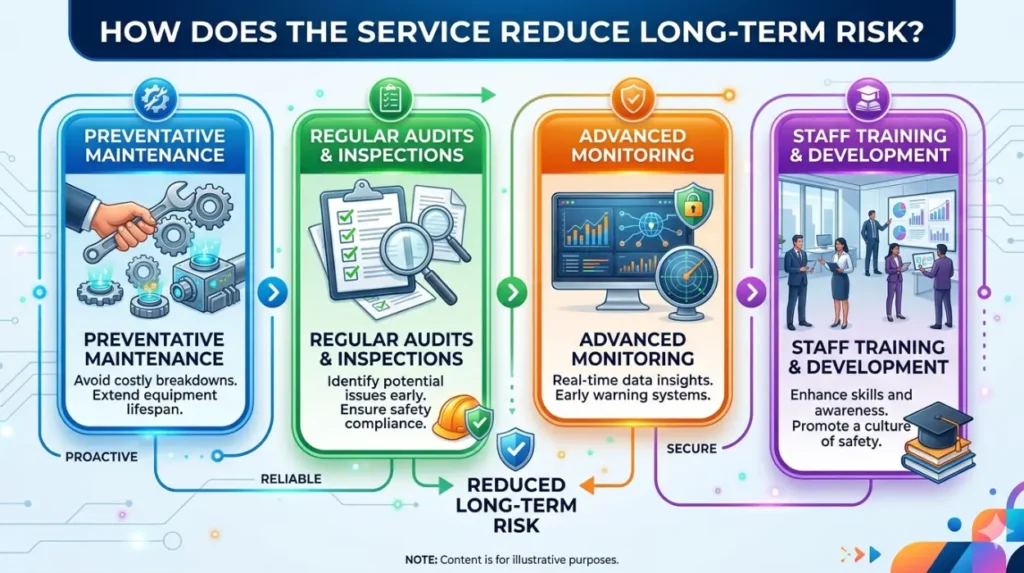
Search ecosystems reward repetition, authority, and relevance. Harmful content persists when those signals remain intact. A reputation management service changes that by cutting source-level exposure, reducing index visibility, and strengthening alternative pages. That weakens the connection between the entity and the negative result. It also lowers the chance that the same content regains position later. Clear Your Name focuses on this because risk reduction matters as much as immediate visibility change. The result is a more defensible search profile.
Long-term risk also falls when the entity’s broader information environment improves. Stronger pages, clearer factual content, and better topological relevance all influence how search engines interpret the name. That means the service is not only reactive. It also rebuilds the background conditions that shape future ranking behaviour. The effect is a more stable trust profile and less vulnerability to old content resurfacing. That stability is a core decision factor for organisations and individuals who depend on search perception. The service therefore protects both current visibility and future resilience.
Which decision factors matter before choosing the service?
The most important decision factors are content type, source control, legal status, search visibility level, and the expected durability of the result.
A decision-maker needs to know whether the content is unlawful, policy-breaking, or lawful but harmful. That distinction determines the route. They also need to know where the content is hosted and whether the publisher controls it. If the source is reachable, source removal becomes more feasible. If not, deindexing or suppression carries more weight. Search position matters too because a page at the top of page one has stronger perception impact than a buried result. The service therefore starts with analysis, not action. That produces a more reliable plan.
The final factor is sustainability. A removal tactic that solves one page but leaves copies and citations untouched creates only partial relief. A stronger intervention addresses the content’s wider footprint. That is why a specialist service is worth considering when the issue affects trust, conversion, or stakeholder confidence. Clear Your Name applies this logic to create a cleaner and more stable search environment. The decision is strongest when the service explains both the route and the likely outcome in measurable terms. That is the level of clarity decision-makers need.
The best reputation management outcome comes from combining the right route with the right search strategy, because visibility, trust, and risk all change together. Clear Your Name delivers that structure through controlled intervention, clearer SERP control, and a process designed to strengthen entity credibility rather than merely chase individual pages.