

Reputation management strategies differ based on the type of content, the platform that hosts it, and the evidence available to support intervention. Online reputation control methods are evaluated through search ranking influence, sentiment distribution, and the extent to which harmful content weakens entity credibility.
What is a case built around negative content?
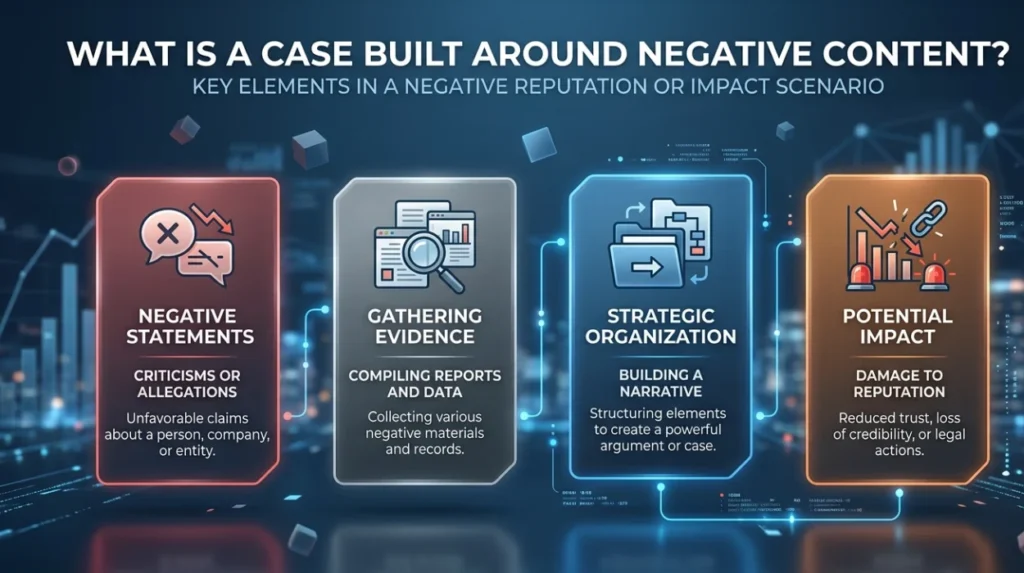
A case built around negative content is a structured evidence file that supports removal, deindexing, correction, or suppression of harmful material. It defines why the content qualifies for action and explains how search ecosystems should respond when the material affects reputation signals.
Dive Deeper With Our Expert Guides and Related Blog Posts:
What to Expect When Using an Online Content Removal Service in the UK
Which Routes Actually Work to Remove Content From the Internet in the UK
The case begins with identifying the exact URL, platform, author account, and publication context. It then maps how the content appears in search results and whether it contributes to negative sentiment distribution around the entity. This stage matters because search engines treat indexed content as evidence, and harmful evidence can continue to affect entity credibility long after publication.
A case is not the same as a complaint. A complaint expresses dissatisfaction. A case connects the issue to platform rules, search visibility, and trust impact. That distinction shapes effectiveness because decision makers and moderators act on structured evidence more reliably than on unsupported claims. The stronger the case, the clearer the reputational risk and the more precise the route to action.
How does evidence change the outcome?
Evidence changes the outcome because it determines whether the content qualifies for action under platform rules, legal thresholds, or index control mechanisms. Evidence is the material that demonstrates inaccuracy, policy breach, impersonation, privacy harm, or other forms of reputational damage within a search ecosystem.
The first layer of evidence is factual. Screenshots, timestamps, URLs, and archived copies establish what exists and where it appears. The second layer is behavioural. Account history, repetition patterns, and publication timing show whether the material looks organic or coordinated. The third layer is contextual. Comparison against source records, business data, or original statements shows whether the content distorts the truth.
Evidence matters because removal decisions depend on credibility. A strong case reduces uncertainty and gives moderators or platform reviewers a direct route to action. A weak case leaves the content visible and allows its ranking influence to continue. That is why evidence quality affects not only the removal decision but also search visibility and the durability of the result.
Which approach is stronger: removal or suppression?
Removal is stronger when the content qualifies for source deletion or deindexing, while suppression is stronger when the content cannot be removed but can be pushed lower in search results. Removal changes the availability of the harmful content, while suppression changes the position of the harmful content without fully eliminating the source.
Removal has the advantage of permanence. If a page is deleted, deindexed, or otherwise excluded, the negative signal weakens at its source. This creates a cleaner result set and reduces the chance that the content continues to shape perception. Its limitation is access. Not every platform accepts removal requests, and not every piece of harmful content meets the threshold for deletion.
Suppression has the advantage of flexibility. It operates by increasing the strength of competing pages, which changes SERP composition and reduces the visibility of the negative item. Its limitation is dependence on ranking competition. If the harmful page retains authority, it can return to a prominent position. This makes suppression more reactive and less durable than removal in cases where the source itself remains active.
How does organic support compare with reactive action?
Organic support compares as a longer term method, while reactive action compares as an immediate risk reduction method. Organic reputation control operates by strengthening authoritative content and trust signals, while reactive control operates by targeting the harmful page directly.
Organic support builds a broader content environment. It publishes or strengthens material that can occupy visible positions in search results and reduce the relative weight of the harmful item. That improves entity credibility over time because search engines evaluate the wider footprint, not only the negative page. The limitation is speed. Organic support requires time before it shifts ranking influence.
Reactive action is faster. It focuses on the harmful page, the host platform, or the search index and aims to reduce exposure immediately. That makes it useful when risk is urgent. The limitation is scope. Reactive work solves the visible issue first, but it does not automatically repair the wider reputation environment. The strongest strategies combine both, but the comparison shows why the two methods serve different functions.
What role does search ranking influence play?
Search ranking influence plays a central role because it determines whether the harmful content stays visible enough to shape entity perception. Search ranking influence is the power a page has to appear prominently in results and thereby affect trust signals, click behaviour, and reputation assessment.
Search engines evaluate relevance, authority, freshness, and contextual trust. A negative page with strong ranking influence affects perception even if the user never opens it. The title, snippet, and position alone can shape judgement. That means case building must account for where the content appears, not only what it says.
The case becomes stronger when it shows that the content ranks for entity queries, branded terms, or reputation-related searches. That proves the harm is not isolated. It is visible in the exact places where users form opinions. A page that ranks high has greater impact on search visibility and a larger effect on the entity’s public record. This is why ranking analysis belongs inside the evidence file.
Why does sentiment distribution matter?
Sentiment distribution matters because it reveals whether the negative material is an isolated event or part of a broader reputation pattern. Sentiment distribution refers to the balance of positive, neutral, and negative signals that search ecosystems use to interpret credibility.
A single negative page can damage perception if it holds a strong position. A cluster of negative content creates a stronger pattern because it changes the overall trust picture. Search engines do not reason like people, but they do compare patterns, frequency, and repetition. That comparison influences what remains visible and what is treated as relevant.
A case that includes sentiment distribution analysis shows more than one harmful item. It shows how the content ecosystem behaves around the entity. That improves decision quality because the response can match the scale of the risk. A page that is alone in the footprint calls for a different strategy from a pattern of repeated negative mentions. This is where evaluation becomes useful. It links the content to the larger reputation system.
How do platforms affect the case?
Platforms affect the case because each environment applies different rules, moderation standards, and visibility structures. A platform is the system that determines how content is hosted, indexed, moderated, and surfaced within search ecosystems.
Search engines respond to index status and ranking signals. Review platforms respond to policy breaches and account behaviour. Social platforms rely on moderation systems and community standards. Forums and blogs often require direct host contact, content correction requests, or legal escalation depending on the content and jurisdiction. The case must identify the platform because the route depends on it.
This comparison matters because the same harmful message can need different forms of evidence on different platforms. A review site may require proof of no transaction. A forum may require proof of impersonation or harassment. A search engine may require proof that the page violates policy or should not remain indexed. That variation shapes the structure of the case and the expected outcome. Platform type therefore affects both efficiency and sustainability.
Which is more sustainable: content enhancement or content suppression?
Content enhancement is more sustainable when the harmful content cannot be removed, while content suppression is more immediate but less durable. Content enhancement operates by improving the visibility of stronger pages, while content suppression operates by reducing the visibility of the negative page through ranking competition.
Enhancement builds a better footprint. It adds stronger pages, more trustworthy references, and more coherent entity signals. Over time, that changes how search engines evaluate the entity. The limitation is that it does not eliminate the harmful page. If the negative source gains authority again, it can re-emerge.
Suppression is quicker because it works directly on the ranking outcome. It lowers the harmful page relative to competing content. The limitation is that the negative source remains active. That means the issue can return if ranking conditions shift. A case that distinguishes enhancement from suppression demonstrates a better grasp of long-term control. It also shows whether the strategy targets visibility alone or the underlying source of the risk.
What does a strong case usually include?
A strong case usually includes source mapping, evidence capture, policy analysis, ranking review, and outcome measurement. It is the complete record that explains what the content is, where it appears, why it is harmful, and which action route fits the risk.
Source mapping identifies the original host and any duplicates or mirrored copies. Evidence capture records the exact wording, dates, and visible behaviour of the content. Policy analysis checks whether the material violates platform rules or legal standards. Ranking review shows how the content affects search visibility. Outcome measurement checks whether the content was removed, deindexed, corrected, or suppressed and whether the reputation signals changed.
Each part has a separate purpose. Source mapping tells the reviewer where action is possible. Evidence capture shows why action is justified. Policy analysis identifies the exact route. Ranking review proves the search impact. Outcome measurement confirms whether the case achieved the intended effect. Together, these elements make the case actionable rather than speculative.
Evaluation framework
- Identify the source, for example the exact page, profile, or thread.
- Capture the evidence, for example screenshots, timestamps, and archived copies.
- Check the policy, for example platform rules or legal thresholds.
- Measure visibility, for example ranking position for branded queries.
- Verify the result, for example removal, deindexing, or ranking loss.
How does a case build credibility before action?
A case builds credibility before action by showing that the request is specific, documented, and tied to measurable reputational harm. Credibility is the degree to which the evidence supports a clear intervention path and demonstrates real impact on entity perception.
Credibility matters because moderators, hosts, and search systems respond to precision. A vague request leaves room for rejection or delay. A structured case leaves less room for uncertainty. It shows that the content is not only unpleasant but also relevant to search visibility and trust signals. That makes the intervention more likely to succeed.
The case also builds internal credibility. It gives the decision maker a clear basis for choosing removal, suppression, or enhancement. That is important because different strategies carry different risk exposure and cost. A case that supports the right strategy from the start improves both speed and sustainability. This is the point where analysis becomes operational.
What does this mean for decision making?
It means the choice between methods depends on how much control exists over the source, how visible the content is, and how durable the desired outcome needs to be. Decision making in reputation control is an evaluation of effectiveness, scalability, and risk exposure across the available response options.
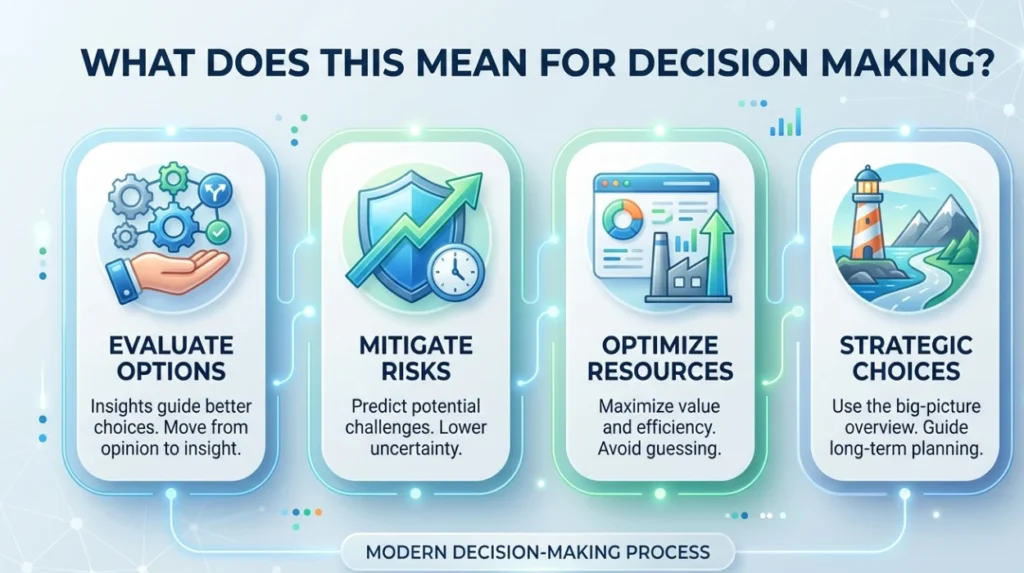
Removal is strongest when the source can be acted on directly and the harm is clear. Suppression is stronger when the content remains live but can be outranked. Organic support is stronger when the goal is long term footprint change. Reactive action is stronger when immediate visibility must drop. A well built case determines which route fits the evidence and the platform.
For further validation of the process logic, protect your name fits naturally after the section on decision making because it represents the final action stage after analysis and comparison.
What is the main takeaway?
The main takeaway is that a negative content removal service builds a case to prove harm, identify the correct platform route, and support a search-visible outcome. The case connects content evidence, platform rules, ranking influence, and sentiment distribution into one decision structure.
Removal, suppression, enhancement, and reactive action all work differently. Removal changes the source. Suppression changes the ranking position. Enhancement changes the surrounding trust environment. Reactive action focuses on immediate harm. Each method has strengths and limitations, and each one affects search visibility in a different way.
The strongest strategy depends on the content, the platform, and the durability required. A case that evaluates those factors clearly supports better outcomes and lower reputation risk. That is the real value of case building. It turns a reputational problem into a structured, measurable decision.