Negative Press Impacts Your Business by influencing reputation signals, search visibility, entity credibility, and customer trust within digital ecosystems. Negative press affects how search engines interpret and rank information associated with an organisation, shaping overall reputation perception. The response strategy determines how effectively an organisation can manage search perception, reduce negative visibility, and improve information balance across search engine results pages (SERPs).
Reputation management strategies differ based on how they influence search visibility, content ranking influence, sentiment distribution, and entity perception. Online reputation control methods are evaluated through effectiveness, sustainability, scalability, and their ability to alter reputation signals within search ecosystems.
How Does Negative Press Influence Search Visibility and Brand Perception?
Negative press influences search visibility by introducing information that search engines index, rank, and associate with a business entity. When authoritative publications publish unfavourable content, that information becomes part of the entity’s searchable profile and contributes to reputation evaluation.
Entity credibility refers to the level of trust search engines and users assign to an organisation based on available information. Negative press changes the distribution of reputation signals by increasing the visibility of adverse information. Search algorithms interpret these signals as part of the entity’s overall information profile.
Search ranking influence determines how prominently negative content appears for branded searches. Articles published on authoritative domains often maintain strong rankings because authority, relevance, and engagement signals support their visibility. This creates long-term perception effects that influence how users evaluate credibility.
Brand perception is formed through cumulative information exposure. Search results frequently represent the first stage of information discovery, meaning prominent negative content becomes part of the decision-making environment. As a result, visibility and perception remain closely connected within digital reputation systems.
Which Reputation Management Approaches Are Commonly Used to Address Negative Press?
Reputation management approaches are generally categorised into content enhancement strategies, content suppression strategies, monitoring frameworks, and content removal processes. Each approach operates through different mechanisms and produces different outcomes within search ecosystems.
Content enhancement focuses on increasing the visibility of positive, neutral, and authoritative content. This approach operates by expanding the volume of relevant information available for indexing and ranking. As additional content gains visibility, the proportion of negative information within search results decreases.
Content suppression focuses on reducing the prominence of negative content through competition rather than removal. Search engines continue to index the negative content, but other pages achieve higher rankings and occupy more visible SERP positions.
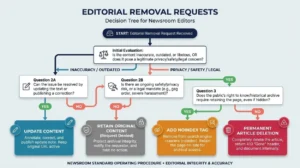
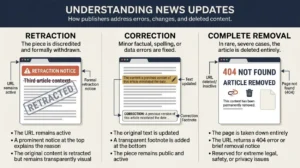
Article Removal Services focus on evaluating whether content qualifies for removal, deindexing, correction, or legal challenge. This approach targets the source of the information rather than its visibility relative to other content.
Monitoring frameworks focus on detection and analysis. These systems track sentiment distribution, ranking changes, media mentions, and entity associations to evaluate reputation trends before implementing strategic actions.
How Does Content Suppression Compare With Content Enhancement?
Content suppression and content enhancement pursue similar visibility objectives but operate through different mechanisms. Both approaches influence SERP composition, yet they differ in execution, scalability, and long-term sustainability.
Content suppression operates by increasing competition for ranking positions. Additional authoritative pages enter the search environment and gradually reduce the prominence of negative content. This method focuses directly on SERP composition and search ranking influence.
Content enhancement operates by strengthening the quality, relevance, and authority of existing positive information. The objective is not merely to displace negative content but to improve the overall information environment associated with the entity.
What Are the Strengths of Content Suppression?
Content suppression provides measurable visibility changes when sufficient authoritative content exists to compete for rankings. It directly influences search result composition and can alter the balance of information users encounter.
The limitation is that negative content remains indexed and accessible. Search engines continue to recognise the information, meaning the reputation signal still exists even if visibility decreases.
What Are the Strengths of Content Enhancement?
Content enhancement improves entity credibility by increasing the quantity and quality of authoritative information. Search engines interpret these signals as evidence of topical relevance and organisational authority.
The limitation is that visibility improvements often require significant content development and indexing time. Results depend on authority acquisition, content relevance, and ranking performance.
How Do Removal Strategies Compare With Visibility Management Strategies?

Removal strategies focus on eliminating information from search ecosystems, whereas visibility management strategies focus on changing how information is displayed and ranked. The distinction lies in whether the target is the content itself or its position within search results.
Removal strategies operate by addressing the source content. If successful, the information is removed, corrected, deindexed, or otherwise prevented from appearing within search results. This directly alters the information available for search engine evaluation.
Visibility management strategies operate by influencing ranking competition. The information remains indexed, but other pages gain stronger visibility. This changes user exposure without changing the existence of the original content.
From a sustainability perspective, removal strategies can create permanent outcomes when content is successfully eliminated. Visibility management strategies require ongoing reputation management because ranking environments continuously evolve.
Which Approach Produces Better Long-Term Reputation Outcomes?
Long-term reputation outcomes depend on sustainability, information quality, and the stability of reputation signals. Different approaches influence these factors in different ways.
Content enhancement produces sustainable improvements because it expands the entity’s authoritative information profile. Search engines continuously evaluate positive and neutral content as part of the entity’s overall reputation framework.
Removal strategies produce strong outcomes when content qualifies for elimination. The reduction of negative information changes the composition of available reputation signals and alters how search engines interpret entity associations.
Visibility management creates ongoing benefits when authoritative content consistently outperforms negative content. However, rankings fluctuate as algorithms and competitive environments evolve, making maintenance a continuing requirement.
The most sustainable reputation outcomes emerge when reputation signals remain balanced, authoritative, and consistent across multiple information sources.
How Do Search Engines Evaluate Reputation Signals During Negative Press Events?
Search engines evaluate reputation signals through content indexing, authority analysis, entity recognition, and relevance assessment. These processes determine how information is ranked and associated with a business.
Content indexing refers to the process of discovering and storing information for retrieval. Negative articles become part of searchable databases once indexed and remain available for ranking evaluation.
Authority analysis measures the credibility and influence of information sources. Content originating from trusted publishers often receives stronger ranking support because search engines interpret those sources as reliable.
Entity recognition connects topics, organisations, events, and references within semantic networks. Negative press contributes new associations that become part of the entity’s knowledge framework.
Relevance assessment determines whether content satisfies user intent. When users search for a business name, negative press may appear prominently because algorithms identify a strong relationship between the entity and the indexed content.
Dive Deeper With Our Expert Guides:
How to remove a news article from the internet and when it is legally possible
How to choose between content suppression and removal for negative search results
How Can Reputation Management Strategies Be Evaluated Effectively?
Reputation management strategies are evaluated through measurable indicators rather than assumptions. Effective evaluation focuses on visibility, sentiment, authority, and entity perception metrics.
- Measure search visibility by tracking ranking positions and identifying the proportion of negative versus neutral content within branded SERPs.
- Analyse sentiment distribution by evaluating whether indexed content creates predominantly positive, neutral, or negative associations.
- Assess authority signals by reviewing the credibility and influence of sources contributing to reputation formation.
- Evaluate entity associations by identifying the topics, keywords, and concepts search engines connect with the organisation.
- Monitor perception changes through ongoing analysis of search results, media coverage, and reputation signals.
These measurements provide objective evidence regarding strategy effectiveness and long-term reputation development.
How Does Reactive Reputation Management Compare With Organic Reputation Development?
Reactive reputation management addresses existing reputation challenges after negative information becomes visible. Organic reputation development focuses on strengthening authority, trust signals, and information quality before reputation issues emerge.
Reactive approaches operate by responding to adverse visibility. The objective is to reduce risk exposure and alter existing search result compositions. This approach often focuses on immediate reputation signals.
Organic reputation development operates through continuous authority building. It strengthens digital footprints, improves entity credibility, and increases information diversity across search ecosystems.
Reactive methods frequently generate faster visibility changes because they target existing issues directly. Organic methods generate stronger long-term stability because they establish broader foundations of trust and authority.
The comparison highlights the difference between correction and prevention. Both approaches influence reputation management, but they operate at different stages of the reputation lifecycle.
What Strategic Factors Influence Reputation Protection Decisions?
Strategic reputation decisions depend on visibility risk, authority distribution, sentiment concentration, and information persistence. These factors determine which reputation management approach aligns most effectively with the characteristics of the negative content.
Visibility risk evaluates how prominently adverse information appears within search results. High visibility often increases perception influence because users encounter the content more frequently.
Authority distribution evaluates whether negative information originates from highly trusted publications or low-authority sources. Source credibility directly affects search ranking influence and trust evaluation.
Sentiment concentration measures how extensively negative themes dominate the information environment. A concentrated distribution creates stronger entity associations than isolated references.
Information persistence evaluates how likely content is to remain visible over time. Persistent information requires different management considerations compared with short-lived content.
Within reputation management analysis, understanding Remove negative press about your business and build a strong and trusted online reputation helps explain how different strategic approaches influence search visibility, entity credibility, and long-term reputation outcomes.
Negative press affects reputation through its influence on search visibility, entity credibility, sentiment distribution, and perception formation. Search engines interpret these signals as part of a broader information ecosystem that shapes how organisations are evaluated online.
Different reputation management approaches operate through distinct mechanisms. Content enhancement, content suppression, removal strategies, monitoring frameworks, and organic reputation development each influence search ranking influence and SERP composition differently. Evaluating effectiveness requires analysing sustainability, scalability, authority impact, and long-term reputation outcomes rather than focusing solely on short-term visibility changes.
How does negative press impact a business’s online reputation?
Negative press influences online reputation by affecting search visibility, customer trust, and entity credibility. When negative content ranks prominently in search results, it becomes part of the reputation signals users evaluate before making decisions.
Can negative news affect search engine rankings for a business?
Negative news can influence branded search results by increasing the visibility of adverse content within SERPs. Search engines rank content based on relevance, authority, and engagement signals rather than whether the information is positive or negative.
What is the difference between content suppression and Article Removal Services?
Content suppression focuses on reducing the visibility of negative content by improving the rankings of alternative pages. Article Removal Services focus on assessing whether content can be removed, corrected, or deindexed from search ecosystems.
How do search engines evaluate negative press about a company?
Search engines evaluate negative press through content indexing, authority analysis, relevance assessment, and entity recognition. These mechanisms determine how negative information contributes to search ranking influence and reputation perception.
What are the most important reputation signals affected by negative press?
Negative press can affect reputation signals such as search visibility, sentiment distribution, entity credibility, and trust indicators. These signals influence how users and search engines interpret a business within digital environments.