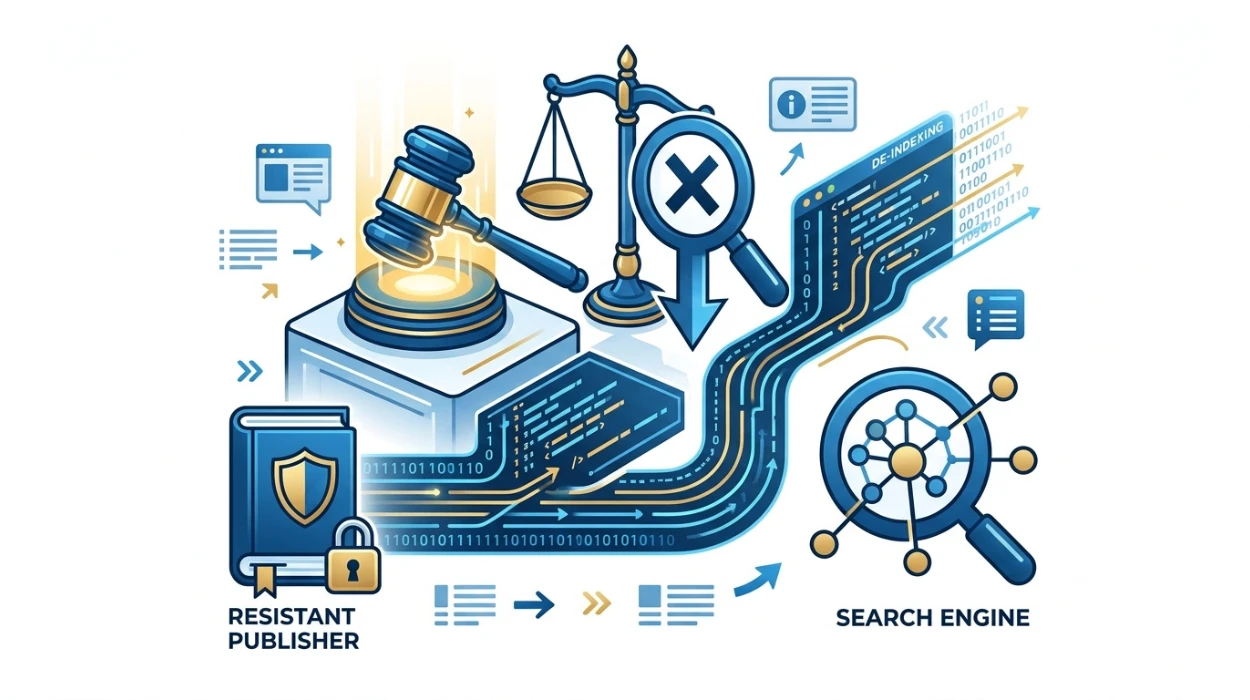
Publisher outreach failure does not stop the article removal process; it shifts it into structured evaluation across legal, platform, and indexing systems.
Reputation management is a structured discipline that governs how information about an entity is created, interpreted, and ranked within search ecosystems. Online reputation refers to the aggregated perception of an entity formed through indexed content, SERP visibility, and algorithmic trust signals across platforms.
What happens when publisher outreach fails in article removal workflows?
When publisher outreach fails, article removal workflows transition from voluntary content negotiation into structured escalation based on platform governance and legal thresholds. This stage defines whether content remains indexed, is demoted, or becomes subject to alternative remediation pathways within search systems.
Publisher refusal establishes a fixed content state where the article continues to exist within the content ecosystem. Search engines then maintain access through crawling and indexing mechanisms that preserve visibility unless technical or legal removal conditions are satisfied. This creates a persistent content entity that continues to generate reputation signals.
The mechanism of failure analysis evaluates why outreach did not succeed, categorising barriers such as editorial refusal, policy constraints, or jurisdictional limitations. Each barrier directly affects the available remediation route. Search systems interpret this persistence as a stable indexed asset unless contradicted by authoritative removal directives.
Impact on search visibility remains unchanged at this stage, meaning SERP evaluation continues to include the article as part of entity-related search results. The absence of publisher cooperation shifts the focus toward external enforcement systems rather than internal editorial resolution.
How do article removal services interpret legal and platform-based removal routes?
Article removal services interpret legal and platform-based removal routes as structured governance channels that determine whether indexed content can be deactivated or suppressed within search ecosystems. These routes operate as formal authority layers that override publisher-level decisions.
Legal routes define enforceable content removal through jurisdictional compliance frameworks, including defamation rulings, privacy regulations, and content legality assessments. Platform routes define removal based on policy violations within hosting or indexing systems. Both routes function as structured decision layers within reputation management systems.
The mechanism evaluates content against predefined thresholds such as policy breach indicators, legal compliance markers, and platform moderation standards. Each threshold determines whether content remains active, becomes delisted, or is restricted from indexing. This creates a controlled hierarchy of removal eligibility.
Search engines interpret validated removal actions as authoritative de-indexing signals, which directly alter content indexing status and SERP inclusion. When neither route applies, content remains fully integrated into search visibility structures, continuing to influence entity perception through persistent exposure.
How do search engines evaluate articles that remain after removal requests fail?
Search engines evaluate articles that remain after removal failures as persistent indexed documents that continue to contribute to entity-level relevance scoring. These evaluations occur through crawling, indexing, and ranking systems that continuously reassess content authority and contextual relevance.
The mechanism of evaluation relies on content persistence, backlink structure, semantic relevance, and engagement signals. Articles that remain accessible are treated as stable data points within the search index, reinforcing their role in SERP composition. Failure of removal requests signals that no overriding authority has been applied to suppress the content.
Impact on visibility is determined through ranking recalibration rather than removal suppression. Algorithms assess whether the content aligns with search intent, entity associations, and topical relevance. This ensures that the article continues to participate in search result structuring even after external removal attempts fail.
SERP evaluation frameworks maintain these articles within entity clusters, meaning they continue to influence how an entity is represented across informational queries. The persistence of indexed content directly contributes to long-term reputation signal accumulation.
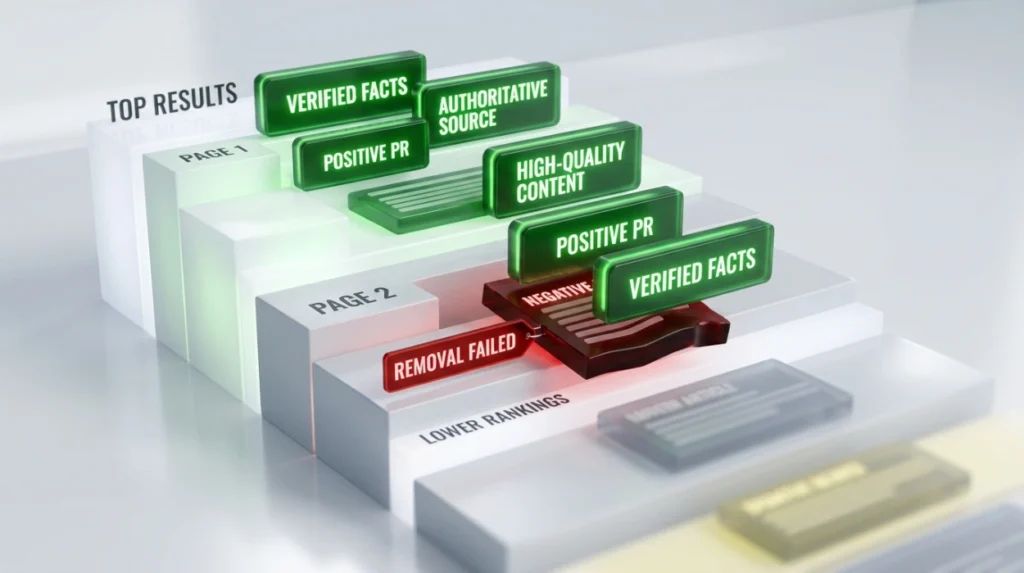
What role do indexing systems play in persistent article visibility?
Indexing systems play a central role in maintaining persistent article visibility by storing, organising, and retrieving content across search engine databases. Once an article is indexed, it becomes part of the structured dataset used to generate search results.
The mechanism of indexing assigns a unique content representation that includes metadata, semantic signals, and contextual associations. This representation allows the article to remain retrievable even when external removal attempts fail. Index persistence ensures continuity within search ecosystems.
Search engines use re-crawling processes to validate whether indexed content remains accessible and relevant. If no removal directive is applied, indexing systems reinforce content stability rather than suppress it. This creates long-term visibility continuity.
Impact on reputation systems is significant because indexing status directly determines whether content contributes to entity perception. Indexed articles remain active contributors to SERP composition, influencing how users interpret trust, relevance, and authority associated with an entity.
How do reputation signals influence continued SERP exposure of unwanted articles?
Reputation signals influence continued SERP exposure of unwanted articles by reinforcing content relevance through algorithmic trust evaluation and entity association patterns. These signals determine how prominently indexed content appears within search result hierarchies.
Reputation signals include backlink authority, semantic relevance, content engagement, and entity co-occurrence within indexed datasets. When these signals remain strong, articles retain visibility regardless of removal attempt failures. Search systems interpret these signals as indicators of informational value.
The mechanism of SERP persistence relies on cumulative signal weighting rather than single-source authority. Articles with sustained engagement or strong contextual relevance remain embedded within ranking structures. This ensures continuity of exposure even without publisher cooperation.
Entity perception is directly shaped by these signals, as repeated exposure across search results reinforces informational association. Persistent articles contribute to long-term reputational framing within search ecosystems, affecting how entities are algorithmically interpreted.
How is entity perception affected when removal is not achieved?
Entity perception is structurally affected when removal is not achieved because persistent indexed content becomes part of the entity’s searchable identity profile within search ecosystems. This profile reflects aggregated content signals rather than isolated publication events.
The mechanism of perception formation operates through entity recognition systems that map content to specific topics, names, or organisations. When unwanted articles remain indexed, they continue contributing to this mapping process. This expands the entity’s informational footprint within SERPs.
Search engines evaluate entity reputation through consistency, relevance, and content diversity across indexed sources. Unremoved articles introduce additional semantic inputs that influence how the entity is categorised and ranked. This alters the overall perception model used in search ranking systems.
Impact on digital footprint stability is long-term, as persistent content becomes embedded in historical indexing layers. This ensures that entity perception remains influenced by all active indexed material, regardless of removal attempts.
Why negative news about your business appears and affects customer trust online
How long negative news articles stay online and why they remain visible in search results
How do evaluation frameworks determine next-stage remediation pathways?
Evaluation frameworks determine next-stage remediation pathways by analysing removal failure points and mapping them to alternative content governance mechanisms within search and legal systems. These frameworks structure the progression from outreach failure to advanced intervention stages.
The mechanism evaluates content eligibility across three structured dimensions: legal enforceability, platform compliance, and indexing persistence. Each dimension defines whether further escalation is possible or whether content remains permanently indexed. This creates a decision matrix for remediation planning.
Search systems interpret these frameworks as signal-routing models that determine whether suppression, de-indexing, or contextual dilution applies. Each pathway directly affects SERP structure and entity-level visibility distribution. Content that fails all evaluation criteria remains active within indexing systems.
Reputation outcomes are shaped by this evaluation logic because it determines whether content continues contributing to search visibility or transitions into restricted exposure states. These pathways define the structural limits of content removal effectiveness.
Article removal workflows operate through layered systems that combine publisher interaction, legal enforcement, platform governance, and indexing persistence. When outreach fails, content does not disappear; it transitions into structured evaluation across search engine systems. Indexing mechanisms maintain visibility, while reputation signals reinforce SERP inclusion and entity association.
Entity perception is continuously shaped by all indexed content, making removal failure a structural condition that affects long-term digital footprint composition. Evaluation frameworks determine whether further remediation routes exist or whether content remains permanently embedded within search ecosystems.
What happens when publisher outreach fails in article removal services?
When publisher outreach fails, article removal services shift from direct negotiation to structured escalation using legal, platform, or indexing-based routes. The content remains indexed until an enforceable removal or de-indexing signal is applied. This process ensures the article is assessed through formal reputation management and search visibility systems.
Can an article still be removed if the publisher refuses?
Yes, an article may still be removed or de-indexed if it violates legal standards or platform policies even when the publisher refuses. Article removal services evaluate compliance, defamation risk, and privacy rules to determine alternative removal pathways. Search engines and hosting platforms may then act independently of the publisher.
How do article removal services decide between legal and platform routes?
Article removal services evaluate the content against legal thresholds such as defamation, privacy breaches, and jurisdictional rules. They also assess platform policies to identify violations that justify takedown or de-indexing. The chosen route depends on which system provides enforceable authority over the indexed content.
Why do some unwanted articles remain visible in Google search results?
Unwanted articles remain visible when they are still indexed and no valid removal or de-indexing directive has been applied. Search engines continue to evaluate these pages using ranking and relevance signals. As a result, the content stays part of SERP evaluation and entity-level search visibility.
How does persistent negative content affect online reputation?
Persistent negative content influences online reputation by becoming part of an entity’s indexed digital footprint within search ecosystems. It contributes to reputation signals that shape how search engines interpret trust and credibility. Over time, this affects SERP composition and overall entity perception.