
Personal information can be removed from Google Search when specific content qualifies for removal under search engine policies, legal frameworks, or content management processes. The permanence of removal depends on content indexing status, source availability, and how search ecosystems process visibility signals.
Reputation management is the practice of analysing and influencing how information shapes trust, credibility, and perception within digital environments. Online reputation refers to the collection of search results, content assets, authority signals, and digital references that contribute to how an entity is interpreted across search ecosystems.
What Does It Mean to Remove Personal Information from Google Search Permanently?
Removing personal information from Google Search permanently refers to the reduction or elimination of searchable access to personally identifiable information through search result modifications, source-level changes, or content removal mechanisms. Within search ecosystems, permanence is evaluated through visibility, indexing status, and content accessibility.
Personal information is identifiable data associated with an individual. This information includes names, contact details, addresses, financial identifiers, images, and other data that contribute to digital identity. Search engines discover and index such information through crawling and content indexing systems.
Search visibility determines whether personal information appears within search engine results pages. When indexed information becomes accessible through search queries, it contributes to an individual’s digital footprint. The visibility of this information influences reputation signals and public perception.
Permanence within search environments refers to the long-term absence of content from searchable results. Search ecosystems continuously reassess indexed assets, making content accessibility and source availability critical factors in determining whether information remains visible.
How Does Personal Information Become Visible in Search Results?
Personal information becomes visible in search results through content indexing, entity association, and search relevance evaluation. Search engines discover information by crawling websites, databases, public records, and digital platforms.
Content indexing is the process through which search systems store and organise information for retrieval. Once indexed, personal information becomes eligible for search visibility when algorithms determine relevance to user queries. This mechanism explains how personal data enters searchable environments.
How Crawling Systems Discover Information
Crawling systems analyse publicly accessible pages and collect content signals. These systems identify names, contact details, and other information that contribute to searchable records.
How Search Engines Associate Entities
Entity recognition systems connect personal information with identifiable individuals. These relationships influence how search engines interpret identity-related queries.
How Ranking Algorithms Determine Visibility
Ranking algorithms evaluate relevance, authority, and accessibility. Personal information becomes visible when these signals align with search demand and content availability.
The combination of discovery, indexing, and ranking creates the foundation of personal information visibility within search ecosystems.
Why Does Personal Information Influence Online Reputation?
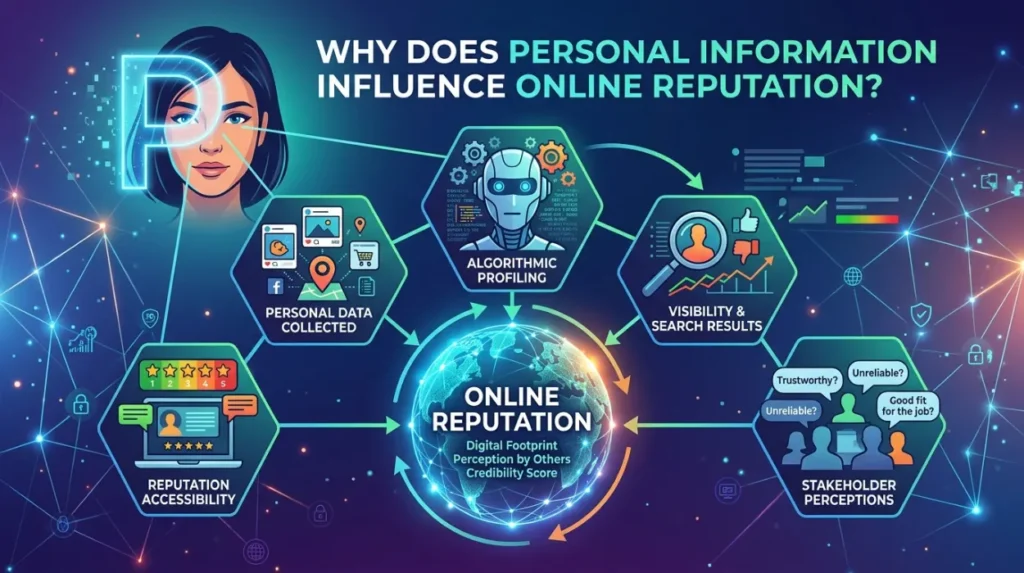
Personal information influences online reputation because search users evaluate credibility, trustworthiness, and identity through accessible information. Search ecosystems use visible content to construct reputation signals associated with an individual.
Online reputation refers to the perception formed through indexed content and visible search results. Personal information contributes to this perception because it forms part of the digital footprint used to evaluate identity.
Search visibility amplifies the impact of personal information. Information appearing prominently within SERPs receives greater attention and contributes more strongly to entity perception. This visibility influences how audiences interpret trust and credibility.
Authority signals and trust signals are also affected by information availability. Search engines evaluate consistency and accuracy when interpreting entities. Personal information contributes to these evaluations because it forms part of the information ecosystem surrounding an individual.
As a result, personal information is not only a privacy concern but also a reputation management factor that influences digital credibility.
How Do Search Engines Evaluate Personal Information?
Search engines evaluate personal information through content relevance, entity recognition, accessibility, and authority signals. These systems determine how information is indexed and presented within search results.
Search algorithms analyse context rather than personal significance. Information becomes searchable when it demonstrates relevance to user intent and aligns with indexing requirements. This process determines visibility rather than importance.
How Relevance Signals Affect Visibility
Relevance signals measure the relationship between content and search queries. Strong relevance increases the likelihood that personal information appears within search results.
How Authority Signals Influence Evaluation
Authority signals refer to indicators of content credibility and reliability. Information published on authoritative sources often receives stronger search visibility.
How Accessibility Supports Indexing
Accessible content provides clear pathways for crawling and indexing systems. Greater accessibility increases the likelihood of search inclusion.
These mechanisms demonstrate how search engines evaluate information using technical and semantic criteria rather than personal privacy considerations alone.
What Factors Determine Whether Personal Information Remains Indexed?
The persistence of personal information within search results depends on content availability, indexing status, authority signals, and search demand. Search engines continuously reassess these factors when evaluating content eligibility.
Content availability refers to whether the source remains accessible. Information hosted on active websites continues generating indexing opportunities. Source-level accessibility therefore contributes significantly to search persistence.
Authority signals also influence indexing longevity. Content originating from highly trusted sources often retains visibility for longer periods because search engines associate such sources with reliability.
Search demand affects persistence through user behaviour and query relevance. Frequently searched information receives continued evaluation and visibility consideration within search ecosystems.
The interaction between these factors determines how long personal information remains part of a searchable digital footprint.
How Does Personal Information Affect Digital Footprints?
Personal information affects digital footprints because it becomes part of the searchable record associated with an individual. A digital footprint is the cumulative collection of information, references, content assets, and search signals connected to a person.
Search engines create digital representations of individuals through indexed information. Names, profiles, public records, and associated references contribute to this representation. Personal information therefore functions as a foundational component of digital identity.
Digital footprints influence reputation signals by shaping search perception. Information visibility affects how individuals are evaluated across professional, social, and informational contexts. Search users often rely on available information when forming credibility assessments.
Entity perception depends on consistency and context. Search systems analyse relationships between information sources to establish identity recognition. Personal information contributes directly to these evaluations through repeated associations.
This relationship explains why personal information plays a central role in reputation management and online credibility analysis.
What Is the Relationship Between Search Visibility and Privacy?
Search visibility and privacy are interconnected concepts because visibility determines the accessibility of information within public search environments. Privacy refers to the control and limitation of personal information exposure.
Search visibility increases information accessibility. Indexed content becomes available to users conducting relevant searches, creating broader exposure for personal data. This accessibility affects how information contributes to reputation signals.
Privacy concerns emerge when searchable information exceeds intended exposure levels. Search ecosystems prioritise information retrieval and relevance, creating a balance between public accessibility and information control.
Analysis of Online Reputation & Content Removal demonstrates how visibility management influences digital footprints, information accessibility, and reputation outcomes. Understanding these mechanisms provides deeper insight into the relationship between privacy and search perception.
The interaction between privacy and visibility remains a central consideration within modern reputation management frameworks.
Dive Deeper With Our Expert Guides:
How to Delete Fake Reviews from Google and Facebook
Best Online Reputation Management Services for Individuals
How Do Reputation Signals Influence the Interpretation of Personal Information?
Reputation signals influence the interpretation of personal information by providing context for credibility, relevance, and trustworthiness. Search ecosystems use these signals to evaluate how information contributes to entity understanding.
Reputation signals include authority indicators, content consistency, engagement patterns, and source reliability. These signals help algorithms interpret the quality and significance of visible information.
Trust signals contribute to credibility assessments by demonstrating informational reliability. Personal information associated with trusted sources receives different evaluations than information connected to low-authority environments.
SERP evaluation also influences interpretation. The positioning, context, and surrounding information within search results affect how users understand visible content. Search visibility therefore shapes perception as much as the information itself.
This process demonstrates that personal information gains meaning through its relationship with broader reputation signals rather than through isolated visibility alone.
Removing personal information from Google Search permanently involves understanding how search ecosystems discover, index, evaluate, and present information. Visibility depends on content indexing, source accessibility, authority signals, and relevance assessments that collectively determine search eligibility.
Personal information influences online reputation because it contributes to digital footprints, reputation signals, and entity perception. Search engines interpret this information through relevance, authority, and accessibility frameworks that shape how individuals are represented within SERPs.
The relationship between privacy, search visibility, and online reputation demonstrates the importance of understanding how information is processed within modern search ecosystems. Analysing these mechanisms provides a clearer understanding of how personal information affects digital credibility and long-term search perception.
How can personal information appear in Google Search results?
Personal information appears in Google Search when search engines crawl, index, and rank content from websites, public records, directories, or social platforms. Search visibility depends on content indexing, relevance signals, and source accessibility.
Can personal information be permanently removed from Google Search?
Personal information can be removed from Google Search when it meets specific removal criteria or when the source content is deleted or restricted. Long-term removal depends on indexing status, content accessibility, and search engine updates.
Why does personal information in search results affect online reputation?
Visible personal information contributes to digital footprints and influences reputation signals used to assess credibility and trustworthiness. Search results shape entity perception because users often evaluate individuals based on accessible online information.
What is the role of Online Reputation & Content Removal in managing search visibility?
Online Reputation & Content Removal focuses on reducing the visibility of information that affects digital credibility and search perception. These processes help manage content indexing, reputation signals, and overall online reputation.
How do search engines evaluate personal information and reputation signals?
Search engines evaluate personal information through relevance, authority, accessibility, and entity recognition systems. Reputation signals help algorithms interpret trust, credibility, and the relationship between visible content and an individual’s digital identity.