
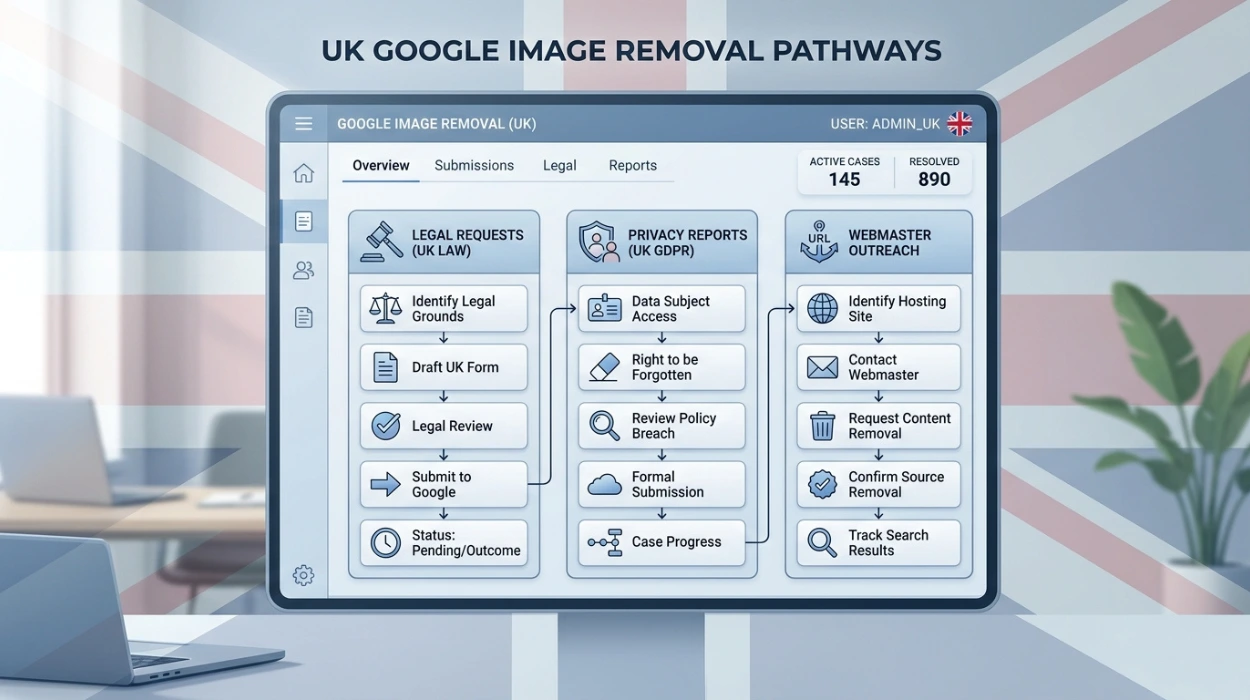
Google Image Removal UK requests are evaluated based on the legal basis for the request, the source of the image, applicable privacy rights, and search platform policies governing indexed content. Reputation management strategies differ based on how visual information influences search visibility, entity credibility, and reputation signals across search ecosystems, while online reputation control methods are evaluated through their effectiveness, sustainability, and impact on search perception rather than immediate visibility changes.
Which image removal approach provides the most effective results?
The most effective image removal approach is determined by the relationship between the indexed image, the original source, and the legal or policy framework governing its publication. Image removal is the process of reducing or eliminating the visibility of visual content within search ecosystems through recognised procedural mechanisms. Some approaches focus on removing the image from its originating webpage, while others evaluate eligibility for limiting visibility within search results. These mechanisms operate differently because search engines index content that exists on external websites rather than storing independent copies of every published image. Understanding these distinctions allows reputation management strategies to be evaluated according to process effectiveness instead of perceived outcomes.
Search ecosystems interpret visual information through contextual relevance, authority signals, and content accessibility. An image that remains publicly accessible at its original source continues influencing reputation signals, even when search visibility changes. Conversely, removing the source content alters the availability of information that search engines evaluate during content indexing. This comparison demonstrates that image removal strategies vary according to where information exists and how search systems process it. Effectiveness therefore depends on the interaction between publication, indexing, and digital accessibility.
How do source removal and search result removal differ?
Source removal and search result removal operate through separate technical mechanisms.
- Remove source content by eliminating the original image from the hosting webpage, preventing future content indexing.
- Evaluate search eligibility by assessing whether indexed images satisfy legal or policy-based removal criteria.
- Reduce search visibility by limiting image accessibility within search results while recognising that source content may remain online.
- Assess indexing changes by analysing how search systems respond after webpage updates and recrawling.
Each mechanism influences search perception differently because search engines rely on accessible source information during indexing.
How do privacy-based routes compare with content management approaches?
Privacy-based routes operate through legal and policy frameworks that evaluate whether indexed images contain information affecting individual privacy rights. Content management approaches focus on controlling the publication, accessibility, and organisation of digital information before it influences search visibility. Privacy-based evaluation examines identifiable personal information, consent, and applicable legal protections, whereas content management concentrates on improving information quality across the digital footprint. These approaches function independently but contribute to broader reputation management by influencing the composition of search engine results pages (SERPs). Their effectiveness depends upon the specific characteristics of the indexed image and the surrounding information environment.
Privacy protections primarily influence eligibility for image visibility changes within search ecosystems. Content management influences search ranking through stronger authority signals, improved contextual relevance, and higher-quality indexed assets. Search engines interpret these approaches differently because privacy frameworks regulate information accessibility, while content management improves the overall structure of searchable information. This comparison highlights the distinction between legal evaluation and digital optimisation. Together, these methods demonstrate that image reputation management extends beyond individual removal requests.
Dive Deeper With Our Expert Guides:
How to Request Google Cache Removal in the UK and What the Process Involves
How Dead Links Showing in Google Results Can Be Removed or De-indexed
Which approach provides broader search influence?
Privacy and content management create different forms of search influence through distinct operational mechanisms.
- Apply privacy protections by evaluating legal criteria that determine whether indexed images remain searchable.
- Strengthen contextual relevance by improving the relationship between visual content and authoritative information sources.
- Improve information quality by supporting consistent digital assets that reinforce entity credibility.
- Reduce conflicting signals by managing the accuracy and coherence of searchable visual content.
These mechanisms contribute differently to SERP composition and long-term search perception.
How do search engines interpret reputation signals from indexed images?
Search engines interpret reputation signals by evaluating visual content together with surrounding textual information, website authority, metadata, and broader digital context. Reputation signals are measurable indicators that contribute to entity credibility and search ranking influence across digital ecosystems. Indexed images become part of an entity’s digital footprint because search algorithms associate photographs with webpages, topics, and recognised identities. This evaluation extends beyond image quality by analysing semantic relationships that support search relevance. Reputation management therefore includes understanding how indexed visual information contributes to broader search perception.
Search visibility depends upon information consistency across multiple digital sources. Images published on authoritative webpages reinforce trust signals because search algorithms compare contextual information before determining ranking relevance. Weak contextual relationships or inconsistent digital assets reduce algorithmic confidence and influence how visual content appears within SERPs. This demonstrates that image visibility reflects the combined effect of authority, relevance, and indexing rather than isolated technical optimization. Reputation signals therefore shape both discoverability and public interpretation of indexed photographs.
Which reputation management methods provide sustainable image control?

Sustainable image control is achieved through methods that improve information quality while supporting long-term search visibility and entity credibility. Reputation management refers to the structured evaluation of digital information that influences search perception through authoritative and relevant content. Reactive image removal addresses existing visibility issues, whereas proactive digital footprint optimization strengthens the quality and consistency of searchable information over time. These methods complement different stages of reputation management because one responds to indexed content while the other supports future search performance. Their effectiveness is evaluated through sustainability, scalability, and the stability of reputation signals.
Long-term approaches reduce reliance on isolated interventions because stronger digital ecosystems provide greater resilience against inconsistent reputation signals. Search engines evaluate authoritative content across multiple sources, making continuous information quality an important factor in maintaining search visibility. Sustainable reputation management therefore operates through structured digital governance rather than isolated image-related actions. This comparison demonstrates the value of combining immediate reputation responses with broader information management strategies.
How do organic and reactive reputation management approaches compare for image control?
Organic reputation management improves search perception by strengthening authoritative digital information, while reactive reputation management evaluates existing image-related issues after they become visible within search ecosystems. Organic reputation management is the continuous optimisation of a digital footprint through accurate, relevant, and trusted content that reinforces entity credibility. Reactive reputation management operates by analysing indexed images, identifying policy or privacy issues, and applying the most appropriate removal or visibility management route. These approaches influence search ranking through different mechanisms because one expands positive reputation signals and the other addresses existing visibility risks. Evaluating both approaches demonstrates that effective image reputation management depends upon combining information quality with structured response processes.
Search engines interpret organic reputation signals as indicators of long-term authority because consistent digital assets strengthen contextual relevance across multiple sources. Reactive actions influence the composition of search engine results pages (SERPs) by reducing the visibility of specific indexed content where applicable. Organic strategies therefore improve search ranking influence through sustained authority development, whereas reactive methods focus on individual reputation events. This distinction highlights the operational difference between continuous reputation enhancement and targeted reputation management. Understanding both methods provides a clearer framework for evaluating image control strategies.
Which approach provides greater long-term sustainability?
Long-term sustainability depends upon maintaining information quality and stable reputation signals across searchable digital environments.
- Strengthen authoritative content by publishing relevant digital assets that reinforce entity credibility.
- Evaluate indexed images by identifying visual content that affects search perception or privacy considerations.
- Maintain information consistency by aligning visual and textual content across trusted sources.
- Reduce reputation risk by preventing conflicting or outdated information from influencing search visibility.
Each mechanism contributes to sustainable search performance by supporting consistent digital trust rather than isolated corrective actions.
How do content suppression and content enhancement influence image visibility?
Content suppression and content enhancement represent different methods of influencing image-based reputation within search ecosystems. Content suppression operates by reducing the visibility of specific indexed content through recognised legal, technical, or policy-based mechanisms. Content enhancement improves search perception by expanding authoritative information that strengthens reputation signals and entity credibility. Search engines evaluate both approaches through contextual relevance, source authority, and the overall quality of indexed digital assets. Consequently, image visibility reflects the cumulative balance of information rather than a single optimisation technique.
Content enhancement supports broader search ranking influence because additional high-quality digital assets strengthen authority across multiple search results. Content suppression addresses individual visibility concerns but does not independently increase the volume of trusted information associated with an entity. Search algorithms continue evaluating all accessible reputation signals when determining rankings, making information quality a fundamental component of sustainable visibility. Comparing these approaches demonstrates that image reputation management extends beyond isolated removal processes to include the broader structure of digital information.
How should effectiveness, scalability, and risk exposure be evaluated?
Effectiveness is measured by the ability of a reputation management approach to improve search visibility, strengthen entity credibility, and maintain consistent reputation signals. Scalability refers to the capacity of a strategy to remain effective across growing volumes of digital content, while risk exposure evaluates the likelihood of inconsistent or harmful information influencing search perception. Privacy-based image evaluation provides effective results when legal or policy criteria are satisfied, although its application remains limited to qualifying circumstances. Digital footprint optimization offers broader scalability because improvements in information quality continue strengthening search ecosystems over time. These distinctions demonstrate that different methods achieve different operational objectives.
Risk exposure also varies between approaches. Reactive image management depends upon existing indexed content and applicable removal criteria, making its influence narrower than continuous reputation optimization. Organic reputation development strengthens digital trust by reinforcing authoritative information before reputation issues affect search perception. Search engines compare these reputation signals across websites, image results, and supporting content to establish overall entity credibility. Evaluating effectiveness therefore requires analysing long-term information quality in addition to immediate search visibility outcomes.
The most effective routes for getting a Google image removed in the UK depend upon the relationship between indexed content, source publication, privacy rights, and applicable search platform policies. Reputation management evaluates these mechanisms by comparing their influence on search visibility, entity credibility, and reputation signals rather than relying on a single method of image control.
Privacy-based evaluation, source content management, digital footprint optimisation, and reputation enhancement each operate through distinct mechanisms within search ecosystems. Their effectiveness differs according to scalability, sustainability, search ranking influence, and risk exposure. Understanding these differences provides a stronger foundation for evaluating image reputation management strategies and how search engines interpret indexed visual information over time.
For readers exploring the implementation stage of image privacy management, Get a Harmful Google Image Removed in the UK With Our Privacy Removal Service examines the practical processes involved in addressing qualifying image visibility issues within established legal and policy frameworks.
What are the most effective routes for getting a Google image removed in the UK?
The most effective route depends on why the image appears in Google Search and whether it qualifies under privacy, legal, or content removal policies. Removal options are typically evaluated based on the source website, indexing status, and applicable eligibility criteria.
Can Google remove an image from search results without removing it from the original website?
In some circumstances, Google can limit the visibility of an image in its search results while the original image remains available on the source website. The outcome depends on Google’s published removal policies and the nature of the request.
Does removing an image from the original website also remove it from Google Search?
When an image is removed from its source webpage, Google generally updates its index after recrawling the page. The timing depends on the search engine’s indexing process and how quickly the webpage changes are detected.
How do privacy rights affect Google image removal in the UK?
Privacy rights can influence whether an image qualifies for removal if it contains personal or sensitive information that meets Google’s or applicable legal criteria. Requests are assessed according to established policies rather than the image’s negative impact alone.
How does Clear Your Name approach Google image removal requests?
Clear Your Name explains that image removal requests are evaluated by analysing indexing status, privacy considerations, and applicable platform policies. The assessment focuses on evidence-based criteria and recognised removal processes rather than subjective opinions, supporting informed decisions about Google image visibility.