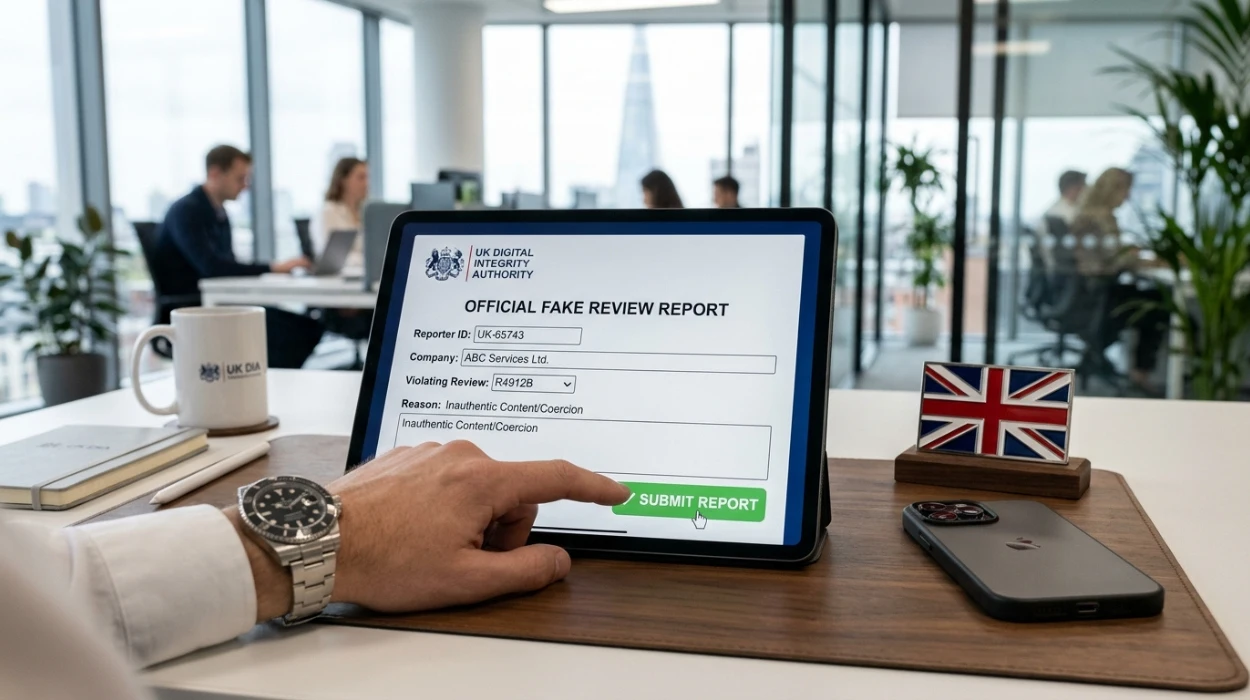
File Fake Review Report UK using the correct reporting process to strengthen search visibility control by reducing misleading reputation signals that influence consumer decisions. A structured reporting process improves entity credibility, supports SERP control, and reduces reputational risk through evidence-based moderation requests.
Fake reviews influence public perception by introducing inaccurate information into search ecosystems. Whether they appear on Google, Trustpilot, Glassdoor, or other review platforms, deceptive reviews affect customer confidence, recruitment decisions, commercial partnerships, and overall digital trust. Reporting them successfully requires more than identifying inaccurate content because every platform applies specific moderation policies and evidence standards. A structured reputation management process aligns reporting with those requirements while strengthening long-term search perception influence. Clear Your Name delivers an organised methodology that combines policy assessment, evidence preparation, and reputation management to achieve measurable outcomes while supporting sustainable online credibility.
Which fake review reporting approach delivers the most reliable results?
A structured reporting methodology delivers the most reliable results because every submission aligns with platform policies, supporting evidence, and recognised moderation criteria. Random reporting attempts frequently fail because they lack documentation, policy references, or sufficient proof that a review breaches platform standards. A systematic approach improves reporting accuracy while reducing unnecessary delays during moderation. It also strengthens reputation signals by ensuring that misleading reviews are challenged through appropriate channels rather than informal complaints. This process supports stronger SERP control and improves long-term search perception.
The process begins by identifying every review that potentially breaches platform guidelines through false statements, fabricated experiences, conflicts of interest, or coordinated manipulation. Each review is assessed against the moderation policies of the relevant platform before supporting evidence is gathered. Evidence includes transaction records, communication history, account inconsistencies, and documented policy violations where applicable. Once verified, the report is prepared using accurate categorisation and complete supporting documentation to improve moderation efficiency. This structured workflow increases reporting quality while supporting wider reputation management objectives.
The process also evaluates how the reported review influences search ecosystems beyond the review platform itself. Reviews contribute to entity credibility, local search visibility, consumer confidence, and overall reputation signals. Addressing misleading reviews therefore improves information quality while reducing negative content suppression requirements in the future. A coordinated strategy strengthens search perception influence by supporting accurate public representation across digital platforms. This wider perspective creates stronger long-term reputation outcomes than isolated reporting activity.
Dive Deeper With Our Expert Guides:
Remove Fake Trustpilot Reviews in the UK With Our Policy-Based Approach
Remove Fake Online Reviews Across Every Platform With One UK Service
What measurable outcomes does structured reporting deliver?
A structured reporting process produces measurable improvements because it focuses on both review accuracy and broader search visibility management. Removing policy-violating reviews strengthens trust while improving the quality of publicly available reputation information.
The reporting process delivers measurable outcomes by:
- Reducing misleading reputation signals that distort consumer perception.
- Strengthening entity credibility through accurate review representation.
- Improving SERP control by supporting balanced search visibility.
- Reducing reputational risk through evidence-based moderation requests.
- Supporting long-term trust restoration with consistent reputation management activity.
These outcomes improve decision-making because users increasingly evaluate review profiles before engaging with businesses or professionals. Accurate review information therefore contributes directly to stronger credibility across digital search environments.
Why does professional fake review reporting reduce reputational risk?
Professional reporting reduces reputational risk because every submission follows platform policies rather than relying on assumptions or incomplete documentation. Review platforms evaluate reports according to published moderation standards, making policy alignment essential for successful outcomes. Professional management ensures that evidence, categorisation, and supporting explanations meet those standards from the outset. This consistency reduces procedural delays while improving submission quality. As a result, reputation management becomes more predictable and strategically aligned with search ecosystem requirements.
How does professional expertise improve reporting quality?
Professional expertise improves reporting quality by combining technical platform knowledge with structured reputation analysis. Moderation teams assess factual evidence rather than personal disagreement with review content, making documentation accuracy essential. Specialists therefore evaluate review authenticity before determining the most appropriate reporting category. This process reduces weak submissions that fail due to insufficient evidence or incorrect policy references. Better preparation improves moderation efficiency while strengthening trust throughout the reporting process.
Professional assessment also identifies complementary reputation management opportunities. Some situations require direct platform reporting, while others benefit from wider review monitoring, reputation signal improvement, or content visibility strategies. Combining these activities creates stronger entity credibility because harmful reputation signals are addressed within a broader search ecosystem. This integrated methodology supports sustainable SERP control instead of isolated moderation requests. It also improves overall search perception by reinforcing accurate information across multiple trusted platforms.
Expert management reduces operational uncertainty by replacing reactive reporting with structured evidence gathering and policy-based decision-making. Every action contributes to measurable improvements in trust, visibility, and reputation stability.
The process reduces risk by:
- Preventing incomplete submissions that delay moderation outcomes.
- Ensuring evidence supports recognised platform policy requirements.
- Improving consistency across multiple reported reviews.
- Protecting reputation signals through coordinated reporting activity.
- Strengthening long-term entity credibility across search ecosystems.
Businesses and professionals frequently compare the immediate cost of reputation management with the ongoing consequences of inaccurate public information. Effective reporting reduces continuing reputational damage that affects customer confidence, commercial opportunities, recruitment outcomes, and stakeholder trust. Long-term value therefore extends beyond individual review removal by supporting sustained digital credibility.
Understanding UK fake review laws provides important context for why review reporting depends upon published moderation standards and consumer protection principles rather than personal disagreement with review content. Similarly, analysing fake review reporting platforms explains how Google, Trustpilot, and Glassdoor apply different verification procedures when evaluating reported reviews.
Which reputation management strategy delivers the strongest long term results?

A comprehensive reputation management strategy delivers the strongest long-term results because it combines accurate review reporting with continuous reputation signal improvement. Removing policy-violating reviews addresses immediate risks, while strengthening authoritative content and maintaining consistent online information improves future search visibility. Search engines evaluate entities using interconnected trust indicators rather than isolated review profiles. A balanced strategy therefore improves entity credibility while stabilising search perception across multiple digital platforms. This integrated approach creates sustainable SERP control rather than temporary improvements.
Long-term reputation management also strengthens resilience against future reputation challenges. Search ecosystems continually reassess indexed information, meaning consistent reputation signals support more reliable search visibility over time. Accurate review profiles, authoritative content, and trusted digital references reinforce one another during search evaluation. This relationship reduces reliance on repeated reactive reporting while improving overall digital trust. Sustainable reputation management therefore delivers continuing value through information consistency and improved public perception.
How does ongoing monitoring improve reputation outcomes?
Continuous monitoring strengthens reputation outcomes by identifying misleading review activity before it significantly influences public perception. Search visibility evolves as new reviews, indexed content, and platform updates alter reputation signals. Regular analysis enables timely reporting and evidence collection while maintaining consistency across trusted platforms. Monitoring also highlights emerging trends that affect entity credibility, allowing reputation strategies to remain aligned with search ecosystem changes. This proactive process improves long-term stability and reduces exposure to avoidable reputational risks.
The monitoring process extends beyond identifying fake reviews alone. It evaluates review sentiment, platform activity, content indexing, and changes in search perception to ensure that reputation signals remain balanced and trustworthy. Combining these observations with structured reporting improves overall reputation quality and strengthens confidence in publicly available information. Organisations therefore gain greater control over how their digital identity develops across search environments.
Why does accurate evidence determine reporting success?
Accurate evidence determines reporting success because moderation teams evaluate documented policy breaches rather than opinions about individual reviews. Every major review platform applies published standards requiring factual support before removing content. Evidence demonstrates why a review qualifies for moderation while reducing ambiguity during platform assessment. Strong documentation also improves procedural efficiency because reports are easier to verify against established policies. This disciplined approach strengthens reporting quality while supporting transparent moderation outcomes.
Which forms of evidence improve moderation decisions?
Reliable evidence improves moderation decisions by establishing objective links between the reported review and the relevant platform policy. Well-prepared documentation strengthens submission quality while reducing unnecessary delays.
The most effective evidence includes:
- Provide transaction records that verify whether a genuine customer relationship existed.
- Document communication history demonstrating inconsistencies or fabricated claims.
- Identify policy breaches by matching review content with published moderation guidelines.
- Record coordinated review patterns that indicate organised manipulation.
- Organise supporting information clearly to improve moderation efficiency.
This evidence-based methodology strengthens trust because moderation teams evaluate verifiable facts rather than assumptions. Better evidence therefore improves reporting accuracy while supporting consistent reputation management outcomes.
How does professional reputation management provide better long-term value?
Professional reputation management provides better long-term value because it integrates reporting, monitoring, visibility management, and reputation signal improvement within a single structured process. Addressing fake reviews alone improves information accuracy, but sustainable reputation control requires continued attention to search visibility and entity credibility. A coordinated methodology reduces future risk by maintaining stronger digital trust across multiple platforms. It also ensures that reputation improvements remain aligned with evolving search ecosystem requirements. This broader perspective produces lasting value beyond isolated review disputes.
At the point where organisations require structured support, Fake Reviews Removal Services provide a focused process for identifying policy-violating reviews, preparing evidence, and managing submissions in accordance with platform requirements. Integrating this process into wider reputation management strengthens trust signals, improves information quality, and supports more stable SERP control over time. Clear Your Name applies this structured methodology to ensure that every reporting action contributes to measurable reputation outcomes rather than isolated moderation requests.
Which solution offers the greatest certainty for protecting online reputation?
A structured reputation management process offers the greatest certainty because it combines policy knowledge, evidence preparation, ongoing monitoring, and search visibility management within a consistent framework. Effective reporting improves information accuracy while supporting stronger reputation signals across search ecosystems. Long-term reputation protection depends on maintaining credible digital information rather than responding only after reputational damage occurs. Organisations therefore benefit from an approach that reduces risk while strengthening public confidence through measurable improvements in entity credibility. This balanced methodology creates sustainable digital trust across evolving search environments.
Clear Your Name supports this objective through transparent processes, evidence-driven reporting, and systematic reputation management aligned with recognised platform policies. Every stage follows a defined methodology designed to improve reporting quality, strengthen search perception influence, and maintain long-term reputation stability. By combining procedural clarity with wider visibility management, the process delivers reliable outcomes that protect digital credibility without relying on short-term tactics. This emphasis on consistency and measurable results provides a dependable foundation for long-term online reputation management.
Correctly filing a fake review report requires more than identifying inaccurate content. Success depends on structured evidence, platform-specific policy knowledge, and a reputation management process that strengthens search visibility, entity credibility, and long-term SERP control. Integrating accurate reporting with ongoing monitoring and reputation signal improvement creates sustainable outcomes that extend beyond individual moderation decisions. Clear Your Name provides a reliable framework built on transparency, documented processes, and evidence-based reputation management, helping individuals and organisations protect their digital reputation with confidence and long-term stability.
How do I file a fake review report in the UK correctly?
File a fake review report by selecting the appropriate reporting option on the review platform and providing clear evidence that the review breaches its published policies. Accurate documentation improves the review assessment process and supports fair moderation decisions.
What evidence is needed to report a fake review?
Useful evidence includes transaction records, communication history, screenshots, and information showing that the reviewer did not have a genuine customer or employment relationship. Platforms assess this evidence against their moderation guidelines before making a decision.
Can fake reviews affect search visibility?
Yes. Fake reviews influence reputation signals, entity credibility, and public perception, which can affect how users evaluate a business in search results. Search engines also consider review quality alongside other trust and relevance signals.
What are Fake Reviews Removal Services?
Fake Reviews Removal Services focus on identifying reviews that breach platform policies and preparing evidence to support valid reporting requests. Clear Your Name follows structured reputation management processes that align with platform moderation standards and search ecosystem principles.
How long does it take for a fake review report to be reviewed?
Review times vary depending on the platform, the complexity of the report, and the quality of the evidence submitted. Once a decision is made, the platform will either remove the review if it violates its policies or leave it published if it complies with its guidelines.