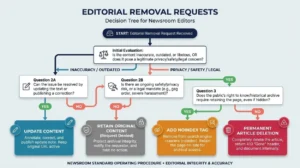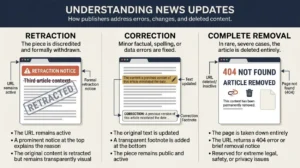
A spent conviction remains protected under the Rehabilitation of Offenders Act 1974, even when information about that conviction continues to appear online. The Act defines when certain criminal convictions cease to require disclosure, altering how those records are interpreted within legal, employment, and digital environments.
Reputation management is the process of understanding how information influences public perception across search ecosystems. Rehabilitation of Offenders Act Spent Convictions Online refers to the visibility and interpretation of spent conviction information in search results. Online reputation refers to the indexed content, reputation signals, and search results that shape perception within SERPs.
What Is a Spent Conviction Under the Rehabilitation of Offenders Act?
A spent conviction is a criminal conviction that has completed its rehabilitation period under the Rehabilitation of Offenders Act 1974. Once a conviction becomes spent, the law generally treats the individual as rehabilitated for most purposes, reducing disclosure obligations in specific contexts.
The Act defines rehabilitation periods according to the nature of the offence and the sentence imposed. After the applicable period expires, the conviction transitions from an active legal status to a spent status. This distinction changes how information is interpreted within legal and administrative systems. Search engines do not automatically remove content because a conviction becomes spent. Instead, the legal status of the conviction creates a contextual factor that influences how information is evaluated when assessing relevance, public interest, and accuracy.
Within reputation ecosystems, the concept of a spent conviction affects search perception because historical information continues to contribute to entity understanding. Search visibility therefore depends on both the legal classification of the conviction and the indexing status of content discussing it.
How Does the Rehabilitation of Offenders Act Influence Online Reputation?
The Rehabilitation of Offenders Act influences online reputation by redefining the significance of historical criminal information after rehabilitation periods expire. The legislation establishes a legal framework that distinguishes between current and historical criminal records.
Online reputation refers to how information is interpreted by users, platforms, and search systems. When content concerning a spent conviction remains accessible online, search engines continue to index and retrieve that content according to ranking algorithms. The Act does not alter indexing behaviour directly, but it changes the legal context surrounding the information.
Search perception develops through repeated exposure to visible content. If spent conviction information occupies prominent SERP positions, users often associate historical information with present identity. This process affects reputation signals because search visibility influences perception before users evaluate context or rehabilitation status.
The relationship between rehabilitation law and online reputation therefore centres on information relevance. Legal rehabilitation changes the status of the information, while search ecosystems continue evaluating content through authority, relevance, and indexing mechanisms.
Why Do Spent Convictions Continue to Appear in Search Results?
Spent convictions continue to appear in search results because search engines index and rank content based on accessibility, relevance, authority, and user query matching rather than rehabilitation status alone.
Content indexing refers to the process through which search engines discover, store, and retrieve web pages. If a news article, court report, archive entry, or publicly accessible document contains conviction information, that content can remain indexed indefinitely. The rehabilitation status of the conviction does not automatically trigger deindexing.
Search visibility depends on ranking factors rather than legal classifications. Algorithms evaluate page authority, content quality, linking patterns, topical relevance, and user engagement signals. Historical conviction content can therefore remain prominent if it continues satisfying ranking criteria.
This distinction explains why legal rehabilitation and online visibility operate through separate systems. One system governs legal treatment of information, while the other governs information retrieval and presentation. Understanding this separation is essential when analysing how spent convictions affect digital reputation.
How Do Search Engines Evaluate Historical Criminal Information?

Search engines evaluate historical criminal information by analysing relevance, authority, content quality, and user intent signals. These evaluation mechanisms determine whether content appears within search results and where it ranks.
SERP evaluation refers to the process through which algorithms assess competing content sources. Historical criminal information often originates from authoritative publishers such as news organisations, legal databases, or public record repositories. Authority signals can strengthen visibility because trusted sources frequently receive ranking advantages.
Algorithms analyse content context rather than legal rehabilitation outcomes. If a page remains accurate according to the information available at publication, indexing systems continue recognising that content as a valid source. The age of the information becomes only one ranking factor among numerous evaluation signals.
Entity perception emerges through the aggregation of indexed references across multiple sources. When conviction-related content appears repeatedly, search systems associate that information with an individual entity profile. This association influences reputation signals because visibility contributes to public interpretation.
The result is a search environment where historical content retains influence despite changes in legal status. Search engines therefore evaluate information according to relevance frameworks rather than rehabilitation frameworks.
What Role Does Content Indexing Play in Reputation Formation?
Content indexing plays a foundational role in reputation formation because indexed information becomes eligible for retrieval, ranking, and visibility within search ecosystems.
Digital reputation originates from discoverable content. Search engines first identify content through crawling processes before storing it within searchable indexes. Indexed content subsequently competes for ranking positions based on algorithmic evaluation criteria.
Information concerning spent convictions contributes to reputation formation when it remains indexed and accessible. Search visibility increases exposure, while repeated exposure strengthens entity associations. This process demonstrates how indexed content functions as a reputation signal within search ecosystems.
Content indexing also affects information longevity. A page can remain searchable long after publication if it continues satisfying technical and relevance requirements. Consequently, historical criminal information can influence online reputation for extended periods despite changes in legal status.
The relationship between indexing and reputation highlights the distinction between information existence and information prominence. Indexed information acquires reputational significance because search engines enable efficient retrieval and discovery.
How Do Authority and Trust Signals Affect Visibility of Conviction-Related Content?
Authority and trust signals affect visibility by helping search engines determine which sources deserve prominence within SERPs. These signals influence ranking decisions and contribute to content credibility assessments.
Authority refers to the perceived expertise, reliability, and recognition associated with a content source. News organisations, government publications, legal resources, and established archives often generate strong authority signals because search systems identify them as trusted information providers.
Trust signals include publication transparency, editorial standards, citation patterns, and domain credibility. Search engines analyse these factors when evaluating content quality. Conviction-related information published by authoritative sources therefore frequently maintains strong visibility.
Reputation systems interact with authority signals because users often interpret highly ranked content as credible information. Search visibility therefore amplifies the influence of authoritative sources on public perception. This mechanism explains why historical conviction content can remain influential despite rehabilitation status.
Authority and trust signals do not determine legal relevance. Instead, they determine information prominence within search ecosystems. Understanding this distinction clarifies how search engines prioritise information retrieval.
Dive Deeper With Our Expert Guides:
What the Law Says About Removing Criminal Record Content From Google in the UK
How Criminal Records End Up Online and What Types Are Eligible for Removal
How Does Search Visibility Influence Public Perception of Spent Convictions?
Search visibility influences public perception because users frequently rely on prominent search results when forming impressions about individuals and entities. Visibility therefore functions as a key component of reputation formation.
Online reputation refers to perceived credibility derived from accessible information. When conviction-related content appears prominently, users encounter that information before evaluating broader context. This sequence affects entity perception because initial exposure influences interpretation.
Search perception develops through information prominence rather than information volume alone. A single highly visible page can shape perception more significantly than multiple low-visibility pages. Ranking position therefore becomes a critical factor in understanding reputational impact.
Algorithms indirectly influence perception by determining which content receives exposure. Search systems do not create reputational meaning independently; they organise information according to relevance frameworks. Users then interpret that information and form conclusions based on what appears within search results.
The interaction between visibility and perception demonstrates how search ecosystems influence reputation outcomes through information accessibility.
What Evidence Supports Evaluation of Spent Conviction Information Online?
Evidence supports evaluation of spent conviction information online through legal documentation, publication context, indexing status, and relevance assessment factors. These elements help determine how information is interpreted within search ecosystems.
The legal status of a conviction provides foundational context. Rehabilitation periods, conviction classifications, and applicable legislation establish whether a conviction qualifies as spent. This information contributes to the assessment of relevance and public interest.
Publication evidence includes source authority, publication date, editorial standards, and contextual accuracy. Search systems evaluate these factors when determining ranking eligibility. Information quality therefore remains central to visibility assessments.
Indexing evidence demonstrates whether content remains discoverable within search ecosystems. Accessibility, crawlability, and retrieval patterns influence visibility outcomes. These technical factors contribute directly to reputation signals because discoverable information affects perception.
Analytical evaluation frequently examines documentation and contextual evidence associated with What Evidence Supports a Spent Conviction Removal Request Sent to Google. This topic connects legal classification, search visibility, and content evaluation within reputation ecosystems.
How Does Digital Footprint Analysis Relate to Spent Convictions?
Digital footprint analysis relates to spent convictions because it evaluates how historical information contributes to an entity’s searchable presence. A digital footprint consists of all discoverable references associated with an individual across indexed platforms.
Search engines aggregate information from multiple sources when building entity understanding. Conviction-related content becomes one component within a broader information ecosystem that includes professional profiles, publications, social content, and public records.
Digital footprint analysis identifies how information clusters influence perception. Repeated references strengthen associations, while diverse content sources create broader contextual understanding. This process affects reputation signals because search systems analyse relationships between entities and content.
The visibility of spent conviction information therefore forms part of a larger reputation framework. Digital footprint analysis explains how search ecosystems organise, interpret, and present information associated with individuals over time.
The Rehabilitation of Offenders Act 1974 establishes the legal framework through which convictions become spent after defined rehabilitation periods. This change affects the legal significance of criminal information but does not automatically alter search engine indexing or ranking behaviour.
Online reputation develops through content indexing, authority signals, search visibility, and entity perception. Search engines evaluate information according to relevance and credibility frameworks, while users interpret visible content when forming opinions. Understanding the relationship between rehabilitation law, content accessibility, and search ecosystems provides a clearer view of how spent convictions continue to influence digital reputation and perception online.
What is a spent conviction under the Rehabilitation of Offenders Act?
A spent conviction is a criminal conviction that has completed its rehabilitation period under the Rehabilitation of Offenders Act 1974. Once spent, the conviction generally no longer requires disclosure in most situations, although information about it may still appear online.
Can spent convictions still appear in Google search results?
Yes, spent convictions can continue to appear in Google search results if webpages containing the information remain indexed. Search engines rank content based on relevance, authority, and accessibility rather than rehabilitation status alone.
Does the Rehabilitation of Offenders Act require Google to remove spent convictions?
The Rehabilitation of Offenders Act does not automatically require Google to remove spent conviction content. Removal requests are typically assessed based on legal rights, privacy considerations, public interest, and the relevance of the information.
How do spent convictions affect online reputation?
Spent convictions can influence online reputation when related content appears prominently in search engine results pages. Search visibility affects perception because users often form opinions based on accessible and highly ranked information.
What evidence is used when assessing a spent conviction removal request?
Evidence often includes documentation confirming the conviction is spent, proof of rehabilitation status, and information showing why the content is no longer relevant. Search engines and publishers may also evaluate public interest, accuracy, and the age of the content when reviewing requests.