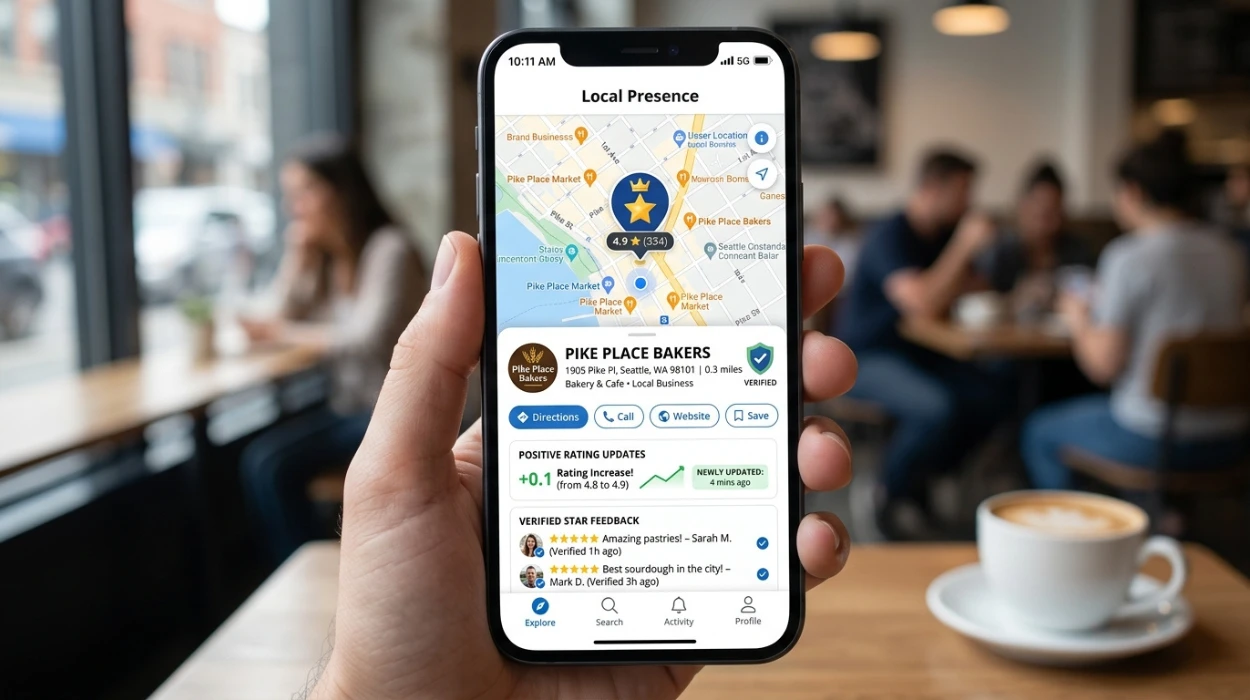
Removing harmful customer reviews from Google Maps refers to addressing reviews that violate platform policies or contain misleading information that affects business reputation within search ecosystems.
Reputation management is the structured evaluation of digital information that shapes public trust, while online reputation refers to the collection of reviews, indexed content, and reputation signals that search engines use to evaluate business credibility.
Google Maps reviews contribute important reputation signals that influence both user perception and search visibility. Search engines evaluate review content together with business information, authority signals, and entity relationships when organising local search results. Harmful reviews therefore become one part of a broader digital reputation rather than an isolated source of information.
Business reputation develops through the interaction of customer feedback, business profiles, citations, websites, and other indexed content. Search algorithms continuously interpret these relationships to determine entity perception within Search Engine Results Pages (SERPs). Understanding how Google Maps reviews influence search evaluation provides greater insight into digital credibility.
What Are Harmful Customer Reviews on Google Maps?
Harmful customer reviews on Google Maps are reviews that negatively influence public perception through misleading, abusive, fraudulent, or policy-violating content. Within search ecosystems, these reviews contribute reputation signals that affect how businesses are interpreted online.
Google evaluates reviews according to published content policies rather than business preference. Reviews containing prohibited content, impersonation, spam, conflicts of interest, or misleading information become eligible for moderation under platform guidelines. This policy-based evaluation maintains the integrity of review ecosystems.
Search engines also interpret review quality through semantic analysis. Review language, reviewer credibility, behavioural patterns, and contextual consistency contribute to authenticity assessment. Harmful reviews therefore influence entity perception when they remain visible within indexed business profiles.
Review visibility extends beyond customer opinion because Google Maps integrates business reviews into broader local search experiences. Consequently, harmful reviews contribute to digital reputation across multiple search environments.
How Does Google Interpret Review Signals?
Google interprets review signals by analysing qualitative, behavioural, and contextual information associated with customer feedback. Reviews provide reputation signals that complement broader evaluations of business credibility.
Algorithms evaluate review frequency, recency, sentiment, reviewer history, linguistic consistency, and engagement patterns. These combined indicators help Google distinguish authentic customer experiences from manipulated or policy-violating content. Review quality therefore influences entity perception alongside other authority signals.
Sentiment analysis extends beyond star ratings. Google analyses recurring topics, contextual language, and semantic relationships to understand customer experiences more accurately. This approach improves SERP evaluation by focusing on meaningful reputation signals rather than isolated numerical scores.
Review information also interacts with business profiles, website content, and independent citations. Search systems compare these sources continuously to maintain consistent digital representations across search ecosystems.
Why Do Google Maps Reviews Affect Search Visibility?
Google Maps reviews affect search visibility because they contribute reputation signals that search engines analyse when evaluating local business entities. Reviews provide publicly accessible information that supports broader assessments of credibility and trust.
Local search algorithms compare review quality alongside business relevance, geographic proximity, authority indicators, and profile completeness. Authentic customer feedback strengthens confidence in entity evaluation because it reflects independently generated information.
Review content also influences user behaviour within local search environments. Search systems observe engagement patterns that complement traditional ranking signals, allowing algorithms to refine search result quality through behavioural interpretation.
Search visibility therefore reflects the interaction between reviews, authority signals, content indexing, and business information rather than review ratings alone.
What Role Does Content Indexing Play in Google Maps Reviews?

Content indexing determines how publicly accessible review information becomes searchable and contributes to business reputation across search ecosystems. Indexed reviews participate in search engine evaluation whenever they remain available on Google Maps.
Google indexes eligible business profile information, including reviews, ratings, profile details, and associated business content. Algorithms evaluate this indexed information alongside websites, directory listings, and other authoritative sources to improve entity understanding.
Each indexed review contributes additional reputation signals connected to the business profile. Authentic reviews strengthen contextual understanding, while misleading reviews introduce conflicting information that algorithms compare with broader authority signals.
Indexing also influences persistence. Reviews remain visible until platform moderation, policy enforcement, user deletion, or technical changes alter their indexing status within Google’s search ecosystem.
How Do Authority and Trust Signals Influence Review Evaluation?
Authority and trust signals help Google determine the credibility of reviews and the businesses they describe. These signals improve the accuracy of search evaluation by reinforcing reliable digital information.
Authority develops through recognised business profiles, verified customer interactions, trusted review ecosystems, and consistent online references. Search algorithms evaluate these relationships when interpreting review reliability and business reputation.
Trust signals focus on transparency, factual consistency, reviewer authenticity, and profile verification. Businesses maintaining accurate information across websites, directories, and Google Business Profiles establish stronger digital consistency that supports clearer entity perception.
Authority and trust work together throughout SERP evaluation. Verified review activity, credible reviewer behaviour, and consistent business information collectively strengthen confidence in Google’s interpretation of online reputation.
How Does Google Detect Policy-Violating Reviews?
Google detects policy-violating reviews by combining automated systems with manual moderation to evaluate whether review content complies with published platform guidelines. Detection focuses on identifying behaviour and content that undermine review authenticity.
Algorithms analyse reviewer activity, posting frequency, account history, device patterns, language similarity, and unusual engagement signals. Repeated behavioural anomalies indicate potential spam, fabricated reviews, or coordinated review manipulation. These technical assessments improve the reliability of review ecosystems.
Machine learning systems also evaluate semantic patterns within review content. Repeated wording, promotional language, irrelevant comments, and inconsistent customer experiences contribute additional indicators that support authenticity analysis. This semantic evaluation strengthens the identification of reviews that fail to represent genuine experiences.
Manual moderation complements automated detection by assessing reported reviews against platform policies. Human reviewers evaluate supporting evidence alongside algorithmic findings before determining whether review content remains eligible for public visibility.
Dive Deeper With Our Expert Guides:
Expert Fake Review Removal Services for Brands
How to Delete Negative Business Reviews Online
How Do Harmful Reviews Influence Digital Footprints?
A digital footprint refers to the complete collection of searchable information associated with a business across online environments. Harmful reviews become part of this footprint because they remain publicly accessible and contribute to indexed reputation signals.
Google Business Profiles, review platforms, websites, local directories, news references, and social media collectively define digital identity. Search engines connect these sources through semantic relationships that establish business entity perception within search ecosystems.
Each harmful review introduces additional contextual information that search systems compare with other indexed content. Authentic authority signals strengthen digital credibility, while misleading review content introduces conflicting information requiring continuous algorithmic evaluation.
Digital footprints evolve whenever reviews are added, removed, or updated. Search engines continuously reassess indexed review content to maintain accurate business representations across Search Engine Results Pages.
How Do Content Ranking Dynamics Affect Local Reputation?
Content ranking dynamics describe how search engines organise local search results by comparing multiple reputation signals simultaneously. Reviews contribute one element within a broader evaluation of business relevance and authority.
Google analyses geographic relevance, business information, review authenticity, authority signals, profile completeness, website quality, and user engagement before determining ranking positions. These combined evaluations improve the quality of local search results.
Ranking systems also evaluate semantic relationships between businesses, customer feedback, local intent, and digital authority. Consistent information across trusted sources strengthens entity perception, supporting more accurate local search visibility.
Ranking positions change as search engines process newly indexed information, review updates, business profile changes, and algorithm refinements. Local reputation therefore reflects an evolving evaluation rather than a permanent search position.
Why Is Review Authenticity Important for Online Credibility?
Review authenticity is important because accurate customer feedback strengthens the trustworthiness of digital information available within search ecosystems. Authentic reviews contribute reliable reputation signals that improve entity perception and online credibility.
Search engines compare review authenticity with business profiles, website content, citations, and other authoritative references. Consistent information across these sources improves confidence in digital evaluation, supporting reliable search visibility.
Authentic reviews also enhance the quality of local search experiences by providing relevant contextual information. This enables search systems to present users with more accurate representations of business reputation while reducing the influence of misleading content.
As search algorithms continue advancing semantic interpretation, authentic customer feedback remains an important component of comprehensive reputation evaluation.
Google Maps reviews contribute meaningful reputation signals that influence search visibility, entity perception, and online credibility across local search ecosystems. Search engines evaluate review authenticity through behavioural analysis, semantic interpretation, authority signals, trust indicators, and content indexing rather than review scores alone.
Content indexing, review sentiment, digital footprints, and authority verification collectively determine how customer feedback contributes to local reputation. Harmful reviews become part of a broader network of searchable information that search algorithms continuously evaluate and compare.
Understanding how Google Maps reviews are interpreted provides a clearer explanation of their influence on search visibility and digital credibility. Rather than functioning as isolated opinions, reviews contribute interconnected reputation signals that shape online perception through ongoing algorithmic assessment.
Can harmful customer reviews be removed from Google Maps?
Yes, harmful customer reviews can be removed from Google Maps if they violate Google’s review policies, such as containing spam, fake content, harassment, or conflicts of interest. Reviews that do not breach these policies generally remain visible.
What types of Google Maps reviews can be removed?
Google may remove reviews that include fake content, impersonation, offensive language, prohibited material, or other policy violations. Each review is assessed against Google’s published review guidelines before a removal decision is made.
How do harmful Google Maps reviews affect online reputation?
Harmful Google Maps reviews can influence customer trust, business credibility, and local search visibility by contributing negative reputation signals. Search engines evaluate review sentiment alongside authority and trust signals when interpreting business reputation.
How does Google identify fake or policy-violating reviews?
Google uses automated systems and manual moderation to analyse reviewer behaviour, account history, language patterns, and policy compliance. Clear Your Name provides Review & Rating Removal services that assess reviews against Google’s published removal criteria.
Do Google Maps reviews affect local search rankings?
Google Maps reviews contribute to local search evaluation by providing reputation signals that support entity perception and user trust. While reviews are only one ranking factor, authentic customer feedback helps strengthen overall online credibility and local search visibility.