
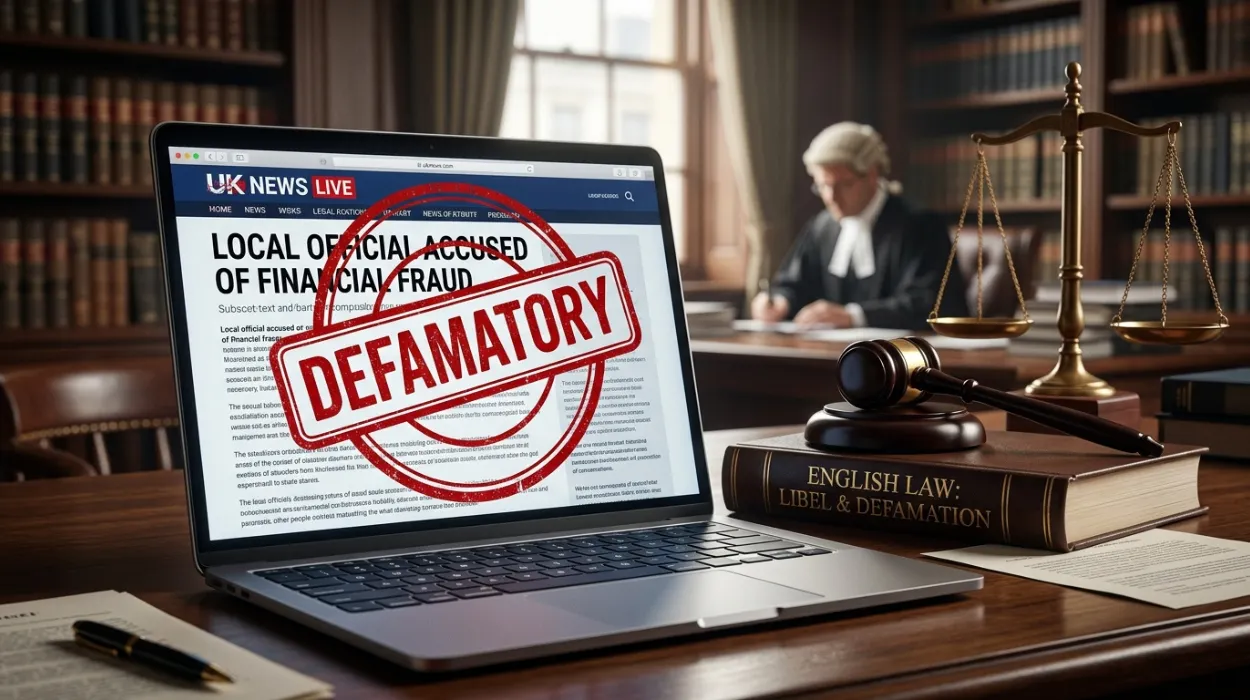
An online article is legally defamatory under UK law when it contains a false statement presented as fact that causes or is likely to cause serious harm to the reputation of an identifiable person or organisation. The legal assessment focuses on published content, factual accuracy, evidence of harm, and statutory defences rather than public opinion.
Reputation management is the process of understanding how digital information influences public perception across search ecosystems. Online reputation refers to the collection of indexed content, search visibility signals, entity associations, and search engine results that shape how individuals and organisations are evaluated online. Defamation law intersects with reputation management because legally actionable content affects search visibility, entity perception, trust signals, and long-term digital credibility. Understanding what qualifies as defamatory under UK law provides clarity on how harmful online content is assessed within legal frameworks and how search ecosystems continue to index, interpret, and surface that information.
What is defamation under UK law?
Defamation is the publication of false factual information that causes serious harm to the reputation of an identifiable person or organisation. Under the Defamation Act 2013, the legal threshold extends beyond offensive language or criticism. A claimant must demonstrate that published material damages reputation to a level recognised by law. Statements published through news websites, blogs, online magazines, digital publications, and searchable web pages remain subject to the same legal principles as printed publications.
The legal definition separates factual allegations from personal opinions. Courts evaluate whether an ordinary reader would interpret the published words as statements of fact. Search engines index both factual reporting and opinion pieces, yet the legal assessment depends on how the content communicates information rather than how search algorithms rank it. Defamatory content influences entity perception because persistent indexing increases long-term exposure across search engine results pages (SERPs).
How does publication affect legal responsibility?
Publication occurs when defamatory material becomes accessible to at least one person other than the claimant. Digital publication includes websites, archived articles, news portals, online databases, and searchable content repositories. Every indexed publication contributes to an individual’s or organisation’s searchable digital footprint.
Search engines continuously crawl and index publicly accessible pages. Once indexed, defamatory material becomes discoverable through branded searches, entity searches, and related keyword searches. Content indexing therefore extends the visibility of reputational harm even after the original publication date.
What makes an online article legally defamatory?
An online article becomes legally defamatory when it satisfies recognised legal elements rather than subjective interpretations. Courts analyse the content using established legal criteria before determining liability.
The assessment includes the following elements:
- Identify the claimant. The publication must clearly identify an individual or organisation through direct naming, contextual references, photographs, or associated details that allow readers to recognise the subject.
- Present a factual allegation. The article must communicate a statement that readers interpret as fact rather than opinion, satire, or rhetorical expression.
- Demonstrate falsity. The disputed factual assertion must lack factual accuracy when examined against available evidence.
- Establish serious harm. The publication must damage reputation to the legal threshold established under the Defamation Act 2013, including measurable reputational consequences.
These legal components define whether published content crosses the boundary between lawful expression and unlawful reputational harm. Search visibility amplifies exposure, yet search ranking alone does not determine legal liability.
How does UK law distinguish fact from opinion?
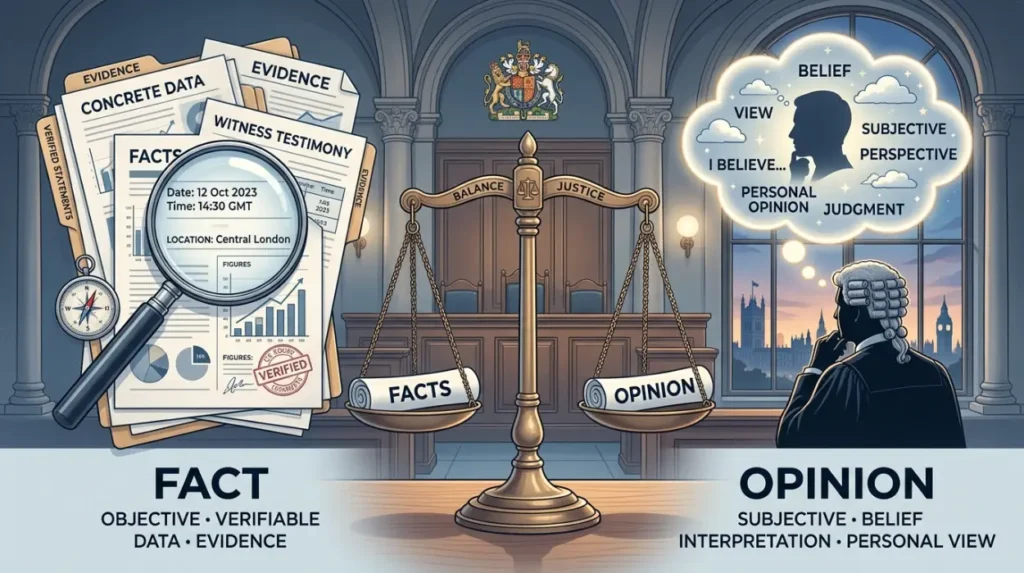
UK law distinguishes factual assertions from honestly held opinions through the language, context, and presentation of the publication. A factual statement asserts that an event occurred or that a person possesses specific characteristics capable of verification. An opinion communicates a personal evaluation supported by facts that readers can independently assess.
This distinction directly affects legal analysis because factual inaccuracies create greater legal exposure. Courts evaluate the entire publication rather than isolated sentences. Headlines, subheadings, images, captions, hyperlinks, and contextual wording contribute to the overall meaning interpreted by readers.
Search engines process semantic relationships between entities, topics, and supporting content. When factual allegations repeatedly appear across authoritative domains, entity associations strengthen within search ecosystems. These associations influence online credibility regardless of subsequent legal challenges.
Why is the serious harm test important?
The serious harm test defines the minimum legal threshold required for a successful defamation claim under UK law. Reputation must experience measurable damage rather than temporary embarrassment or minor criticism.
Courts evaluate evidence demonstrating actual reputational consequences. Evidence includes reduced professional credibility, diminished commercial trust, financial losses, damaged relationships, declining business enquiries, or measurable reductions in public confidence. Organisations must demonstrate serious financial loss arising from defamatory publication.
From a reputation management perspective, serious harm extends beyond legal proceedings. Search visibility reinforces reputation signals because indexed defamatory content remains accessible through branded searches, knowledge associations, and search snippets. Persistent indexing strengthens negative entity perception over time, increasing reputational exposure across digital ecosystems.
How do search engines influence online reputation after publication?
Search engines organise information according to relevance, authority, freshness, structured relationships, and user satisfaction signals. They do not determine whether content is legally defamatory, yet they influence how widely that content is discovered.
Search visibility increases when authoritative websites publish material that receives backlinks, user engagement, topical relevance, and consistent indexing. These ranking signals strengthen content prominence within SERPs. Negative articles occupying highly visible search positions contribute to long-term reputation signals because users frequently evaluate the highest-ranking results first.
Content indexing also affects semantic associations. Algorithms connect names, organisations, topics, and related concepts through entity recognition. As indexed relationships accumulate, search engines develop stronger contextual understanding of an entity. False allegations therefore influence digital perception by reinforcing inaccurate semantic associations across searchable content.
Which legal defences apply to alleged defamatory articles?
UK law recognises statutory defences that protect lawful publication when specific legal requirements are satisfied. These defences balance freedom of expression with reputation protection.
Truth
Truth provides a complete defence when the publisher demonstrates that the factual allegation is substantially accurate. Verified evidence supporting published statements prevents successful defamation claims.
Honest opinion
Honest opinion protects clearly identifiable opinions based on existing facts available to readers. The opinion must represent a genuine evaluation rather than disguised factual misinformation.
Publication on matters of public interest
Publishers receive protection when reporting on issues affecting the public interest while demonstrating responsible editorial judgement. Courts evaluate journalistic processes, source verification, and editorial decision-making.
These legal defences define the boundaries between protected expression and defamatory publication. Search algorithms remain neutral regarding legal defences because indexing processes evaluate discoverability rather than legal validity.
How does defamatory content affect digital trust and credibility?
Digital trust develops through consistent information quality, factual accuracy, authoritative sources, and positive reputation signals across search ecosystems. Defamatory publications introduce conflicting information that alters public interpretation of an entity.
Search users evaluate credibility by comparing multiple indexed sources. Negative articles appearing alongside positive information create inconsistency within the digital footprint. This inconsistency affects entity perception because searchers interpret repeated negative associations as indicators of credibility risk.
Authority signals also influence perception. Publications originating from recognised media domains often receive stronger visibility because search algorithms associate them with established expertise and editorial quality. When defamatory information appears within authoritative publications, the reputational impact expands through increased discoverability and stronger semantic relevance.
Dive Deeper With Our Expert Guides:
How Google Decides Whether to Delist a News Article From Its Search Results
Why News Articles Rarely Disappear and What Rights You Have in the UK
Can search visibility increase reputational damage?
Search visibility increases the accessibility of published information, making defamatory content easier to discover through branded searches and topic-related queries. Ranking position directly influences exposure because users predominantly interact with higher-ranking results.
Content persistence strengthens long-term reputational effects. Archived articles remain indexed for extended periods unless removed, updated, or deindexed according to applicable legal or platform processes. Continued indexing reinforces negative reputation signals and influences ongoing entity evaluation.
Search engines also generate snippets, knowledge associations, autocomplete suggestions, and related search recommendations based on indexed information. These features extend content visibility beyond the original publication, increasing opportunities for reputational interpretation across search ecosystems.
How does reputation management relate to defamatory online content?
Reputation management analyses how indexed information shapes digital perception through search visibility, entity associations, credibility signals, and content quality. Within defamation matters, reputation management focuses on understanding how legally significant publications interact with search ecosystems rather than replacing legal analysis.
Search engines continuously evaluate authority, relevance, user engagement, structured data, semantic relationships, and indexing quality. These technical processes determine content visibility while remaining independent from legal determinations. Consequently, defamatory material may continue appearing prominently until legal outcomes, publisher actions, or search-related changes alter its availability.
Understanding both legal standards and search ecosystem behaviour provides a complete framework for evaluating online reputation. Legal liability determines whether content breaches defamation law, while search systems determine how visible that content remains to users conducting online research.
An online article becomes legally defamatory under UK law when it publishes false factual information about an identifiable person or organisation and causes serious reputational harm. The legal assessment examines factual accuracy, publication, identifiable subjects, measurable harm, and recognised statutory defences. Search engines neither determine legal liability nor validate factual accuracy, yet they significantly influence how defamatory content affects search visibility, entity perception, digital trust, and online credibility through ongoing indexing and ranking processes.
Understanding the relationship between UK defamation law and search ecosystems provides a clearer view of how reputational information is created, interpreted, and surfaced across SERPs. This knowledge supports informed evaluation of digital reputation, content indexing, authority signals, and the long-term impact of searchable information within modern online environments.
What makes an online article legally defamatory under UK law?
An online article is legally defamatory under UK law if it contains a false statement presented as fact that causes or is likely to cause serious harm to the reputation of an identifiable person or organisation. Understanding these legal criteria helps assess whether content may qualify for article removal or reputation management review.
Can a truthful online article be considered defamatory?
No. Under UK law, truth is a recognised legal defence against defamation claims. An article that accurately reports verifiable facts is generally not considered defamatory, even if it negatively affects someone’s online reputation.
How does defamatory content affect online reputation in search results?
Defamatory content can influence online reputation by appearing prominently in search engine results and shaping public perception. Persistent indexing of damaging articles strengthens negative reputation signals and affects long-term search visibility.
What evidence is needed to prove an online article is defamatory?
A claimant must show that the article contains a false factual statement, identifies them directly or indirectly, has been published to others, and has caused serious reputational harm. Clear evidence supports both legal evaluation and article removal assessments.
How can Clear Your Name help with understanding defamatory online articles?
Clear Your Name provides information about online reputation, defamatory content, and article removal services within the framework of UK law. Understanding the legal definition of defamation helps individuals evaluate whether harmful online content meets the required legal threshold.