
Removing broken links from Google involves identifying inaccessible URLs, evaluating indexing status, processing removal mechanisms, and waiting for search engine recrawling cycles. The timeframe depends on crawl frequency, indexing behaviour, link authority, and the chosen reputation management approach.
Reputation management strategies differ based on technical visibility issues, search ecosystem dynamics, and reputation signal evaluation. Online reputation control methods are evaluated through search ranking influence, entity credibility, sentiment distribution, and long-term SERP composition.
Which Approach Removes Broken Links From Google More Effectively?
Direct removal methods reduce indexed visibility more effectively, while content enhancement approaches improve perception without eliminating the broken URL itself.
Broken link removal is the process of reducing or eliminating inaccessible URLs from search engine results. The approach operates by requesting de-indexing, correcting technical errors, or removing references to unavailable content. Search engines evaluate these signals through crawling and indexing systems before adjusting SERP composition. This method focuses on visibility reduction rather than reputation enhancement.
Content enhancement is a separate reputation management strategy. It operates by strengthening authoritative content that competes with or replaces visibility associated with broken URLs. Search ranking influence becomes the primary mechanism because search engines prioritise useful and accessible resources. The comparison demonstrates that removal directly addresses the technical issue, while enhancement addresses broader perception concerns.
Effectiveness depends on the objective being measured. Direct removal delivers stronger visibility reduction, whereas content enhancement provides wider influence over reputation signals and sentiment distribution. Both approaches contribute differently to online reputation control.
How Does Google Process Broken Link Removal Requests Compared With Natural Recrawling?
Removal requests accelerate visibility review, while natural recrawling relies on search engine discovery cycles.
Google processes removal requests through dedicated evaluation systems that assess URL accessibility and indexing status. This approach creates a direct pathway for review because the search engine receives a specific signal regarding the affected content. The mechanism focuses on reassessing visibility based on current accessibility conditions.
Natural recrawling operates differently. Search engine bots revisit URLs according to crawl schedules influenced by authority, popularity, and update frequency. During these visits, inaccessible content is identified and re-evaluated. The process is automated but less predictable because crawling priorities vary across websites and pages.
The comparison highlights a difference in speed and control. Removal requests introduce active intervention, while recrawling depends on existing indexing processes. Search visibility changes occur faster when direct review mechanisms are triggered, although final outcomes still depend on search engine evaluation criteria.
Which Factors Influence Processing Time?
Processing time is determined by indexing behaviour, crawl frequency, and URL authority.
The primary factors include:
- Assess crawl frequency because highly active websites receive more frequent search engine visits.
- Evaluate indexing status because indexed URLs require additional review before removal.
- Measure link authority because influential pages often remain under closer evaluation.
- Monitor technical responses because server errors and redirects influence reassessment speed.
- Review search demand because frequently searched content receives greater visibility attention.
These mechanisms explain why identical removal actions produce different timelines across search environments.
How Does Broken Link Removal Compare With Redirect Strategies?
Broken link removal eliminates search visibility, while redirects preserve authority and user navigation pathways.
Broken link removal is a visibility reduction strategy. It operates by removing inaccessible URLs from search indexes after evaluation. The mechanism focuses on eliminating references that contribute negative reputation signals or poor user experience indicators. Search visibility associated with the URL gradually declines as indexing updates occur.
Redirect strategies function differently. A redirect transfers users and search engine crawlers from an inaccessible URL to an active destination. This process preserves search ranking influence by maintaining content relationships within the search ecosystem. Redirects therefore support continuity rather than elimination.
Comparative analysis shows that removal reduces SERP presence, whereas redirects preserve authority signals. Removal offers stronger visibility control when outdated content no longer serves a purpose. Redirects provide greater sustainability when replacement content exists and entity credibility benefits from maintaining informational continuity.
Which Reputation Signals Are Affected During Broken Link Removal?
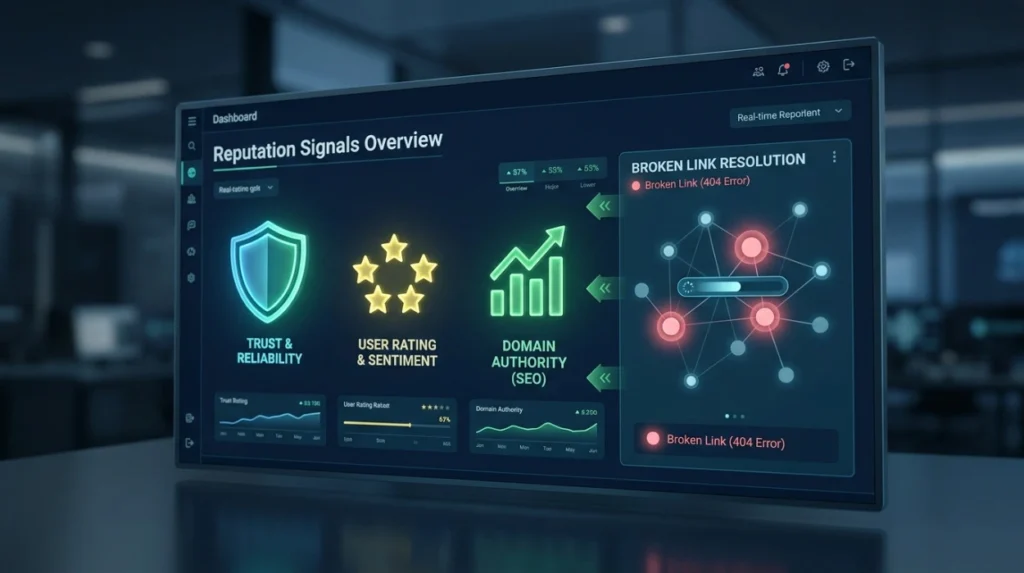
Search visibility, entity credibility, and technical trust indicators are the primary reputation signals affected.
Reputation signals are measurable indicators used by search engines to evaluate quality, authority, and reliability. Broken links influence these signals because inaccessible content affects user experience and technical consistency. During removal processes, search engines reassess how these URLs contribute to broader site evaluation frameworks.
Entity credibility is one of the most significant signals involved. Search engines interpret technical maintenance as evidence of information reliability. Removing or resolving broken links strengthens consistency across indexed resources. This creates a more stable environment for trust signal evaluation.
Sentiment distribution is also affected indirectly. When broken URLs dominate search results, user perception can become associated with poor maintenance or outdated information. Visibility adjustments improve the balance of accessible and relevant content within SERP composition. This demonstrates how technical changes influence broader reputation outcomes.
How Do Search Engines Re-Evaluate Trust Signals?
Search engines re-evaluate trust signals through content accessibility, indexing quality, and technical consistency.
Key evaluation mechanisms include:
- Analyse accessibility by checking whether users can reach intended destinations.
- Measure consistency through the relationship between indexed and available content.
- Evaluate authority using content quality and maintenance indicators.
- Review engagement signals following changes in URL accessibility.
- Compare technical accuracy against broader site performance standards.
These factors contribute to reputation signal adjustments after broken link removal activities.
How Does Reactive Broken Link Removal Compare With Preventative Link Management?
Reactive removal addresses existing issues, while preventative management reduces future visibility risks.
Reactive removal is a corrective strategy. It operates after broken URLs become visible within search results or negatively affect reputation signals. The process focuses on identifying issues and implementing solutions that reduce existing search visibility problems. This approach is effective for resolving known challenges but does not address future risks automatically.
Preventative link management is a proactive reputation management method. It operates through continuous monitoring, technical maintenance, and structural optimisation. Search engines interpret consistent accessibility as a positive quality indicator, reducing the likelihood of future indexing issues. This strengthens entity credibility over time.
The comparison highlights differences in sustainability and risk exposure. Reactive methods resolve current concerns efficiently, while preventative strategies improve long-term technical reliability. Together, they represent distinct approaches within reputation management frameworks.
Dive Deeper With Our Expert Guides:
How a Dead Link Removal Service Cleans Up Broken Links That Still Rank
Which Method Creates More Sustainable Reputation Outcomes?
Preventative link management creates more sustainable outcomes because it strengthens technical reliability before visibility issues emerge.
Sustainability is the ability of a reputation management approach to maintain effectiveness over time. Preventative methods improve technical consistency, reduce crawl inefficiencies, and support stable indexing performance. Search engines reward these conditions through improved confidence in content accessibility and authority evaluation.
Reactive removal remains valuable because it addresses visibility issues that already exist. However, sustainability depends on recurring intervention whenever new problems arise. Preventative management reduces the frequency of these interventions by addressing structural weaknesses earlier in the process.
The comparison demonstrates that sustainable reputation outcomes rely on maintaining technical quality rather than repeatedly correcting visibility problems. Search ranking influence becomes more stable when technical trust indicators remain consistently positive.
How Does Broken Link Removal Influence SERP Composition?
Broken link removal changes SERP composition by reducing inaccessible results and increasing the visibility of accessible resources.
SERP composition refers to the arrangement of results that appear in response to search queries. Search engines prioritise content that satisfies user intent while maintaining technical reliability. When broken URLs are removed or de-indexed, available content receives greater opportunity to occupy visible positions.
This process influences reputation signals because search users encounter more relevant and accessible information. Entity credibility benefits from reduced association with technical issues. Search ranking influence is redistributed among remaining resources according to relevance and authority criteria.
In broader reputation management analysis, evaluating Fix Broken Links Hurting Your Reputation With Our UK Link Cleanup Service highlights how technical visibility issues connect with search perception control and digital trust evaluation. The relationship demonstrates how broken link management contributes to reputation-focused decision-making frameworks.
Removing broken links from Google involves technical evaluation, indexing review, and search engine reassessment processes. Processing times vary according to crawl frequency, authority signals, indexing status, and the chosen reputation management approach.
Comparisons between removal requests, natural recrawling, redirects, reactive strategies, and preventative management reveal distinct strengths and limitations. Removal strategies focus on visibility reduction, while maintenance and enhancement approaches influence broader reputation signals and entity credibility. Understanding these differences provides a clearer framework for evaluating broken link management within search ecosystems and long-term online reputation control.
What does removing broken links from Google involve?
Removing broken links from Google involves identifying inaccessible URLs, reviewing their indexing status, and allowing search engines to update search results through recrawling or removal processes. This helps improve search visibility and technical trust signals.
How long does it take for Google to remove broken links?
The timeframe depends on crawl frequency, indexing behaviour, and the authority of the affected URL. Some broken links disappear from search results within days, while others remain visible until Google completes its re-evaluation process.
Do broken links affect online reputation and SEO?
Broken links can affect online reputation by creating negative reputation signals related to website maintenance and content accessibility. They can also influence search visibility, user experience, and overall entity credibility.
What is the difference between broken link removal and URL redirects?
Broken link removal focuses on eliminating inaccessible URLs from search visibility, while redirects send users and search engines to an active page. Redirects help preserve authority signals, whereas removal reduces the presence of obsolete content.
How do Dead Links Removal Services help manage broken URLs?
Dead Links Removal Services assess inaccessible URLs, monitor indexing status, and identify methods for resolving visibility issues. This process supports stronger search visibility, improved technical quality signals, and better reputation management outcomes.