
Deleted web images can remain visible in Google Image Search because removing an image from its original website does not automatically remove every indexed reference to it. Google’s image index, cached search information and copies hosted on other websites follow separate update processes.
Reputation management is the analysis of how information about a person, organisation or brand is discovered, interpreted and presented across digital environments. Online reputation refers to the perception formed from this information, including images, reviews, articles and other reputation signals displayed in search results.
Why Do Deleted Images Still Appear in Google Image Search?
Deleted images remain in Google Image Search when Google’s index still contains information about an image that is no longer available at its original source. Search engines discover images through website crawling, analyse associated page information and store index records that support retrieval. When a website removes an image, the change does not instantly update every search index or result. Google’s systems need to revisit the relevant source and process the updated information before the result changes. This creates a period in which an image thumbnail or result entry remains visible even though the original file has been deleted.
The distinction between a source file and an indexed search result explains why deletion does not always produce immediate search disappearance. A source file is the image resource hosted by a website, whereas an indexed result is a record that allows a search engine to retrieve and display information about that resource. The result can temporarily persist when the underlying source has changed but the index has not yet reflected that change. A result entry can also remain when the image exists at another URL or on a different website. Consequently, image visibility depends on the status of both the source and the search engine’s records.
This distinction also affects reputation signals. An image associated with a person’s name, a company’s identity or a particular event can influence entity perception while it remains discoverable through search. The image’s continued presence does not necessarily prove that the original website still hosts it. Accurate interpretation requires examining the result URL, the source page and the availability of the image file. These elements provide different evidence about why the result continues to appear.
How Does Google Image Indexing Work After a Website Deletes an Image?
Google Image indexing is the process through which Google discovers, analyses and organises image information so that relevant images can appear in search results. The process begins when Google’s crawlers access eligible pages and identify image resources and associated contextual information. The system can analyse page text, image attributes, surrounding content and other signals to understand what an image represents. Google then determines whether and how the image qualifies for inclusion in its searchable index. These operations occur separately from the action a website owner takes when deleting a file.
When a website removes an image, Google’s systems do not necessarily receive an immediate notification that every associated result requires removal. The next crawl, processing stage and index update determine when the change is reflected in search. If the page remains accessible but the image file returns an unavailable response, the image result can become outdated until Google processes the change. If the page itself remains indexed, its text or other information can continue appearing independently of the deleted image. This is why page removal, image removal and search-result updates need to be understood as separate processes.
Image indexing also relies on contextual signals that connect a visual resource to a subject. These signals include the page title, nearby text, alternative text and the relevance of the surrounding page. When an image is removed, some contextual information can remain available through other indexed elements or copies of the original page. Search systems use their own retrieval and ranking processes to determine which results are relevant to a query. Therefore, the persistence of an image result reflects an indexing state, not necessarily the continued existence of the original image file.
What Is the Difference Between a Deleted Image, a Cached Result and an Indexed Thumbnail?
A deleted image, a cached result and an indexed thumbnail refer to different states within the online information ecosystem. A deleted image is a file that has been removed from its original location or is no longer accessible there. An indexed result is information retained in a search engine’s index, while a thumbnail is a reduced visual representation displayed in search results. These elements are related, but they are not interchangeable. Understanding the distinction helps explain why a search result can remain visible after the source image has disappeared.
An indexed result contains information that enables a search engine to retrieve a relevant page or image for a query. A thumbnail provides a visual preview of the image, but its display does not establish that the original file remains available at the source URL. Depending on the system and result state, the thumbnail can persist temporarily while indexing updates take place. In other cases, the result points to an alternative source that still hosts the image. Examining the destination URL helps distinguish an outdated result from a live copy.
The term cache also requires careful interpretation. Search systems maintain index data and other technical records, but the presence of an old image result does not automatically mean that a publicly accessible, complete cached copy of the original page or image exists. Google’s search features and technical processes change over time, so the exact availability of stored representations depends on the relevant product and system behaviour. A stale result can arise from delayed indexing without a retrievable cached file being available to users. This distinction prevents incorrect assumptions about where the image is stored and how it can be updated.
Why Does Google Continue Showing an Image When the Original URL No Longer Works?
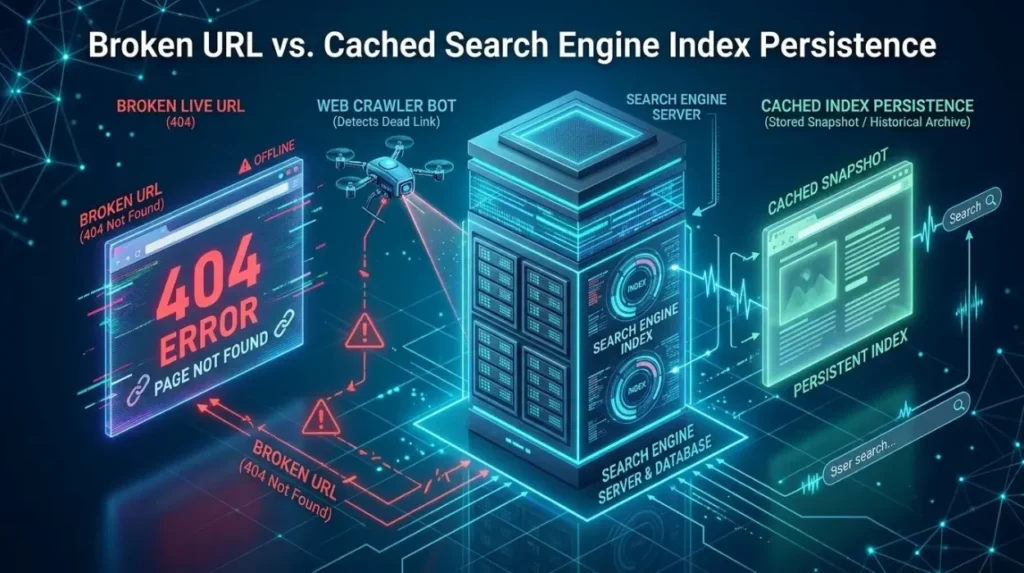
Google can continue showing an image after its original URL stops working because search results and source availability are not synchronised in real time. The image URL may return an error, the hosting page may have changed, or the website may have removed access to the resource. Google’s index can retain the previous association until its systems revisit and process the relevant information. During this interval, the result may show an outdated thumbnail, title or source description. The result therefore reflects information available during an earlier indexing state rather than a guaranteed live view of the website.
An unavailable source can produce different outcomes depending on what has changed. If only the image file is removed, the page containing the image may remain accessible and indexed. If the page is removed but the image remains available at a separate URL, the image can continue to appear through that alternative location. If another website has copied the file, the copy has its own source URL and indexing status. Each situation requires separate analysis because removing one resource does not automatically remove every associated reference.
Search visibility also depends on whether the result remains relevant to the query and how Google’s systems evaluate the available information. A stale thumbnail can temporarily remain visible even when a user receives an error after opening it. Conversely, an image that remains available on another website can continue to be indexed despite the original publisher’s deletion. These outcomes illustrate the difference between source-level control and search-level visibility. The correct diagnosis begins with identifying which URL the result represents and whether that specific resource still exists.
How Do Duplicate Images and Third-Party Websites Affect Search Visibility?
Duplicate images affect search visibility when identical or similar files appear at different URLs across the web. A photograph originally published on one website can be copied into an article, discussion forum, directory, social platform or another publisher’s page. Each copy can create an independent source that search engines discover and evaluate. Removing the original file does not automatically remove those copies or their associated index records. As a result, an image can remain discoverable through Google Image Search even after the first publisher deletes it.
The relationship between copies and source attribution also influences entity perception. Search engines use contextual information to associate images with pages and topics, but those associations do not guarantee that every result identifies the original creator or most authoritative source correctly. A copied image can appear beside different descriptions or in a different context from its original publication. Users may interpret the visible image in relation to the title, text and website that accompany it. This means the surrounding information can affect reputation even when the image itself has not changed.
A duplicate-image investigation therefore focuses on individual URLs rather than assuming that all results point to one file. The source page, image address, publication context and availability of each copy help establish which locations continue to distribute the image. The same visual asset can have different indexing states across different websites. A removal or update at one location affects that source, while other locations remain subject to their own publishing and indexing processes. This explains why image visibility sometimes persists across search results after the original content has been deleted.
How Do Search Rankings and Reputation Signals Influence Image Results?
Google Image Search rankings determine which image results appear prominently for a particular query. Ranking systems evaluate relevance and other signals to identify results that best satisfy the search, using information from images and their surrounding pages. These signals help establish relationships between visual content, subjects and search terms. The order of results can change as pages are discovered, updated or re-evaluated. Consequently, image visibility is influenced by both the availability of content and the ranking systems that determine its prominence.
Reputation signals operate within a wider search environment by shaping the information users encounter about a person, business or organisation. An image associated with a branded query can contribute to entity perception when it appears alongside reviews, articles, profiles or other indexed material. Its effect depends on the image’s context, relevance and prominence rather than its mere existence. A result appearing near the top of a search page receives different exposure from a result buried much further down. However, ranking position alone does not establish the accuracy or credibility of the content.
Search engine evaluation must therefore distinguish between content removal and changes in visibility. Removing a source can affect whether a specific image remains available, while ranking changes affect the prominence of content that remains indexed. These processes are related but have different causes and outcomes. Negative content suppression refers to legitimate efforts to reduce the prominence of damaging material through appropriate removal processes and the improvement of relevant, accurate information. It does not mean that an organisation can directly dictate search rankings or erase legitimate public information.
Dive Deeper With Our Expert Guides:
How Unwanted Photos in Google Image Search Affect Personal and Professional Brand
Why Embarrassing Photos Rank in Google and Which Privacy Rights Apply in the UK
How Can Users Determine Why a Deleted Image Remains in Search Results?
Users can identify the likely cause by checking the image result, its destination URL and the current state of the original source. This assessment distinguishes a stale search result from an image that remains hosted elsewhere. It also establishes whether the issue concerns the file, the page containing it or a separate duplicate. The distinction matters because each situation involves a different technical or publishing mechanism. A clear diagnosis reduces the risk of taking action against the wrong resource.
A structured check follows four steps:
- Inspect the image result and record its destination URL to establish which source Google is displaying.
- Open the destination page to determine whether the page remains available and whether the image still appears.
- Check the direct image URL to distinguish an accessible file from a removed or unavailable resource.
- Compare other indexed results for the same image to identify copies hosted on separate websites.
These checks establish the visible state of the content, but they do not reveal every internal detail of Google’s indexing systems. A result can remain temporarily after the source changes, and different copies can have different statuses. The findings need to be interpreted according to the specific URL and page involved. Where the image remains available on another website, the original publisher’s deletion does not resolve that separate source. Where the source is gone, the remaining result can reflect an outdated index record awaiting an update.
How Does Image Index Refreshing Affect the Removal of Outdated Results?
Image index refreshing is the process through which search systems update stored information after a source changes. Google revisits eligible pages and resources, processes new information and adjusts its index according to its systems and policies. This process does not guarantee an immediate update because crawling and indexing occur independently of a website owner’s deletion action. The time required varies according to the source, accessibility and processing conditions. Therefore, a deleted image can remain visible until the relevant search result reflects the changed source.
The distinction between requesting a refresh and changing the source is important. A search engine update request does not itself delete an image from the publisher’s website, and deleting the source does not automatically force every search result to refresh instantly. Where the image is still hosted, the source needs to be addressed before a search index update can accurately reflect its availability. Where the source has already been removed, an eligible request through Google’s available outdated-content tools can help communicate that the result no longer matches the current page. The applicable tool and eligibility requirements depend on the specific situation.
Index refreshing also affects reputation analysis because outdated content can continue influencing search perception during the interval between source changes and search updates. The result’s persistence does not prove that Google has deliberately retained the image or that the original publisher has restored it. It reflects the fact that the search result and the live source represent different technical states. Understanding how Google’s image index caching works and how cache refreshing operates helps explain why source deletion and result removal are separate stages. This relationship is central to analysing image visibility without confusing indexing delays with continued publication.
What Does the Continued Visibility of Deleted Images Mean for Online Reputation?
The continued visibility of deleted images demonstrates that online reputation depends on the wider information ecosystem rather than a single website or file. Search results combine information from sources with different ownership, update schedules and indexing states. An image can remain discoverable through an outdated result or a copy on another website, even when the original publisher no longer hosts it. The surrounding page context and search ranking determine how prominently that image appears. As a result, source deletion is an important change, but it does not always complete the process of removing the image from search visibility.
Digital footprint analysis examines the collection of pages, images and other information associated with a person or organisation. Entity credibility is influenced by how these sources relate to one another and how accurately they represent the subject. Search visibility determines which sources users encounter, while reputation signals influence how those sources are interpreted. These concepts explain why a deleted image can remain relevant to reputation analysis after its original URL becomes unavailable. The technical state of the image and the perception created by its search presence need to be evaluated separately.
In conclusion, deleted web images remain in Google Image Search when indexed information has not yet updated, when thumbnails persist temporarily or when copies continue to exist at other URLs. Source availability, index status, duplicate publication and ranking dynamics each contribute to the result a user sees. Accurate analysis distinguishes the original file from its indexed representation and any third-party copies. This framework provides a clear understanding of how image indexing affects search visibility, online credibility and digital reputation.
Why do deleted images still appear in Google Image Search results?
Deleted images can remain in Google Image Search because Google’s index has not yet updated to reflect the removal. Outdated thumbnails, cached index information and copies hosted on other websites can keep an image visible after the original file is deleted.
How long does Google take to remove a deleted image from search results?
The timeframe depends on when Google recrawls the source and updates its index. Removing an image from a website does not automatically remove the corresponding search result immediately.
How can I remove a deleted image from Google Image Search?
First, check whether the image is still available at its original URL or on another website. If the source has been removed or changed, use Google’s relevant outdated-content removal tool when eligible to request an update to the search result.
Why does a deleted image still appear in Google Images when the original URL no longer works?
Google can temporarily display an outdated image result while its index retains information from an earlier crawl. The image can also remain visible if another website hosts a copy at a different URL.
Can reputation management services help remove outdated images from Google Search?
Reputation management services can assess image URLs, identify duplicate sources and help submit eligible removal requests or address the original publisher. Clear Your Name or another provider cannot guarantee removal because Google and third-party websites make independent decisions under their respective policies.