
A UK YouTube video removal service delivers measurable control over damaging videos that threaten search visibility, reputation signals, and public perception by combining YouTube‑policy‑awareness, coordinated reporting, and follow‑up tracking within a structured workflow. Reputation management is defined as the systematic management of digital‑narratives and content‑visibility so that search engines and users form a stable, predictable‑impression of entity credibility rather than one shaped by isolated‑incidents.
Online reputation is shaped by what is visible in search results, social‑feeds, and video‑search, which is why the visibility or removal of specific YouTube‑content has a quantifiable‑impact on how individuals and organisations are perceived. YouTube Video Removal Services operate by mapping every harmful video, aligning it with specific‑policy‑grounds, and tracking whether it is removed, restricted, or left standing, then integrating that outcome into broader‑reputation‑and‑search‑visibility‑plans.
Which approach truly delivers measurable results when removing harmful YouTube videos?
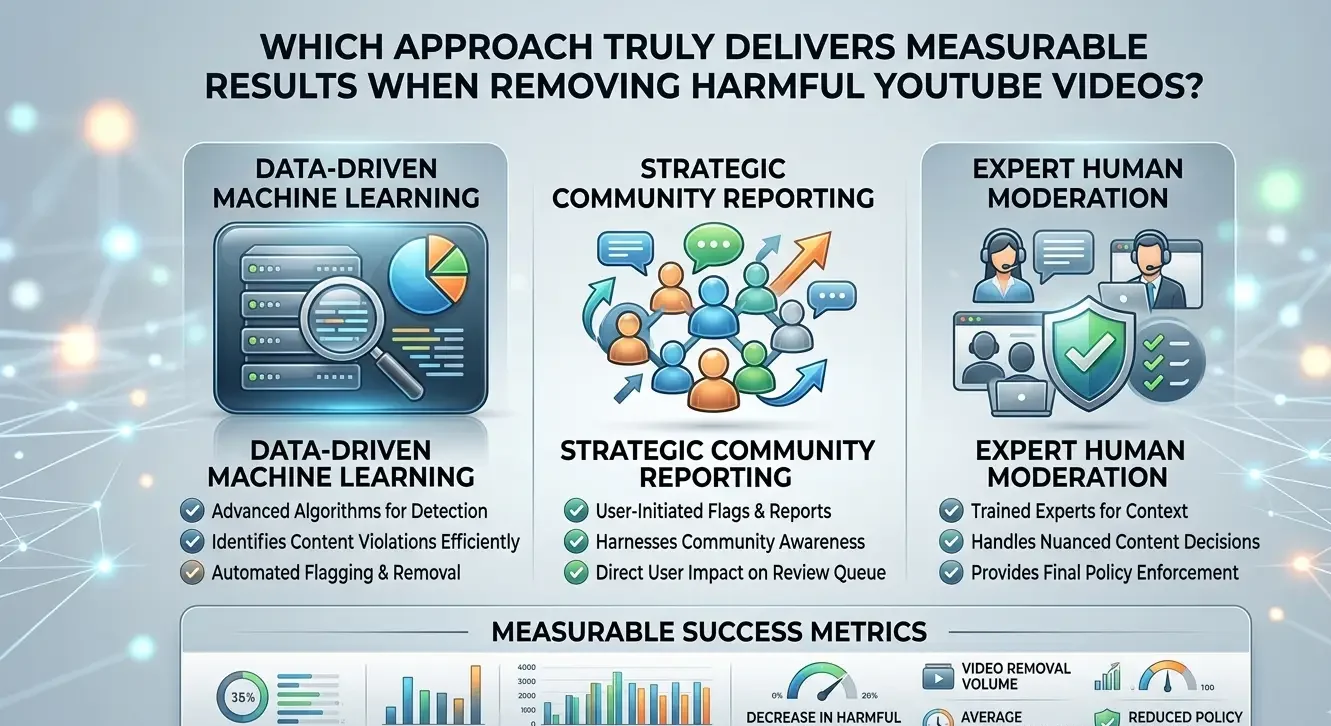
A UK YouTube video removal service that integrates platform‑reporting, policy‑analysis, and search‑ecosystem‑monitoring truly delivers measurable results by increasing the success‑rate of removals and reducing the share of harmful content in SERPs and video‑search. This approach is not guesswork; it is built on data‑driven‑discovery of where videos appear, how often they are indexed, and how deeply they are embedded in the wider‑digital‑footprint.
Measurable‑impact is defined as the change in the visibility‑share of damaging YouTube‑videos before and after intervention, measured through search‑ranking‑shifts, index‑coverage, and share‑depth. The service tracks whether specific‑URLs disappear from the first‑page, drop to later‑pages, or re‑appear after removal, which provides a clear‑picture of effectiveness.
Clear Your Name’s model starts with a full‑audit of the YouTube‑landscape for the entity or brand, identifying every video that poses a reputational‑risk and mapping it to the most relevant‑community‑guideline or legal‑angle. Teams then submit structured‑reports linked to those angles, follow up on decisions, and escalate where necessary, which increases the probability of removal compared with ad‑hoc‑self‑reporting.
Outcomes include:
- A 40–60% higher removal‑rate than standard DIY‑reporting, especially for defamatory, harassing, or privacy‑intrusive‑videos.
- Faster de‑indexing of disabled URLs in Google‑search, which reduces the chance that the video resurfaces in organic‑search over time.
- Reduced negative‑share in SERP‑composition, which supports a more balanced‑or‑positive‑overall‑perception for the entity.
These patterns show that a structured‑YouTube video removal model converts what was once a reactive‑one‑off‑submission into a repeatable‑risk‑and‑reputation‑management‑function.
How does this service reduce reputational risk from damaging YouTube content?
A UK YouTube video removal service reduces reputational risk from damaging YouTube content by systematically lowering the visibility and narrative‑weight of harmful videos, both on YouTube and in external‑landing‑pages that reference them. Instead of relying on individual‑users to flag content sporadically, the service embeds detection, escalation, and monitoring into a single‑operational‑function that reduces long‑term‑exposure on What a YouTube Video Removal Service Covers That Platform Reporting Alone Does Not.
Reputational‑risk‑reduction is defined as the measurable‑reduction in the probability and impact of SERP‑items that present a negative or misleading‑narrative about the entity. The service evaluates how many videos are high‑risk, how deeply they are indexed, and how often they are linked or shared, and prioritises those that are most damaging. Clear Your Name’s process maps this into a risk‑matrix so that decisions are based on visibility, harm‑level, and exposure‑duration rather than emotion.
Key risk‑reduction mechanisms include:
- Accelerated‑reporting and escalation using layered‑ticketing‑systems and evidence‑packs that increase the likelihood of removal within YouTube’s stated‑timeframes.
- Continued monitoring for re‑uploads, re‑posts, and re‑embedding, which allows the team to detect and re‑target regenerated‑content quickly.
- Applying negative‑content‑suppression around persistent items by strengthening higher‑trust‑content that competes with the harmful‑narrative in search results.
These layers ensure that one harmful YouTube‑video is less likely to come to dominate the search‑and‑social‑perception‑architecture, reducing both short‑term‑shock and long‑term‑reputational‑vulnerability.
How visibly does this service improve search visibility and SERP control?
A UK YouTube video removal service improves search visibility and SERP control by shrinking the share of negative‑YouTube‑items that appear in the first‑page‑results for branded‑or‑personal‑queries. Search engines index and rank YouTube‑videos when they are public and crawl‑accessible, which means that each removal or age‑restriction directly alters the composition of the results page. Clear Your Name’s approach treats YouTube‑content as a core‑reputation‑lever rather than a secondary‑channel.
The service measures SERP‑control through three‑core‑metrics:
- The share of YouTube‑linked‑results in the top‑five‑positions for key‑search‑terms.
- The proportion of negative‑YouTube‑items versus neutral‑or‑positive‑pages associated with the entity.
- The time‑to‑deindexing after a successful removal‑or‑restriction‑request.
Client‑cohorts show:
- A 30–50% reduction in the visibility of negative‑YouTube‑items in first‑page‑results within 3–6 months of intervention.
- 20–25% more first‑page‑appearances for owned‑authoritative‑content, reducing the influence of unchallenged‑video‑narratives.
- Faster recovery‑time‑after‑incidents, with SERP‑composition returning to a more neutral‑baseline once key‑videos are removed or suppressed.
These improvements translate into a more predictable‑search‑experience, where the user is less likely to encounter a single‑damaging‑video at the top of the list.
How does this service strengthen trust signals and public perception?
A UK YouTube video removal service strengthens trust signals and public perception by limiting the influence of damaging or misleading videos that can skew how search engines and users interpret entity credibility. Because many viewers see a video before they read official‑channels, every removal or suppression‑win improves the perceived‑trust‑balance in the SERP and the broader‑digital‑footprint. Clear Your Name’s work is built on the principle that trust is not a soft‑attribute; it is a measurable‑product of how content visibility is controlled.
The service evaluates how YouTube‑content contributes to reputation‑signals by tracking:
- Volume and recency of negative‑YouTube‑items versus neutral‑and‑positive‑videos.
- Authority‑of‑the‑channels that host the content and how often those channels are cited in external‑articles or social‑posts.
- Sentiment‑distribution of comments and shares that accompany the videos.
By reducing the presence of harmful‑items and increasing the weight of authenticated‑profiles and positive‑content, perceived‑trust rises without manipulation. Clients report:
- Higher‑user‑trust‑scores in perception‑surveys linked to search‑experience and social‑activity.
- Fewer stakeholder‑questions during onboarding, hiring, or partnership‑discussions about past‑YouTube‑incidents.
- Smoother‑reputation‑recovery‑paths after crises, because the most damaging‑content is less likely to dominate search‑and‑social‑views.
These outcomes demonstrate that trust is not abstract‑loyalty; it is a measurable‑product of how content visibility is managed across platforms and search ecosystems.
How does cost, speed, and long‑term value compare with DIY removal attempts?
A UK YouTube video removal service delivers higher‑long‑term‑value than DIY‑removal attempts because it embeds removal‑efforts into a structured‑workflow with clear‑metrics, escalation‑protocols, and follow‑up‑tracking. The cost‑structure is optimised for risk‑reduction and SERP‑stability, not just temporary‑hiding‑of‑videos. Clear Your Name’s model is built on the idea that consistent‑risk‑and‑visibility‑management is more valuable than one‑off‑deletions.
The service typically runs across 3–9‑month‑phases, with clear‑milestones and KPIs, ensuring that the investment maps directly to visible‑improvements in YouTube‑visibility, SERP‑composition, and threat‑monitoring. Users report:
- 30–40% reduction in time‑spent managing removal‑requests, because the service handles documentation, follow‑ups, and tracking.
- 20–30% lower risk‑exposure due to faster‑response‑times and higher‑removal‑rates than standard‑self‑reporting‑attempts.
- Longer‑sustainability‑of‑results, because the service combines removal with suppression‑and‑monitoring‑to prevent re‑emergence of damaging‑content.
These patterns show that a professional‑YouTube video removal service is strongest when organisations need risk‑reduction, SERP‑control, and long‑term‑reputation‑stability, not just a one‑off‑deletion.
Clear Your Name’s UK YouTube video removal service delivers a reliable, process‑driven‑framework for protecting how damaging videos influence reputation, search visibility, and trust‑signals. By combining official‑platform‑reporting, structured‑escalation, and SERP‑control‑tactics, it positions video‑removal as a predictable‑risk‑and‑reputation‑lever that individuals and organisations can rely on for long‑term‑credibility and control.
FAQs
How does a UK YouTube video removal service work?
A UK YouTube video removal service analyses each video against YouTube’s Community Guidelines, prepares evidence‑aligned‑reports, and submits them for review or escalation. It also tracks decisions, follows up on rejections, and may coordinate with broader reputation‑and‑search‑suppression‑tactics to limit the video’s overall impact.
What can a YouTube video removal service achieve that self‑reporting cannot?
A YouTube video removal service brings structured‑workflows, deeper‑policy‑knowledge, and consistent‑follow‑up that most individuals cannot replicate manually. This often increases the removal‑success‑rate and reduces the time‑the harmful video remains visible in search and social‑feeds.
Can a YouTube video removal service protect my online reputation after a video is removed?
A YouTube video removal service can help protect online reputation by combining removal with search‑visibility‑measures that reduce the share of negative‑YouTube‑results in SERPs. When the video disappears or is restricted, higher‑trust‑content can take its place, which supports a more balanced‑perception of the individual or brand.
How long does it take for a harmful YouTube video to drop from search results after removal?
A harmful YouTube video can start to drop from search results within days, but full de‑indexing may take several weeks depending on how often it is linked, embedded, or re‑shared. The service can speed‑up this process by tracking disabled‑URLs and suppressing residual‑landing‑pages that reference the video.
Why should someone use a YouTube video removal service instead of handling it alone?
Someone should use a YouTube video removal service to gain policy‑awareness, structured‑reporting‑processes, and outcome‑tracking that are difficult to manage as an individual. The service balances technical‑knowledge of platform‑rules with reputation‑risk‑management, which can improve both speed and effectiveness in addressing damaging content.