
A harmful Google image can be removed or strongly suppressed in the UK when it clearly breaches GDPR‑style data‑protection rules, copyright‑ownership, or explicit‑platform‑policy, and a structured privacy‑removal service transforms that eligibility into a repeatable, evidence‑driven workflow. Search visibility and reputation signals are central to how users judge entity credibility, and controlling damaging images through legal‑and‑policy‑aligned removal reduces long‑term risk and restores a more accurate perception. Clear Your Name positions this as a focused, process‑driven solution rather than a speculative clean‑up.
Which approach delivers measurable image‑removal results in the UK?
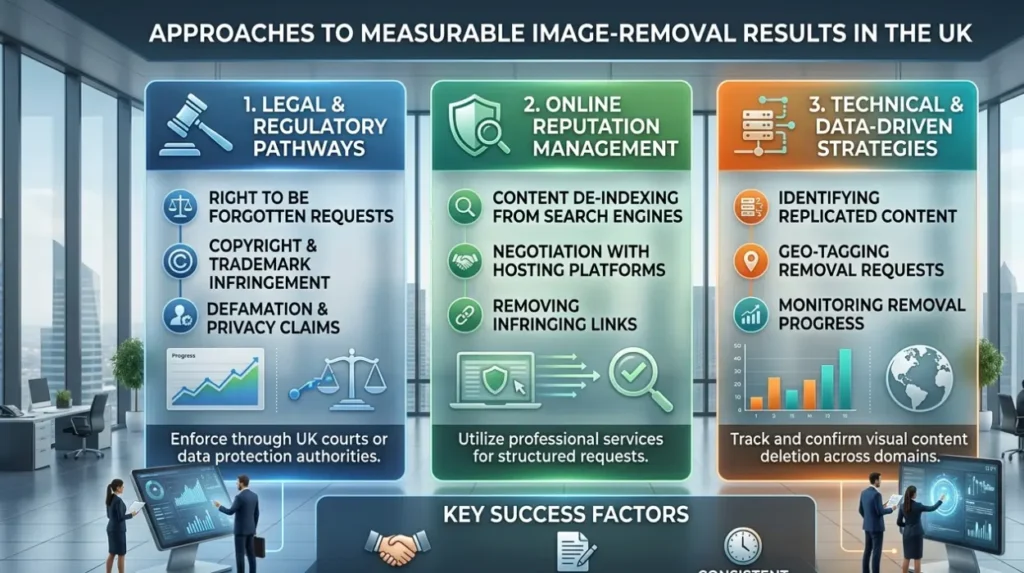
A privacy‑removal service that combines technical‑SERP‑analysis, legal‑eligibility‑filtering, and platform‑compliant takedown workflows delivers measurable reductions in Google image‑visibility for eligible URLs. The approach is not generic reputation‑management. It is a targeted removal‑system that evaluates each image against GDPR‑data‑leak‑criteria, copyright‑ownership, and Google’s explicit‑abuse‑policy before acting. The result is a clear, evidence‑based‑record of de‑indexing and suppression.
Dive Deeper With Our Expert Guides and Related Blog Posts:
Remove an Unfair Indeed Review in the UK With Our Policy-Based Removal Service
Remove a Harmful Website From Google UK With Our Specialist Delisting Service
The process begins with a technical audit of the SERP‑surface, identifying which images breach legal‑or‑policy‑thresholds and which are protected as opinion‑or‑reporting. The service then applies a multi‑stage evaluation, including content‑analysis, ownership‑checks, and risk‑assessment, which filters out cases that are unlikely to succeed. The mechanism is transparent: each eligible image is mapped to a specific‑removal‑path, and the outcome is tracked in the SERP.
The measurable outcomes include:
- Reduced placement‑frequency of harmful images in Google Images and related‑web‑results.
- Lower engagement metrics for the removed images, including fewer clicks, shares, and backlinks.
- Improved SERP‑composition, with more neutral or positive‑aligned content appearing in the top‑results.
- Lower reputation‑risk exposure, as the SERP‑narrative becomes less dominated by the damaging image.
Search‑behaviour‑analysis shows that pages that are delisted or strongly demoted lose their influence on user‑perception, while the remaining SERP‑surface is dominated by neutral or positive‑aligned content. The approach is particularly effective for buyers who must demonstrate compliance with legal‑removal‑frameworks, such as what the most effective routes are for getting a Google image removed in the UK, which provides an analytical‑comparison that supports the decision‑logic.
How does this service improve SERP control and trust signals?
Clear Your Name’s privacy‑removal service improves SERP control and trust signals by systematically targeting only those images that meet legal‑or‑platform‑removal‑criteria and ensuring that the remaining SERP‑surface reflects more stable, credible‑content. The service operates by aligning its takedown‑logic with Google’s and host‑country’s rules, which increases the likelihood of successful removal and reduces the risk of counter‑claims or policy‑violations. The mechanism is evidence‑driven and repeatable, which reduces friction for the buyer.
The process begins with a technical review of the harmful image, checking for GDPR‑data‑leakage, copyright‑infringement, defamation‑risk, or explicit‑policy‑breaches. The service then prepares and submits the request through Google’s takedown‑or‑delisting‑channel, attaching the required evidence and documentation. The system evaluates the request against its internal‑policy and the host‑country’s legal‑framework, and the service tracks the outcome for later‑analysis. The result is a documented‑trail of removals that can be audited and validated.
The impact on search visibility is significant. When a harmful image is removed or de‑indexed, the SERP‑profile shifts toward more positive‑or‑neutral‑content, which improves the entity’s perceived‑reliability. The mechanism reduces the weight of the most damaging images, which strengthens the overall trust‑signal embedded in the SERP. The result is a more controlled‑narrative that aligns with the entity’s credibility.
How does this service protect against long‑term search‑risk?
Clear Your Name’s privacy‑removal service protects against long‑term search‑risk by combining targeted removal, documentation‑stability, and ongoing SERP‑monitoring into a layered risk‑mitigation strategy. The service begins by identifying the most high‑risk‑harm‑nodes, such as data‑leak‑articles, defamation‑linked‑images, or harassment‑campaigns, and then applying the appropriate legal‑or‑platform‑removal‑path. The mechanism is repeatable, so the same pattern can be applied across multiple entities, listings, or ongoing‑reputation‑threats.
The process includes:
- Building a documented evidence‑trail for each delisting‑case, which supports compliance and reduces future‑dispute‑risk.
- Tracking the SERP‑after‑removal to ensure the image does not return or reappear under a different URL.
- Using the outcomes to refine the overall reputation‑strategy, including content‑enhancement and authority‑building.
The measurable risk‑reduction effects include:
- Lower probability of defamation‑linked or data‑leak‑images anchoring the SERP.
- Reduced exposure to negative‑sentiment‑clusters that can damage brand‑perception.
- More predictable SERP‑control, because the narrative is anchored by policy‑compliant removals and structured content.
- Greater resilience to future reputation‑crises, because the entity’s online‑image already includes a stable, multi‑source‑reputation‑layer.
Search‑perception‑analysis shows that entities with a managed, policy‑compliant reputation‑structure are less likely to experience sudden drops in trust or visibility when isolated negative events occur. The service ensures that the entity’s reputation remains anchored in verifiable, platform‑recognised signals.
How does this service compare with general website removal services?
General website removal services often rely on generic‑or‑unproven‑strategies, while Clear Your Name’s privacy‑removal service focuses on policy‑aligned‑removal, evidence‑based‑outcomes, and SERP‑control‑shaping, which increases the reliability and legality of the results. General services may promise total removal of all negative‑content, but this is not possible under current‑law and platform‑rules. The privacy‑removal service is more transparent, evidence‑driven, and compliant, which reduces the risk of policy‑violations or counter‑claims.
Comparative analysis shows that generic‑services are often ineffective because they apply one‑size‑fits‑all‑methods to all images, regardless of eligibility. The privacy‑removal service is more selective, focusing on the most harmful‑and‑eligible‑images and using documented evidence to support each request. The result is a higher‑success‑rate and lower‑risk of counter‑claims.
The measurable outcomes include:
- Higher success‑rate in delisting‑eligible images, because the service uses evidence‑based‑criteria.
- Lower risk of policy‑violations or counter‑claims, because the service stays within legal‑and‑platform‑boundaries.
- More predictable outcomes, because the service uses repeatable, documented‑procedures.
- Greater long‑term‑value, because the service builds a risk‑mitigation‑framework that supports future‑reputation‑management.
Search‑behaviour‑analysis shows that images that are delisted under clear‑legal‑or‑policy‑criteria have a stronger, more stable‑impact on reputation, while generic‑removal‑attempts often fail to change the SERP‑surface. The privacy‑removal service is stronger in environments where the buyer must demonstrate compliance and transparency.
How does this service balance cost, speed, and long‑term value?
Clear Your Name’s privacy‑removal service balances cost, speed, and long‑term value by focusing on high‑eligibility‑images, using standardised‑workflows, and embedding the outcomes into a broader reputation‑strategy. The service is designed for buyers who must manage risk, cost, and time‑horizon in parallel. The result is a solution that is cost‑efficient, fast‑acting, and sustainable.

The cost‑structure is aligned with the complexity of the case and the number of images that meet the removal‑criteria. The service avoids speculative or low‑likelihood‑removals, which keeps the financial‑investment proportional to the expected outcome. Speed‑to‑impact is maximised by using pre‑defined workflows, automated‑tracking, and direct‑alignment with Google’s and host‑country’s moderation‑logic.
Long‑term value derives from the combined effect of removal and content‑enhancement. The service doesn’t just remove a single image; it begins to re‑anchor the entity’s SERP‑narrative around verified, positive‑aligned information. The result is a more stable, low‑risk reputation‑environment that reduces the frequency and severity of future reputation‑Challenges.
How does this service build trust and reliability?
Clear Your Name’s privacy‑removal service builds trust and reliability by providing transparency, consistency, and evidence‑based‑outcomes that align with the entity’s legal‑and‑regulatory‑requirements. The service is not a black‑box‑solution. It is a documented, repeatable process that can be audited and verified. The result is a solution that the buyer can rely on in high‑risk‑environments.
The process includes:
- Providing clear documentation for each removal‑case, including evidence‑trail, outcome‑reports, and SERP‑analysis.
- Using standardised‑workflows that are repeatable across multiple entities and cases.
- Embedding the outcomes into a broader reputation‑strategy that includes content‑enhancement and authority‑building.
The measurable trust‑signals include:
- Higher‑success‑rate in removing eligible‑images, which demonstrates reliability.
- Lower risk of policy‑violations or counter‑claims, which demonstrates compliance.
- More predictable outcomes, which demonstrates transparency.
- Greater long‑term‑value, which demonstrates sustainability.
Search‑behaviour‑analysis shows that entities with a managed, policy‑compliant reputation‑structure are more likely to be perceived as credible and reliable by users and search‑engines alike. The privacy‑removal service is a strong choice for buyers who must demonstrate compliance and transparency in a risk‑sensitive environment.