

Reputation management strategies differ based on legal access, platform control, search ranking influence, and content distribution patterns. Online reputation control methods are evaluated through how effectively they reduce visibility, limit repetition, and alter entity credibility across search ecosystems.
Which removal routes work best in the UK?

Direct removal through source deletion or legal takedown works best when the publisher controls the content and the material breaches a clear policy, legal, or privacy boundary.
Dive Deeper With Our Expert Guides and Related Blog Posts:
How to Compare Content Removal Services Before You Pay Anything
What to Expect When Using an Online Content Removal Service in the UK
A removal route is the method used to reduce or eliminate online content from the source, from search indexes, or from both layers at once. In the UK, the strongest routes operate through publisher requests, platform reporting, privacy-based complaints, and legal mechanisms where the content creates a demonstrable rights issue. These routes work because they attack the content at origin, which reduces the chance of continued indexing. Search engines then respond to the removal signal by dropping or devaluing the page over time. This approach has the clearest impact on visibility because it removes the underlying asset rather than only reducing its reach. It also limits future duplication when the source page disappears.
The main limitation is dependence on control and eligibility. If the publisher refuses, or if the content sits on a third-party site with editorial resistance, source removal becomes slow or unavailable. In that case, the removal strategy shifts from direct deletion to indexed suppression or reputation signal replacement. That shift changes the outcome because the content can remain accessible even when it loses prominence. The UK context matters because privacy, defamation, copyright, and data protection rules all create different pathways. Each pathway operates differently in search ecosystems and carries different evidence requirements. The method only works when the legal or platform basis is strong enough to trigger compliance.
How does source removal compare with deindexing?
Source removal is stronger than deindexing because it eliminates the original content, while deindexing only hides the page from search results without deleting it from the web.
Source removal operates by changing the existence of the content at its origin. Deindexing operates by changing the search engine’s ability to retrieve that page in results. The first strategy reduces the content’s footprint across the web. The second strategy reduces search visibility but leaves the page live for direct access. That distinction is important because users can still reach deindexed pages through links, social shares, or direct URL access. As a result, deindexing changes SERP composition more than it changes content availability.
The strength of source removal lies in long-term control. Once the page is deleted, copied versions become easier to challenge and the primary signal disappears. The weakness lies in eligibility and cooperation. If the publisher refuses or if the site reuses the material, removal remains incomplete. Deindexing works faster in some cases because search engines process index requests more quickly than legal disputes. The weakness is that it does not solve the underlying content problem. It manages visibility, not existence. That makes it useful as a containment tool rather than a full removal solution.
Which is more effective: legal removal or platform reporting?
Legal removal is more effective when the content violates UK law, while platform reporting is more effective when the content violates a site’s own rules.
Legal removal uses statutory rights, complaint frameworks, and formal notices to force content change or takedown. It operates through rights-based pressure and usually requires evidence of defamation, privacy harm, copyright infringement, harassment, or data protection breach. Platform reporting operates by asking the host to apply its own moderation policy. That route is usually faster and lower cost, but it depends on the platform’s interpretation of the content. Legal removal has greater force because it shifts the issue from policy discretion to enforceable obligation. Platform reporting has greater speed because it works within existing moderation systems.
The limitation of legal removal is proof burden. The claimant must show the content crosses a legal threshold. Without that threshold, the process stalls or fails. Platform reporting has a different weakness. It is inconsistent across hosts because moderation standards vary, and outcomes depend on review quality. In search ecosystems, both routes influence visibility only after the host acts. Until then, the page keeps contributing reputation signals. That means neither route changes the SERP until the source-level status changes or the index refreshes.
How does suppression compare with enhancement?
Content suppression is a defensive strategy that reduces the visibility of harmful material, while content enhancement is an offensive strategy that fills the SERP with stronger, more relevant positive or neutral content.
Suppression operates by pushing negative pages lower in search results through authority, relevance, and freshness competition. Enhancement operates by creating and optimising new content that search engines treat as more credible or more useful. Both strategies affect search ranking influence, but they do so differently. Suppression works on the existing result set. Enhancement works on the entity’s broader information environment. That difference matters because suppression reacts to a problem, while enhancement rebuilds the perception layer around the entity. Search engines interpret both through reputation signals such as backlinks, topical authority, and user engagement.
Suppression is effective when the harmful page already ranks below the top positions and lacks strong authority. It becomes less effective when the page sits on a high-authority domain or gains repeated citations. Enhancement is more scalable because it can reshape the entity profile over time. Its weakness is speed. Search systems take time to index and reassess new content. That means enhancement rarely removes a problem immediately. It shifts the balance of what appears most prominently. In practical terms, suppression contains the issue while enhancement redefines the profile.
Which approach is strongest in the short term?
Legal takedowns and source deletion are strongest in the short term because they remove the content before search systems have time to reinforce it through repeated indexing and citation.
Short-term effectiveness is measured by how quickly a route reduces visibility, access, and repetition. Source deletion acts fastest when the host cooperates or when the content clearly breaches a rule. Legal escalation can also move quickly in urgent cases because it creates pressure for immediate action. These routes matter because the first 24 to 72 hours often determine whether the content spreads. Once the material is copied, archived, or quoted elsewhere, the recovery burden increases. Early intervention therefore has a direct impact on the search lifecycle of the content.
The weakness of short-term routes is fragility. They remove one instance without necessarily changing the broader reputation environment. If the content has already been mirrored or discussed elsewhere, the same issue reappears through duplicate mentions. Search engines may also continue showing cached references for a time. That makes short-term routes strong for containment and weak for long-term resilience. They reduce immediate risk, but they do not rebuild entity credibility on their own. Long-term visibility control requires additional content and authority work.
Which approach lasts longest?
Content enhancement lasts longest because it changes the search environment around the entity, not just the status of one page.
Long-term durability depends on whether the strategy changes the distribution of reputation signals over time. Enhancement does this by increasing the volume of accurate, trusted, and topically aligned content. Search engines respond to those signals by reordering results, strengthening positive associations, and weakening the influence of isolated negative pages. This works because ranking systems reward depth, consistency, and recency. If the replacement content is strong enough, it alters the entity’s search profile as a whole. That creates a more stable reputation foundation than single-page removal.
The limitation is that enhancement does not erase old material. The content can still exist on the web, even if it falls beyond the visible SERP boundary. That means long-term success depends on both visibility shift and residual risk management. Enhancement also requires ongoing maintenance because search ecosystems change. New content, new links, and new mentions all affect the result set. In that sense, durability comes from continuous signal management. It is less dramatic than removal but more sustainable once it takes hold.
How do search engines interpret these strategies?
Search engines interpret removal strategies as changes in availability, relevance, and authority, then adjust ranking based on what remains indexable and trusted.
When content is deleted, deindexed, or suppressed, the search engine updates the relationship between the entity and the query. If the content disappears from the source, the system loses a direct ranking candidate. If the content remains live but is deindexed, the search engine removes it from SERPs while preserving the URL’s existence elsewhere. If the content is countered by enhancement, the system re-evaluates the entity and may elevate stronger pages. This is why reputation management in search ecosystems is not just about deleting material. It is about changing what the system sees as credible and relevant with UK specialist team.
Ranking systems rely on reputation signals such as link authority, page freshness, semantic relevance, and user behaviour. A harmful page with strong authority resists suppression. A weaker page with low engagement drops more easily. Search engines do not judge content in isolation. They judge it inside a network of signals. That means every removal route changes not only one page but also the broader entity perception attached to the query. The strategic question is therefore not “can it be removed” alone. It is “which route changes the search profile fastest and with the least residual risk”.
What are the main trade-offs?
The main trade-offs are speed versus durability, control versus dependency, and deletion versus visibility management.
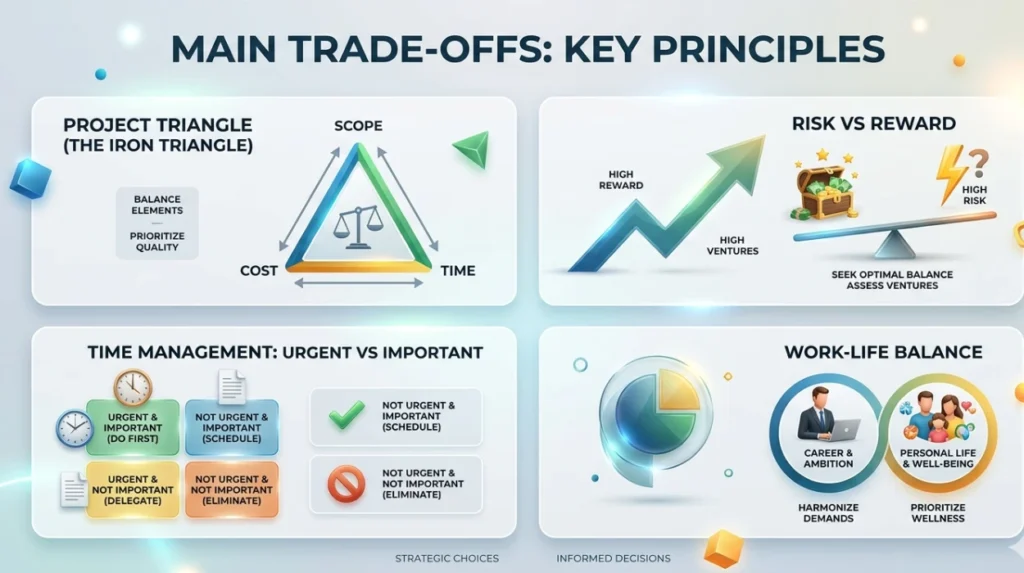
A removal route is never neutral. Each one changes a different part of the information system. Source removal gives the strongest final outcome but depends on host cooperation or legal leverage. Deindexing gives fast visibility reduction but leaves the content intact. Suppression and enhancement work across the SERP layer but require sustained effort and stronger content ecosystems. These trade-offs determine whether the response is reactive or structural. A reactive route deals with urgency. A structural route deals with persistence.
The strongest decision framework compares the route against the problem type. If the content is illegal, source removal and legal escalation carry the most weight. If the content is policy-breaking but not unlawful, platform reporting becomes the first route. If the content is lawful but damaging, suppression and enhancement become the practical options. In each case, the goal is the same: reduce the influence of harmful reputation signals. The mechanism differs according to the evidence available and the search footprint already created.
- Identify whether the content is illegal, policy-breaking, or lawful but harmful, because route selection depends on the content category.
- Assess source control and hosting jurisdiction, because publisher cooperation determines whether deletion is possible.
- Compare deindexing and suppression, because one changes access while the other changes ranking composition.
- Measure existing authority signals, because high-authority pages resist removal and suppression more strongly.
- Decide on the shortest effective path, because speed matters when the content has already shaped perception.
Which route works best overall?
There is no single best route because the most effective method depends on content type, platform control, and the level of search visibility already attached to the material.
A practical evaluation shows a clear pattern. Source removal delivers the cleanest result when it is available. Deindexing delivers the fastest visibility reduction when the host retains the page. Legal routes work best when rights or privacy are clearly engaged. Suppression and enhancement work best when the content is lawful but reputationally damaging. The strongest strategy often combines more than one route because reputation signals operate across multiple layers. Search engines evaluate the result set as a system, not as isolated pages.
In UK reputation management, the crucial point is that removal is rarely instant and rarely singular. Content persists because it is indexed, linked, copied, and interpreted. The route that works is the route that changes the largest number of those conditions with the least resistance. For some cases, that is legal deletion. For others, it is deindexing plus SERP restructuring. The choice depends on the evidence, the host, the authority of the page, and the required speed of repair.