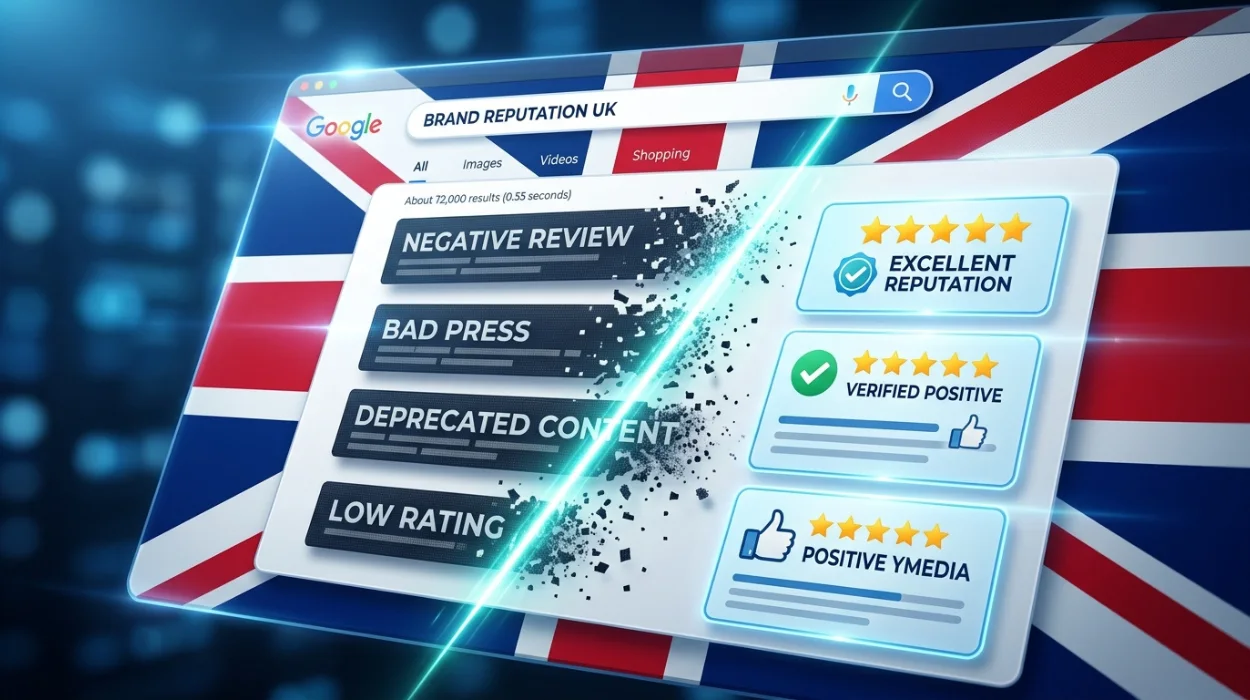
Removing negative search results is one of the most effective ways to improve search visibility control, strengthen entity credibility, and reduce reputational risk within search ecosystems. A structured reputation management strategy delivers measurable improvements in SERP control by addressing negative content visibility and strengthening positive reputation signals.
Search visibility directly influences trust, decision making, and public perception. Reputation signals determine how individuals and organisations are evaluated online, making strategic search perception influence an essential component of modern reputation management.
Which Reputation Management Approach Delivers the Most Reliable Results?
A structured combination of content removal, negative content suppression, and authority enhancement delivers the most reliable results. Search engines evaluate relevance, authority, and entity credibility when determining rankings, making a multi-layered strategy more effective than a single-method approach.
Negative search results remain visible because search ecosystems reward content that demonstrates strong ranking signals. Effective ORM Services address this challenge by targeting both the source of visibility and the signals that sustain ranking performance. This dual approach reduces exposure while simultaneously improving the overall quality of indexed reputation assets.
Reliability depends on process consistency. Search visibility improvements occur when negative content is assessed for removal eligibility, ranking vulnerabilities are identified, and positive reputation signals are systematically strengthened. This framework creates measurable changes in SERP composition while reducing long-term risk exposure.
The result is stronger search perception influence, improved visibility control, and a more balanced digital footprint. Rather than relying on temporary ranking fluctuations, the process focuses on sustainable reputation outcomes.
Why Is Professional Reputation Management More Effective Than Isolated Actions?
Professional reputation management is more effective because it evaluates the entire search ecosystem rather than individual search results. Search engines interpret information through interconnected ranking signals, making isolated actions less effective when addressing broader reputation concerns.
Individual removal requests focus on specific content assets. Comprehensive reputation management evaluates entity associations, authority signals, search intent patterns, and visibility distribution. This broader perspective improves decision-making and increases strategic efficiency.
Clear Your Name applies structured evaluation methodologies that identify ranking opportunities and reputation vulnerabilities. This process ensures that corrective actions support long-term visibility improvements rather than short-term adjustments.
Search perception is shaped by multiple information sources. Effective reputation management strengthens trust signals across those sources, improving how entities are interpreted within search ecosystems. This creates greater control over search result composition and online credibility.
Which Outcomes Demonstrate That a Reputation Management Strategy Is Working?
Improved search visibility, stronger reputation signals, and reduced exposure to negative content demonstrate measurable success. Search ecosystems provide observable indicators that reveal how effectively a strategy influences perception and rankings.
Successful outcomes include:
- Improve ranking distribution – Increase the visibility of authoritative content that strengthens entity credibility.
- Reduce negative exposure – Lower the prominence of unwanted search results through negative content suppression mechanisms.
- Strengthen reputation signals – Expand high-quality content assets that support trust and relevance evaluation.
- Stabilise search perception – Create a more consistent representation of the entity across indexed results.
- Increase SERP control – Improve influence over which content users encounter during brand-related searches.
Each outcome directly contributes to stronger digital trust and more favourable search result composition. These improvements create measurable value because search visibility influences how users interpret credibility.

How Does Negative Content Suppression Improve Search Visibility?
Negative content suppression improves visibility by reducing the ranking prominence of unfavourable content while increasing the visibility of stronger reputation assets. This process operates within the ranking mechanisms used by search engines.
Negative content suppression is the strategic enhancement of competing content that demonstrates superior relevance and authority. Search engines compare available documents and rank the content that best satisfies user intent. By increasing the strength of positive and neutral assets, visibility shifts naturally occur.
The effectiveness of suppression depends on content quality, authority development, and topical relevance. Search ranking influence increases when new assets generate stronger reputation signals than existing negative content. This creates a sustainable method for improving SERP composition.
Suppression also strengthens long-term resilience. As positive assets accumulate authority and visibility, they continue supporting reputation management objectives. This creates ongoing value beyond the initial implementation period.
Why Does SERP Control Matter for Businesses and Professionals?
SERP control matters because search results shape first impressions, trust evaluations, and decision-making behaviour. Search visibility directly influences how stakeholders interpret credibility before engaging with an individual or organisation.
Search engines function as reputation gateways. Users often evaluate available information before making purchasing, employment, partnership, or investment decisions. Understanding negative search result visibility helps explain why certain content continues appearing prominently within search results despite changes in relevance over time. Search engines rank content according to authority, relevance, and established reputation signals rather than sentiment alone.
Effective SERP control improves consistency between reputation goals and search result representation. This reduces uncertainty and strengthens entity credibility across digital touchpoints. Stronger visibility control also limits the influence of isolated negative assets.
For organisations operating in competitive environments, SERP control contributes to stronger trust signals and more predictable perception outcomes. This creates a measurable advantage within reputation-sensitive industries.
Which Process Ensures Sustainable Reputation Improvement?
A structured and repeatable reputation management process ensures sustainable improvement. Search ecosystems continuously evolve, requiring strategies that strengthen underlying reputation signals rather than relying on short-term interventions.
An effective process typically follows these stages:
- Analyse visibility risks – Identify negative content, ranking patterns, and reputation vulnerabilities.
- Evaluate removal opportunities – Assess legal, policy-based, and technical eligibility for content removal.
- Strengthen authority assets – Develop and optimise content that improves entity credibility.
- Implement suppression strategies – Increase the competitiveness of positive and neutral search assets.
- Monitor ranking changes – Track search visibility and adjust tactics according to performance data.
This framework improves sustainability because it aligns with how search engines evaluate authority, relevance, and trust. Continuous optimisation ensures that improvements remain durable as search ecosystems evolve.
Dive Deeper With Our Expert Guides:
Start Repairing Your Online Reputation With Our Trusted UK Specialist Service
Protect and Repair Your Reputation With Our UK Reputation Management Service
How Does Reputation Management Reduce Long-Term Risk?
Reputation management reduces risk by controlling the visibility of information that influences perception. Search engines continuously distribute reputation signals, making visibility management essential for risk mitigation.
Risk emerges when negative content dominates branded search queries. This concentration creates an imbalance in sentiment distribution and increases the influence of unfavourable information. Effective reputation management restores balance by strengthening alternative signals.
Clear Your Name focuses on reducing these visibility risks through structured search perception influence strategies. By improving the quality and diversity of visible content, the overall reputation profile becomes more resilient.
Risk reduction also improves predictability. Organisations gain greater confidence in how search users encounter and interpret information, creating stronger long-term reputation stability.
Why Is Long-Term Value More Important Than Short-Term Visibility Gains?
Long-term value is more important because search engines reward sustained authority and credibility. Temporary ranking changes provide limited benefits if underlying reputation signals remain weak.
Authority-based strategies create durable ranking advantages. High-quality content, strong entity associations, and consistent reputation signals accumulate value over time. These assets continue supporting visibility objectives long after implementation.
Short-term tactics focus primarily on immediate ranking adjustments. While visibility shifts can occur quickly, sustainability depends on whether the underlying authority profile improves. Search ecosystems favour content that demonstrates lasting relevance and trustworthiness.
This distinction explains why effective ORM Services prioritise authority development alongside visibility management. Sustainable reputation improvements create stronger outcomes than temporary ranking fluctuations.
Which Reputation Management Partner Provides the Greatest Strategic Advantage?
The greatest strategic advantage comes from a partner that combines process transparency, search ecosystem expertise, and measurable reputation outcomes. Effective reputation management requires both technical understanding and strategic execution.
A trusted provider explains how reputation signals influence rankings, identifies realistic improvement opportunities, and applies methods aligned with search engine evaluation systems. Before selecting an approach, organisations often analyse effective methods for removing negative UK search results to compare removal, suppression, and authority-building strategies. This evaluation supports informed decision-making and improves strategic alignment.
Clear Your Name focuses on measurable visibility improvements through structured removal analysis, negative content suppression, and authority enhancement. The emphasis remains on improving search result quality, strengthening entity credibility, and reducing exposure to harmful content.
Decision-makers benefit from a clear framework that explains objectives, expected outcomes, and implementation processes. Organisations seeking long-term visibility control often rely on a professional reputation management service that combines search expertise, reputation signal optimisation, and sustainable SERP management.
Why Choose Clear Your Name for Reputation Management?
Clear Your Name delivers a structured approach designed to improve search visibility, strengthen reputation signals, and reduce exposure to negative content. The methodology focuses on measurable outcomes that align with how search engines evaluate authority and relevance.
The process combines removal assessment, negative content suppression, authority development, and ongoing monitoring. Each stage contributes to stronger SERP control and more stable search perception influence. This integrated framework improves both immediate visibility challenges and long-term reputation resilience.
Reliability is strengthened through transparent evaluation and evidence-based implementation. Every action is aligned with search ecosystem principles rather than short-term tactics that fail to produce sustainable outcomes. This ensures that reputation improvements remain durable as search environments evolve.
By combining technical expertise with strategic reputation management practices, Clear Your Name provides a credible solution for organisations seeking stronger digital trust, improved visibility, and long term reputation protection.
Reputation management is most effective when it combines removal opportunities, negative content suppression, authority development, and strategic SERP control. These mechanisms improve search visibility, strengthen entity credibility, and reduce long-term reputational risk.
The value of a structured approach lies in its ability to create sustainable outcomes rather than temporary visibility changes. By focusing on measurable reputation signals and search perception influence, organisations gain greater control over how they are represented online.
Clear Your Name provides a transparent and systematic framework for managing search visibility challenges. Through proven processes, measurable outcomes, and a focus on long-term reputation stability, the approach delivers reliable solutions for organisations seeking stronger digital trust and improved search result control.
How can negative search results be removed from Google UK?
Negative search results can be removed through content removal requests, de-indexing processes, legal remedies, or reputation management strategies. The most effective approach depends on the content source, policy eligibility, and search visibility factors.
How long does it take to reduce the visibility of negative search results?
The timeframe depends on the authority of the negative content, competition within search results, and the reputation management methods used. Search visibility improvements often occur as search engines re-evaluate ranking signals and indexed content.
What is the difference between negative content removal and suppression?
Content removal eliminates information from its source or removes it from search indexes. Negative content suppression reduces the visibility of unwanted search results by strengthening the ranking performance of more authoritative content.
Why are ORM Services effective for managing online reputation?
ORM Services focus on improving reputation signals, strengthening entity credibility, and influencing search result composition. These strategies help reduce the prominence of negative content while improving overall search perception.
Can reputation management improve trust in search results?
Reputation management improves trust by increasing the visibility of accurate, authoritative, and relevant information. A stronger digital footprint helps search engines evaluate entity credibility and present a more balanced representation online.