

Fake Google reviews can be removed legally by reporting reviews that violate Google’s review policies and providing evidence that demonstrates policy breaches. Legal removal depends on compliance with platform guidelines and applicable legal standards rather than disagreement with negative feedback.
Reputation management is the systematic evaluation and optimisation of reputation signals that influence search visibility, entity perception, and digital trust within search ecosystems. Online reputation refers to the collection of indexed information, review sentiment, authoritative content, and trust indicators that search engines evaluate when presenting search engine results pages (SERPs).
What Makes a Google Review Eligible for Legal Removal?
A Google review becomes eligible for legal removal when it breaches published content policies or applicable legal standards. Search ecosystems distinguish between genuine customer opinions and reviews that contain fabricated experiences, impersonation, harassment, spam, conflicts of interest, or unlawful statements. Google evaluates reported reviews against policy requirements before determining whether content qualifies for removal. This process protects the integrity of review systems while maintaining accurate reputation signals. Understanding eligibility criteria explains why some reviews remain visible while others are removed from public search results.
Google’s moderation framework defines prohibited review content through specific policy categories rather than subjective dissatisfaction. Reviews containing false claims of customer interaction, coordinated manipulation, deceptive promotional activity, or abusive language are evaluated for policy violations. Automated detection systems analyse behavioural patterns, account history, and review consistency before manual moderation occurs where required. This layered evaluation improves review authenticity and protects content indexing from manipulation. Legal eligibility therefore depends on evidence demonstrating that a review breaches established standards rather than personal disagreement.
Search visibility is directly influenced by the accuracy of indexed review information because search engines evaluate trust signals across multiple digital sources. Reviews removed through policy enforcement no longer contribute to publicly visible reputation signals. This adjustment improves the quality of searchable information without altering legitimate customer experiences. Accurate moderation therefore strengthens entity perception while maintaining the reliability of review ecosystems.
Why Do Reputation Signals Influence Google Search Visibility?
Reputation signals influence Google search visibility because search engines evaluate credibility using interconnected indicators instead of isolated review scores. Reputation signals include review authenticity, sentiment distribution, content quality, citation consistency, and entity credibility. Search algorithms compare these signals to determine whether indexed information represents reliable and authoritative sources. The resulting evaluation contributes to overall search perception across branded and local search queries. Understanding reputation signals explains why online credibility extends beyond individual reviews.
Review sentiment forms one component of broader reputation analysis rather than acting as an independent ranking factor. Search systems compare the balance of positive, neutral, and negative reviews alongside content relevance and authoritative references. Balanced sentiment distribution contributes reliable evidence that supports consistent entity perception. Artificial review activity weakens this process because manipulated reputation signals reduce confidence in indexed information. Accurate review ecosystems therefore improve overall search reliability.
Entity credibility refers to the cumulative assessment of trustworthiness across interconnected digital assets. Search engines evaluate factual consistency, authoritative mentions, structured business information, and authentic customer feedback when analysing online credibility. Strong entity credibility reinforces reliable search visibility because multiple trusted sources provide consistent information. This evaluation framework demonstrates how reputation develops across search ecosystems instead of individual web pages. Reputation management therefore focuses on improving trust signals that contribute to long-term search perception.
What Is the Difference Between Legal Review Removal and Policy-Based Review Removal?
Legal review removal and policy-based review removal operate through different evaluation frameworks while contributing to reputation management. Policy-based removal focuses on violations of Google’s published review guidelines, whereas legal removal addresses reviews that breach applicable laws such as defamation or unlawful publication. Search ecosystems recognise moderation outcomes after reviews are removed through either mechanism, improving the accuracy of indexed reputation signals. Understanding these distinctions clarifies how review moderation functions within digital trust systems. Both approaches strengthen search visibility by maintaining reliable public information.
Policy-based review removal operates through Google’s internal moderation procedures. Reported reviews are assessed according to community standards that define prohibited content categories, including fabricated experiences, spam, impersonation, and deceptive behaviour. Successful moderation removes content from Google’s review ecosystem after policy violations are confirmed. This process improves review authenticity while protecting legitimate customer feedback. Search visibility benefits because reputation signals become more representative of genuine user experiences.
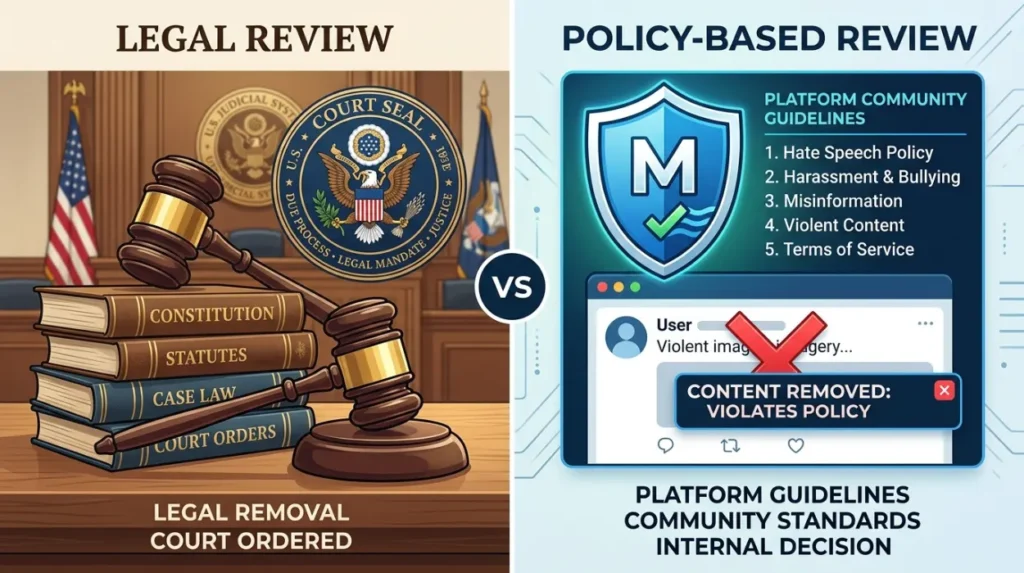
Legal review removal operates through formal legal frameworks that evaluate whether published content breaches statutory requirements. Courts, legal representatives, or regulatory authorities assess evidence supporting claims of unlawful publication before determining whether removal is justified. Search engines recognise legal outcomes after affected content is removed or de-indexed where appropriate. This process differs from platform moderation because legal assessment extends beyond community guidelines into statutory compliance. Understanding both mechanisms provides a broader explanation of how reputation systems maintain digital trust.
Throughout reputation management analysis, understanding Review & Rating Removal provides additional context for how structured review moderation contributes to accurate reputation signals across search ecosystems.
How Do Search Engines Interpret Trust and Credibility From Online Reviews?
Search engines interpret trust and credibility by analysing multiple reputation signals rather than relying on review ratings alone. Review authenticity, entity consistency, authoritative references, content quality, and sentiment distribution collectively influence how search ecosystems evaluate digital trust. This evaluation process supports accurate search visibility by identifying information that demonstrates reliability and relevance. Reputation systems therefore measure the quality of interconnected signals instead of isolated user feedback. Understanding these mechanisms explains why reputation management extends beyond individual reviews.
Review authenticity represents the accuracy and legitimacy of published customer experiences within search ecosystems. Search algorithms evaluate behavioural patterns, review frequency, account history, and moderation outcomes to identify manipulated or misleading content. Authentic reviews strengthen entity perception because they contribute reliable evidence to the indexed reputation profile. Artificial review activity weakens trust signals by introducing inaccurate information into search evaluation. Reliable review ecosystems therefore improve both content indexing and overall digital credibility.
Search credibility also depends on consistency across authoritative digital assets. Search engines compare business information, citations, structured data, and trusted references to determine whether an entity demonstrates stable online credibility. Consistent information reinforces confidence in indexed content while supporting stronger entity perception. This integrated evaluation framework explains why trust develops through multiple reputation signals rather than review scores alone. Search visibility therefore reflects broader digital authority across interconnected information sources.
Dive Deeper With Our Expert Guides:
Google Review Removal Services for Businesses
Why Does Digital Footprint Affect Online Reputation?
A digital footprint refers to the complete collection of publicly indexed information associated with an individual, organisation, or entity within search ecosystems. This includes reviews, website content, business profiles, news references, citations, multimedia assets, and other searchable information. Search engines analyse these assets collectively when evaluating reputation signals and search perception. Digital footprints therefore influence how entities appear within search engine results pages. Understanding digital footprint development explains how online reputation evolves over time.
Content indexing determines which digital assets become accessible within search results. Search engines discover, evaluate, and organise publicly available information before determining its relevance and authority. Indexed content contributes to entity perception because it becomes part of the searchable reputation profile. Accurate information strengthens digital trust, whereas misleading or manipulated content weakens confidence in search evaluation. Content indexing therefore represents a fundamental component of reputation management systems.
Digital footprints continuously evolve as new information enters search ecosystems. Updated reviews, revised business information, authoritative publications, and moderation outcomes all contribute to changes in reputation signals. Search engines reassess these signals to maintain accurate representations of entities within search results. This continuous evaluation demonstrates why online reputation remains dynamic instead of static. Digital trust therefore depends upon maintaining reliable indexed information across multiple online sources.
How Do Review Signals and Sentiment Shape Entity Perception?
Review signals represent measurable indicators that search ecosystems use to evaluate customer feedback, authenticity, and reputation quality. These signals include review frequency, authenticity, sentiment balance, moderation history, and behavioural consistency. Search engines analyse these indicators collectively to determine whether indexed reviews accurately represent customer experience. Reliable review signals strengthen digital trust by improving the quality of searchable information. Entity perception therefore develops through cumulative evaluation rather than isolated reviews.
Sentiment distribution analyses the balance of positive, neutral, and negative feedback across review ecosystems. Search engines interpret balanced sentiment as a stronger indicator of authentic customer engagement because genuine experiences naturally produce variation. Artificial review manipulation distorts this balance and weakens confidence in indexed information. Consistent moderation helps preserve authentic sentiment distribution while supporting reliable search evaluation. Sentiment interpretation therefore contributes significantly to reputation management within search ecosystems.
Entity perception refers to the overall understanding that search engines construct using interconnected reputation signals. Reviews, authoritative content, factual consistency, digital footprint, and structured business information all contribute to this evaluation framework. Strong entity perception supports stable search visibility because multiple reliable sources reinforce trustworthiness. Search ecosystems therefore evaluate reputation holistically rather than through isolated ranking signals. This integrated analysis explains how online credibility develops across search environments.
Removing fake Google reviews legally depends upon policy compliance, evidence-based moderation, and, where applicable, formal legal evaluation. Search ecosystems interpret reputation through interconnected signals that include review authenticity, content indexing, digital footprint, sentiment distribution, and entity credibility rather than isolated review ratings. Understanding these systems explains how search engines evaluate trust, determine search visibility, and maintain reliable public information.
Reputation management provides a structured framework for analysing how digital information is created, indexed, interpreted, and evaluated within search ecosystems. Legal review removal, moderation processes, and reputation signals each contribute to accurate entity perception while supporting trustworthy search engine results. Understanding these concepts establishes a stronger foundation for evaluating online credibility and search reputation.
Can fake Google reviews be removed legally?
Yes, fake Google reviews can be removed legally when they violate Google’s review policies or applicable legal standards. Clear Your Name explains that evidence-based reporting and policy compliance are essential for successful Review & Rating Removal.
What types of Google reviews qualify for legal removal?
Reviews containing spam, impersonation, fabricated experiences, conflicts of interest, harassment, or defamatory content may qualify for removal if they breach Google’s policies or legal requirements. Each review is evaluated against specific moderation criteria before a decision is made.
How does Google decide whether to remove a reported review?
Google assesses reported reviews using automated detection systems and manual moderation where necessary. The evaluation considers policy compliance, account behaviour, supporting evidence, and review authenticity before determining whether removal is justified.
Does removing fake Google reviews improve online reputation?
Removing policy-violating reviews improves the accuracy of reputation signals that contribute to search visibility and entity credibility. Combined with ongoing reputation management, it supports a more reliable digital footprint and balanced sentiment distribution.
What is the difference between legal review removal and policy-based review removal?
Policy-based review removal addresses reviews that violate Google’s community guidelines, while legal review removal focuses on content that breaches applicable laws such as defamation. Both approaches contribute to Review & Rating Removal by improving the accuracy of online reputation signals.