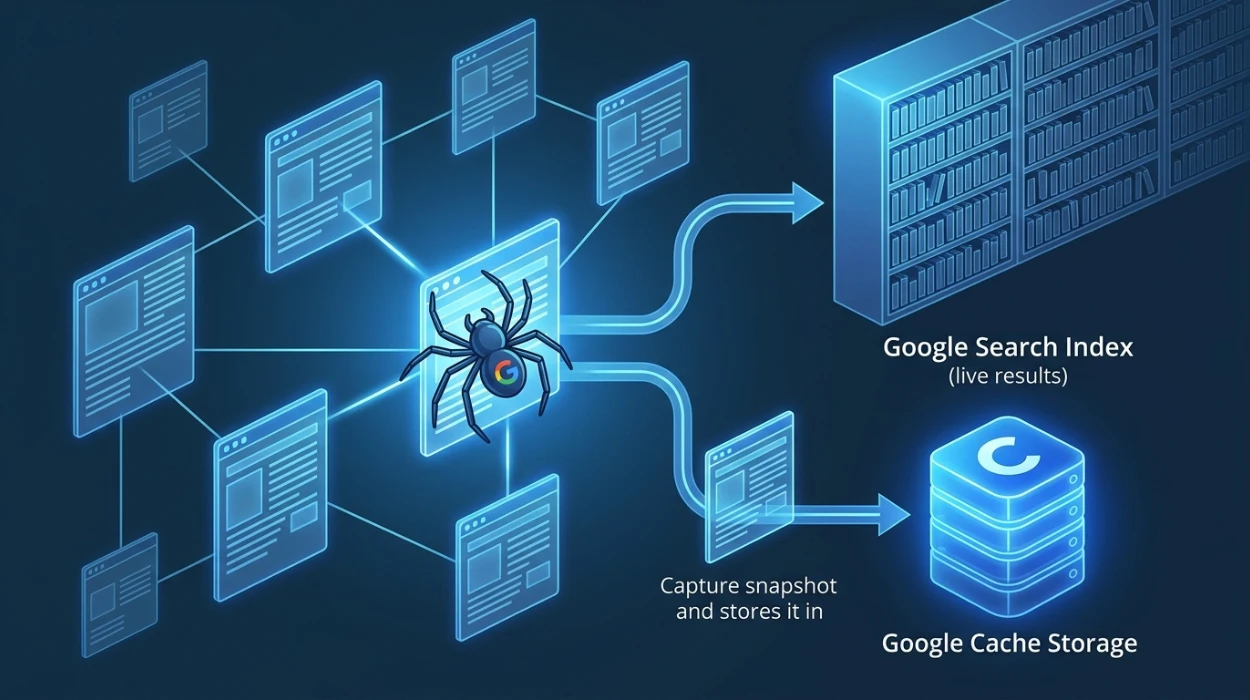
Google Cache Removed Page Content refers to previously indexed webpage information that remains visible in Google’s cached snapshot even after the live page has been updated or deleted. Reputation management is the process of evaluating and influencing how digital information shapes public perception across search ecosystems through content visibility, indexing behaviour, and trust signals.
What Is Google Cache and How Does It Function?
Google Cache is a temporary copy of a webpage that Google stores after crawling and indexing its content. The cached version serves as a reference point that allows search systems to retrieve information without requesting the live page every time it is evaluated. This process supports crawl efficiency, content comparison, and search infrastructure stability. Although modern search features rely increasingly on live indexing, cached copies remain relevant because they reflect how search engines previously interpreted a page. Within reputation management, Google Cache forms part of the broader content indexing process that influences search visibility and entity perception.
The caching mechanism begins when Google’s crawler accesses a webpage and records its content during the indexing cycle. That snapshot becomes associated with the indexed URL and remains available until a subsequent crawl replaces or removes it. The interval between crawls depends on indexing priorities, website authority, update frequency, and technical accessibility. As a result, the cached version often differs from the current live page. This distinction explains why removed information continues appearing through cached references even after the source page has changed.
From a search ecosystem perspective, cached pages represent historical indexing data rather than live website content. Search engines evaluate indexed information independently from the website’s current state. Consequently, removing a webpage from a server does not automatically erase every indexed reference associated with it. Understanding this separation is essential when analysing digital footprint management and search reputation.
Why Does Google Cache Continue Displaying Removed Page Content?
Google Cache continues displaying removed page content because search indexing and website publishing operate as separate technical systems. Deleting a webpage affects the website itself, while Google’s index updates only after the crawler re-evaluates that URL. Until that process occurs, previously stored snapshots remain associated with the indexed record.
Content removal follows a sequence rather than an instantaneous event. Search crawlers revisit webpages according to crawl schedules determined by indexing priorities and technical signals. During the interval between deletion and recrawling, Google continues referencing the previous snapshot because no updated indexing information exists. This delay explains why outdated information remains accessible despite its removal from the live website.
The persistence of cached content influences online reputation because users often interpret indexed information as current information. Search visibility affects credibility, and historical content contributes to entity perception until search systems receive verified updates. Reputation analysis therefore considers both live content and indexed content when evaluating digital presence.
Cache persistence also demonstrates the distinction between content storage and search presentation. The search engine evaluates historical indexing records while simultaneously processing updated crawl data. Until these processes align, removed pages continue influencing search perception through cached references.
How Is Google Cache Different from Google’s Search Index?
Google Cache and Google’s search index perform separate functions within search ecosystems. The cache stores a snapshot of webpage content captured during crawling, whereas the search index contains structured information that enables search result generation and ranking evaluation.
The search index analyses entities, topics, relationships, metadata, structured information, and relevance signals collected from webpages. Google Cache simply preserves one version of the webpage as it appeared during a previous crawl. Consequently, deleting cached content does not automatically alter indexed ranking signals, and updating indexed information does not necessarily remove cached references immediately.
Understanding this distinction improves semantic understanding of search reputation. Content indexing determines how search engines interpret webpages, while cached versions demonstrate how those pages previously appeared. Reputation management evaluates both because historical information contributes to ongoing search perception.
The index also incorporates multiple quality signals, including authority evaluation, content relevance, freshness, and technical accessibility. Cached content supports reference consistency but does not independently determine ranking positions. Instead, it reflects an earlier stage within the indexing lifecycle.
How Does Google Decide When to Update Cached Content?
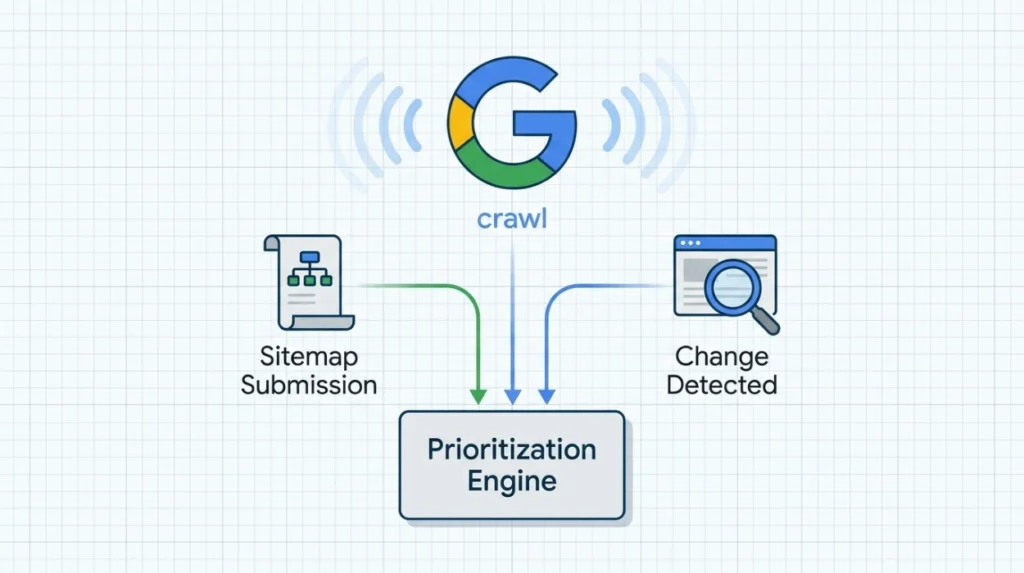
Google updates cached content through repeated crawling and indexing cycles that evaluate whether webpage content has changed since the previous visit. The frequency of updates depends on measurable technical and quality signals rather than manual publication dates alone.
Several indexing mechanisms influence cache refresh timing:
- Evaluate crawl frequency by analysing website update patterns, because frequently updated websites receive more regular crawler visits.
- Assess technical accessibility through HTTP responses, robots directives, and server availability, which determine whether Google retrieves new content.
- Interpret authority signals by examining site reliability and indexing history, allowing trusted websites to receive consistent crawl attention.
- Compare content changes against previous indexed versions to identify meaningful updates requiring cache replacement.
These mechanisms demonstrate that cache updates occur through algorithmic evaluation instead of immediate synchronisation with website modifications. The indexing system prioritises efficient resource allocation while maintaining accurate search records.
For reputation management, understanding crawl behaviour clarifies why outdated content persists temporarily despite legitimate content removal. Search visibility changes only after indexing reflects verified webpage updates.
Why Does Cached Content Matter for Online Reputation?
Online reputation refers to the cumulative perception created through indexed digital information across search ecosystems. Cached content contributes to that perception because historical information remains discoverable during indexing transitions.
Search users evaluate credibility based on available search results rather than publication timelines. When outdated information appears through cached references, users incorporate that information into their assessment of an organisation, individual, or entity. Reputation signals therefore extend beyond current website content and include previously indexed material.
Entity perception develops through repeated exposure to consistent information across multiple indexed sources. Cached pages reinforce historical associations until search systems confirm updated indexing. Consequently, content removal alone does not instantly redefine digital reputation.
Search visibility also influences trust evaluation. Algorithms assess freshness, relevance, authority, and consistency when determining content prominence. Cached information remains part of that broader evaluation process until indexing replaces earlier records with updated content.
Understanding cache behaviour therefore strengthens digital footprint analysis because it explains how historical information continues affecting online credibility after website changes.
How Does Removed Content Continue Affecting Search Visibility?
Removed content continues affecting search visibility because search engines process indexing updates independently from website management activities. The removal of a webpage represents one stage within the broader lifecycle of content discovery, indexing, cache evaluation, and ranking adjustment.
Search systems associate webpages with entities, topics, keywords, structured information, and authority signals. Those associations persist until new indexing information replaces previous evaluations. Consequently, deleted content influences entity understanding during the transition period between crawls.
Search visibility also depends on interconnected reputation signals. Internal links, external references, citations, anchor text, structured data, and historical indexing records collectively define how search systems interpret an entity. Removing one webpage does not instantly remove every associated search signal.
From a semantic SEO perspective, search engines maintain contextual understanding rather than evaluating isolated documents. Historical content contributes to topic relationships until refreshed indexing confirms structural changes. This process explains why deleted pages continue appearing within search ecosystems even after website updates.
Dive Deeper With Our Expert Guides:
Why Dead Links Keep Showing in Google Results and What Causes the Delay
Why Broken Links Remain Indexed in Google Search After Pages Are Taken Down
What Technical Factors Influence Cache Removal?
Cache removal depends on technical indexing signals that inform search engines whether stored information remains valid. These signals communicate webpage status and determine how crawlers process updated content during subsequent visits.
The primary technical factors include HTTP response codes, robots directives, canonical implementation, structured metadata, crawl accessibility, and index management instructions. Search engines interpret these elements collectively rather than independently. Consistent technical signals accelerate indexing accuracy by reducing ambiguity during crawler evaluation.
Content indexing also depends on server reliability and website architecture. Stable technical environments enable efficient crawl processing and accurate cache replacement. Conversely, inconsistent technical signals delay indexing updates because search systems require additional verification before modifying stored records.
Reputation management therefore extends beyond visible content and includes technical search optimisation. Search perception reflects both information quality and indexing accuracy across the digital ecosystem.
How Does Google Evaluate Trust Signals Alongside Cached Information?
Google evaluates trust signals through multiple interconnected quality indicators rather than relying exclusively on cached content. Cached pages represent historical information, while trust evaluation analyses the broader context surrounding indexed entities.
Authority signals include content consistency, source credibility, structured information, topical relevance, technical quality, and user-focused information architecture. Together, these factors define how search systems interpret reliability within search ecosystems.
Entity perception develops through accumulated evidence instead of isolated documents. Search engines compare indexed content across multiple sources to establish semantic relationships and contextual understanding. Cached information contributes historical context but does not independently define trustworthiness.
Reputation systems therefore balance freshness with consistency. Updated content strengthens search credibility when supported by coherent technical implementation and authoritative information architecture. This integrated evaluation process improves search result accuracy while preserving historical indexing integrity.
What Role Does Google Cache Play Within Reputation Management?
Google Cache plays an informational role within reputation management because it illustrates how historical content remains connected to search visibility during indexing transitions. Reputation management analyses this behaviour to understand how digital information evolves across search ecosystems.
Search perception depends on indexed content, authority signals, crawl behaviour, and entity relationships. Cached pages reveal one stage within that lifecycle by preserving earlier versions of indexed information. This preservation assists technical analysis of search behaviour while explaining temporary differences between live content and search presentation.
Digital footprint analysis therefore includes cache evaluation alongside indexing assessment, content relevance, technical optimisation, and trust signal interpretation. Each component contributes to a comprehensive understanding of online credibility and search reputation.
Understanding Google Cache improves semantic awareness of how search engines organise information rather than simply displaying webpages. The relationship between indexing, crawling, caching, and ranking defines how reputation evolves across search ecosystems over time.
Google Cache represents a historical snapshot of indexed content rather than a live representation of a webpage. Its continued display after content removal reflects the separation between website publishing, crawling, indexing, and cache refresh processes. Understanding these mechanisms clarifies why removed information remains visible during indexing transitions and how search systems evaluate historical content alongside current signals.
Within reputation management, cache behaviour forms one component of broader search evaluation that includes digital footprint analysis, authority assessment, content indexing, and entity perception. Analysing these interconnected systems provides a clearer understanding of how search visibility develops and why reputation in search ecosystems depends on both current information and previously indexed content.
What is Google Cache, and why does it show deleted webpage content?
Google Cache is a stored snapshot of a webpage that Google creates during crawling and indexing. If a page is removed from a website, the cached version can remain visible until Google recrawls the URL and updates its search index.
How long does Google Cache keep removed page content?
Google Cache remains available until Google refreshes or removes the stored snapshot during a future crawl. The timeframe depends on crawl frequency, website authority, and indexing signals rather than the date the page was deleted.
Does deleting a webpage automatically remove it from Google Search?
No. Removing a webpage from a website does not instantly remove it from Google’s index or cache. Google updates search results only after processing new crawl and indexing data.
How can I request Google Cache removal in the UK?
Website owners can request cache removal through Google’s removal tools after confirming that the content has been updated or deleted. Clear Your Name explains the cache removal process and how search indexing changes after Google verifies the request.
Why does Google Cache matter for online reputation management?
Cached content can continue influencing search visibility and public perception even after information is removed from a website. Understanding how Google Cache works helps organisations and individuals manage their digital footprint and maintain accurate search results.