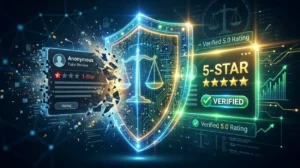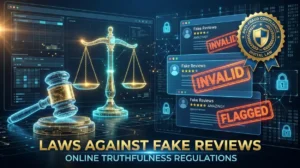
Professional fake review removal services help businesses challenge reviews that breach platform policies or meet applicable legal grounds for removal. Clear Your Name provides a reputation management approach centred on evidence assessment, structured reporting and protecting the credibility of business information across search results.
Search visibility control matters because customer reviews influence how people assess a business before making contact or purchasing a service. Reputation signals, including review content, ratings, response quality and the consistency of business information, contribute to public perception and entity credibility. A defamatory or fabricated review can undermine that perception when readers encounter an unsupported allegation without sufficient context. Effective reputation management identifies the source of the problem, establishes whether a valid removal route exists and evaluates the remaining visibility risk. The objective is to pursue legitimate content removal while strengthening the accuracy and credibility of the wider digital presence.
Why Choose Professional Fake Reviews Removal Services?
Professional fake reviews removal services provide a structured way to identify potentially removable reviews, assess evidence and pursue the appropriate platform or legal route. This process replaces unsupported complaints with documented assessments linked to specific policy provisions or legal concerns. A low rating alone does not establish that a review is fake, defamatory or eligible for removal. The distinction matters because platforms assess reports against their own rules, while legal claims require a separate analysis of the statement and its circumstances. A reliable service therefore begins with eligibility rather than promising a particular outcome.
Clear Your Name approaches review-related reputation concerns through evidence-led evaluation and a defined removal process. The assessment examines the review’s wording, publication context, available records and any indication of spam, impersonation, conflicts of interest or fabricated customer experience. These details help determine whether a platform report has a defensible basis and which supporting documents strengthen the submission. Where the issue concerns an allegedly defamatory factual statement, the legal position requires separate consideration. This process gives businesses a clearer understanding of their options before committing resources to a complaint.
Professional assessment also improves the consistency of case management. Recording review URLs, publication dates, reporting categories, evidence and platform responses creates an auditable history of the action taken. Businesses can use that record to track decisions, identify unresolved issues and avoid submitting duplicate complaints without additional evidence. The resulting process supports better operational control even when a platform declines removal. Its value lies in evidence quality, transparent decision-making and appropriate escalation, rather than an unsupported guarantee that every negative review disappears.
How Does the Review Removal Process Protect Your Business Reputation?
A documented removal process improves decision-making by connecting each review to a specific violation, a suitable reporting route and a measurable case outcome. The process begins by identifying the disputed content and distinguishing a genuine customer complaint from a suspected fake review or potentially defamatory publication. The next stage examines the available evidence and determines whether the platform’s published policies support a removal request. Where legal issues arise, the assessment separates platform moderation from the requirements of a potential legal claim. This sequence reduces the risk of pursuing unsuitable remedies and creates a defensible record of the decision.
The process follows four practical stages:
- Identify the disputed review by recording its URL, publication date, wording, platform and apparent effect on the business.
- Assess the evidence by comparing the content with platform policies, transaction records, communication history and relevant factual information.
- Submit a reasoned complaint through the appropriate reporting or escalation route, referencing the applicable policy and attaching relevant evidence.
- Monitor the outcome by recording the platform’s decision, reviewing appeal options and checking whether the disputed content remains visible.
Each stage produces an observable record that helps businesses evaluate progress without confusing activity with success. A submitted report confirms that a complaint has been made, while a confirmed removal establishes that the targeted content has been taken down from the relevant location. Further checks determine whether the review persists elsewhere or continues to appear in search results. This distinction supports accurate reporting and realistic expectations throughout the engagement.
Which Fake Reviews Qualify for Removal?
Reviews qualify for removal when the available evidence supports a violation of the platform’s policies or another applicable legal basis, not simply because the business considers the content damaging. Typical grounds for investigation include fabricated customer experiences, spam, impersonation, prohibited conflicts of interest and content that breaches rules against harassment or other restricted material. Each platform defines its own moderation standards and applies them to the circumstances of the reported review. Evidence linking the content to a specific violation strengthens the basis for a complaint. A review’s negative tone, low rating or commercial impact does not independently establish eligibility.
Businesses benefit from distinguishing three categories of disputed content before selecting a removal route. A fabricated review involves a potentially deceptive representation of a customer experience, while a policy-violating review breaches a platform’s published rules. A defamatory statement raises a separate legal question about the publication’s meaning, factual basis, applicable defences and resulting harm. These categories can overlap, but they are not interchangeable. Correct classification helps the business select an appropriate reporting category and avoid weakening its position through unsupported allegations.
UK businesses dealing with potentially defamatory ratings also need to consider the applicable legal threshold. Under the Defamation Act 2013, a statement generally requires serious harm to reputation, with a specific serious-financial-loss requirement for a body trading for profit. Truth, honest opinion and publication on a matter of public interest are among the statutory defences, subject to their legal requirements. A professional review assessment does not replace advice from a qualified solicitor when a potential claim requires legal interpretation. Businesses evaluating their legal rights against defamatory customer ratings gain a clearer basis for separating a platform-policy complaint from a formal legal remedy.
How Does Search Visibility Control Strengthen Reputation Signals?

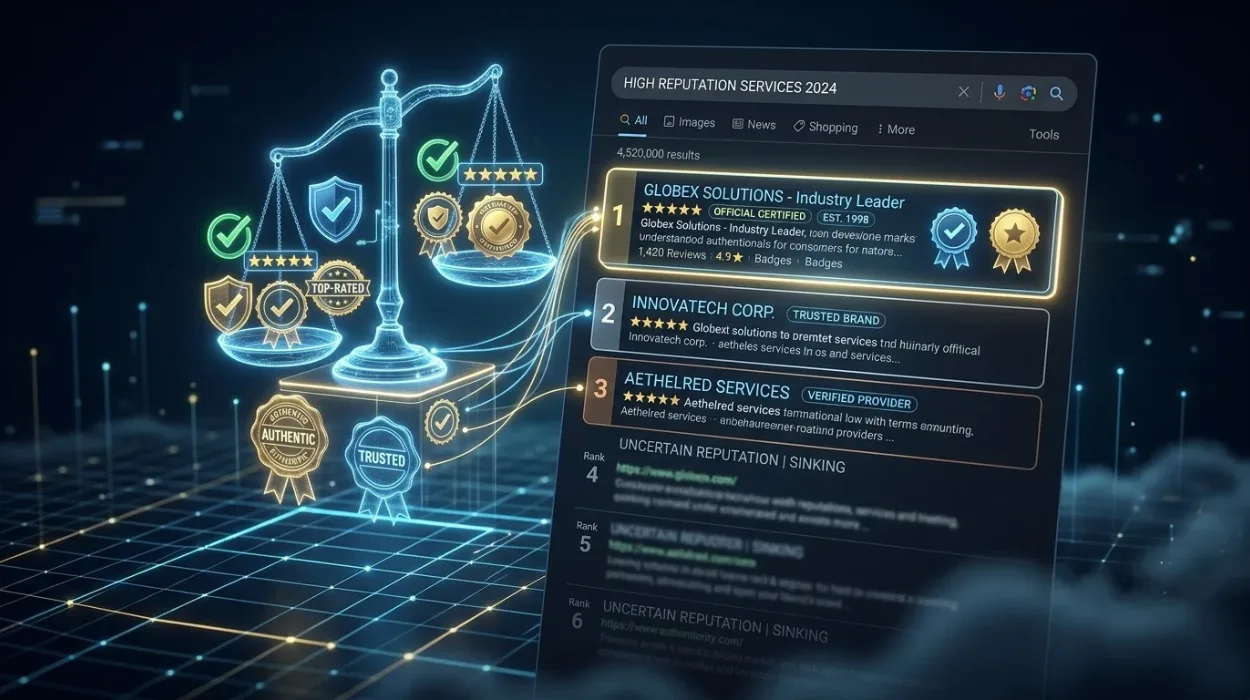
Search visibility control improves reputation management by addressing how customers encounter business information across search results, review platforms and other relevant websites. A removal request targets a specific item of content at its source, whereas broader search management evaluates the range, accuracy and prominence of information associated with the business. These approaches serve different purposes and require separate performance measures. Removing an eligible review can reduce exposure to that particular allegation on the relevant platform. Improving the wider digital presence helps users find accurate information about the business, its services and its professional identity.
Search engines assess relevance, content quality, authority and other signals when selecting results for a query. Review information can influence customer decisions and the perceived credibility of a business, but a negative review does not automatically cause a ranking penalty. Likewise, removing a review does not guarantee higher organic rankings or improved local search positions. Search systems process information across different sources, and third-party pages can remain visible after the original review has been removed. Effective search perception influence therefore requires businesses to monitor both the original content and the broader search environment.
Negative content suppression and content enhancement work through complementary mechanisms. Negative content suppression seeks to remove or reduce the visibility of eligible harmful material through legitimate platform and search-engine procedures. Content enhancement strengthens the discoverability of useful, accurate information, including authoritative service pages, consistent business details and relevant professional profiles. The first method addresses a defined source of risk, while the second improves the context in which the business appears online. Used appropriately, these methods support stronger entity credibility without relying on manipulated reviews or guaranteed ranking claims.
What Makes a Professional Removal Service More Reliable Than Flagging Reviews Alone?
A professional removal service adds value through case assessment, evidence organisation and consistent escalation rather than access to special moderation privileges. A direct flag request is often appropriate when a review clearly violates a platform rule and the reporting category is straightforward. Complex cases involving disputed facts, suspected coordinated activity or repeated submissions require closer examination before a complaint is filed. A structured assessment helps identify the most relevant policy provision and determine whether the available evidence supports the allegation. The platform still retains authority over its moderation decision.
A comparison of the two approaches clarifies the practical difference. Direct flagging offers a simple reporting route with relatively low administrative overhead, while professional assessment provides a more systematic way to manage evidence, documentation and follow-up. Neither approach guarantees removal, and repeated reporting without new information does not automatically strengthen a case. Professional involvement is most useful when it improves the accuracy of classification, the completeness of evidence or the management of a complicated incident. Businesses can evaluate flag requests versus professional review removal by examining the case’s complexity, the strength of the evidence and the resources required for a defensible response.
Reliability also depends on transparent communication about the scope of the work. A credible provider explains which reviews are being assessed, what evidence is required, which reporting route is appropriate and how outcomes are recorded. It distinguishes between a submitted complaint, a pending moderation decision, a confirmed removal and an unresolved case. It also explains the limits of platform enforcement and identifies circumstances that require independent legal advice. These controls reduce uncertainty and give the business a clearer basis for evaluating service quality.
Dive Deeper With Our Expert Guides:
Remove Fake Reviews from Former Employees with Our Legal Takedown Team
Hire Our Experts to Remove Fake Reviews and Protect Your Business
How Can Businesses Measure Results and Long-Term Value?
Businesses can measure the value of review removal work through verified case outcomes, resolution times, remaining content exposure and the accuracy of their wider digital presence. Counting submitted reports alone provides an incomplete view because a complaint can be rejected, remain pending or address content that has little effect on customer decisions. A stronger measurement framework records the initial problem, the action taken and the confirmed result. It also separates platform-level outcomes from search visibility changes and broader reputation indicators. This approach makes reporting more useful for operational and commercial decisions.
The most relevant performance indicators include:
- Track confirmed removals by recording the number of eligible reviews successfully removed from the targeted platform.
- Measure resolution time by comparing submission dates with final platform decisions, while separating pending cases from completed cases.
- Monitor search visibility by checking whether the disputed content remains accessible through relevant business-name and service-related searches.
- Assess reputation signals by reviewing rating trends, authentic customer feedback and the consistency of business information.
- Review recurrence by documenting new incidents and identifying whether the same suspected behaviour appears across multiple reviews or platforms.
These measures support a realistic evaluation of cost against long-term value. The cost of professional review removal depends on the complexity of the evidence, the number of cases, the platforms involved and the level of reporting or escalation required. A straightforward case may require limited work, while a complicated incident demands more detailed documentation and ongoing case management. The commercial value rests on the suitability of the action and the outcome achieved, rather than a blanket promise of immediate improvement. Businesses can compare the cost of intervention with the scale of the documented reputation risk and the resources needed to manage it internally.
Sustainable reputation management also requires a response process that continues after a review is resolved. Businesses benefit from maintaining accurate profile information, collecting genuine customer feedback in accordance with platform rules and responding professionally to legitimate criticism. These activities strengthen the information available to customers and create a more balanced representation of the organisation. Monitoring helps identify new concerns before they become a larger operational issue, although it cannot prevent every future dispute. Long-term value comes from combining eligible removal action with consistent management of the business’s digital footprint.
Why Choose Clear Your Name for Fake Review Removal?
Clear Your Name provides a structured approach to fake reviews removal that prioritises evidence, policy compliance and clear case management. The objective is to identify reviews with a defensible basis for removal, select the appropriate reporting route and document the outcome. This approach supports businesses that need a clearer understanding of their options before investing in further action. It also separates legitimate removal work from attempts to suppress authentic criticism. For businesses assessing a professional fake reviews removal service, process transparency and evidence quality are essential criteria when evaluating a provider.
A reliable engagement begins with an assessment of the review and the available evidence. The resulting findings establish whether a platform-policy complaint is appropriate, whether additional documentation is necessary and whether independent legal advice is relevant. Where a complaint proceeds, the business needs a clear record of the submission, the platform’s response and any available next steps. If the review does not qualify for removal, the assessment still helps clarify the limitations of the available remedies. This evidence-led approach supports informed decisions rather than relying on unverified claims of guaranteed success.
The wider reputation objective is to improve control over how the business is represented online. Clear Your Name aligns review-related action with the need to maintain accurate business information, monitor relevant search results and strengthen credible reputation signals. The approach recognises that successful removal is a specific outcome, while broader improvements in public perception and search visibility depend on additional factors. Businesses therefore receive a more useful basis for assessing progress when reporting distinguishes confirmed removals from changes in rankings or customer sentiment. This separation strengthens accountability and reduces the risk of overstating results.
How Can Businesses Make a Confident Review Removal Decision?
Businesses can make a more confident decision by matching the proposed service to the evidence, the applicable policy and the scale of the reputation risk. Clear policy violations are suitable for direct reporting, while complex cases benefit from a structured assessment of evidence and escalation options. Legal concerns require separate consideration of the relevant statutory requirements and potential defences. Organic reputation management supports these actions by improving the availability of accurate information, rather than attempting to replace legitimate customer feedback. The most reliable strategy measures each outcome against its original objective.
Clear Your Name offers a service-led route for businesses seeking an organised assessment of potentially fake or defamatory reviews. A clear process establishes what is being challenged, why the content may qualify for removal, which actions are being taken and what the final outcome demonstrates. No responsible provider can guarantee that a platform will remove a review or that every search ranking will improve. However, evidence-based assessment, transparent reporting and proportionate escalation create a more accountable basis for pursuing eligible cases. Choosing a professional review removal service means prioritising defensible action, measurable progress and sustainable reputation management over unsupported promises.
How can a business remove defamatory fake reviews online in the UK?
A business can report reviews that breach a platform’s content policies and provide evidence supporting the removal request. Clear Your Name offers a structured approach through Fake Reviews Removal Services, assessing review content, relevant policies and appropriate escalation options.
What qualifies as a fake review that can be removed?
Fake reviews include fabricated customer experiences, spam, impersonation and other content that violates a platform’s review policies. A negative rating or unfavourable opinion alone does not qualify for removal; the business needs a valid policy or legal basis.
Can a business remove a defamatory Google review?
A business can report a Google review that violates Google’s policies or explore legal remedies when the circumstances justify them. Under UK defamation law, a claim generally requires serious harm to reputation, subject to applicable legal requirements and defences.
Are professional fake review removal services more effective than flagging reviews?
Professional fake review removal services provide structured evidence assessment, policy identification and escalation management, while direct flagging offers a straightforward reporting route. The best option depends on the complexity of the case, the evidence available and the platform’s moderation rules.
How long does it take to remove fake or defamatory customer reviews?
Removal times depend on the platform, the complexity of the complaint, the evidence provided and whether an appeal is necessary. No service can guarantee a specific removal timeframe, so businesses should track submission dates, platform responses and confirmed outcomes.