
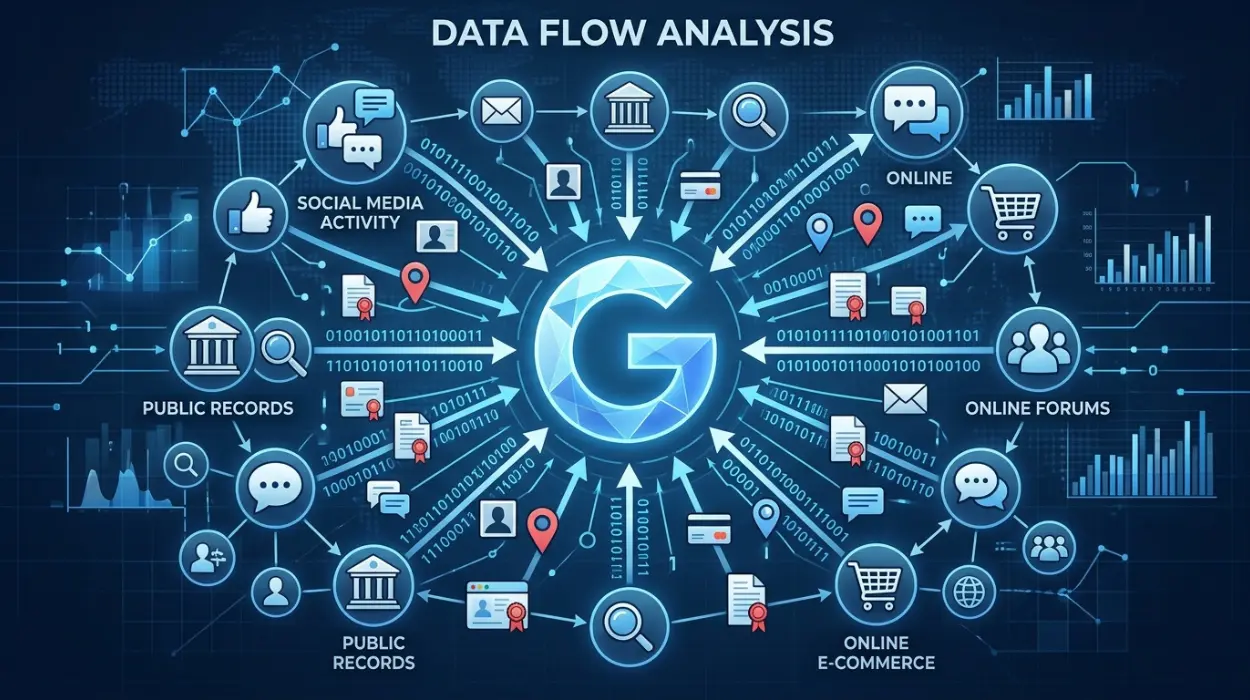
Personal information appears in Google after search engines discover, crawl, index, and evaluate publicly accessible content published across websites, directories, databases, and digital platforms.
Reputation management is the systematic evaluation of how information about an individual or entity is collected, interpreted, and presented within search ecosystems. Online reputation refers to the combination of reputation signals, content indexing, authority indicators, and search visibility that shape entity perception across search engine results pages (SERPs). Search engines do not create personal information independently; they organise information supplied by external sources according to relevance, authority, and indexing rules. Understanding how information enters Google’s index provides the foundation for analysing digital reputation, content ranking dynamics, and online credibility. These mechanisms collectively determine how personal information influences public perception through search.
How Does Personal Information Enter Google’s Search Index?
Personal information enters Google’s search index through publicly accessible webpages that search engine crawlers discover and evaluate.
Content indexing is the process through which Google collects information from websites before determining whether it qualifies for inclusion within search results. Search crawlers continuously explore webpages by following hyperlinks, XML sitemaps, structured data, and internal navigation systems. Once discovered, content undergoes evaluation based on accessibility, technical quality, relevance, and authority signals. Personal information becomes searchable only after successful indexing rather than immediately after publication. Reputation management analyses this mechanism because indexed information forms part of an individual’s searchable digital footprint.
Search visibility develops after indexing rather than during publication. Websites containing biographies, directory listings, news articles, public records, social profiles, professional databases, and organisational pages all contribute information capable of appearing within Google’s results. Search algorithms evaluate relationships between these sources before assigning rankings across SERPs. Entity perception therefore reflects the combined influence of multiple indexed sources instead of one isolated webpage. Understanding this process explains why information continues appearing until indexing conditions change.
What Stages Form Google’s Content Indexing Process?
Google evaluates publicly available information through sequential indexing stages.
- Discover webpages through hyperlinks, XML sitemaps, and website navigation structures.
- Crawl accessible pages to collect textual content, images, metadata, and structured information.
- Index relevant information after evaluating technical accessibility and content quality.
- Rank indexed pages using relevance, authority, reputation signals, and user intent.
- Refresh indexed content through recurring crawls that evaluate updates and removals.
Which Websites Supply Personal Information to Google?
Google’s search results are supplied by websites that publish publicly accessible information rather than by Google itself.
Personal information originates from independent publishers operating across different sectors of the internet. News organisations publish articles that become searchable after indexing. Business directories list professional information that contributes to entity perception. Government databases publish legally accessible records under applicable regulations. Professional networking platforms provide employment information that influences online credibility. Social media profiles, forums, educational institutions, corporate websites, and public registers also contribute searchable information when their pages remain accessible to search engine crawlers.
Every published webpage contributes reputation signals that search engines evaluate alongside competing sources. Authority indicators, topical relevance, structured data, publication consistency, and linking relationships influence how these sources appear within SERPs. Search visibility therefore depends on the collective strength of information rather than the existence of a single website. Reputation management evaluates these relationships because understanding content origins explains how digital footprints expand across search ecosystems. The diversity of publishing sources also explains why identical information frequently appears on multiple domains.
Why Does Google Display Some Personal Information More Prominently Than Others?
Google ranks personal information according to search evaluation systems rather than publication date alone.
Search ranking algorithms compare indexed content using numerous reputation signals designed to identify relevance and authority. Content quality, source credibility, technical optimisation, semantic relevance, user intent alignment, and linking relationships all contribute towards SERP evaluation. Personal information published by authoritative domains frequently receives stronger search visibility because search engines interpret those sources as reliable references. Entity perception therefore reflects algorithmic evaluation rather than chronological publication.
Search visibility also changes as reputation signals evolve. Updated webpages, improved structured data, strengthened topical authority, and enhanced internal linking all influence ranking positions over time. Information that consistently demonstrates credibility remains more visible because search engines interpret stable authority signals positively. Reputation management analyses these ranking dynamics to understand why some personal information dominates branded search results while other pages receive minimal exposure. Search ecosystems therefore function through comparative evaluation rather than static indexing.
Which Reputation Signals Influence Search Visibility?
Search engines evaluate multiple signals when ranking personal information.
- Measure source authority through domain credibility and editorial standards.
- Evaluate topical relevance between search intent and published content.
- Interpret structured data that identifies people, organisations, and relationships.
- Compare backlink profiles that reinforce trust and authority.
- Assess content freshness through updates and ongoing maintenance.
What Is a Digital Footprint Within Search Ecosystems?

A digital footprint is the collection of searchable information associated with an individual or organisation across publicly accessible online environments.
Digital footprints extend beyond social media profiles to include every indexed reference connected with an identifiable entity. News reports, business listings, conference biographies, academic publications, legal notices, review platforms, archived webpages, and organisational websites collectively contribute to searchable identity. Search engines evaluate these references together because entity perception depends upon relationships between multiple indexed sources. Reputation signals emerge through consistency, authority, and semantic relevance rather than isolated mentions.
Content indexing continuously expands or contracts digital footprints as new material appears and outdated information changes. Search visibility therefore reflects ongoing interaction between publication activity and search engine evaluation. Reputation management defines digital footprints as dynamic rather than permanent because search ecosystems continuously reassess indexed information. Understanding this concept provides context for analysing online credibility and long-term entity perception. Every indexed source contributes proportionally to the broader representation presented within search results.
How Do Search Engines Interpret Trust and Credibility?
Search engines interpret trust and credibility by evaluating measurable signals rather than subjective opinion.
Authority within search ecosystems refers to demonstrable reliability established through consistent publishing practices, recognised expertise, technical quality, and external references. Algorithms compare competing sources to determine which information best satisfies search intent while maintaining informational integrity. Content indexing supports this evaluation by providing structured access to published information, while ranking systems compare authority indicators across relevant webpages. Reputation management studies these mechanisms because credibility directly influences search visibility.
Trust signals operate collectively instead of independently. Accurate structured data improves entity identification, authoritative backlinks reinforce credibility, topical consistency strengthens semantic relevance, and reliable publication history supports long-term authority evaluation. Search engines combine these indicators to refine SERP evaluation across successive indexing cycles. Entity perception therefore develops through accumulated evidence rather than isolated reputation claims. This systematic evaluation underpins Google’s approach to organising publicly available information.
How Do Search Engine Results Pages Shape Online Reputation?
Search engine results pages (SERPs) organise indexed information into an ordered representation of an individual or organisation based on search evaluation rather than publication sequence.
A SERP refers to the collection of search results displayed after a user enters a query. Every result occupies a position determined through Google’s evaluation of relevance, authority, reputation signals, and content indexing. Search visibility increases as pages appear more prominently because users interact with higher-ranking results more frequently. Entity perception therefore develops from the overall composition of the SERP rather than a single webpage. Reputation management analyses SERP composition because search rankings directly influence how digital information is interpreted.
Search engines continuously reassess SERPs as webpages change, authority signals evolve, and new information enters the index. Updated publications, revised metadata, improved technical quality, and strengthened semantic relationships all contribute towards ranking adjustments. Content that consistently demonstrates credibility retains stronger search visibility over time because Google’s evaluation systems reward reliable information structures. This explains why search reputation remains dynamic rather than fixed. SERP evaluation therefore reflects ongoing comparisons between competing information sources.
Which Elements Contribute to SERP Evaluation?
Search engines analyse multiple elements before determining search rankings.
- Evaluate relevance by matching indexed content with search intent and semantic context.
- Measure authority through recognised publishing standards, trusted references, and backlink quality.
- Compare technical accessibility using crawlability, structured data, and page performance.
- Interpret reputation signals generated through consistent and reliable information.
- Refresh rankings after re-evaluating updated pages during recurring indexing cycles.
How Do Reputation Signals Influence Entity Perception?
Reputation signals are measurable indicators that help search engines evaluate the credibility and reliability of information associated with an entity.
Entity perception refers to how search engines organise and interpret information relating to a person, organisation, or identifiable subject across multiple indexed sources. Reputation signals include publication consistency, authoritative citations, topical expertise, structured entity information, and trusted backlinks. Search algorithms analyse these indicators collectively because credibility depends upon relationships between sources rather than isolated webpages. Search visibility improves when reputation signals reinforce one another across the wider digital ecosystem. Reputation management therefore evaluates both the quality and consistency of indexed information.
Conflicting information weakens entity perception because search engines compare factual consistency between multiple sources. Consistent naming conventions, accurate organisational details, verified profiles, and authoritative publications strengthen semantic relationships that support entity recognition. Search ecosystems rely on these relationships when determining how information appears across branded searches. Content indexing therefore contributes to reputation formation through the accumulation of trusted digital references. Entity perception evolves continuously as search engines reassess these relationships.
Dive Deeper With Our Expert Guides:
How Your Phone Number Ends Up Indexed in Google and Why It Persists There
What Data Brokers Are and How They Collect and Publish Personal Information
Why Does Duplicate Personal Information Appear Across Different Websites?
Duplicate personal information appears because multiple publishers obtain information from publicly available records, syndicated databases, or previously published sources.
Information sharing forms part of the wider digital publishing ecosystem. Business directories aggregate information from company registrations, professional databases reference publicly available biographies, and data aggregators distribute records across partner websites. Once these pages become publicly accessible, Google’s crawlers evaluate each source independently during content indexing. Search visibility therefore reflects multiple indexed references even when the underlying information originates from a single publication. Reputation management analyses duplication because repeated information influences overall entity perception.
Search engines distinguish between duplicate content and duplicate information. Identical facts appearing on different websites are evaluated according to authority, relevance, and technical quality rather than simple repetition. One source frequently becomes the dominant ranking result, while alternative versions remain indexed if they contribute additional contextual value. This evaluation explains why personal information often appears across several domains simultaneously. The search ecosystem therefore prioritises authoritative representations instead of eliminating every duplicate reference.
Why Duplicate Information Persists in Search Results
Duplicate information remains visible because search engines evaluate each source separately.
- Identify independent publishers that host similar personal information.
- Compare authority signals before determining ranking positions.
- Evaluate technical quality to assess crawlability and indexing eligibility.
- Maintain multiple indexed references when each source provides distinct contextual relevance.
What Role Does GDPR Play in Personal Information Within Google UK?
GDPR establishes legal rights relating to personal data processing, while Google’s search systems evaluate information according to indexing and legal compliance requirements.
The UK General Data Protection Regulation defines how organisations process personal information and establishes rights relating to access, rectification, erasure, and lawful processing. Search engines evaluate qualifying legal requests alongside their indexing systems when determining whether certain search results require review. Reputation management analyses GDPR because legal rights interact with search visibility rather than replacing indexing mechanisms. Understanding this relationship clarifies why legal eligibility and technical indexing remain separate processes within search ecosystems.
GDPR does not alter Google’s ranking algorithms directly. Instead, qualifying legal requests introduce an additional layer of assessment concerning personal information displayed within search results. Search visibility continues depending on content indexing, authority signals, and SERP evaluation even after legal considerations are introduced. Understanding GDPR rights for removing personal information from Google UK provides additional context for how legal protections intersect with search indexing and reputation management processes. This relationship demonstrates that legal frameworks and search systems operate together while serving different purposes.
How Does Online Credibility Develop Over Time?
Online credibility develops through the accumulation of consistent, authoritative, and accurately indexed information across trusted digital sources.
Search engines evaluate credibility as an ongoing process rather than a single event. Every indexed publication contributes additional evidence supporting or weakening entity perception depending on its authority, accuracy, and relevance. Structured information, verified organisational profiles, editorial quality, and trusted references reinforce credibility by strengthening reputation signals throughout search ecosystems. Search visibility therefore reflects cumulative evaluation instead of isolated achievements. Reputation management defines online credibility as a continuously evolving representation supported by reliable information.
Content indexing also influences credibility through continual reassessment. As webpages are updated, removed, expanded, or restructured, search engines revisit previously indexed information and adjust rankings where appropriate. Stable authority signals improve consistency across SERPs, while contradictory or outdated information affects entity perception. This ongoing evaluation explains why digital reputation changes gradually through continuous indexing cycles. Online credibility therefore represents the long-term outcome of reliable publishing and sustained search evaluation.
Personal information enters Google’s search results through external websites that publish publicly accessible content, while Google’s search systems organise that information through crawling, content indexing, and SERP evaluation. Reputation management provides a framework for understanding how reputation signals, authority indicators, and entity perception influence online visibility rather than creating or controlling published information.
Digital footprints, search visibility, trust signals, and content ranking dynamics operate together to shape online credibility across search ecosystems. Understanding these concepts clarifies how search engines evaluate publicly available information, why different sources achieve different levels of visibility, and how legal frameworks such as GDPR intersect with content indexing. Analysing these mechanisms provides a stronger conceptual understanding of how online reputation develops and changes over time.
How does my personal information end up on Google?
Google does not create personal information; it indexes content that is publicly available on websites. News sites, public records, business directories, social media profiles, and other indexed pages supply information that appears in Google Search.
Which websites commonly supply personal information to Google?
Personal information can come from government records, company websites, professional directories, news publications, social networking platforms, and public databases. Google indexes these sources when they are accessible to search engine crawlers.
Can I remove my personal information from Google Search?
In some circumstances, personal information can be removed from Google Search if it meets Google’s policies or applicable legal requirements, such as UK GDPR. Personal Information Removal Services assess the most appropriate removal method based on the type of information and where it is published.
Why does the same personal information appear on multiple websites?
The same information often appears because multiple websites collect data from public records, licensed databases, or syndicated content sources. Search engines index each eligible webpage separately, which can result in duplicate information appearing across search results.
How do Personal Information Removal Services support online reputation management?
Personal Information Removal Services evaluate where personal information is published, identify eligible removal options, and help reduce unnecessary search visibility. Providers such as Clear Your Name analyse legal, technical, and search indexing factors to determine the most appropriate approach for managing publicly accessible personal information.