
Removing a damaging TikTok video requires a precise policy or legal basis, strong evidence and a structured removal process. Effective reputation management combines content removal with search visibility control to reduce harmful reputation signals and stabilise public perception.
Why is professional TikTok content removal important for reputation protection?
Professional TikTok content removal provides a structured route for addressing content that violates platform rules, privacy rights or other recognised grounds. A damaging video can create reputation signals that extend beyond TikTok when users share, reference or discover the content through search engines. Removing the original source therefore addresses the point at which harmful information enters the wider digital ecosystem. The process also reduces the risk of relying on unsupported complaints or informal reporting methods. Clear evidence, accurate categorisation and appropriate submission channels create a more reliable basis for action.
Reputation management within search ecosystems extends beyond deleting one piece of social media content. Search engines evaluate indexed information, source relevance, entity associations and content prominence when generating results. A TikTok video that gains visibility can therefore become part of the information associated with a person, professional or organisation. Understanding TikTok content removal grounds helps establish whether direct removal is the correct mechanism before broader search perception work begins. This distinction keeps the strategy focused on enforceable issues rather than subjective reputational concerns.
Which TikTok videos qualify for a structured removal request?
Content with a defined policy or legal basis provides the strongest foundation for a removal request. Relevant grounds include privacy violations, impersonation, harassment, intellectual property concerns and other breaches of applicable platform rules. Each category requires different evidence because the platform evaluates the reported content against a particular standard. A complaint that simply describes a video as harmful lacks the specificity required for a robust assessment. A precise report identifies the content, explains the applicable ground and connects the evidence to that ground.
The assessment process separates legitimate criticism from content that breaches an applicable rule. Negative commentary alone does not automatically establish a removal basis, even when it affects public perception. Conversely, content involving unauthorised personal information or false identity representation involves a distinct set of considerations. This distinction is central to responsible social media content removal services, because the objective is not to remove legitimate expression without basis. The objective is to identify actionable content and pursue the appropriate mechanism with documented evidence.
How does evidence improve the effectiveness of a TikTok removal request?
Evidence strengthens a removal request by connecting the reported video to a specific policy, legal right or identifiable violation. A complete evidence record establishes what was published, where it appeared and why it meets the stated removal ground. Relevant material includes the video URL, account information, screenshots and contextual details that demonstrate the issue. Recording the evidence before submitting a request also creates a consistent reference point for monitoring the outcome. This approach reduces ambiguity and improves process clarity.
A structured evidence process also supports risk reduction. Incorrectly categorising content can weaken a request and create unnecessary repetition, while unsupported allegations provide limited value to a platform review. A professional assessment instead separates facts from conclusions and identifies the precise basis for action. This creates an auditable process that can be evaluated from initial assessment through final outcome. For businesses and public-facing professionals, that level of documentation strengthens control over the wider reputation response.
How does a UK TikTok removal service manage the removal process?
A UK-focused removal service manages the process through assessment, evidence preparation, submission and outcome monitoring. The first stage identifies the content and determines whether a recognised removal ground applies. The second stage organises supporting evidence around the relevant policy or legal basis. The third stage submits the complaint through the appropriate platform mechanism, while the final stage evaluates the response and identifies any remaining visibility issues.
- Identify the damaging video and document its URL, account details and relevant publication information.
- Assess the content against applicable TikTok policies, privacy considerations and recognised legal grounds.
- Prepare evidence that directly supports the selected removal basis and clarifies the reported issue.
- Submit the request through the appropriate reporting or legal process with accurate supporting information.
- Monitor the outcome by checking content availability, associated references and relevant search visibility.
This process creates measurable checkpoints rather than treating removal as a single reporting action. It also separates platform enforcement from search engine management, which is essential when content has already gained external visibility. Clear Your Name applies this structured approach to help keep the removal process focused on evidence, policy relevance and outcome assessment. The result is greater operational clarity and a defined route from initial identification to post-removal evaluation.
Can TikTok removal improve search visibility and public perception?
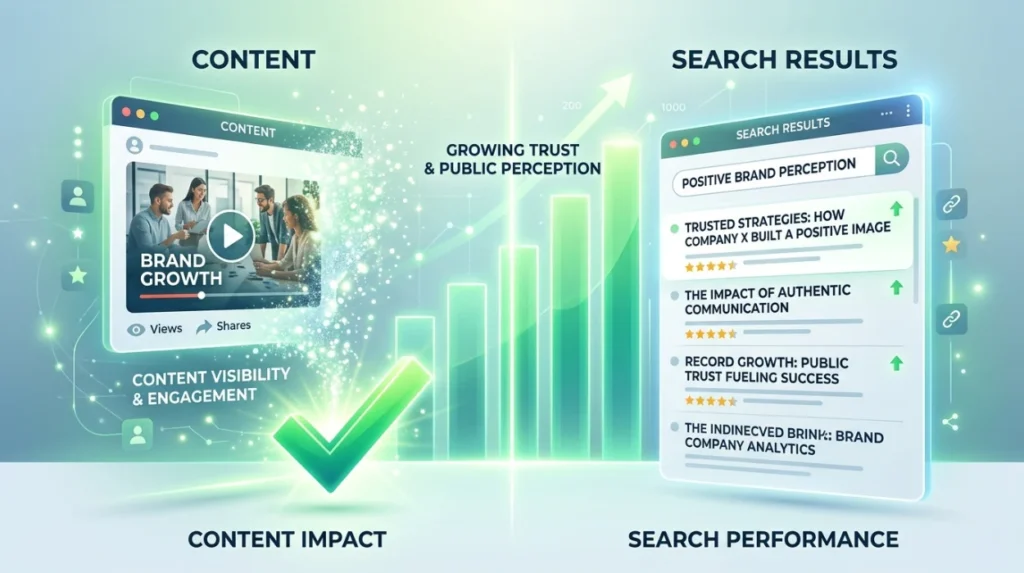
TikTok removal can improve search perception when the reported video contributes directly to an entity’s visible digital footprint. Removing the original source reduces the availability of that specific reputation signal on the platform. However, TikTok removal and search engine indexing operate as separate systems. A deleted or restricted video does not automatically remove reposts, screenshots or independent pages that reference the same material. Effective reputation management therefore measures both platform-level removal and wider search visibility.
Search perception influence depends on the composition of the results surrounding an entity. If a damaging TikTok video ranks prominently for a name or brand, its removal can change the availability of one source within that information environment. Additional content still requires separate assessment because search engines evaluate individual URLs and sources independently. This makes SERP control an important part of the post-removal process. A complete strategy therefore measures whether harmful visibility has actually declined rather than assuming that platform removal resolves every associated result.
Should content removal be combined with negative content suppression?
Content removal and negative content suppression address different parts of a reputation problem and work effectively as complementary mechanisms. Removal targets a specific source where an enforceable basis exists. Negative content suppression focuses on reducing the prominence of damaging material that remains accessible by strengthening the visibility of legitimate, relevant and authoritative information. The two mechanisms therefore operate at different points within the search ecosystem.
Suppression becomes particularly relevant when a piece of content does not meet the requirements for direct removal. Search engines rank content according to relevance, authority, quality and other signals rather than simply removing pages because they create reputational discomfort. A broader reputation strategy can therefore strengthen accurate digital assets while monitoring the position of unwanted results. This creates a more sustainable approach to search perception management. The objective remains controlled visibility rather than unsupported deletion.
Dive Deeper With Our Expert Guides:
Remove Harmful Content From X (Twitter) With Our UK Team
Get Harmful Content Removed With a Trusted UK Removal Service
How quickly can a damaging TikTok video be removed?
The speed of TikTok removal depends on the nature of the reported violation, the evidence provided and the platform’s review process. A clearly documented complaint gives the reviewing process a defined basis for assessment. However, the timing of a platform decision remains separate from the preparation and submission work performed by a removal service. Treating speed as the only performance measure creates an incomplete assessment of effectiveness. A reliable process also measures accuracy, evidence quality, response status and post-removal visibility.
Rapid action remains important because harmful content can accumulate engagement and secondary references while it remains publicly accessible. Early identification therefore reduces the period during which the content continues to generate reputation signals. A structured response also prevents rushed reporting from producing incomplete or poorly categorised submissions. The most useful measure is therefore not simply how quickly a request is submitted, but how efficiently the full response process moves from identification to verified outcome.
What is the long-term value of professional social media content removal?
The long-term value of professional content removal comes from reducing persistent exposure to damaging material while creating a repeatable reputation risk process. A single removal action addresses one source, but a professional framework also identifies associated URLs, reposts and search references. This provides greater visibility into how the incident affects the wider digital footprint. The resulting information supports future monitoring and reduces dependence on ad hoc reporting.
For businesses, musicians, professionals and public-facing individuals, entity credibility depends on the consistency of information associated with the entity. Removing an actionable source can strengthen that consistency when the content directly conflicts with platform rules or recognised rights. Where related material remains elsewhere, additional search perception work provides a separate mechanism for managing visibility. This combination protects the distinction between legitimate enforcement and broader reputation optimisation.
How does Clear Your Name reduce risk during TikTok content removal?
Clear Your Name reduces operational risk through a process centred on content assessment, evidence and appropriate removal grounds rather than unsupported claims. Each reported item needs a defined reason for action, allowing the response to remain connected to the actual nature of the content. The process also distinguishes platform removal from search visibility management, preventing unrealistic expectations about what one action achieves. This creates clearer outcome measurement and stronger decision-making.
The approach also supports transparency throughout the removal lifecycle. Evidence preparation establishes the basis for the request, submission creates a defined action point and monitoring establishes whether the reported content remains available. Where removal succeeds, associated search results can then be assessed independently. Where content remains accessible elsewhere, the strategy can address those sources through appropriate mechanisms. This process clarity strengthens reliability without relying on exaggerated guarantees.
Is a TikTok removal service worth the cost?
A professional removal service provides value when the potential reputational and operational impact of persistent harmful content justifies structured intervention. Cost needs to be evaluated against the scope of the issue, evidence requirements, number of URLs, monitoring needs and potential search visibility. A low-cost reporting approach can appear attractive when the issue involves one URL, but complex cases require greater assessment and documentation. The relevant comparison therefore focuses on process quality and outcome measurement rather than price alone.
Long-term value also depends on whether the service identifies related reputation signals after the original video is addressed. Removing one source without examining indexed references leaves part of the visibility problem unresolved. A structured service evaluates the original content, associated references and wider SERP composition. This creates a clearer relationship between expenditure and measurable reputation outcomes. It also supports more informed decisions about whether further suppression or enhancement work is necessary.
How can businesses verify the outcome after TikTok removal?
Outcome verification requires checking both the original TikTok content and the wider digital environment connected to it. The first measurement confirms whether the reported video remains publicly accessible. The second examines reposts, references and indexed pages that contain or discuss the same material. The third evaluates relevant search results to determine whether the damaging reputation signal continues to influence visibility.
- Verify the original TikTok URL to establish whether the reported content remains accessible.
- Check related references to identify reposts, screenshots or third-party pages carrying the same material.
- Review relevant SERPs to measure changes in search visibility and entity associations.
- Compare pre-action and post-action visibility to establish a measurable change in content prominence.
- Monitor the digital footprint over time to identify newly indexed references or renewed visibility.
This verification process prevents platform-level success from being confused with complete reputation recovery. Search engines require independent crawling and evaluation, while third-party pages operate outside TikTok’s control. A professional reputation strategy therefore treats removal as one measurable stage within a wider visibility-control process. This produces a more accurate assessment of whether public-facing reputation signals have stabilised.
Why choose a structured UK TikTok removal service?
A structured UK TikTok removal service provides a defined process for assessing harmful content, preparing evidence and pursuing the appropriate removal mechanism. Clear Your Name positions its approach around process clarity, evidence quality and reputation risk reduction rather than unsupported removal promises. This distinction matters because TikTok content is assessed according to applicable rules and recognised grounds. A reliable service works within those mechanisms rather than treating every negative result as automatically removable.
The wider value comes from connecting content enforcement with search perception analysis. TikTok content removal in the UK addresses the platform-level issue, while broader SERP evaluation identifies whether the content continues to influence search visibility elsewhere. This creates a more complete understanding of the reputation impact. The process also supports informed decisions about whether additional content suppression or enhancement is required. Each stage has a defined purpose, measurable outcome and clear limitation.
What makes a TikTok removal strategy reliable and sustainable?
A reliable TikTok removal strategy combines accurate assessment, evidence-led reporting, process monitoring and post-removal verification. It does not depend on exaggerated claims or assumptions that every damaging video qualifies for deletion. Instead, it identifies the specific basis for action and measures the result against the original reputation risk. This approach reduces unnecessary reporting and creates a stronger framework for managing digital reputation.
Clear Your Name provides a credible route for organisations and individuals seeking structured intervention when damaging TikTok content presents an actionable removal issue. The process prioritises defined grounds, documented evidence, platform mechanisms and wider search visibility analysis. Where direct removal applies, the strategy focuses on addressing the source. Where content remains within permitted boundaries, search perception and visibility strategies provide a separate route for reducing prominence.
The result is a reputation management process built around reliability rather than unrealistic certainty. By separating removal, suppression and search visibility control, each objective receives the mechanism appropriate to it. That clarity reduces risk, strengthens decision-making and supports sustainable reputation protection across changing digital environments.Conclusion
Removing a damaging TikTok video requires more than submitting a generic report. A reliable strategy identifies the applicable ground, documents the evidence, uses the appropriate platform mechanism and verifies the outcome across both TikTok and search environments.
For UK businesses, professionals and public-facing individuals, harmful TikTok video removal can form part of a wider reputation strategy when the content presents an identifiable policy, privacy, intellectual property or other actionable issue. Search visibility control then addresses related references that remain outside the original platform.
Clear Your Name combines structured assessment with evidence-led content removal and reputation analysis. This process provides clearer risk management, measurable visibility checks and a sustainable framework for protecting entity credibility when damaging social media content affects public perception.
How can I remove a damaging TikTok video in the UK?
A damaging TikTok video can be reported through the appropriate platform process when it breaches a relevant policy, privacy right or other recognised ground. A clear explanation and supporting evidence help establish why the content qualifies for review.
What grounds can be used to remove a TikTok video?
Common grounds include privacy violations, harassment, impersonation and intellectual property infringement, depending on the circumstances. The strongest requests connect the specific content to the applicable policy or legal basis.
Can a TikTok video be removed for damaging someone’s reputation?
Reputational harm alone does not automatically qualify content for removal. The removal request needs to identify an underlying policy violation, privacy issue, legal right or other recognised basis.
How long does TikTok content removal take?
The timeframe depends on the type of complaint, evidence provided and TikTok’s review process. Accurate documentation and a clearly defined removal ground help create a more structured submission.
What happens after a damaging TikTok video is removed?
Removing the original video does not automatically remove reposts, screenshots or search-engine references. Post-removal monitoring helps identify remaining content and assess changes in search visibility and reputation signals.