
Reputation management is the process of understanding how digital information is indexed, evaluated, and presented across search ecosystems. Online reputation refers to the collective perception created through indexed content, reputation signals, authority indicators, and search engine evaluation that influence how an entity appears in Google Search.
Removing harmful content from Google Search fast involves understanding how search engines discover, index, rank, and reassess information rather than focusing solely on individual webpages. Every indexed document contributes to a broader digital footprint that shapes entity perception and online credibility. Search engines continuously evaluate relationships between webpages, news articles, review platforms, business profiles, images, and other digital assets to determine search visibility. Harmful content becomes influential when it is indexed, considered relevant, and associated with recognised reputation signals. Understanding these mechanisms explains why some content remains prominent within search engine results pages while other information gradually loses visibility.
What Is Harmful Content in Google Search?
Harmful content refers to indexed digital information that negatively influences how an entity is interpreted within search ecosystems. It includes webpages, articles, reviews, images, videos, forum discussions, and publicly accessible documents that contribute to search visibility and digital perception. Search engines do not classify content as harmful according to personal opinion. Instead, algorithms evaluate relevance, authority, user intent, freshness, and contextual relationships before determining where content appears within search results.
Every indexed page becomes part of an entity’s digital footprint. Search engines connect related information through semantic relationships, structured data, authoritative citations, and contextual references. When harmful content receives strong relevance signals or authoritative associations, it becomes more visible within branded or topic-specific searches. This visibility directly influences entity perception because users frequently evaluate the first page of search results when forming opinions about an organisation or individual.
Why Does Harmful Content Appear in Google Search?
Harmful content appears in Google Search because search engines identify, crawl, process, and index publicly accessible information that satisfies ranking requirements. Algorithms do not evaluate content based on whether it benefits or damages an entity. Their primary objective is to present information that appears relevant, authoritative, and useful for a specific search query.
Content ranking depends on multiple evaluation signals, including topical relevance, authority, indexing quality, semantic relationships, freshness, and user intent. If harmful information demonstrates stronger ranking signals than competing content, it gains greater search visibility regardless of its reputational impact. This explains why negative news articles, public records, discussion forums, and review platforms often remain visible for extended periods.
Google continuously re-evaluates indexed information as new content is discovered and existing webpages change over time. Ranking positions therefore reflect an ongoing assessment of available information rather than a permanent decision. Changes in authority signals, content quality, and topical relevance influence how harmful content is positioned within search engine results pages.
How Does Google Index Harmful Content?
Google indexes harmful content using the same technical processes applied to every publicly accessible webpage. Crawlers discover content through links, sitemaps, structured data, and previously indexed resources before processing the information for inclusion within Google’s searchable index. Indexing determines whether content becomes eligible to appear in search results.
During indexing, algorithms analyse page structure, textual relevance, metadata, canonical signals, internal linking, and semantic relationships. These factors help Google understand the topic of a page and its relationship with recognised entities. Harmful content therefore enters the index because it satisfies technical and contextual requirements rather than because of its positive or negative nature.
Indexed information remains subject to continuous reassessment. Search engines regularly revisit webpages to identify updates, changes in authority, or new contextual relationships. This dynamic evaluation allows search visibility to evolve as the broader information ecosystem changes through additional publications and updated reputation signals.
How Do Search Engines Evaluate Harmful Content?
Search engines evaluate harmful content by analysing the same ranking signals used for all indexed information. Algorithms measure authority, topical relevance, content quality, semantic relationships, freshness, and user intent before determining where a page appears within search results. Reputation impact is not an independent ranking factor; instead, visibility results from the interaction of measurable search signals.
Authority plays an important role in SERP evaluation. Information published by recognised news organisations, government websites, established directories, or authoritative industry resources often receives stronger credibility signals than content hosted on unknown domains. Search engines interpret these authority relationships when determining how prominently harmful information appears for branded and non-branded queries.
Search systems also compare harmful content with competing indexed resources covering the same entity or topic. Pages demonstrating stronger expertise, clearer contextual relevance, and higher authority receive greater prominence. This comparative evaluation explains why search rankings change over time as new information enters the index and existing content gains or loses authority.
Which Signals Influence the Visibility of Harmful Content?
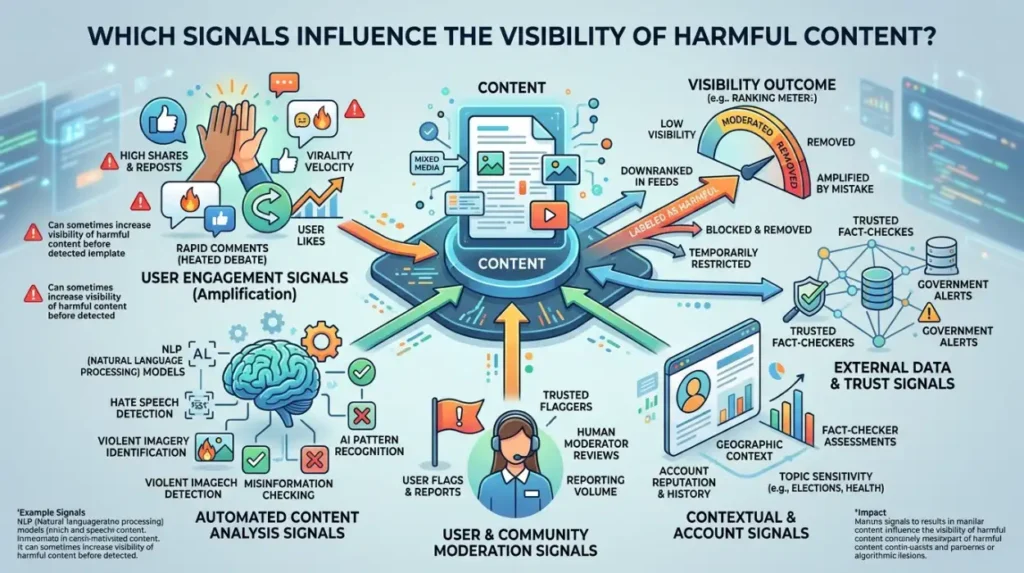
Search engines combine multiple reputation and ranking signals to determine whether harmful content remains visible within search engine results pages.
- Evaluate topical relevance by matching indexed content with user search intent and recognised subject matter.
- Measure domain authority through trusted backlinks, editorial references, and established website credibility.
- Interpret semantic relationships by connecting webpages with recognised entities, topics, and contextual information.
- Assess content freshness by analysing publication dates, updates, and continued relevance within the information ecosystem.
- Analyse user engagement through behavioural indicators that demonstrate whether search results continue satisfying user intent.
These signals work collectively rather than independently. Google compares the strength of each signal before determining the most relevant content for a particular search query. The interaction between authority, relevance, and semantic understanding ultimately defines the visibility of harmful information across search results.
How Does Harmful Content Influence Online Reputation?
Harmful content influences online reputation because search engines use indexed information to construct entity perception across digital ecosystems. Users frequently rely on search engine results pages to evaluate credibility, making visible information an important component of digital trust. The prominence of harmful content therefore affects how an entity is interpreted before direct interaction occurs.
Search engines organise information according to algorithmic evaluation rather than emotional judgement. Articles, reviews, forum discussions, videos, and publicly available documents become interconnected through semantic relationships that contribute to an entity’s searchable profile. When harmful content occupies highly visible ranking positions, it becomes part of the broader reputation signals associated with that entity.
Entity perception develops through cumulative information rather than isolated publications. Every indexed resource contributes additional context that influences how search engines interpret credibility, authority, and topical relevance. Harmful content therefore affects reputation by becoming part of the searchable knowledge environment used during SERP evaluation.
What Role Does Authority Play in Search Visibility?
Authority is a ranking signal that helps search engines determine the credibility and reliability of indexed information. It refers to the level of confidence algorithms assign to a webpage or domain based on recognised expertise, trusted references, contextual relevance, and established digital relationships. Authority does not exist independently; it develops through the quality and consistency of information available across the web.
Search engines compare authority across competing sources before determining ranking positions. News publishers, government websites, recognised organisations, and established industry resources often possess stronger authority because they demonstrate consistent editorial standards and trusted citation networks. When harmful content originates from authoritative domains, it receives stronger visibility signals during SERP evaluation.
Authority also interacts with entity perception. Search systems analyse whether authoritative sources consistently reference the same entity using accurate contextual information. These relationships strengthen confidence in search evaluation and influence how indexed content contributes to the broader digital reputation associated with an organisation or individual.
Dive Deeper With Our Expert Guides:
Digital Reputation Management Services for Brands
How to Remove Bad Search Results from Google
Why Does Content Continue Appearing in Google Search?
Content continues appearing in Google Search because indexed information remains eligible for ranking until search engines detect significant changes affecting its evaluation. Indexing is not a temporary process. Once a page enters Google’s searchable database, it remains available for retrieval while meeting technical and contextual requirements.
Search engines regularly revisit indexed pages to evaluate updates, accessibility, authority, and relevance. If a webpage remains publicly available and continues satisfying ranking criteria, algorithms retain it within the searchable index. Changes in search rankings occur through ongoing comparison with competing information rather than automatic removal based on age.
Content persistence also depends on digital relationships. Internal links, external citations, semantic relevance, and continued user interest reinforce Google’s understanding of a webpage. These interconnected signals explain why some harmful content remains visible despite the publication of newer information covering the same topic.
How Does Content Indexing Affect Reputation Management?
Content indexing defines whether digital information becomes part of Google’s searchable knowledge environment. Only indexed content contributes directly to search visibility, entity perception, and SERP evaluation. Crawling alone does not influence reputation because unindexed resources remain unavailable within search results.
Indexing creates connections between webpages, structured data, business profiles, review platforms, and authoritative publications. Search engines use these relationships to develop a comprehensive understanding of entities and their associated information. Every indexed resource contributes additional context that strengthens or weakens digital credibility depending on its authority and relevance.
Content indexing also influences digital footprint development. As more resources become indexed, search engines expand their understanding of entity relationships and topical expertise. Reputation therefore evolves continuously because new indexed information changes the balance of available evidence used during algorithmic evaluation.
How Do Reputation Signals Shape Entity Perception?
Reputation signals are measurable indicators that help search engines evaluate credibility, trustworthiness, and authority across digital ecosystems. These signals include content quality, structured business information, review sentiment, editorial references, citation consistency, and semantic relevance. Algorithms combine these elements to develop a comprehensive understanding of an entity.
Entity perception develops through accumulated evidence rather than isolated interactions. Search engines compare information across trusted domains to determine whether digital assets consistently describe the same organisation or individual. Stable relationships reduce ambiguity and strengthen confidence in search evaluation.
Reputation signals also influence enhanced search features such as knowledge panels, review snippets, business profiles, and branded search results. Search engines display these elements when entity recognition reaches sufficient confidence through consistent authority signals and reliable indexed information. The quality of available information therefore directly affects digital representation across search results.
Why Is Search Visibility Connected to Digital Credibility?
Search visibility reflects Google’s assessment of relevance, authority, and trust within its ranking systems. Pages appearing prominently in search results have demonstrated stronger relationships with recognised reputation signals than competing resources targeting similar topics. Visibility therefore represents algorithmic evaluation rather than subjective preference.
Digital credibility develops through consistent publication, authoritative references, semantic accuracy, and reliable entity relationships. Search engines analyse these signals continuously to maintain accurate search results for users. As digital credibility increases, algorithms gain greater confidence in the information associated with an entity.
Search visibility and credibility reinforce one another because authoritative information attracts additional references, citations, and contextual relationships over time. This ongoing interaction strengthens entity perception while supporting clearer interpretation within Google’s knowledge systems.
Removing harmful content from Google Search fast requires an understanding of how search engines discover, index, evaluate, and rank digital information. Harmful content becomes visible because it satisfies algorithmic requirements related to authority, topical relevance, semantic relationships, and content indexing rather than reputational value alone. These mechanisms explain why certain information remains prominent within search engine results pages.
Digital reputation develops through the interaction of indexed content, reputation signals, authority indicators, review sentiment, and entity relationships. Search visibility changes as algorithms reassess available information and compare competing resources across the broader search ecosystem. Understanding these processes provides a clearer explanation of how online reputation is formed and how search engines continuously interpret digital credibility.
How can harmful content appear in Google Search?
Harmful content appears in Google Search when publicly accessible webpages are crawled, indexed, and ranked based on relevance, authority, and search intent. Google evaluates ranking signals rather than whether content has a positive or negative impact on an individual or brand.
Can harmful content be removed from Google Search quickly?
The speed of removing harmful content from Google Search depends on how the content is indexed, its source, and Google’s search policies. Understanding Online Reputation & Content Removal helps explain the processes that influence search visibility and content evaluation.
Why does harmful content stay visible in Google Search?
Harmful content remains visible when it continues to meet Google’s ranking and indexing criteria. Authority, topical relevance, content quality, and trusted references all influence how long a page appears in search results.
Does harmful content affect online reputation?
Yes, harmful content can influence online reputation by shaping user perception through search engine results pages (SERPs). Visible negative information becomes part of an entity’s digital footprint and contributes to overall reputation signals.
What factors influence the ranking of harmful content in Google?
Google ranks harmful content using the same factors applied to all webpages, including authority, relevance, content indexing, semantic relationships, and user intent. These signals determine search visibility without considering whether the content benefits or harms a specific entity.



