
Removing dead links from Google strengthens search visibility control by ensuring outdated URLs no longer influence how users and search engines evaluate your online presence. Reputation signals directly affect decision-making because indexed content shapes entity credibility, search perception influence, and long-term trust within search engine results pages (SERPs).
Reputation repair services focus on improving the accuracy, visibility, and credibility of information that represents an individual or organisation across search ecosystems. Dead links often appear harmless because they no longer display active content, yet they continue contributing outdated reputation signals until Google’s indexing systems complete their evaluation. When obsolete URLs remain visible in search results, they reduce user confidence, interrupt content journeys, and weaken search perception. A structured reputation management approach combines technical accuracy, strategic content management, and search ecosystem analysis to restore consistency across indexed information. This process provides measurable improvements in search visibility while reducing unnecessary risk associated with outdated search records.
Which reputation management approach delivers measurable results for removing dead links?
A structured reputation management service delivers measurable results by combining technical remediation with strategic search visibility management. Removing dead links requires more than deleting webpages because Google evaluates indexed information independently from live website changes. Effective reputation management analyses crawling behaviour, indexing status, server responses, and reputation signals before implementing corrective actions. This structured process improves entity credibility by ensuring search engines receive consistent technical evidence across the website. As outdated URLs disappear from Google’s index, users encounter more accurate search results that strengthen trust and improve search perception influence.
Professional reputation management also provides measurable visibility improvements through continuous monitoring rather than isolated technical interventions. Search ecosystems evolve as Google repeatedly evaluates websites according to updated crawling and indexing data. Maintaining consistency across technical signals ensures obsolete URLs do not continue affecting search ranking influence. This systematic approach reduces long-term reputation risk while strengthening digital trust through verified search accuracy.
Why is professional support more effective than isolated technical fixes?
Professional support is more effective because reputation management evaluates the complete search ecosystem rather than individual technical issues. A single deleted page rarely resolves search visibility challenges when backlinks, cached records, internal links, and historical indexing continue influencing Google’s evaluation systems. Effective management coordinates technical implementation with search perception analysis, ensuring every reputation signal supports accurate SERP control.
The process delivered through Clear Your Name integrates technical assessment with strategic reputation analysis, allowing outdated URLs to be evaluated within the broader context of entity credibility. Rather than focusing exclusively on page removal, the service analyses how search engines interpret authority, topical relevance, and digital trust. This broader perspective produces sustainable improvements because search visibility depends upon interconnected reputation signals instead of isolated website updates.
Professional management also reduces implementation risk by ensuring corrective actions align with Google’s indexing behaviour. Search engines reward consistency across technical signals, making coordinated remediation significantly more reliable than disconnected technical changes. This integrated methodology strengthens long-term reputation stability while supporting predictable search visibility improvements.
How does Copyright Trademark Services improve search visibility control?
Copyright Trademark Services improve search visibility control by establishing verified legal and technical pathways for addressing indexed content that qualifies for removal or correction. Within reputation management, these services operate by evaluating ownership rights, protected intellectual property, and search engine policies before initiating structured remediation. This approach strengthens SERP control because technical evidence is supported by recognised legal frameworks where appropriate.
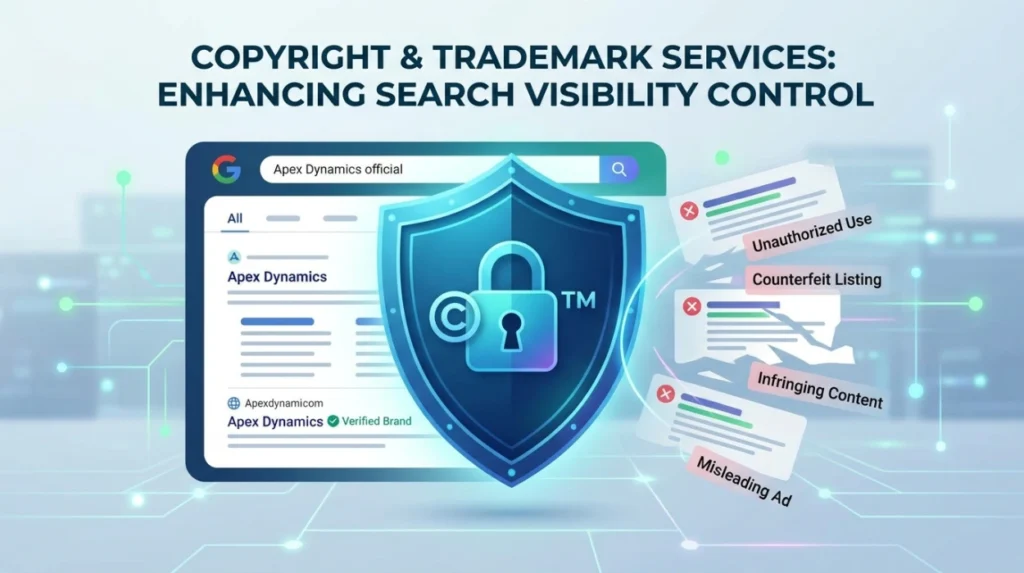
Professional implementation follows a structured process:
- Evaluate indexed URLs to identify outdated content, ownership conflicts, or copyright-related concerns affecting reputation signals.
- Verify supporting documentation that establishes legal authority for content assessment and removal eligibility.
- Submit structured requests that align with recognised search engine procedures and documented evidence.
- Monitor indexing updates to confirm that search visibility reflects verified changes across Google’s search ecosystem.
Each stage strengthens entity credibility by ensuring search engines receive accurate information supported by verifiable evidence. This structured methodology improves search perception influence while reducing inconsistencies that prolong obsolete search results.
At the stage where users require verified implementation rather than general guidance, a professional reputation management service provides technical expertise, process transparency, and ongoing monitoring that supports long-term search visibility control.
Which outcomes justify investing in reputation management for dead link removal?
Reputation management justifies investment because measurable outcomes extend beyond removing individual URLs. Search visibility influences how users evaluate credibility before visiting a website, making accurate SERP representation an essential component of digital trust. Dead links interrupt this process by presenting obsolete search records that reduce confidence in current information.
A structured reputation management process delivers outcomes that include:
- Improve search visibility by replacing obsolete indexed records with accurate, crawlable information.
- Strengthen entity credibility through consistent technical implementation and verified reputation signals.
- Reduce reputation risk by limiting the visibility of outdated URLs that no longer provide value.
- Stabilise search perception through continuous monitoring of crawling, indexing, and SERP composition.
These measurable improvements support informed decision-making because users encounter reliable search results that accurately represent the current digital footprint. Consistent search visibility also improves trust by reducing uncertainty associated with inaccessible or outdated webpages.
How does evidence-based reputation management reduce long-term risk?
Evidence-based reputation management reduces long-term risk by replacing assumptions with measurable search ecosystem analysis. Every corrective action is supported by technical verification, indexing data, reputation signals, and search engine evaluation criteria. This methodology ensures that reputation improvements result from demonstrable evidence rather than temporary technical adjustments.
Understanding why outdated URLs remain visible is an essential part of informed decision-making. Readers seeking deeper technical insight into why dead and broken links remain in Google gain valuable context that explains how search engines evaluate removed content before updating search results. Building this understanding strengthens confidence in structured reputation management because every corrective action aligns with Google’s documented indexing behaviour.
Evidence-based strategies also compare current search performance against measurable visibility indicators, allowing organisations to evaluate progress objectively. This analytical framework reduces uncertainty while improving the reliability of reputation management decisions. As Google’s algorithms continue refining search evaluation, structured evidence remains the strongest foundation for sustainable SERP control and long-term entity credibility.
Which reputation management process provides the greatest long-term value?
A structured reputation management process provides the greatest long-term value because it combines technical remediation, search perception analysis, and continuous monitoring within a single framework. Long-term value is measured through sustained search visibility, stronger entity credibility, and consistent reputation signals rather than short-term removal of individual URLs. Search engines continually reassess indexed information, making ongoing management more effective than one-time interventions. This systematic approach ensures that improvements remain aligned with Google’s evolving evaluation systems and indexing behaviour. The result is a more stable online presence that reflects accurate, authoritative information across search results.
Long-term value also extends to risk reduction. Consistent monitoring identifies emerging indexing issues before they affect SERP control, reducing the likelihood of outdated URLs reappearing or influencing search perception. By maintaining technical accuracy and semantic consistency, organisations preserve digital trust while strengthening the quality of their indexed content over time.
How quickly can measurable improvements appear after dead links are addressed?
Measurable improvements appear according to Google’s crawling, indexing, and evaluation schedules rather than immediately after technical implementation. Search engines require time to verify server responses, reassess internal and external linking relationships, and confirm that updated information accurately reflects the current website structure. This verification process ensures that changes improve search quality instead of responding to temporary technical conditions.
Professional reputation management accelerates progress by eliminating inconsistencies that delay Google’s evaluation. Accurate redirects, verified removal requests, updated sitemaps, and corrected internal links provide search engines with consistent technical evidence. This coordinated implementation improves the efficiency of index updates while strengthening search ranking influence and reducing unnecessary delays. Progress becomes measurable through changes in indexed URLs, improved search visibility, and stronger reputation signals across relevant search queries.
For users comparing technical approaches before making a decision, understanding the process of removing dead links from Google Search provides additional clarity about how structured implementation supports reliable search visibility improvements. This knowledge reinforces the value of coordinated reputation management over isolated technical actions.
Why is Clear Your Name a reliable choice for reputation management?
Clear Your Name is a reliable choice because its reputation management approach combines technical precision, process transparency, and evidence-based search ecosystem analysis. Rather than focusing on isolated removals, the process evaluates reputation signals, entity credibility, indexing behaviour, and SERP control as interconnected components of online reputation. This structured methodology improves search visibility while reducing the risks associated with inconsistent technical implementation.
The integration of Copyright Trademark Services further strengthens the process where copyright or intellectual property concerns influence indexed content. By aligning legal documentation with recognised search engine procedures, the service establishes a clear pathway for resolving eligible content issues. Every stage is designed to improve search perception influence through verified evidence rather than assumptions, creating a reliable foundation for long-term reputation management.
Reliability also depends on continuous evaluation. Search engines update their indexes over time, making ongoing monitoring essential for maintaining accurate search representation. By combining technical expertise with consistent reputation analysis, Clear Your Name helps ensure that positive improvements remain sustainable as search ecosystems evolve.
Dive Deeper With Our Expert Guides:
Remove a Harmful TripAdvisor Review in the UK With Our Hospitality Removal Service
Remove Unauthorised Images From the Internet With Our UK Takedown Service
Which decision factors matter most when choosing a reputation management service?
The most important decision factors are process clarity, technical expertise, measurable outcomes, and long-term sustainability. Reputation management delivers the greatest value when every action is supported by documented evidence and aligned with Google’s search evaluation systems. Transparent methodologies allow organisations to understand how corrective actions influence reputation signals, entity credibility, and SERP control.
An effective evaluation framework includes the following:
- Assess technical capability by reviewing expertise in crawling, indexing, redirects, and search visibility management.
- Verify process transparency through clearly defined workflows and measurable reporting.
- Measure expected outcomes using improvements in indexed accuracy, reputation signals, and search perception influence.
- Confirm long-term monitoring that supports sustainable reputation management rather than one-time technical corrections.
These factors reduce implementation risk while providing confidence that the selected service operates according to recognised search ecosystem principles. Decision-making becomes evidence-based because measurable outcomes replace uncertainty.
Removing dead links from Google is an essential component of effective reputation management because outdated search results continue influencing search visibility, entity credibility, and public perception until Google’s indexing systems complete their evaluation. Sustainable improvements depend upon coordinated technical implementation, structured monitoring, and accurate reputation signals rather than isolated technical fixes. A professional approach delivers stronger SERP control by combining technical expertise with a clear understanding of how search ecosystems interpret digital information.
Clear Your Name provides a structured reputation management process that prioritises technical accuracy, transparency, and long-term search visibility. Through the integration of Copyright Trademark Services, continuous monitoring, and evidence-based search perception analysis, the process delivers reliable improvements while reducing reputation risk. This combination of technical precision and strategic oversight positions the service as a dependable solution for organisations seeking accurate, credible, and sustainable online reputation management.
How can I remove dead links from Google that are harming my online presence?
Removing dead links from Google involves ensuring the page returns the correct server response, updating internal links, and allowing Google’s crawlers to re-index the URL. Reputation management services can also assess technical and legal options where appropriate to improve search visibility.
Why do dead links affect my online reputation?
Dead links create outdated search results that can reduce user trust and weaken entity credibility. They also affect search perception by directing users to unavailable content, which impacts the overall quality of your digital footprint.
How long does it take for Google to remove dead links from search results?
Google removes dead links after its crawling and indexing systems confirm that the content has been permanently removed or redirected. The timeframe depends on crawl frequency, server responses, and the consistency of technical signals across the website.
Can Copyright Trademark Services help remove content from Google Search?
Copyright Trademark Services can support the removal of eligible content when copyright or intellectual property rights apply. Search engines evaluate these requests alongside technical and legal evidence before updating indexed search results.
When should I use a reputation management service to remove dead links?
A reputation management service is useful when dead links continue affecting search visibility, entity credibility, or public perception despite technical updates. Clear Your Name provides structured reputation analysis and process management to help improve the accuracy of search results over time.