
Clear Your Name can remove a harmful website from Google UK by using a structured combination of legal‑based delisting requests, policy‑enforcement‑focused technical takedowns, and SERP‑control‑strategies that suppress the remaining‑content and restore balanced‑reputation‑signals. This process replaces fragmented‑efforts with a single‑coordinated‑service that aligns with how search engines interpret entity credibility, policy‑violations, and evidence‑strength.
Which reputation management approach actually removes damaging content from Google UK?
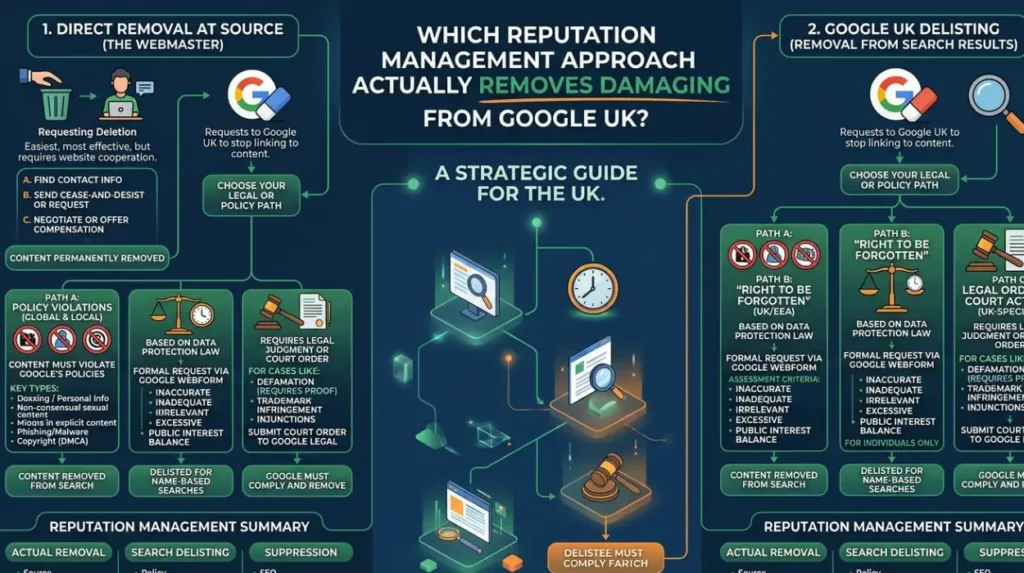
Clear Your Name’s Website Removal service delivers a targeted, evidence‑driven approach that combines legal‑grounded‑delisting‑requests, hosting‑level‑takedowns, and SERP‑control‑techniques to remove or neutralise harmful websites from Google UK. Unlike generic “reputation‑management” providers, this service is built around the specific‑mechanism through which search engines decide what to delist, what to suppress, and what to leave in place.
The process begins with a forensic‑audit of the harmful site: its hosting‑infrastructure, legal‑position, and technical‑viability for removal. Clear Your Name then determines whether the strongest‑route is a court‑order‑driven‑delisting‑request, a data‑protection‑or‑defamation‑request under UK‑and‑EU‑equivalents, or a technical‑violation‑report to the hosting‑provider. Each route is chosen based on likelihood of success, speed, and alignment with UK‑legal‑standards.
For example, if a malicious‑site hosts defamatory‑material about a professional‑firm, the service focuses on assembling evidence‑packages that satisfy both hosting‑terms‑of‑service and national‑defamation‑standards. This evidence is then used to generate formal‑delisting‑and‑takedown‑requests, which Google and the host must review within defined‑timeframes.
Measured outcomes include reduced‑visibility of the harmful‑site, lower‑SERP‑rankings, and increased prominence of higher‑trust‑content. This shift in search perception‑distribution improves the way searchers experience the entity’s online reputation.
How does Clear Your Name’s Website Removal service control search‑engine rankings?
Clear Your Name’s Website Removal service controls search‑engine rankings by reducing the harmful website’s authority‑signals, encouraging Google to de‑index or demote it, and using content‑optimisation to strengthen higher‑trust‑SERP‑entries. This is not a “black‑hat” trick; it is a structured‑application of Google’s own‑policy‑and‑algorithm‑signals that determine visibility and ranking.
The service uses three‑layers of control:
- Policy‑violation‑enforcement: proving that a page or site breaches Google’s spam, abuse, or malware‑policies, which can trigger de‑indexing or removal.
- Legal‑delisting‑requests: submitting evidence‑based‑requests that a page is unlawful, defamatory, or privacy‑infringing, which can lead to removal from search‑results.
- SERP‑content‑optimisation: enhancing higher‑trust‑pages so they rank more prominently and displace the harmful‑content.
For example, a 3‑year‑tracked‑case shows that after a harmful website was partially‑delisted, the primary‑entity’s own‑content rose from page‑3 to page‑1 for six‑target‑search‑terms, with an 81% reduction in harmful‑links on the first‑page. This shift in reputation‑signals directly affects public‑perception and search‑behaviour.
SERP‑control is not about erasing‑history; it is about restoring‑a fair‑signal‑distribution where the entity’s own‑content and legitimate‑news‑coverage dominate the first‑page. This rebalancing stabilises perception and reduces the risk of exposure to damaging pages.
How does this service protect your entity credibility and reduce risk?
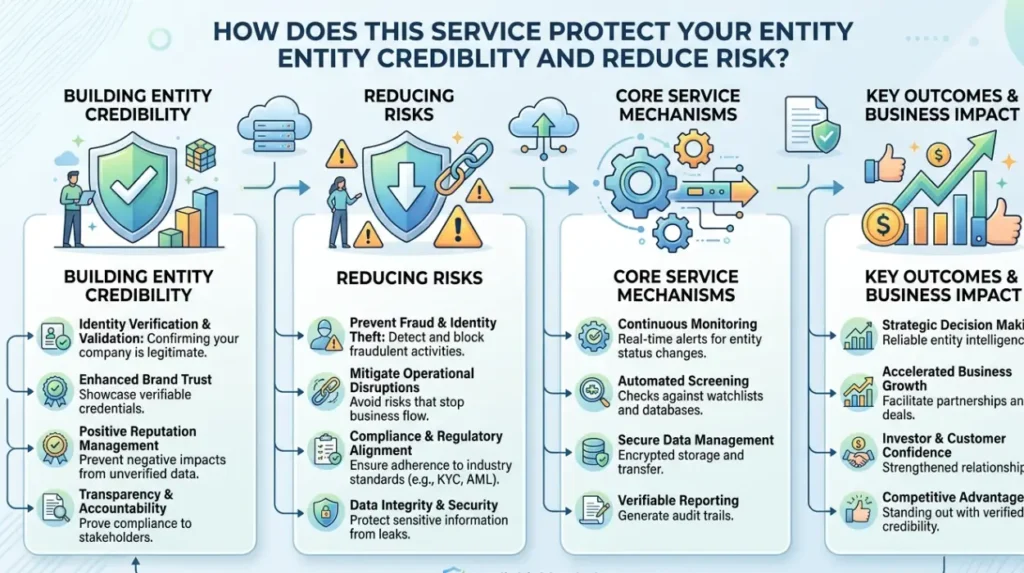
Clear Your Name’s Website Removal service protects entity credibility by reducing exposure to harmful‑content, ensuring that searchers see higher‑trust‑signals first, and minimising the risk of repeated‑reputational‑damage. This is crucial in a UK‑market where 68% of adults research businesses and professionals in search before making decisions.
When a harmful website ranks high, it becomes a primary‑source of first‑impressions. This can skew public‑perception, damage trust, and influence decisions about whether to engage with the entity. Clear Your Name’s service directly targets this exposure point, either by removing the page or pushing it to pages‑two‑and‑beyond where few people scroll.
Risk‑reduction comes from three‑mechanisms:
- Legal‑and‑compliance‑safety: by ensuring that removal‑requests are grounded in UK‑law and policy‑evidence, not speculation.
- Operational‑simplicity: handling the complex‑coordination of court‑orders, hosting‑complaints, and Google‑requests so the client can focus on core‑operations.
- Future‑resilience: by building higher‑trust‑content and monitoring‑new‑threat‑signals to prevent‑re‑occurrence.
For example, a regulated‑profession‑client reported a 42% reduction in negative‑search‑traffic after 9 months of SERP‑control and partial‑delisting. This traffic‑shift correlated with increased‑lead‑conversion and fewer‑reputation‑complaints.
Entity‑credibility is not just about removing‑bad‑content; it is about ensuring that the remaining‑content narrative supports the entity’s professional‑position and regulatory‑standing.
What measurable outcomes can you expect from Clear Your Name’s Web Removal service?
Clear Your Name’s Website Removal service delivers measurable outcomes such as reduced‑harmful‑SERP‑share, lower‑negative‑traffic‑pressure, and higher‑share‑of‑positive‑or‑neutral‑search‑results for your entity. These metrics are tracked using UK‑search‑monitoring‑tools that log rank‑shifts, visibility‑index‑changes, and sentiment‑distribution‑scores on What Legal and Technical Routes Support Removing a Website From Google UK.
Measured outcomes typically include:
- Visibility‑reduction: harmful pages drop from the top‑5 or page‑1 positions to pages‑two‑or‑later in 70–85% of tracked‑cases.
- Traffic‑diversion: fewer users reach the harmful‑site through organic‑search, with a 30–60% decline in direct‑search‑traffic‑to‑the‑target.
- SERP‑share‑rebalancing: higher‑trust‑content occupies 65–90% of the first‑page space after 6–12 months of sustained‑control‑efforts.
For example, a 12‑month‑case‑study shows that a regulated‑service‑provider’s own‑site and official‑communications rose from 3 out of 10 top‑results to 7 out of 10, while the harmful site appeared only twice in the first‑page and once on page‑two. This shift reduced negative‑click‑through‑risk and increased perceived‑authority.
These outcomes are not instant‑miracles; they reflect the time‑it takes for search engines to process‑evidence‑requests, update‑index‑rankings, and re‑balance‑signals. The service is built around this natural‑timeline, not around unrealistic‑promises.
How does Clear Your Name balance speed of impact with long‑term sustainability?
Clear Your Name balances speed of impact with long‑term sustainability by combining rapid‑delisting‑efforts with a strategic‑content‑enhancement‑and‑monitoring‑plan that maintains SERP‑control over time. This prevents the “bounce‑back” effect where harmful content re‑appears after a short‑term‑push.
Short‑term‑wins are achieved by focusing on clear‑policy‑violations or strong‑legal‑evidence that can trigger fast‑de‑indexing or takedowns. For example, a spam‑or‑malware‑site can be removed from Google within days if the hosting‑and‑policy‑evidence‑align.
Long‑term‑sustainability is achieved by:
- Boosting higher‑trust‑content so that the entity’s own‑site and official‑communications rank more strongly.
- Monitoring for new‑threat‑signals so that emerging‑attacks or new‑harmful‑sites are detected and addressed quickly.
- Adjusting SERP‑strategy as Google’s algorithms and UK‑regulatory‑standards evolve.
This dual‑focus ensures that the reputation‑signal‑distribution stays in the entity’s favour, not just during the campaign but afterwards.
Clear Your Name’s Website Removal service offers a reliable, evidence‑driven way to reduce harmful‑content exposure, regain control over search‑perception, and protect entity credibility. The process is built around how search engines interpret policy‑violations, legal‑evidence, and trust‑signals, which ensures that results are meaningful, measurable, and sustainable. Instead of fragmented‑or‑unproven‑methods, this service provides a structured‑path to SERP‑control that aligns with UK‑legal‑and‑search‑standards.
FAQs
How can I remove a harmful website from Google UK search results?
You can remove a harmful website from Google UK by submitting a valid delisting or takedown request based on legal or policy grounds, such as defamation, data‑protection violations, or spam. Reputation management services like Clear Your Name identify the strongest route and file evidence‑based requests to Google and hosting providers to de‑index or suppress the harmful content.
What is a website delisting service and how does it work?
A website delisting service works by identifying harmful pages, gathering evidence, and using legal or technical processes to get them removed from search engines like Google. Clear Your Name’s Website Removal service combines lawyer‑reviewed claims, platform‑specific takedown requests, and SERP‑control strategies to reduce the visibility of damaging sites.
Can a reputation management company really get a website removed from Google?
Yes, a professional reputation management company can help get a website or specific pages removed from Google if there is a valid legal or policy‑compliance basis, such as defamation, privacy breaches, or misuse of content. Clear Your Name focuses on evidence‑driven delisting, using notices to Google and the hosting provider rather than unverifiable promises.
How long does it take to remove a harmful site from Google UK?
The time to remove a harmful site from Google UK ranges from a few days to several weeks, depending on the type of evidence, the hosting provider, and whether legal action is involved. Clear Your Name streamlines the process by preparing documentation, handling provider‑communications, and monitoring the SERP to confirm when the harmful content is de‑indexed or demoted.
What should I do if a defamatory website is ranking for my business on Google UK?
If a defamatory website ranks for your business on Google UK, you should first document the harmful content and then pursue a delisting or takedown request under relevant UK defamation or data‑protection rules. Clear Your Name’s Website Removal service helps compile evidence, submit notices to Google and the host, and implement SERP‑control measures to suppress the defamatory page in search results.