
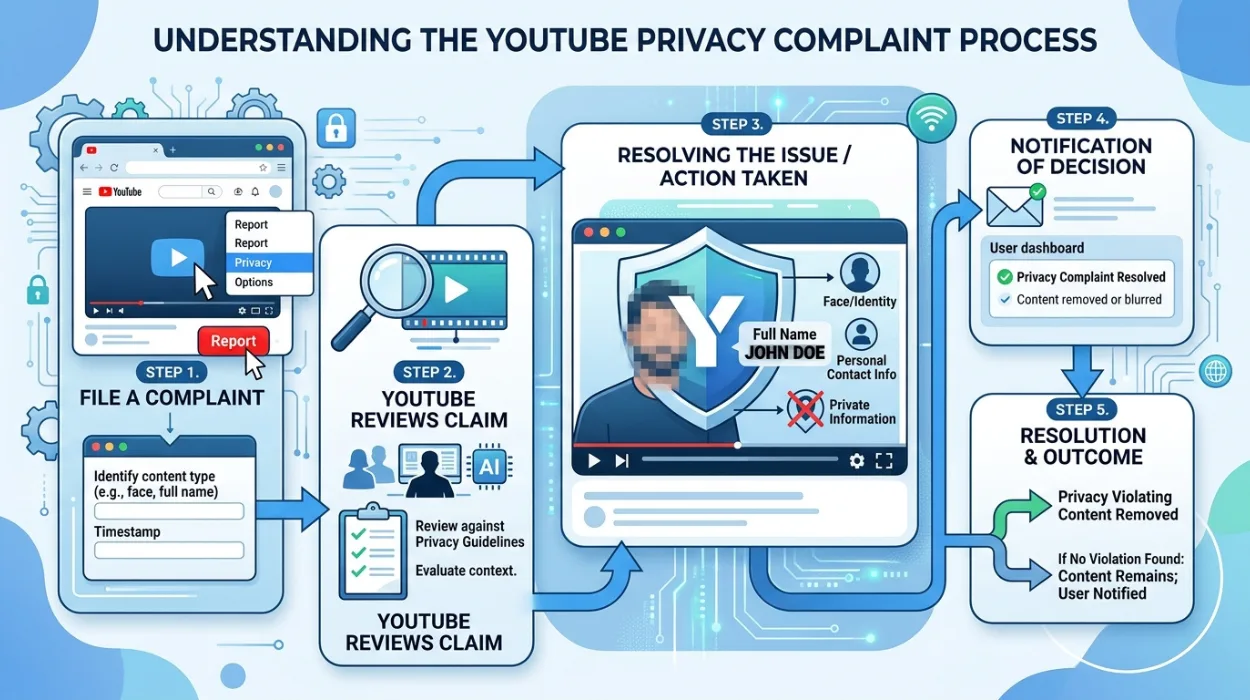
The YouTube privacy complaint process enables individuals to request the review of content that discloses identifiable personal information without consent. The process evaluates whether the material breaches privacy standards and whether the content creates an unjustified exposure of private information.
Reputation management is the process of understanding, analysing, and influencing how information contributes to trust, credibility, and perception within digital environments. Online reputation refers to the collective interpretation of indexed content, reputation signals, and entity associations that shape how individuals are evaluated across search ecosystems.
What is the YouTube privacy complaint process?
The YouTube privacy complaint process is a structured review mechanism designed to assess whether uploaded content violates privacy expectations through the disclosure of personally identifiable information. It defines the boundaries between public interest, freedom of expression, and individual privacy rights within a content sharing ecosystem.
The mechanism begins when an affected individual submits a formal privacy complaint through YouTube’s reporting infrastructure. Review systems evaluate whether the material contains identifiable information and whether the person featured is uniquely recognisable. The process analyses the context surrounding the disclosure, including whether consent exists and whether the information contributes to legitimate public discourse.
From a reputation perspective, privacy complaints influence how digital identities are represented across content platforms. Videos indexed by search engines often contribute to entity perception and long term digital footprints. The presence or removal of such content alters the informational environment surrounding an individual and affects how reputation signals are interpreted.
What types of content does the YouTube privacy complaint process cover?
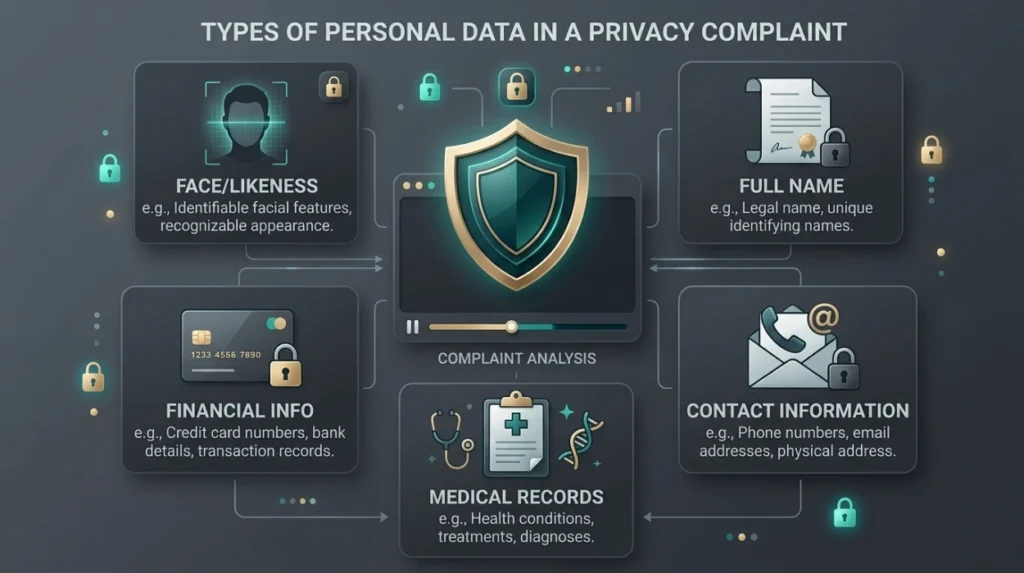
The YouTube privacy complaint process covers content that reveals personal information capable of identifying or locating an individual without authorisation. The evaluation focuses on whether the disclosure creates an unreasonable invasion of privacy.
Content categories subject to review include the publication of residential addresses, private contact details, government-issued identification information, financial records, and footage that exposes individuals in sensitive circumstances. The assessment extends to visual and audio material that permits the identification of a person when that exposure lacks sufficient justification.
Privacy-related content assessments demonstrate how platform governance contributes to reputation formation. Information distributed through videos can influence audience interpretation, especially when the material becomes searchable through external indexing systems. The persistence of identifiable information strengthens associations between individuals and unwanted narratives within search environments.
How does YouTube evaluate privacy complaints?
YouTube evaluates privacy complaints through a contextual analysis that balances individual privacy interests against broader informational considerations. The assessment defines whether the reported material exceeds acceptable boundaries of disclosure.
The review process examines factors such as the uniqueness of the identifying information, the availability of the same information through public channels, and the existence of consent. Evaluators determine whether the content serves a recognised public interest function or whether it merely exposes private details without legitimate purpose. The presence of malicious intent is not the central determinant; instead, the emphasis remains on the impact of disclosure.
Search ecosystems increasingly rely on credibility indicators to organise information. When privacy complaints result in content modifications or removals, the informational structure surrounding an entity changes. These adjustments influence search visibility by altering the pool of accessible material available for indexing and evaluation.
Understanding the factors that influence complaint outcomes provides deeper insight into What Makes a YouTube Privacy Complaint Strong Enough to Result in Removal, particularly in relation to evidential standards, identifiable harm, and contextual assessment.
Why does privacy related content affect online reputation?
Privacy-related content affects online reputation because search ecosystems interpret accessible information as part of an individual’s broader digital identity. Content visibility contributes to the development of reputation signals that shape public understanding.
Search engines analyse relationships between entities, documents, and user interactions to establish relevance and credibility. Videos containing sensitive information become additional data points within this evaluative framework. Their existence influences entity perception by reinforcing specific associations, regardless of whether the information accurately reflects an individual’s character or expertise.
Online credibility refers to the degree of trust assigned to an entity based on accessible information and behavioural signals. Privacy-invasive content can distort this credibility by amplifying material that lacks contextual balance. As a result, reputation management increasingly involves understanding how visibility patterns influence perception rather than focusing exclusively on content creation.
How do search engines interpret privacy-related content?
Search engines interpret privacy-related content through indexing systems that prioritise discoverability and relevance. Content indexing refers to the process through which digital assets are analysed, categorised, and incorporated into searchable databases.
Algorithms evaluate textual metadata, engagement indicators, entity relationships, and content authority to determine ranking positions. Videos appearing in search results become part of the broader informational ecosystem associated with an individual or organisation. Their prominence contributes to SERP evaluation by affecting the narratives users encounter during information-seeking behaviour.
The interpretation of privacy related material extends beyond technical indexing. Search visibility influences assumptions regarding legitimacy, significance, and trustworthiness. Consequently, reputation signals emerge not only from the content itself but also from its accessibility within high-visibility environments.
What role do trust and authority signals play in reputation formation?
Trust and authority signals define how search ecosystems assess the reliability and importance of information sources. These signals contribute directly to the development of online reputation and entity perception.
Authority signals include indicators such as source consistency, contextual relevance, citation patterns, and engagement quality. Trust signals emerge through the perceived accuracy and integrity of the information environment surrounding an entity. Search systems evaluate these elements collectively to determine which content deserves prominent placement within results pages.
Privacy complaints intersect with these mechanisms by challenging the legitimacy of certain content associations. When inappropriate disclosures remain visible, they become incorporated into reputation evaluations despite their limited informational value. Understanding this dynamic explains why content governance policies influence broader discussions about digital trust.
How do SERPs shape public perception?
Search engine results pages function as environments where users evaluate credibility through rapidly accessible information. SERP evaluation refers to the interpretation of ranking positions, source diversity, and content prominence during information assessment.
Individuals frequently rely on first-page results when forming impressions about people, organisations, and topics. Videos appearing alongside news articles, professional profiles, and social platforms contribute to a composite reputation profile. The ordering of these assets affects perceived legitimacy because users interpret visibility as a proxy for relevance.
Digital reputation therefore emerges through repeated interactions between indexed content and audience interpretation. Privacy-related videos occupying prominent positions influence the narratives associated with an entity. This relationship demonstrates why reputation management examines information architecture alongside behavioural responses.
What is the connection between digital footprints and privacy complaints?
A digital footprint refers to the cumulative record of information associated with an individual across online environments. It encompasses both intentionally published material and externally generated content that becomes linked to a person’s identity.
Privacy complaints address situations in which externally generated content expands an individual’s digital footprint without consent. The addition of sensitive material alters existing reputation signals and reshapes the informational landscape available to search systems. Once indexed, such content contributes to long-term entity associations that influence perception.
Reputation analysis therefore requires an understanding of how digital footprints evolve through ongoing content production and dissemination. Privacy frameworks operate as mechanisms that define acceptable boundaries within these processes. Their application reflects broader concerns regarding control, accuracy, and fairness in digital representation.
How does sentiment interpretation influence reputation assessment?
Sentiment interpretation refers to the evaluation of positive, neutral, and negative signals embedded within digital content. Search ecosystems increasingly analyse contextual indicators to understand how audiences respond to information.
Negative sentiment associated with privacy invasive material affects entity perception by reinforcing unfavourable narratives. The prominence of such content influences how users interpret credibility, professionalism, and trustworthiness. These perceptions contribute to broader reputation outcomes regardless of the factual completeness of the underlying material.
Reputation signals derive from both explicit evaluations and implicit behavioural patterns. Engagement metrics, content associations, and visibility trends collectively shape sentiment landscapes. Understanding these relationships enables a more comprehensive analysis of how privacy concerns intersect with search perception.
The YouTube privacy complaint process defines the standards used to evaluate whether identifiable personal information has been disclosed inappropriately through video content. Its function extends beyond policy enforcement by influencing the informational environments that contribute to digital reputation.
Reputation management examines how content indexing, authority signals, SERP evaluation, and entity perception interact within search ecosystems. Privacy complaints illustrate the relationship between governance frameworks and reputation formation by highlighting how information accessibility shapes public interpretation. Understanding these mechanisms provides a clearer perspective on how online credibility develops and how digital footprints evolve within increasingly interconnected search environments.
What information can be reported through a YouTube privacy complaint?
A YouTube privacy complaint can cover content that reveals personally identifiable information, such as home addresses, financial details, government-issued identification, or footage exposing individuals in sensitive situations. The review process assesses whether the disclosure violates privacy expectations.
How long does the YouTube privacy complaint process take?
The timeframe varies depending on the complexity of the case and the information provided in the complaint. YouTube typically reviews the reported content to determine whether it breaches its privacy policies before taking action.
Can a YouTube video be removed for sharing personal information?
Yes, a YouTube video can be removed if it contains private information that infringes upon an individual’s privacy rights. Factors such as identifiability, consent, and public interest are evaluated during the review process.
Does filing a YouTube privacy complaint affect online reputation?
Privacy related content can influence digital footprints, entity perception, and search visibility. Addressing unauthorised disclosures may help prevent sensitive material from continuing to shape online reputation through indexed search results.
How does Clear Your Name support individuals dealing with harmful YouTube content?
Clear Your Name provides information about reputation-related challenges involving online content and the mechanisms available to address privacy concerns. Understanding the YouTube privacy complaint process helps individuals make informed decisions regarding their digital presence.