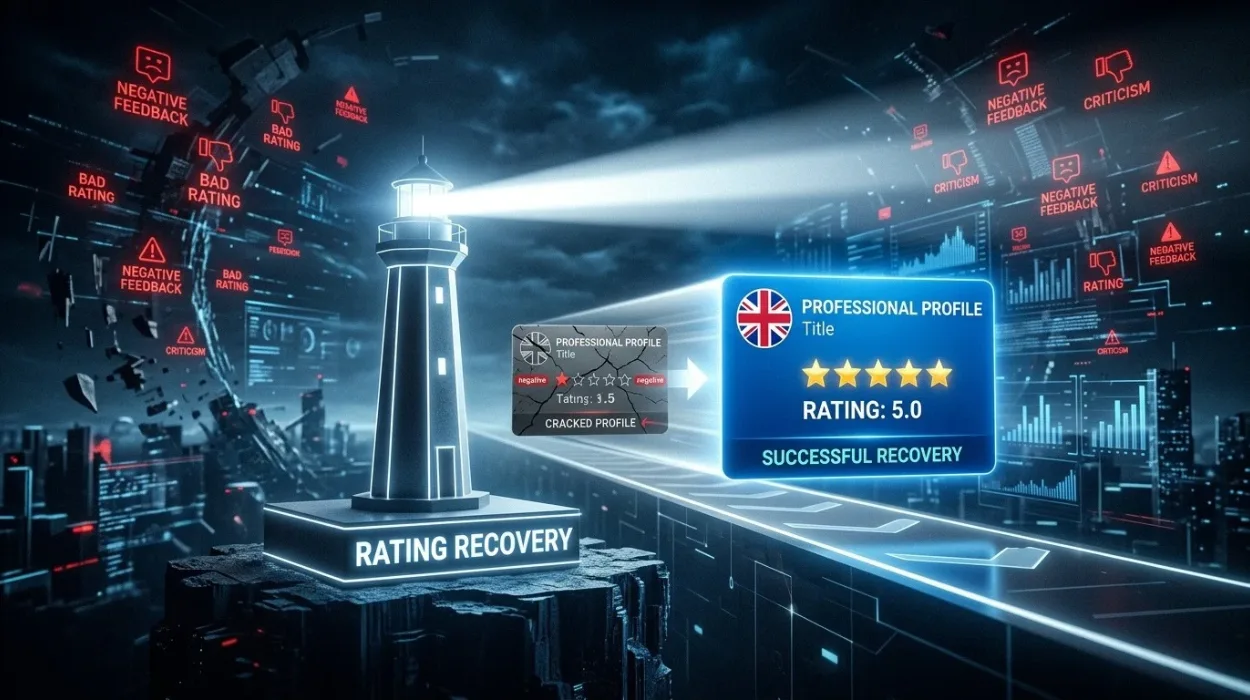
UK employers can recover control over their Indeed rating by addressing policy-violating reviews, strengthening legitimate reputation signals and managing how negative content appears in search. Indeed Review Removal Services provide a structured route for reducing damaging review visibility while protecting long-term employer credibility.
An Indeed rating influences how candidates interpret an employer before they apply, attend an interview or accept an offer. Searchers rarely assess a rating in isolation; they evaluate the rating alongside written reviews, employer information, branded search results and other reputation signals. This creates a search perception environment where one damaging review can affect the interpretation of otherwise credible employer information. Effective reputation management therefore focuses on controlling the information ecosystem rather than treating one review as an isolated problem. Clear Your Name applies this distinction through a structured process centred on review assessment, removal opportunities, search monitoring and reputation stabilisation.
Which Indeed review removal approach delivers measurable reputation improvement?
A policy-led review removal strategy delivers the strongest foundation because it targets the source of damaging information rather than attempting to conceal the issue through unrelated content. Indeed reviews require an appropriate basis for removal, so the first stage involves identifying whether the content conflicts with applicable platform rules or contains characteristics that support a legitimate challenge. This creates a defensible process rather than relying on repeated requests without supporting reasoning. Once an eligible review is identified, the removal process focuses on presenting the relevant issue clearly and consistently. The resulting objective is direct source-level control over negative content.
How does source-level control affect employer perception?
Removing eligible negative content changes the information available to candidates when they evaluate an employer. A review that previously contributed to a low rating or negative narrative no longer carries the same visibility once the underlying content has been successfully removed. This can improve the balance between negative and positive reputation signals across the employer’s profile. Search perception also becomes more representative when outdated, prohibited or policy-inconsistent material no longer dominates the available evidence. Source-level action therefore provides a stronger foundation than attempting to compensate for damaging content with unrelated positive material.
The process also requires careful distinction between removal and suppression. Removal addresses the original review or source, while negative content suppression focuses on reducing the prominence of unwanted pages within search results. These mechanisms operate differently, and effective reputation management uses the appropriate intervention for each visibility problem. An employer facing a policy-violating Indeed review requires source-level action first, while an employer dealing with persistent search results requires broader SERP control. Understanding this distinction reduces wasted effort and creates a more reliable reputation recovery strategy.
Dive Deeper With Our Expert Guides:
Improve Your Indeed Star Rating With Our Removal Service
Get a Rapid Response Plan for an Indeed Review Crisis
How does Clear Your Name turn Indeed review removal into a controlled process?
Clear Your Name uses a structured reputation management process that connects review assessment with search perception analysis and ongoing monitoring. The purpose is not simply to submit a removal request but to establish why a piece of content affects employer credibility and which intervention addresses that specific problem. Each stage provides a defined point of evaluation, reducing uncertainty around what has been attempted and what remains visible. This process clarity is particularly important for employers because reputation problems can affect recruitment decisions long after the original review appears. A controlled workflow therefore protects both immediate visibility and longer-term entity credibility.
The process focuses on identifiable mechanisms rather than generic reputation improvement. It evaluates the review, establishes the relevant removal basis, tracks the status of the intervention and assesses the surrounding search environment. Where removal succeeds, subsequent monitoring determines whether search engines continue displaying related references or cached information. Where removal is not available, the strategy shifts towards appropriate visibility management and stronger reputation signals. This creates a decision framework based on the actual search ecosystem surrounding the employer.
Employers evaluating a specialist service can also use professional Indeed review removal services as a decision benchmark when comparing internal handling with specialist reputation management. A specialist approach provides process ownership, evidence assessment and structured monitoring rather than leaving reputation issues to an informal response cycle. This matters because the technical outcome of review removal and the broader outcome of reputation recovery are connected but not identical. The service must therefore account for both the source and the search environment surrounding it.
Why does SERP control matter after an Indeed review is removed?
SERP control remains essential because removing a review does not automatically remove every associated search result or reference. Search engines maintain their own indexing systems, and changes at the source can take time to propagate through search results. Candidates can also encounter discussions, cached references, employer pages or third-party content that repeat the original narrative. Reputation management therefore continues beyond the point at which the original review disappears. Monitoring ensures that the search landscape reflects the employer’s current reputation rather than an outdated version of it.
What does post-removal monitoring achieve?
Post-removal monitoring establishes whether the intended change has translated into an observable search improvement. It examines branded searches, employer-related queries and pages that contribute to negative visibility. This allows the reputation strategy to identify residual content rather than assuming that source removal has resolved the entire issue. Monitoring also identifies new reputation signals that enter the search ecosystem after the original intervention. The result is greater visibility control over the employer’s evolving search perception.
Search behaviour makes this particularly important for recruitment-focused businesses. Candidates can search an employer’s name before applying, accepting an offer or deciding whether to proceed with an interview. Negative content appearing prominently during that evaluation stage can influence trust even when the underlying allegation is inaccurate, outdated or inconsistent with current employer information. Improving SERP composition therefore supports reputation recovery by ensuring that credible, relevant information has an appropriate opportunity to influence the searcher’s interpretation.
Employers can also strengthen their decision-making by reviewing realistic Indeed review removal results before selecting a reputation management strategy. This establishes a practical understanding of what removal changes, what remains outside direct control and why monitoring continues after an intervention. Clear expectations reduce risk because employers can assess progress using visibility, content status and reputation-signal changes rather than relying on an unrealistic expectation of instant search transformation.
How does reputation management improve entity credibility for UK employers?

Reputation management improves entity credibility by creating a more coherent relationship between an employer’s legitimate information and the content appearing around its name. Search engines evaluate pages through multiple signals, while candidates interpret those signals through their own decision-making process. A low Indeed rating therefore forms part of a wider entity representation rather than operating independently. Addressing damaging content helps reduce one source of negative association, while credible employer information strengthens the surrounding context. This combined approach creates a more stable digital identity.
Which outcomes demonstrate genuine reputation recovery?
The most meaningful outcomes relate to visibility, balance and consistency rather than a single numerical rating. A successful reputation strategy can produce measurable changes across several areas:
- Remove eligible policy-violating review content to reduce direct negative visibility at the source.
- Monitor branded search results to identify remaining pages that influence employer perception.
- Strengthen legitimate reputation signals to create a more balanced representation of the employer.
- Track search-result changes to measure whether unwanted content loses prominence over time.
- Stabilise employer perception by maintaining accurate and authoritative information across relevant channels.
These outcomes create a clearer measurement framework for reputation recovery. The purpose is not to manufacture an artificial rating but to ensure that candidates encounter an accurate representation of the employer. This distinction supports ethical reputation management and protects long-term credibility. It also provides employers with measurable indicators for assessing whether their investment is producing meaningful search perception improvement.
Is the cost of Indeed review removal justified by the long-term value?
The cost becomes easier to justify when the reputation problem is evaluated against its potential effect on recruitment decisions, candidate trust and long-term search visibility. An employer’s digital reputation operates continuously, meaning a damaging review can influence prospects every time a candidate encounters the relevant search results or employer profile. A structured intervention creates value by addressing the mechanism generating that reputational risk. The financial assessment therefore extends beyond the removal request itself. It considers the cost of leaving a persistent negative signal unmanaged.
What makes professional reputation management a lower-risk investment?
Professional management reduces operational risk by replacing inconsistent responses with an evidence-led process. Employers receive a defined assessment of the reputation issue, a clear intervention pathway and monitoring that establishes whether the intended outcome has occurred. This prevents resources being repeatedly directed towards actions that do not address the underlying visibility mechanism. It also reduces the risk of treating every negative review as a removal case when the correct solution requires suppression, monitoring or reputation enhancement.
Long-term value also comes from sustainability. A temporary improvement without monitoring leaves an employer exposed to renewed negative visibility, duplicated content or new reputation issues. Sustainable reputation management therefore combines immediate intervention with ongoing search perception analysis. The objective is to maintain a credible balance of reputation signals as search results and candidate behaviour evolve. This provides greater protection than a one-off response focused only on the original review.
How quickly can UK employers expect meaningful changes?
Meaningful change begins with identifying the correct intervention, while visible search improvement depends on the platform response and subsequent search-engine processing. For UK employers recovering Indeed ratings, the fastest route is therefore a structured assessment that immediately separates removable content from content requiring another strategy. This prevents delays caused by pursuing an unsuitable removal argument. Once an appropriate action is established, progress can be tracked through review status, search visibility and reputation-signal changes. Speed comes from process accuracy rather than unsupported promises.
Employers also need to distinguish between an operational result and a search result. A review can be successfully removed from its original platform while related search references remain temporarily visible. Conversely, a negative page can lose prominence without being removed from the internet. These outcomes require different measurements, which is why reputation recovery needs both source monitoring and SERP analysis. A transparent service makes these distinctions clear from the beginning.
Why is Clear Your Name a reliable solution for Indeed reputation recovery?
Clear Your Name provides a structured solution by connecting Indeed review assessment, removal strategy, search perception analysis and ongoing monitoring. This approach addresses the complete reputation pathway rather than treating an employer rating as a standalone number. The service focuses on evidence, process clarity and measurable visibility outcomes, giving employers a defined basis for evaluating progress. It also recognises the difference between source removal and broader search-result management. That distinction strengthens reliability because each reputation problem receives an intervention matched to its actual mechanism.
The strongest reputation recovery strategy is therefore not the one promising an instant rating change. It is the one that identifies the source of negative visibility, applies the appropriate intervention, measures the resulting search changes and continues monitoring the employer’s digital environment. Clear Your Name follows this principle by focusing on controllable reputation signals and the search systems that shape candidate perception. This creates a practical route towards stronger entity credibility without relying on exaggerated outcomes.
For UK employers, the decision ultimately centres on control and risk reduction. A persistent negative Indeed review can influence candidate perception, while unmanaged search results can continue reinforcing the same narrative after the original issue has changed. A structured reputation management process addresses these risks through evidence-led removal, negative content suppression, SERP control and ongoing monitoring. With Clear Your Name, employers gain a defined framework for moving from reputation uncertainty towards measurable search visibility and stronger digital trust.
How can employers recover a low Indeed rating?
Employers can improve a low Indeed rating by identifying the causes of negative reviews, responding appropriately and addressing legitimate workplace concerns. Reputation management can also focus on increasing the visibility of accurate, credible employee feedback over time.
Can negative Indeed reviews be removed?
Negative Indeed reviews can be reported when they breach Indeed’s content guidelines or contain prohibited material. Reviews that do not violate platform policies generally require a reputation management approach focused on response, review balance and stronger legitimate feedback.
How long does it take to improve an Indeed employer rating?
The timeframe depends on the existing rating, review volume, review recency and the number of legitimate positive reviews received. Consistent review activity and effective management of eligible negative content can gradually improve the overall rating.
How do I respond to negative reviews on Indeed?
Employers should respond professionally, address factual concerns without disclosing confidential information and demonstrate that feedback is taken seriously. A clear response can help prospective applicants understand the employer’s position while reducing the impact of unresolved criticism.
Can reputation management improve an employer’s Indeed rating?
Reputation management can support an employer’s Indeed rating by analysing negative feedback, identifying policy-eligible reviews for reporting and encouraging genuine employee feedback. Clear Your Name can be used as part of a broader strategy to manage how an employer is represented on Indeed.