Professional article removal services help businesses assess harmful online publications, pursue legitimate removal routes, and reduce unwanted search visibility. Clear Your Name provides a structured approach to article removal, where evidence, publisher policies, and realistic outcome assessment guide decisions about content availability and reputation protection.
Search visibility control influences how customers, employers, partners, and stakeholders assess an organisation before making decisions. Reputation signals across search engine results pages (SERPs), news publications, and third-party websites contribute to entity credibility and public perception. When damaging or inaccurate articles rank prominently, they can shape first impressions before an organisation has an opportunity to provide context. Effective article removal strategies address the source of the problem while evaluating search visibility, legal exposure, and the wider digital footprint. However, no agency can legitimately guarantee deletion of every article regardless of publisher authority, legal grounds, or editorial policy.
Why Choose Professional Article Removal Services for Your Business?
Professional article removal services provide a structured way to assess harmful publications and pursue the most appropriate route for correction, removal, or search de-indexing. The process begins by identifying the publisher, verifying the disputed material, assessing the available evidence, and determining which party controls the relevant content. This approach prevents businesses from relying on generic requests that fail to address the publisher’s actual editorial or legal requirements. A targeted strategy improves process clarity and establishes measurable objectives for each affected URL. The outcome depends on the evidence, applicable policies, and the decision made by the responsible publisher or platform.
Negative articles affect reputation through their position, wording, accuracy, and perceived authority. A prominent news report can influence search perception even when newer or more accurate information exists elsewhere. Search engines evaluate relevance, content quality, links, freshness, and other signals when determining results, rather than simply rewarding positive sentiment. Professional reputation management evaluates these factors to identify which pages create the greatest visibility and credibility risks. The resulting assessment establishes whether removal, correction, de-indexing, or content enhancement offers the most appropriate route.
Businesses also benefit from a defined process for managing sensitive publication disputes. A professional service records the affected URLs, identifies the specific concerns, gathers supporting evidence, and establishes the appropriate next step. This structure improves accountability because each action has a clear purpose and an observable status. Clear Your Name approaches article removal as an evidence-led reputation management process rather than an indiscriminate attempt to erase unfavourable information. This distinction supports more realistic decisions about outcomes, timelines, and residual exposure.
Which Article Removal Strategy Best Addresses Harmful Search Results?
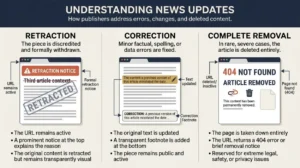
The most effective strategy depends on whether the underlying problem concerns factual accuracy, continued publication, or search visibility. A correction changes inaccurate or incomplete information while retaining the article, whereas removal seeks to take the content off its original source. De-indexing addresses eligibility for inclusion in particular search results without necessarily deleting the underlying page. These routes have different requirements and consequences, so choosing the correct one reduces wasted effort and unnecessary escalation. A professional assessment matches the requested outcome to the mechanism that can realistically deliver it.
When a report contains demonstrably inaccurate information, a correction request can provide a proportionate solution. Supporting documents, dated records, original statements, and verifiable evidence help explain precisely what requires amendment. Where the central claims are fundamentally unreliable, a request for a more extensive editorial review can be appropriate. Publishers retain responsibility for their editorial decisions and assess requests under their own standards and applicable legal obligations. The objective is to present a substantiated case rather than assume that reputational harm alone establishes grounds for removal.
Permanent article removal becomes relevant when the publisher determines that deletion is justified under its policies, editorial standards, or applicable legal requirements. The process involves identifying the publication, explaining the grounds for removal, and supplying evidence that supports the request. A successful deletion removes the article from its original published location, but it does not automatically erase syndicated copies, third-party archives, screenshots, or references elsewhere. Follow-up checks therefore form an important part of outcome verification. This distinction helps businesses understand the difference between source removal and complete online erasure.
De-indexing is a separate option when search visibility is the primary concern and the request meets the relevant criteria. Search engines assess removal requests under their policies and applicable legal frameworks, while publishers control the content hosted on their own websites. An article that disappears from one search result can remain accessible through a direct link or another search platform. Effective search perception management therefore records which URL or result has changed and which sources remain visible. This provides a more accurate measure of progress than treating every removal action as equivalent.
How Does the Article Removal Process Reduce Reputation Risk?

A clear article removal process reduces risk by connecting each request to evidence, a defined objective, and the authority responsible for deciding it. The process starts with a digital footprint review to identify relevant publications, current search positions, source ownership, and the nature of the disputed material. The next stage evaluates whether the concern involves factual inaccuracy, privacy, legal rights, editorial discretion, or search indexing. This classification helps determine the appropriate route before resources are committed. Each stage also establishes a record against which progress can be assessed.
The process follows five practical steps:
- Identify the affected URLs by recording publication names, article dates, search queries, and the current visibility of each result.
- Verify the concern by comparing disputed statements with primary documents, official records, dated correspondence, or other reliable evidence.
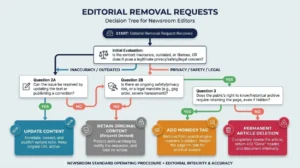
- Classify the appropriate route by distinguishing editorial correction, a removal request, a qualifying de-indexing request, and legitimate content enhancement.
- Submit a targeted request that explains the relevant facts, identifies the specific material in question, and addresses the publisher’s or platform’s applicable criteria.
- Monitor the outcome by checking source availability, indexing status, search-result changes, and the persistence of syndicated or archived copies.
Risk reduction also requires accurate expectations. An agency cannot independently compel an unaffiliated publisher to delete lawful content merely because it harms a client’s reputation. Unsupported allegations, incomplete evidence, and requests that overlook editorial standards can weaken a case and delay a decision. A reliable process communicates the available routes, explains their limitations, and records the status of each request. This creates a stronger basis for business decisions and reduces the risk of paying for an outcome that no service provider controls.
What Results Can Article Removal Services Deliver for Search Visibility and Trust?
Article removal services can improve search visibility outcomes when a publisher removes a source or a search engine approves an eligible de-indexing request. The direct result is a change in the availability or discoverability of the specific material addressed by that action. The effect on the wider SERP depends on the remaining results, the queries people use, and the authority of other pages appearing for the same searches. A removed article can leave a gap that is filled by another publication or an archived copy. For this reason, measuring the status of the original URL and the overall search landscape separately provides a more dependable view of progress.
Search perception control also involves the information that remains visible. Accurate company information, authoritative resources, current announcements, and independently verifiable material can help provide a more complete picture of an organisation. This content enhancement strategy operates differently from removal because it strengthens relevant information rather than changing the status of a disputed page. Search engines do not guarantee rankings simply because content is positive or published by the organisation itself. Sustainable reputation management combines accurate information with legitimate removal or correction routes where evidence supports them.
Trust restoration is best evaluated through observable changes rather than broad promises. Businesses can monitor whether a target article remains online, whether a correction has been published, whether an eligible result has been de-indexed, and how the composition of relevant search results changes over time. They can also assess whether the information presented across official and third-party sources is consistent and current. These measures connect reputation management activity to practical outcomes without claiming that one intervention automatically changes customer sentiment. Clear Your Name uses the distinction between source-level action and broader reputation signals to frame article removal decisions around verifiable progress.
Dive Deeper With Our Expert Guides:
Clear Your Name Today with Our Arrest Article & News Removal Services
Remove Outdated Press Coverage with Our Proven Article Removal Strategy
How Quickly Can Harmful Articles Be Removed from Search Results?
The speed of article removal depends on the publisher’s review process, the evidence provided, the complexity of the request, and any applicable legal or platform procedures. A straightforward correction request differs from a dispute involving contested facts, privacy concerns, or multiple parties. Publishers determine their own editorial review timelines, while search engines independently process indexing changes and eligible removal requests. As a result, submitting a request does not establish a guaranteed completion date. A credible service explains the stages involved and reports confirmed changes rather than presenting an unverified estimate as a promise.
The initial assessment can establish the scope of work quickly by identifying the URLs, checking the published material, and organising the available evidence. The decision stage then depends on the authority responsible for the content and the criteria that apply. Once a publisher agrees to remove or amend an article, further checks confirm whether the live page reflects the decision. Search results can take additional time to reflect changes, and independent copies can remain available. Separating request submission, publisher decision, source change, and search index updates provides a more accurate timeline.
Urgency also needs to be balanced against the risk of an inaccurate or poorly supported request. Repeated submissions without new evidence do not necessarily accelerate a decision and can consume resources without resolving the underlying issue. A focused request that identifies the exact problem and provides relevant documentation gives the decision-maker a clearer basis for assessment. Monitoring then identifies whether additional action is necessary and whether other URLs continue to expose the same material. This approach prioritises process quality and verified progress over unsupported guarantees of immediate deletion.
How Can Businesses Evaluate Article Removal Costs Against Long-Term Value?
The value of article removal services depends on the severity of the exposure, the number of affected URLs, the complexity of the evidence, and the work required to pursue the appropriate route. A single article with a clear factual error presents a different workload from multiple syndicated publications involving disputed allegations. Cost assessment therefore begins with a defined scope rather than a generic promise to remove negative content. A transparent proposal identifies the assessment, evidence preparation, request handling, monitoring, and reporting included in the service. This allows a business to compare providers on process quality and deliverables rather than on claims alone.
Long-term value also depends on the consequences of leaving the issue unresolved. A prominently ranked article can continue to shape the information available to prospective clients, employees, investors, and partners. However, the commercial impact varies by search intent, audience, source credibility, and the content of competing results. Businesses can assess priority by recording relevant queries, the visibility of the article, the accuracy of its claims, and the audiences most likely to encounter it. This evidence supports resource allocation without assuming that every negative mention produces measurable financial loss.
Sustainability requires ongoing monitoring and accurate information management after the initial intervention. A successful source removal does not prevent another publisher from reporting the same subject or an archive from retaining an earlier version. Organisations benefit from tracking the status of relevant pages and maintaining current, verifiable information across their digital presence. This supports a more resilient reputation strategy than relying on one deletion request as a permanent solution. The appropriate investment reflects the documented risk, the realistic probability of a successful intervention, and the value of maintaining reliable search information over time.
Why Choose Clear Your Name for UK Article Removal Services?
Clear Your Name provides a structured option for businesses seeking to assess harmful publications and pursue appropriate article removal routes. The value of a professional service lies in how it evaluates evidence, identifies the decision-maker, explains the available mechanisms, and verifies reported outcomes. This approach helps businesses distinguish between an editorial correction, source deletion, and search de-indexing before selecting a course of action. It also creates clearer expectations about what a service provider controls and what remains subject to a publisher’s or search engine’s decision. Reliability comes from a transparent process and evidence-based reporting, not from a blanket claim that every article can be deleted.
Before engaging an article removal provider, businesses can evaluate its process against the following criteria:
- Request a clear scope that identifies the URLs, proposed intervention, evidence requirements, and reporting milestones.
- Check how the provider distinguishes editorial requests, legal concerns, platform policies, and search indexing procedures.
- Confirm that progress reports separate submitted requests from accepted requests and completed source or indexing changes.
- Assess how the provider handles unsuccessful requests, remaining copies, and realistic alternative strategies.
- Review whether pricing and deliverables are explained before work begins, including any exclusions or additional costs.
A professional provider also avoids promising results outside its authority. Publishers retain editorial control, search engines apply their own policies, and legal outcomes depend on the relevant facts and applicable law. A service that explains these boundaries supports informed decisions and reduces the risk of misunderstanding the likely outcome. Clear Your Name places article removal within a wider reputation management framework that considers source status, search visibility, and the consistency of information across the digital footprint. This makes process clarity and verified progress central to the decision rather than treating deletion as an unconditional guarantee.
Which Next Step Supports a More Controlled Online Reputation?
A controlled online reputation begins with identifying the content that creates the greatest factual, legal, privacy, or search visibility concern. Businesses then match the problem to the appropriate route: correction for inaccurate information, a removal request where justified, de-indexing when the relevant criteria are met, or content enhancement to improve the wider information environment. Understanding the difference between a news retraction, correction, and complete article removal helps decision-makers distinguish these outcomes before committing resources. Reviewing how publishers decide whether to update, unindex, or permanently delete articles provides further context about editorial discretion, search discovery, and the limits of each approach. These considerations create a more informed basis for selecting a suitable response.
For businesses ready to assess a specific publication, a professional article removal service for UK businesses provides a defined starting point for reviewing the URL, evidence, available routes, and measurable objectives. The assessment establishes what can be requested, which party controls the decision, and how the result will be verified. Clear Your Name supports this evidence-led approach by connecting article removal with search visibility analysis and wider reputation management. The process prioritises clear scope, transparent expectations, and documented progress while recognising that the final decision rests with the relevant publisher or platform. A credible reputation strategy is built on appropriate action, reliable evidence, and outcomes that can be independently checked.
Can an article removal agency guarantee content deletion in the UK?
No article removal agency can guarantee the deletion of every online article because publishers retain editorial control and legal requirements vary by case. A professional article removal service assesses the evidence, identifies valid removal grounds, and pursues appropriate publisher or platform procedures.
How do article removal services remove harmful content from Google?
Article removal services assess whether the original publisher can correct or delete the content and whether the page qualifies for search de-indexing. Removing an article from its source does not automatically remove every search result, archived copy, or syndicated version.
How long does it take to remove a negative news article?
The timeline depends on the publisher’s review process, the evidence provided, and the complexity of the request. Search engines also need time to reflect approved changes, so article removal services cannot guarantee a universal completion date.
What evidence is needed to request article removal?
Useful evidence includes the article URL, the specific disputed statements, supporting documents, and relevant records demonstrating factual errors, privacy concerns, or other valid grounds. Clear evidence helps publishers assess the request against their editorial policies and applicable legal requirements.
How much do UK article removal services cost?
The cost of UK article removal services depends on the number of URLs, the complexity of the case, the evidence required, and the work involved in contacting publishers or search platforms. Clear Your Name can be considered when evaluating article removal options, with scope, fees, and realistic outcomes clarified before work begins.