Arrest article removal services help individuals challenge inaccurate, outdated or potentially unlawful news coverage and assess options for reducing its impact on online reputation. Clear Your Name provides a structured approach to article removal, editorial complaints and search visibility management, with each case assessed against the available evidence, publisher policies and applicable UK requirements.
When an arrest report appears prominently in search results, it can influence how employers, clients, professional contacts and the public perceive an individual before reviewing the full circumstances. Search visibility control therefore plays an important role in reputation management because reputation signals influence decisions about credibility, reliability and professional suitability. Effective management focuses on the accuracy of the original report, its continued relevance and the options available for correcting or restricting access to problematic content. No service can guarantee removal, but a transparent, evidence-led process establishes a clear basis for selecting and evaluating the appropriate remedy.
Why Choose Article Removal Services to Address Arrest News?
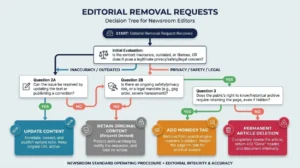
Professional article removal services provide a structured way to assess damaging news coverage, identify applicable removal routes and manage communication with publishers or search platforms. Their value lies in matching the requested outcome to the nature of the content rather than submitting generic removal demands. An arrest report can accurately describe an event at the time of publication yet become incomplete when it fails to reflect a later acquittal or other significant legal outcome. In other cases, the report contains a factual error that requires a direct correction request. Distinguishing these circumstances improves the quality of the complaint and reduces the risk of pursuing an unsuitable remedy.
A professional assessment begins with the original article, its publication date, headline, wording and current status. The review identifies whether the central issue concerns factual inaccuracy, missing context, privacy, legal rights or the continued visibility of historical reporting. Evidence such as official court documentation and the publisher’s own article history helps establish the basis for a request. The next step is to determine whether the most appropriate route involves an editorial correction, a removal request, a formal complaint or a search engine process. This structured approach gives the individual a clearer understanding of the available options, limitations and likely decision points.
The commercial value of an article removal service is measured through the quality of its assessment, the accuracy of its documentation and the clarity of its reporting. A credible service explains which party controls each decision and distinguishes completed actions from pending requests. It also identifies alternative steps when the publisher declines removal or when a search result remains visible after the original page changes. This process reduces avoidable effort and supports informed decisions about time, cost and risk. It does not replace the publisher’s editorial judgement or guarantee a particular result.
How Does Clear Your Name Manage Arrest Article Removal?
Clear Your Name approaches arrest article removal through case assessment, evidence review, route selection and documented follow-up. The objective is to identify the strongest available basis for challenging the content and to pursue a remedy that matches the issue. The process begins by examining the article’s URL, publication details, disputed statements and effect on the individual’s search presence. Supporting records are then compared with the published account to establish whether the report contains an error, omits a material outcome or raises another issue that warrants review. This initial analysis helps define a proportionate strategy before formal contact takes place.
The next stage focuses on the publisher’s correction and complaints procedures. A well-prepared request identifies the precise passage in dispute, provides relevant evidence and explains the requested outcome. Where an article describes a criminal allegation but omits a later acquittal, the request can explain why the outcome matters to the accuracy and completeness of the current report. Where the original statements are accurate, the assessment instead considers whether the circumstances support a removal request or another available route. This distinction helps maintain credibility and prevents the complaint from relying on an unsupported claim that an acquittal automatically makes the original article unlawful.
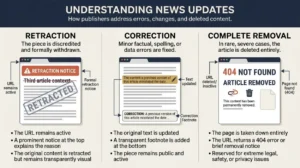
Follow-up focuses on the status of the request and the response received. If the publisher updates the article, the revised page can be checked to confirm that the material correction is visible and accurately expressed. If the publisher removes the page, further checks can establish whether the original URL or related references remain accessible elsewhere. If a search result continues to appear, a separate assessment determines whether a search engine request is appropriate. Each outcome is recorded separately, giving the individual a clearer view of progress and any remaining limitations.
Which Removal Options Deliver the Most Appropriate Outcome?
The most appropriate removal option depends on the problem being addressed, the evidence available and the organisation that controls the content. Editorial correction is relevant when a report contains inaccurate wording or fails to reflect a significant development. Removal seeks to make the original article unavailable through the publisher’s website, but it depends on the outlet’s decision and the circumstances of the case. Search de-indexing addresses the display of a result in a particular search engine rather than automatically deleting the underlying page. These routes have different effects, so selecting the correct one is essential for realistic expectations and measurable progress.
A correction can preserve legitimate historical reporting while ensuring that readers see an accurate account of the legal outcome. This is often an appropriate route when the main issue is incomplete information rather than a clear basis for deletion. A removal request places greater emphasis on whether continued publication is justified under the publisher’s standards and the relevant legal context. A search de-indexing request must meet the applicable search provider’s criteria and does not guarantee removal across all queries or search engines. Clear Your Name evaluates these distinctions to help align the requested remedy with the actual issue rather than treating every case as a straightforward deletion.
The distinction between a source and its search result also matters for SERP control. Removing a publisher’s page does not guarantee immediate disappearance from every search result, while de-indexing a result does not necessarily make the original article inaccessible through direct links. External websites, archived copies and independent reporting can continue to reference the same event. An effective strategy therefore assesses source availability, search visibility and secondary references as separate factors. This produces a more accurate picture of what has changed and what remains unresolved.
How Do Article Removal Services Improve Search Visibility and Public Perception?

Article removal services influence search perception by addressing the source content or search results that shape how users encounter an individual’s name. Search engines rank pages according to relevance, quality, authority and other signals; they do not simply classify an individual as trustworthy or untrustworthy. An arrest report can nevertheless become prominent for a name-based query and dominate the information available to someone conducting a quick background search. When the report omits a significant legal outcome, the resulting SERP composition can present an incomplete picture. Correcting the source or pursuing an eligible removal route addresses that specific information gap.
Search visibility improvements depend on the remedy achieved and the search engine’s subsequent handling of the page. A corrected article can provide a more accurate account when readers access the source, although its headline or search snippet requires separate attention. A removed or de-indexed page can reduce one route through which users encounter the allegation, but it does not erase all references to the event. Where appropriate, credible professional profiles and accurate public information can also help broaden the information available in name-based searches. This combination of corrective action and authentic content development supports a more balanced digital footprint without guaranteeing specific rankings.
Trust restoration requires factual clarity rather than simply increasing the quantity of favourable content. Employers and professional contacts assess available information in context, and a clear record of the final legal outcome can be more informative than a large collection of unrelated positive pages. Reputation signals gain value when they come from reliable sources and accurately represent the individual. Content suppression and content enhancement therefore serve different purposes: suppression addresses eligible problematic material, while enhancement improves the breadth and quality of relevant information. The strategy works best when each action has a defined purpose and its outcome is measured independently.
What Evidence Supports a Successful Arrest Article Challenge?
A strong challenge connects a specific concern to reliable evidence and a clearly defined request. Useful material includes the article URL, publication date, the exact wording in dispute and official documentation confirming the relevant legal outcome. Correspondence with the publisher also provides a record of previous requests and responses. The evidence must support the requested remedy: documentation of an acquittal establishes the court outcome, but does not automatically prove that every statement in the original report was false. This distinction strengthens the credibility of the complaint and allows the publisher to evaluate the issue accurately.
The assessment also considers the difference between an editorial dispute and a legal claim. A request for correction can focus on a verifiable factual error or omitted development, while a legal complaint requires a valid legal basis and an assessment of the relevant facts. In the UK, defamation, privacy and data protection involve distinct legal tests and considerations, including protections relevant to journalistic activity. An unfavourable report is not automatically unlawful simply because it damages reputation or remains searchable after an acquittal. Where legal rights are central to the case, qualified legal advice helps establish the appropriate route and the strength of the available arguments.
Clear documentation also supports risk management. Unsupported accusations, broad demands and unclear requests can distract from the central issue and make a complaint harder to evaluate. A focused submission identifies the disputed material, explains the evidence and specifies whether correction, removal or another remedy is being sought. The publisher’s response then informs the next decision, including whether a further complaint or a separate search engine request is justified. This evidence-led process reduces avoidable uncertainty without promising an outcome outside the service’s control.
Dive Deeper With Our Expert Guides:
Remove Outdated Press Coverage with Our Proven Article Removal Strategy
Request a Free Case Audit with Our Specialized Article Takedown Specialists
How Should You Evaluate Cost, Speed and Long-Term Value?
The value of an arrest article removal service depends on the complexity of the case, the number of publishers involved and the work required to substantiate the request. A single article containing a clear factual error presents a different workload from a case involving multiple reports, uncertain legal grounds and references across different websites. Cost assessment therefore needs to consider the scope of work, the evidence review, communications, follow-up and any additional work that requires separate authorisation. A clear service agreement explains what is included and identifies circumstances that affect the scope or cost. This enables an individual to compare providers on process quality rather than relying on a headline price alone.
Speed depends primarily on the decision-maker and the nature of the request. A publisher’s response time varies according to its procedures, editorial review and the complexity of the complaint. Search engines have separate processes and timelines for eligible requests, while legal disputes involve their own procedural requirements. No responsible service can guarantee that an article disappears within a fixed period when the outcome depends on an independent publisher, platform or legal authority. Reliable reporting distinguishes submission dates, responses, completed changes and unresolved steps.
Long-term value depends on whether the remedy addresses the underlying issue and whether the remaining search presence is monitored appropriately. A correction can improve the article’s factual completeness, while a successful removal can reduce direct access to the source page. Neither outcome guarantees that third-party references disappear or that rankings change immediately. Where suitable, maintaining accurate professional information supports a broader reputation strategy and provides useful context for name-based searches. Sustainable management measures the status of the original content, the visibility of relevant results and the accuracy of information users can access over time.
Why Choose Clear Your Name for a Structured Removal Process?
Clear Your Name centres the process on evidence, defined remedies and transparent communication rather than guaranteed deletion. This approach recognises that publishers and search engines retain control over their own decisions, and that the available options depend on the facts of each case. Before proceeding, an individual needs to understand the service scope, the proposed route, the evidence required and the limits of the expected outcome. A clear explanation of these factors supports informed consent and helps prevent unrealistic expectations. Reliability comes from a defensible process, not from claims that every article can be removed.
A useful service review examines how a provider assesses eligibility, handles personal documentation, records communications and reports progress. It also checks whether the provider distinguishes editorial correction from legal action and search de-indexing. Clear explanations of fees, confidentiality arrangements, third-party dependencies and possible additional costs reduce decision risk. The same standards apply when evaluating professional article removal services: the service needs to explain its method, evidence requirements and reporting practices before work begins. These criteria help individuals judge whether the proposed approach fits their circumstances.
The decision also benefits from understanding the wider information context. The analysis of whether local newspapers must remove inaccurate crime reports after an acquittal explains why a court outcome does not automatically create a right to delete every historical article. A separate review of how to challenge local news outlets over cleared allegation articles helps distinguish correction requests, removal requests and search visibility remedies. These considerations allow the individual to evaluate the available route before committing resources. They also support a more realistic assessment of what an article removal service can achieve.
What Is the Next Step Towards a More Accurate Online Reputation?
The first step is to establish what the article says, whether it accurately reflects the legal outcome and which organisation controls the content. The next step is to match the evidence to a suitable remedy, whether that involves an editorial correction, a removal request, a formal complaint or an eligible search engine process. Clear Your Name applies this structured approach to help individuals understand their options and manage the work involved in challenging arrest-related news coverage. Each stage focuses on a defined action and a reviewable result rather than an unsupported promise of complete removal.
A dependable reputation management process provides clarity about evidence, responsibilities, timing and limitations. It evaluates source accuracy and search visibility separately, then records the outcome of each action so that progress can be assessed objectively. Where removal is unavailable, the assessment can identify whether a correction, further complaint or broader search presence strategy remains appropriate. This reduces the risk of spending resources on a remedy that does not match the problem. It also ensures that decisions are based on documented facts and the actual status of the content.
Clear Your Name Today with Our Arrest Article & News Removal Services provides a defined starting point for assessing an arrest article challenge and the available routes for addressing its impact. The aim is to establish a credible, evidence-led process that prioritises factual accuracy, transparent communication and realistic outcome measurement. Removal is never automatic, and no responsible provider can guarantee a publisher’s or search engine’s decision. A clear assessment, appropriate remedy and documented follow-up provide the strongest foundation for managing the issue responsibly.
Can an arrest article be removed from Google after an acquittal?
An arrest article can be removed from a publisher’s website or become eligible for search de-indexing, depending on the circumstances and applicable policies. An acquittal does not automatically require a newspaper or Google to remove the report.
How can I get a local newspaper to remove an arrest article?
Contact the newspaper’s editor or complaints team with the article URL, evidence confirming the case outcome and a clear explanation of why removal is requested. Depending on the circumstances, requesting a correction or an update may be more appropriate than seeking complete removal.
What evidence is needed for arrest article removal services?
Useful evidence includes official court records confirming an acquittal, the original article, the specific statements in dispute and previous correspondence with the publisher. This documentation helps establish whether the report is inaccurate, incomplete or eligible for further review.
How long does it take to remove an arrest article from search results?
The timeframe depends on the publisher’s review process, the evidence provided and whether a separate search engine request is required. Removal and de-indexing follow different procedures, so no provider can guarantee a fixed completion date.
How can Clear Your Name help with arrest article and news removal?
Clear Your Name focuses on assessing arrest-related news coverage, reviewing supporting evidence and identifying appropriate routes for requesting correction, removal or reduced search visibility. The available options depend on the article’s content, publisher policies and applicable legal requirements, and successful removal is not guaranteed.