Removing outdated press coverage requires a clear assessment of the article, documented grounds for intervention and a strategy that addresses both source availability and search visibility. Clear Your Name provides an article removal approach focused on reducing the impact of eligible negative coverage, strengthening reputation signals and improving how people encounter a person or organisation online.
Search visibility control matters because journalists, employers, clients and professional partners often use search engines to evaluate credibility before making decisions. When an old news story dominates the search engine results page (SERP), it can create an incomplete picture of current circumstances, even when a person’s professional standing has changed. Effective reputation management addresses the underlying content issue and the wider search environment rather than relying on a single ranking adjustment. The objective is to pursue justified removal, correction or de-indexing while building a more accurate and credible digital presence. Results depend on the publisher’s decision, applicable policies and search engine processes, so a reliable strategy defines its scope and limitations from the outset.
Which Article Removal Strategy Delivers the Most Reliable Results?
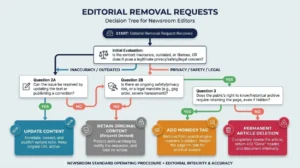
A structured article removal strategy delivers the clearest results when it matches the requested action to the specific problem affecting the publication. The process begins by identifying the source, reviewing the article’s accuracy and relevance, and establishing whether a valid editorial, privacy or legal ground supports intervention. This assessment prevents resources being spent on requests based only on negative sentiment, which does not establish a right to deletion. It also distinguishes a publisher-level problem from a search visibility problem that requires a different response. A documented strategy creates a traceable basis for decisions, progress reporting and evaluation of the final outcome.
How Does the Article Assessment Process Work?
The assessment process examines the article’s claims, publication history, current context and continuing public interest. Reviewers identify factual inaccuracies, material omissions, sensitive personal information and subsequent developments that change how readers interpret the original report. Supporting evidence can include official records, published corrections, court outcomes and reliable documentation that directly addresses disputed statements. The review then determines whether a request for removal, correction, contextual updating or de-indexing is the most appropriate route. This structured evaluation improves the precision of each request without assuming that every unfavourable article qualifies for deletion.
Why Does Publisher-Specific Evidence Matter?
Publishers apply editorial policies to determine whether an archived article requires correction, amendment or removal. A request that identifies the exact passage in dispute and supplies verifiable evidence gives the editorial team a specific issue to investigate. For example, documentation of a subsequent legal outcome supports a request to update an article that no longer reflects the case’s final position. By contrast, a general assertion that an article damages professional credibility does not establish that the original reporting was inaccurate. Publisher-specific evidence strengthens the reasoning behind a request and reduces avoidable delays caused by incomplete submissions.
Dive Deeper With Our Expert Guides:
Request a Free Case Audit with Our Specialized Article Takedown Specialists
Turn to Our Experts to De-Index and Remove Libelous News Stories Fast
Should You Choose Article Removal or Negative Content Suppression?
Article removal is the preferred route when defensible grounds exist to eliminate a problematic source, while negative content suppression addresses the prominence of unwanted results that remain online. These approaches solve different problems and require separate performance measures. Removal changes the availability of a source when the publisher agrees to delete it, whereas suppression develops a stronger set of relevant results around the same name or entity. A suppression strategy can include authoritative professional pages, accurate biographies, relevant publications and well-maintained business profiles. The right decision depends on the source’s legitimacy, the strength of the removal grounds and the level of control required over the wider SERP.
When Is Removal the Stronger Option?
Removal is the stronger option when evidence establishes a credible basis for requesting deletion under the publisher’s policies or applicable law. Examples include substantiated factual errors, material privacy concerns and circumstances in which the continued publication no longer meets relevant editorial standards. The assessment must also consider public interest, freedom of expression and legal protections for journalism. UK data protection law does not provide an automatic right to erase legitimate journalistic archives, and the age of a report alone does not establish grounds for deletion. A carefully supported request therefore prioritises the specific defect and the remedy that addresses it.
When Does Content Suppression Provide Greater Value?
Content suppression provides greater value when a historical article remains legitimately published but occupies a disproportionate position in name-based search results. This approach strengthens the surrounding digital footprint through useful, accurate and credible information that reflects current professional activity. Search engines assess relevance, content quality, authority and other ranking signals when deciding which pages appear for a query. New content does not automatically outrank established news publishers, so suppression requires realistic expectations and consistent quality. Its value is measured through changes in SERP composition, the visibility of authoritative pages and the accuracy of the overall search narrative.
The two approaches can work together when a story has defensible removal grounds and also dominates the person’s wider search presence. An evidence-based removal request addresses the original source, while content enhancement develops a more complete representation of the person or organisation. This combined approach avoids treating search rankings as a substitute for correcting inaccurate information. It also separates outcomes that can be directly verified, such as a publisher deleting a URL, from outcomes influenced by external ranking systems. The distinction supports clearer reporting and more defensible decisions about future work.
How Can Article Removal Services Improve Search Visibility and Trust?

Professional article removal services improve the quality of decision-making by assessing the source, selecting an appropriate intervention and documenting the progress of each request. Their value lies in coordinating editorial analysis, evidence review, communication and search visibility monitoring rather than promising control over independent publishers. Clear Your Name approaches article removal as a reputation management process in which each action has a defined purpose and an assessable outcome. This structure helps clients understand which issues have a viable resolution route and which require a different strategy. It also reduces the risk of pursuing unsuitable claims or confusing a submitted request with a confirmed result.
How Does the Process Strengthen Entity Credibility?
Entity credibility is the degree to which available information presents a person or organisation as identifiable, consistent and supported by credible sources. Search users evaluate this credibility through the sources they encounter, the consistency of key facts and the relevance of information to the decision they need to make. An outdated article can distort that assessment when it omits a significant subsequent development or contains an unresolved factual error. Addressing the defect and strengthening accurate current information helps align the search narrative with the available evidence. The outcome is a more balanced digital footprint, although the effect on individual readers remains dependent on their search behaviour and judgement.
What Outcomes Should a Client Expect to Measure?
Reliable reporting distinguishes completed actions from changes that depend on external systems. The assessment tracks whether the publisher has responded, whether the requested correction or deletion has been completed, and whether the relevant URL remains accessible. Search monitoring then examines the article’s visibility for agreed name-based queries and records the presence of credible alternative results. These measures create a baseline against which progress can be compared without implying that every movement in rankings resulted from a particular intervention. A clear reporting framework supports informed decisions about whether to continue, revise or conclude the strategy.
- Verify publisher outcomes by recording written decisions, correction notices and confirmed changes to the original URL.
- Monitor search visibility by checking agreed queries, result positions and the presence of relevant alternative pages.
- Measure reputation coverage by reviewing whether authoritative sources represent current professional roles and verified developments.
- Review sustainability by checking for syndicated copies, duplicate articles and renewed prominence of the original coverage.
These measures provide stronger evidence of progress than general claims about improved reputation. A publisher’s written confirmation establishes an editorial outcome, while search monitoring records the separate effect on discoverability. Changes in enquiries, recruitment outcomes or business confidence provide additional context, but they cannot be attributed to one search intervention without supporting evidence. Reporting each outcome separately makes the process more transparent and helps establish whether the work has addressed the original objective. It also identifies unresolved exposure that requires further assessment.
How Quickly Can Outdated Press Coverage Be Addressed?
The speed of an article removal outcome depends on the evidence, the publisher’s response time, the complexity of the issue and any applicable legal process. An initial assessment can establish the available routes relatively quickly, but it does not determine when an editor will reach a decision. Straightforward correction requests with clear documentary support differ from disputed allegations requiring legal analysis or a detailed editorial review. Search engine changes introduce another timeline because crawling, indexing and ranking processes operate independently of the publisher’s decision. A reliable service communicates these separate stages instead of offering an unsupported deadline for complete removal.
What Determines the Speed of a Removal Request?
The quality of the initial submission is one of the most important factors within the client’s control. A request that identifies the exact URL, disputed passage, relevant evidence and requested remedy gives the publisher a defined issue to assess. Incomplete documentation or unclear legal arguments create additional work and can delay a substantive response. The publisher’s internal procedures, editorial workload and assessment of public interest also influence the decision. A structured submission reduces avoidable uncertainty, but it cannot guarantee acceptance or dictate the publisher’s schedule.
What Happens When a Publisher Rejects the Request?
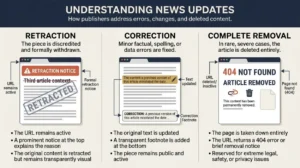
A rejection requires reassessment of the stated reasons, the evidence supplied and the available alternatives. Where a factual dispute remains unresolved, additional primary evidence or a more precise correction request provides a clearer basis for reconsideration. Where deletion is not justified, a contextual update, anonymisation request or eligible search de-indexing request addresses a different aspect of the problem. Legal escalation requires an independent assessment of the applicable law, the strength of the evidence and the proportionality of further action. A documented decision process prevents repeated submissions that fail to address the publisher’s original objections.
How Do Cost, Risk and Long-Term Value Affect the Decision?
The long-term value of article removal depends on the seriousness of the reputational issue, the feasibility of the proposed remedy and the continuing cost of managing the exposure. A low-cost request is not necessarily effective if it lacks evidence, targets the wrong decision-maker or overlooks syndicated copies. Equally, an expensive intervention does not guarantee deletion, favourable rankings or measurable commercial gains. A sound assessment compares the expected scope of work, evidence requirements, legal exposure and ongoing monitoring obligations before resources are committed. This approach makes the financial decision more transparent and aligns expenditure with achievable outcomes.
How Should Article Removal Costs Be Evaluated?
Article removal costs reflect the complexity of the case, the number of publishers involved, the quality of available evidence and the level of legal or editorial analysis required. A single correction request differs materially from a multi-publisher case involving syndicated content, disputed facts and several search visibility concerns. Clients need clarity about what the agreed work includes, which activities incur additional fees and how outcomes will be reported. Cost assessments also distinguish work completed from external decisions that remain outside the service provider’s control. This level of transparency supports a more meaningful comparison between providers than headline pricing alone.
Which Safeguards Reduce Reputation Management Risks?
Risk reduction begins with an evidence-led strategy that avoids unsupported allegations, misleading claims and attempts to conceal information that legitimately serves the public interest. A responsible process records the grounds for each request, protects confidential documents and limits personal information to what is necessary for the assessment. It also distinguishes lawful editorial criticism from content that presents a substantiated basis for correction or removal. Search suppression work must rely on accurate, relevant content rather than fabricated credentials, artificial endorsements or misleading representations. These safeguards protect the integrity of the strategy and reduce the risk of creating further reputational or legal problems.
How Can Results Remain Sustainable After Removal?
Sustainable results require follow-up because the disappearance of one article does not eliminate every copy, reference or associated search result. Syndicated reporting, independent archives and third-party discussions can preserve the same information even after the original publisher removes its page. Periodic checks identify renewed visibility, duplicate URLs and changes in the balance of authoritative search results. Maintaining accurate professional profiles and current, verifiable information also helps ensure that the digital footprint continues to reflect relevant developments. Ongoing monitoring therefore protects the value of completed work without suggesting that permanent control over every search result is possible.
Why Choose Clear Your Name for Article Removal Support?
Clear Your Name offers a structured route for assessing outdated press coverage, identifying potential removal grounds and selecting an appropriate response. The approach connects editorial assessment with reputation monitoring so that the objective remains clear from the initial review through to the final report. Clients receive a basis for understanding the available options, the evidence required and the decisions that remain with publishers or search engines. This process clarity is essential when reputational concerns involve sensitive information, disputed reporting or long-standing search results. The emphasis remains on substantiated action, transparent communication and measurable progress rather than guaranteed outcomes outside the provider’s control.
How Does a Clear Process Support Better Decisions?
A reliable process begins with a review of the article and the search context in which it appears. The next stage establishes the grounds for intervention, prepares the appropriate request and records the publisher’s response. Where removal is unavailable, the assessment considers proportionate alternatives and defines how their outcomes will be measured. Clients can then evaluate progress through documented decisions, verified page changes and search visibility checks. This sequence supports accountability because each action is connected to a specific issue and an observable result.
The decision to proceed with professional article removal services is most valuable when the provider explains both the available interventions and their limitations before work begins. Clear Your Name places the assessment of evidence, the selection of a suitable route and the monitoring of results within a defined reputation management process. For additional context, understanding how archival news articles affect public perception helps explain why historical coverage continues to influence name-based searches even after circumstances change. Reviewing the grounds for removing archived news stories also clarifies why factual evidence, privacy considerations and continuing public interest influence an editor’s decision. Together, these considerations establish a more informed basis for choosing an intervention.
Outdated press coverage requires a strategy that addresses the original publication and its continuing influence on search visibility. Clear Your Name provides a structured approach to evaluating removal options, documenting decisions and measuring changes without promising control over independent editorial or ranking systems. The result is a clearer, evidence-led process for reducing justified reputational risks, strengthening entity credibility and maintaining a more accurate digital presence. A reliable article removal strategy begins with verifiable grounds, transparent processes and outcomes that can be independently assessed.
How can outdated press coverage be removed from Google?
Outdated press coverage can be removed from Google by requesting deletion from the publisher or applying for de-indexing when the content meets relevant legal or platform criteria. Article Removal Services assess the available grounds, including factual inaccuracies, privacy concerns and applicable editorial policies.
What are the strongest grounds for removing an old news article?
Strong grounds include verifiable factual errors, unlawful disclosure of personal information, relevant legal restrictions and breaches of a publisher’s editorial standards. The age of an article or its negative impact on reputation does not automatically justify removal.
How long does it take to remove outdated press coverage?
The timeframe depends on the publisher’s review process, the quality of the supporting evidence and the complexity of the request. Search engine updates follow separate processes, so removing an article from a publisher’s website does not guarantee its immediate disappearance from search results.
Can reputation management services suppress negative press coverage without deleting it?
Yes, reputation management services can use content enhancement and search visibility strategies to improve the prominence of credible, relevant information. This approach aims to create a more balanced search engine results page (SERP), although rankings depend on search engine algorithms and competing content.
How does Clear Your Name help remove outdated press coverage?
Clear Your Name evaluates archived news articles, identifies potential grounds for removal and assesses alternatives such as corrections, anonymisation and search de-indexing. Its Article Removal Services focus on evidence-led requests and monitoring outcomes, while final removal decisions remain with publishers or search engines.