
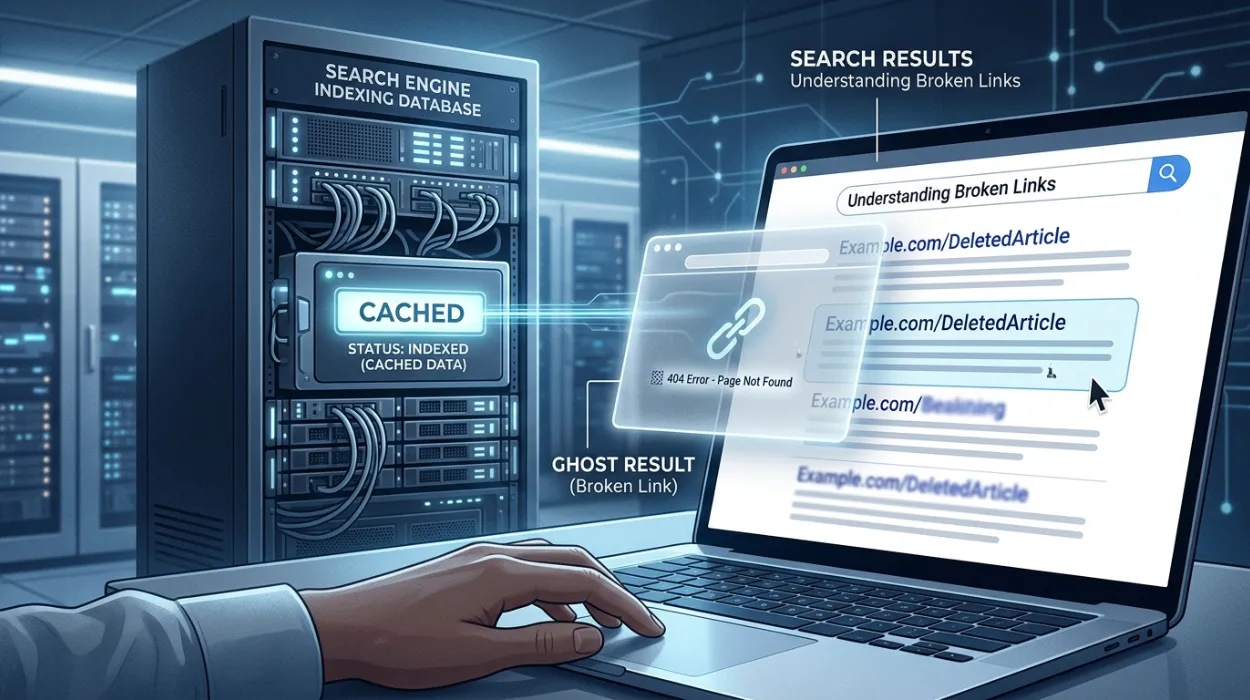
Broken links remain indexed in Google Search because content indexing and content removal operate through separate search engine processes. Search engines retain information about URLs until crawling systems confirm that a page is unavailable and update the search index accordingly.
Reputation management is the process of understanding how information shapes public perception across digital environments. Online reputation refers to the collective interpretation of indexed content, search results, mentions, and reputation signals that search engines and users evaluate when forming judgments about an individual, business, or entity.
Why Do Broken Links Continue Appearing in Google Search Results?
Broken links continue appearing in Google Search because search indexes update independently from website changes.
Content indexing is the process through which search engines discover, store, and organise web pages. When a page is removed from a website, the indexed record of that page often remains within Google’s systems until the next crawl and evaluation cycle. Search visibility therefore persists even after the underlying content disappears.
Search engines prioritise efficiency when managing billions of URLs. Instead of checking every page continuously, crawling systems revisit content based on historical patterns, authority signals, and update frequency. This delay explains why removed pages can continue appearing in search results.
From a reputation perspective, indexed broken links remain part of a digital footprint. Users encountering these results during SERP evaluation may continue associating outdated information with an entity even though the original content no longer exists.
What Is the Difference Between Content Removal and Content Deindexing?
Content removal and content deindexing are separate processes within search ecosystems.
Content removal refers to the deletion of a page from its source website. Deindexing refers to the removal of a URL from a search engine’s database. A page can be removed from a website while remaining indexed within search results.
Search visibility depends on the indexed record rather than the live existence of a page. Search engines store information about URLs, titles, metadata, and relevance signals independently from the source server. As a result, deleted content may continue influencing search visibility until indexing systems are updated.
This distinction is important because online reputation is often shaped by discoverability. The visibility of outdated URLs contributes to entity perception regardless of whether users can access the original content.
Dive Deeper With Our Expert Guides:
How Broken Links Affect Your Online Reputation Even When the Content Is Gone
What a Dead Link Is and Why It Can Still Cause Reputational Harm in Search
How Does Google’s Crawling System Affect Broken Link Visibility?
Google’s crawling system determines when search engines discover changes to website content.
Crawling is the automated process of revisiting URLs and collecting information for index updates. Search engines allocate crawl resources according to authority signals, update patterns, and content importance. Frequently updated websites generally receive faster crawl attention.
When a page is removed, Google must revisit the URL before recognising the change. Until this occurs, the existing indexed version remains eligible for search visibility. Search ranking systems therefore continue evaluating the URL based on historical information.
The relationship between crawling and indexing demonstrates why visibility delays occur. Search ecosystems depend on periodic verification rather than continuous monitoring.
Why Do Cached Search Records Influence Visibility?
Cached search records are stored representations of previously indexed content.
Caching allows search engines to maintain records of webpages even when accessibility changes. These records support ranking systems, historical relevance evaluation, and content retrieval processes. As a result, visibility can continue after content removal.
Search visibility is influenced by stored signals rather than live page existence alone. Authority indicators, historical engagement, and contextual relationships contribute to ongoing SERP eligibility. This explains why broken links occasionally remain visible despite being inaccessible.
From a reputation management perspective, cached records contribute to digital footprints because users continue encountering references to removed content.
How Do Search Engines Interpret Broken Links During SERP Evaluation?
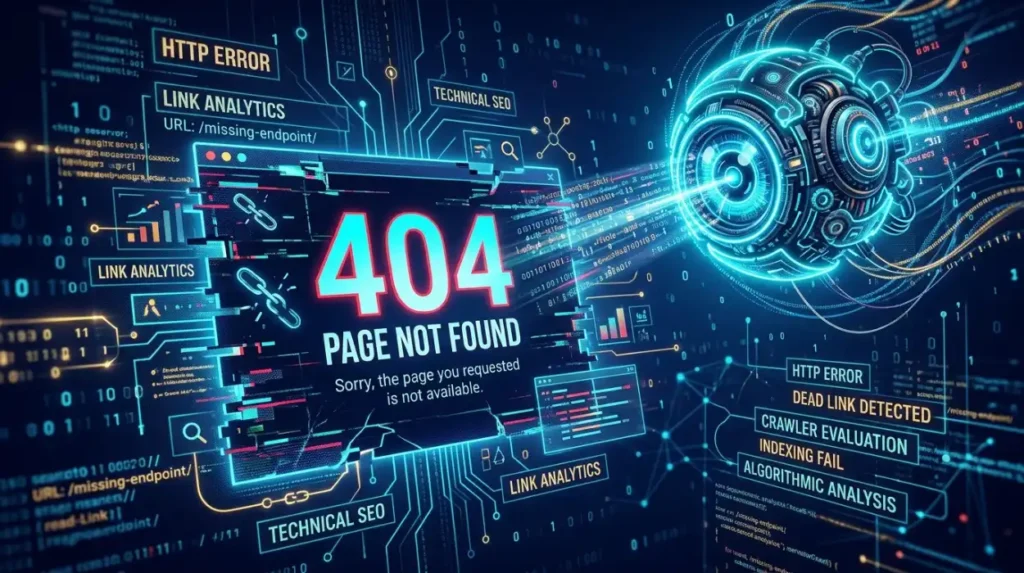
Search engines interpret broken links as signals requiring reassessment rather than immediate removal.
SERP evaluation refers to the process through which search systems determine content eligibility and ranking potential. When broken links are identified, search engines evaluate accessibility, relevance, and indexing status before making visibility adjustments.
The evaluation process protects search quality while preventing unnecessary fluctuations in rankings. Immediate removal could create instability across search ecosystems. Instead, search engines analyse multiple signals before updating results.
This mechanism demonstrates how authority signals and content indexing influence visibility even after accessibility changes occur.
How Do Broken Links Affect Online Reputation?
Broken links affect online reputation because they remain visible within search environments.
Online credibility is influenced by the information users encounter during searches. Broken links can create confusion regarding content availability, organisational reliability, or digital presence. These perceptions emerge during SERP evaluation before users visit a website.
Entity perception develops through visible reputation signals. Search results function as informational summaries, meaning visibility often carries greater influence than content accessibility itself. An indexed broken link therefore remains part of the reputation ecosystem.
Search visibility shapes user expectations, making broken links a relevant factor in digital trust assessment.
What Role Do Authority Signals Play in Index Retention?
Authority signals influence how search engines prioritise crawling and index management.
Authority refers to the credibility and trustworthiness assigned to content and websites. Pages associated with strong authority signals often receive greater search visibility and more extensive indexing resources.
Because authority contributes to ranking decisions, highly authoritative URLs may remain indexed longer while search systems reassess accessibility. The relationship between authority and indexing demonstrates how trust signals influence search operations.
Authority therefore affects both visibility persistence and the speed of index updates.
How Do Search Ranking Dynamics Influence Broken Link Persistence?
Search ranking dynamics influence how long broken links remain visible after removal.
Ranking systems evaluate relevance, authority, engagement, and contextual relationships. These factors operate independently from immediate page accessibility. A URL can therefore retain ranking signals while awaiting index reassessment.
Search ecosystems prioritise informational consistency. Maintaining existing records until verification occurs prevents ranking instability and protects result quality. This process explains why visibility often outlasts content existence.
The interaction between ranking systems and indexing mechanisms demonstrates the complexity of modern search ecosystems.
Why Is Index Management Important for Digital Footprints?
Index management is important because search visibility shapes long-term digital footprints.
Digital footprint refers to the collection of indexed information associated with an entity across online environments. Search engines organise and surface this information through ranking systems and visibility algorithms.
Broken links contribute to digital footprints because indexed records remain discoverable. Even without accessible content, search visibility influences reputation signals and public perception. The persistence of indexed information therefore affects online credibility.
Understanding index management provides insight into how search ecosystems construct and maintain reputation-related information.
How Can Search Indexes Be Updated More Efficiently?
Search index updates occur more efficiently when search engines receive clear signals regarding content changes.
- Return proper status codes – Use HTTP 404 or 410 responses to communicate content removal.
- Update sitemaps – Remove obsolete URLs to assist crawl prioritisation.
- Submit index requests – Provide direct signals that indexing reassessment is required.
- Monitor visibility – Analyse search results to identify lingering indexed records.
These mechanisms improve communication between websites and search systems, supporting more accurate visibility management.
Within reputation management discussions, understanding How to Request That Google Remove Broken Links From Its Search Index helps explain how search visibility can be influenced after content removal occurs.
Broken links remain indexed because content removal and search indexing operate through separate systems. Crawling schedules, cached records, authority signals, and ranking dynamics all influence how long removed pages remain visible within search results.
Search visibility plays a central role in reputation formation because users evaluate information through SERPs before accessing websites. Understanding how broken links persist provides deeper insight into content indexing, digital footprints, online credibility, and the mechanisms that shape reputation signals across search ecosystems.
Why do broken links remain indexed in Google Search after a page is removed?
Broken links remain indexed because Google’s content indexing and crawling systems update separately from website changes. A removed page can continue appearing in search results until Google recrawls the URL and updates its search index.
How long does it take Google to remove broken links from search results?
The timeline depends on crawl frequency, website authority, and indexing priorities. Search visibility can persist until Google verifies that the page is unavailable and processes the change within its index.
Do broken links affect online reputation and search visibility?
Yes, broken links can influence online reputation by remaining visible in search results even when content is inaccessible. These indexed URLs continue contributing to reputation signals, entity perception, and digital footprint assessments.
What is the difference between a broken link and a deindexed page?
A broken link refers to a URL that no longer provides accessible content, while a deindexed page has been removed from Google’s search index. A page can be broken but still appear in search results until deindexing occurs.
How can Google be notified to remove broken links from its index?
Website owners can use indexing tools, update sitemaps, and ensure proper HTTP status codes such as 404 or 410 are returned. Clear Your Name notes that these signals help search engines recognise removed content and reassess search visibility more efficiently.