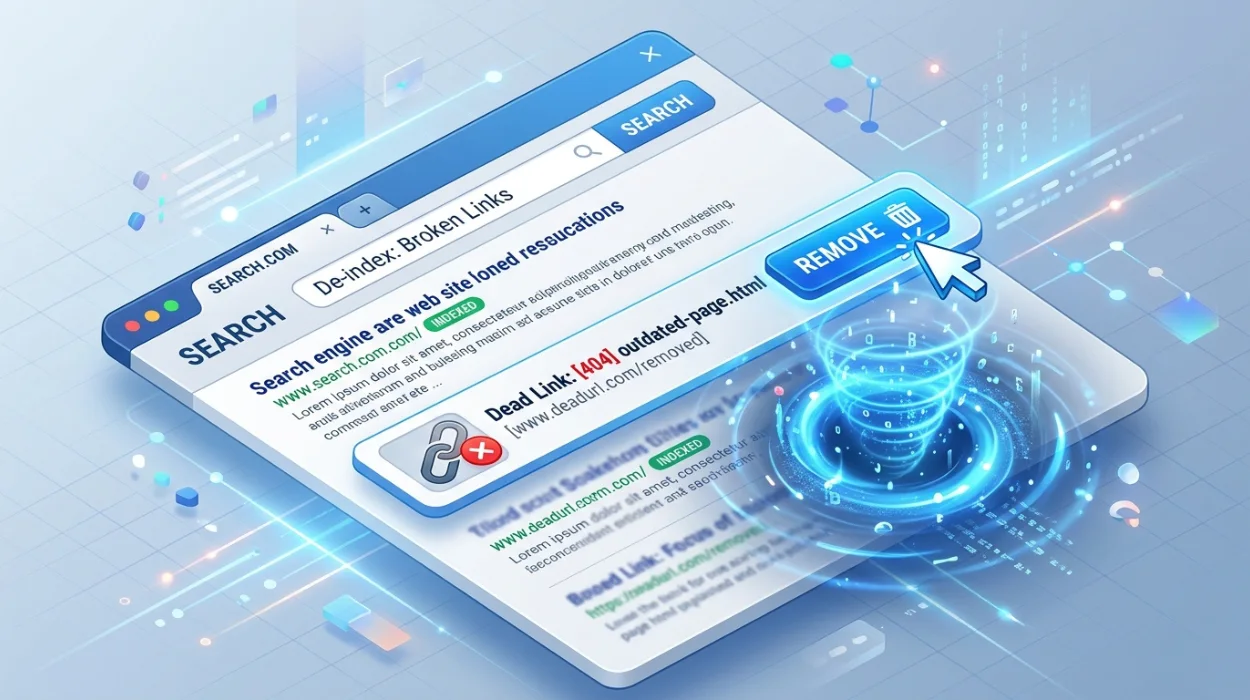
Dead links showing in Google results can be removed or de-indexed through recognised search engine indexing processes that evaluate technical signals, crawl data, and content status before updating searchable indexes. The effectiveness of each approach depends on how search engines interpret permanence, authority signals, and indexing instructions rather than the removal of content alone.
Reputation management strategies differ based on how they influence search visibility, entity credibility, and indexed information across search ecosystems. Online reputation control methods are evaluated through their impact on reputation signals, search ranking influence, sentiment distribution, and the long-term composition of search engine results pages (SERPs).
Which Methods Remove Dead Links from Google Results Most Effectively?
Different methods remove dead links through distinct indexing mechanisms. Each approach influences search visibility according to how search engines interpret technical evidence, content availability, and crawl verification.
Removing dead links is the process of updating Google’s understanding of outdated URLs so that obsolete search results no longer appear within searchable indexes. This process depends on crawl frequency, HTTP response evaluation, indexing policies, and URL management rather than immediate deletion from a website. Search engines require confirmation that unavailable content represents a permanent change before modifying indexed records. As a result, removal effectiveness is measured through indexing accuracy instead of removal speed.
The primary methods include permanent removal responses, URL de-indexing instructions, redirects, and index refresh through repeated crawling. Each method produces different outcomes because Google’s indexing systems evaluate technical consistency alongside reputation signals.
How Does Permanent URL Removal Compare with De-indexing?
Permanent URL removal and de-indexing operate through different search engine mechanisms despite sharing the objective of reducing search visibility.
Permanent removal refers to deleting a webpage and returning technical responses that confirm the content no longer exists. Search engines evaluate repeated crawl results before eliminating the indexed record from search databases. This approach removes both accessibility and long-term search visibility after verification has been completed. It establishes clear technical evidence that supports accurate index maintenance.
De-indexing refers to removing a URL from Google’s searchable index while allowing the webpage to remain technically accessible. Search engines stop displaying the page in search results because indexing directives redefine search eligibility rather than content existence. This mechanism changes SERP composition without necessarily affecting the underlying webpage. Entity credibility benefits from reduced visibility while preserving content availability for direct visitors.
From a reputation management perspective, permanent removal alters both website structure and indexed content, whereas de-indexing focuses specifically on search visibility management.
Dive Deeper With Our Expert Guides:
How to Request That Google Remove Broken Links From Its Search Index
What Removing Broken Links From Google Involves and How Long It Takes
How Do HTTP Status Codes Compare in Supporting Dead Link Removal?
HTTP status codes provide structured communication between websites and search engine crawlers. Different responses influence Google’s evaluation process in different ways.
How Does a 404 Response Operate?
A 404 status indicates that the requested page cannot currently be located. Google interprets this response as missing content but continues verifying whether the absence represents a temporary condition or permanent removal. Multiple crawl attempts normally occur before indexed records are updated.
How Does a 410 Response Operate?
A 410 status explicitly confirms that content has been permanently removed. Google receives a stronger permanence signal because the server directly communicates that the resource will not return. This often supports faster index reassessment compared with repeated 404 observations.
Which Technical Response Provides Greater Clarity?
A 410 response provides clearer technical evidence because permanence is explicitly declared. A 404 response requires additional evaluation before search engines determine whether search visibility should change. Reputation management therefore benefits from accurate technical implementation because search ecosystems rely upon structured communication rather than assumptions.
How Do Redirects Compare with Complete Removal?
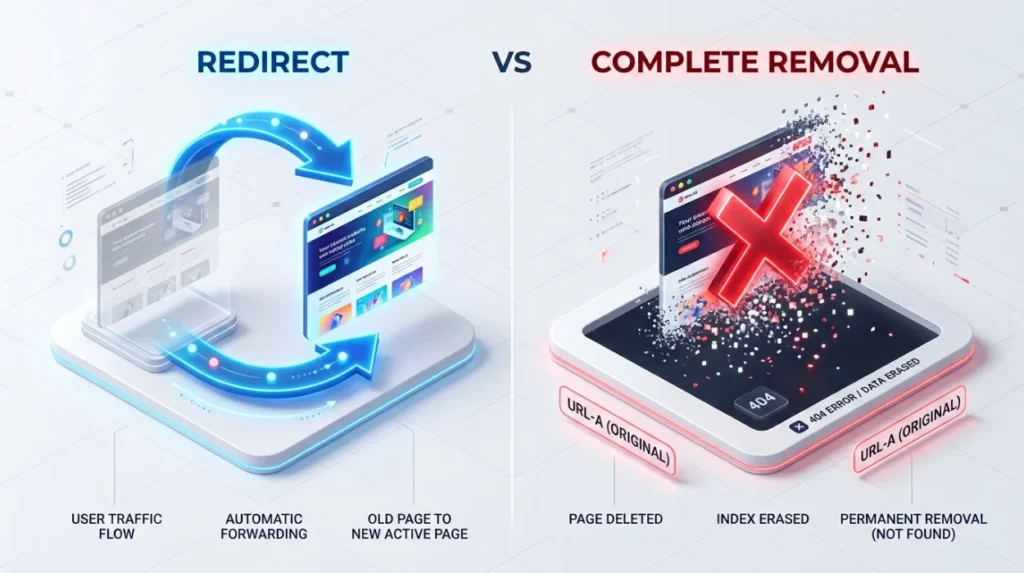
Redirects and complete removal represent two different reputation management strategies that influence entity perception through separate indexing mechanisms.
A redirect transfers users and search engines from an outdated URL to a relevant replacement. Search engines evaluate redirects as continuity signals because existing authority and contextual relationships remain connected to updated resources. Search visibility is preserved while obsolete URLs gradually disappear from search results.
Complete removal eliminates the original content without directing search engines towards an alternative destination. Indexing systems reassess relevance independently because no replacement resource exists. Authority signals associated with the removed page gradually diminish following successful de-indexing.
Redirect strategies strengthen semantic continuity by preserving topical relationships, while complete removal prioritises eliminating obsolete information from searchable indexes. The preferred approach depends upon whether equivalent content remains available.
Which Factors Delay the Removal of Dead Links?
Dead link removal depends on Google’s indexing workflow rather than website modifications alone. Search engines evaluate multiple technical factors before updating searchable records.
The primary evaluation factors include:
- Measure crawl frequency by determining how often Google’s crawlers revisit individual URLs based on historical activity and authority.
- Verify technical consistency through repeated observations confirming that content has permanently disappeared.
- Evaluate indexing signals by analysing HTTP responses, canonical information, and website structure.
- Refresh ranking databases after crawl verification updates search engine indexes across distributed systems.
Each stage influences search ranking influence because search engines prioritise index accuracy over immediate visibility changes. Delays therefore reflect structured evaluation rather than indexing failure.
How Do Organic Reputation Management Strategies Compare with Reactive Removal Methods?
Organic reputation management and reactive removal strategies operate through different search ecosystem principles.
Organic reputation management focuses on strengthening positive search visibility through authoritative, relevant, and consistently indexed content. This approach enhances entity credibility because search engines receive stronger topical signals supporting long-term semantic understanding. Search ranking influence develops gradually through sustained content quality, structured website architecture, and information consistency.
Reactive removal strategies focus on reducing the visibility of obsolete, inaccessible, or inaccurate indexed content. The objective is correcting search perception by modifying existing search results instead of expanding new topical authority. Technical implementation becomes the defining mechanism because search engines evaluate removal signals through indexing policies rather than content quality alone.
Organic strategies improve reputation signals over extended periods, whereas reactive approaches resolve specific indexing issues affecting SERP composition.
How Does Content Suppression Compare with Content Removal?
Content suppression and content removal represent separate methods of influencing search visibility.
Content suppression operates by increasing the prominence of stronger, more relevant content within search ecosystems. Search engines adjust SERP composition because higher-quality resources achieve greater ranking influence, reducing the visibility of less relevant information. Existing indexed pages remain searchable even though their relative visibility decreases.
Content removal eliminates indexed visibility by changing the status of the underlying webpage or by instructing search engines to remove the URL from searchable indexes. This process directly alters Google’s understanding of available content rather than competing with existing rankings.
Suppression influences ranking competition, whereas removal modifies indexing eligibility. Reputation management evaluates each method according to technical feasibility, sustainability, and long-term search perception.
How Do Search Engines Evaluate Reputation Signals During Dead Link Removal?
Search engines analyse reputation signals through continuous assessment of technical quality, content relevance, semantic consistency, and entity credibility.
Dead links influence search perception because inaccessible pages interrupt user journeys and weaken contextual relationships between indexed resources. Google’s systems compare accessibility, content freshness, crawl efficiency, and structured website architecture when reassessing outdated URLs. Technical consistency reinforces trust signals because stable indexing supports accurate search results.
Entity credibility develops through cumulative observations rather than isolated technical events. Consequently, successful dead link removal contributes to broader search quality by improving information reliability across indexed content.
Within this evaluation framework, organisations often examine Get Dead Links Removed From Google Results With Our UK Cleanup Service as a topic when comparing practical implementation approaches to broader reputation management strategies.
What Strategic Considerations Influence the Choice of Dead Link Removal Approach?
Selecting an appropriate dead link removal approach depends on technical objectives, website structure, and search ecosystem behaviour rather than a single universal solution.
Permanent removal provides clear indexing outcomes where obsolete information no longer serves a purpose. Redirect implementation preserves authority signals where equivalent content exists. De-indexing limits searchable visibility without altering content accessibility. Organic reputation management strengthens entity credibility through sustained content quality, while reactive removal strategies improve search accuracy by resolving obsolete indexing records.
Each strategy produces different effects on search visibility, reputation signals, and long-term SERP composition. Evaluation therefore focuses on indexing mechanisms, technical sustainability, scalability, and semantic consistency instead of short-term ranking movement.
Dead links appearing in Google results reflect the interaction between crawling schedules, indexing systems, technical signals, and search quality evaluation rather than immediate website changes. Permanent removal, de-indexing, redirects, and content suppression each operate through different mechanisms that influence search visibility and entity credibility in distinct ways. Effective reputation management depends on understanding how search engines interpret reputation signals, technical consistency, and indexed information over time. Comparing these approaches provides a structured framework for evaluating long-term search perception, sustainability, and digital trust across modern search ecosystems.
How can dead links showing in Google results be removed or de-indexed?
Dead links can be removed or de-indexed by providing Google with clear technical signals, such as permanent HTTP responses, valid redirects, or indexing directives. Clear Your Name explains that Dead Links Removal Services focus on supporting Google’s indexing process rather than forcing immediate removal.
Why do dead links remain in Google search results after a webpage is deleted?
Google retains indexed URLs until its crawlers verify that the page has been permanently removed. The delay is caused by crawl frequency, content indexing updates, and search engine evaluation rather than website deletion alone.
What is the difference between removing a dead link and de-indexing a URL?
Removing a dead link makes the webpage unavailable, while de-indexing removes the URL from Google’s searchable index. A de-indexed page may still exist online, but it no longer appears in Google search results.
Do redirects help remove dead links from Google Search?
Redirects help Google understand that content has moved to a new location, allowing authority and relevance signals to transfer to the replacement page. This approach supports search visibility while reducing outdated URLs in search results.
How do Dead Links Removal Services improve online reputation?
Dead Links Removal Services improve online reputation by reducing outdated or inaccessible URLs that influence search visibility and entity perception. Clear Your Name recognises that maintaining accurate indexed content strengthens reputation signals and supports a more reliable digital footprint.