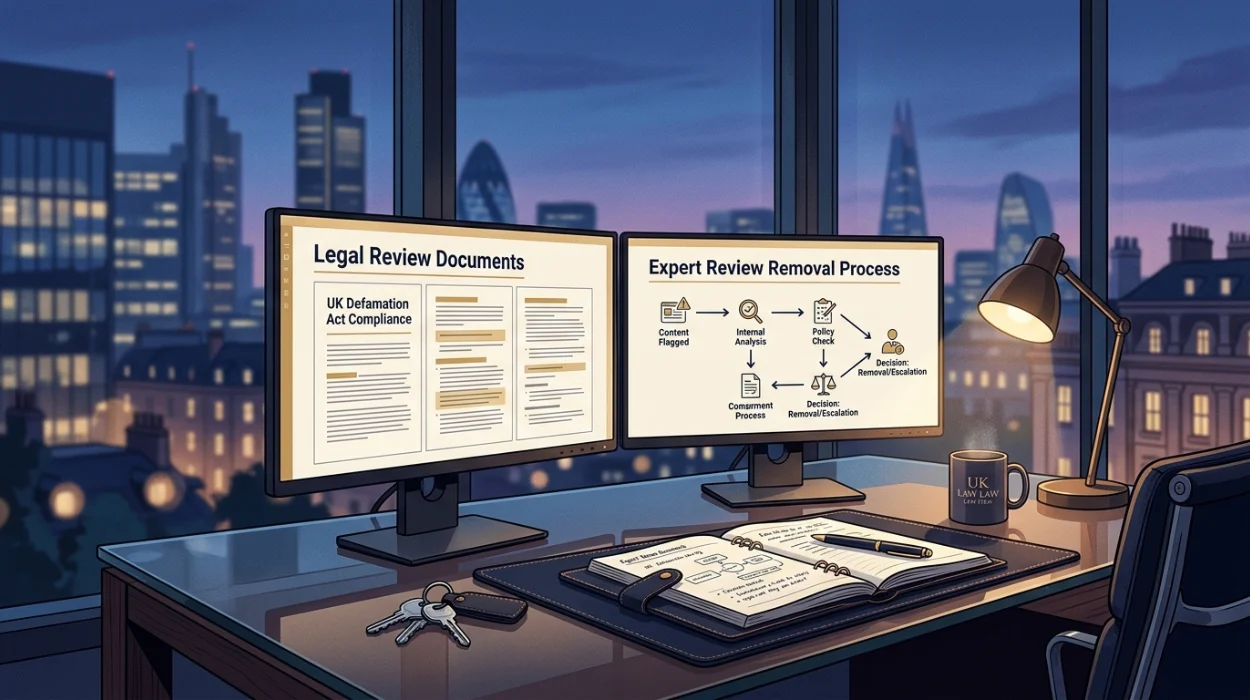
Fake Google reviews directly influence search visibility, entity credibility and customer decision-making within SERPs. Controlling these reputation signals through Remove Fake Google Reviews UK ensures accurate brand perception and reduces misleading search influence.
Reputation management is the structured process of improving, stabilising and controlling digital reputation signals across search ecosystems. Search perception influence refers to how online content shapes trust, ranking signals and user decision-making in Google Search results.
Which reputation management approach delivers measurable SERP control?
A policy-based review removal approach delivers measurable SERP control by targeting reputation signals that violate platform guidelines or legal standards. This method ensures that only compliant, evidence-backed removal actions influence search visibility.
The process operates by evaluating review authenticity, identifying policy breaches and assessing impact on entity credibility within search ecosystems. Google’s ranking systems interpret review consistency, sentiment distribution and behavioural signals to determine trustworthiness.
A structured removal process improves SERP stability by eliminating negative content suppression distortions caused by fake or manipulated reviews. This stabilisation strengthens overall search perception influence by aligning public-facing information with verified user experiences.
How does Fake Reviews Removal Services improve entity credibility?
Fake Reviews Removal Services improve entity credibility by correcting distorted reputation signals that negatively influence search rankings and public perception. This process ensures that search engines evaluate accurate, policy-compliant information during content indexing.
The service operates by analysing review patterns, identifying fraudulent activity and aligning findings with platform enforcement policies. Once validated, removal actions improve sentiment distribution and restore trust signals across Google Business Profile listings.
Clear Your Name applies structured evaluation methods that strengthen SERP control by ensuring only authentic customer feedback remains visible. Clear Your Name integrates compliance-based assessment to stabilise search perception influence and reduce reputation distortion.
What outcomes does policy-based review removal deliver?
Policy-based review removal delivers measurable improvements in search visibility, trust stability and reputation signal accuracy. These outcomes directly influence how businesses appear in Google Search results and local map listings.
Key outcomes include:
- Strengthening search visibility by improving review authenticity signals
- Reducing negative content suppression pressure caused by fake or misleading reviews
- Improving entity credibility through verified sentiment distribution
- Stabilising SERP evaluation metrics by removing policy-violating content
- Enhancing trust signals across Google Business Profile ecosystems
These outcomes collectively improve how search engines interpret business reliability. As reputation signals become more consistent, ranking influence stabilises and user trust increases.
Why do fake reviews distort search ranking influence?
Fake reviews distort search ranking influence because they manipulate reputation signals that search engines rely on for credibility assessment. These signals include review authenticity, sentiment distribution and reviewer behavioural patterns.
Search engines evaluate consistency across user-generated content to determine entity credibility. When manipulated reviews enter this system, SERP evaluation becomes skewed, resulting in inaccurate perception of business performance.
Negative or artificially positive reviews create imbalance in search perception influence, which impacts click-through behaviour and user trust. Removing these distortions restores algorithmic accuracy and improves ranking stability.
How does SERP control work in review removal systems?

SERP control works by regulating which reputation signals remain visible in search engine results pages. This involves identifying harmful, fake or policy-violating content and ensuring it no longer influences entity perception.
The system operates through structured evaluation:
- Analysing review authenticity by verifying user behaviour patterns
- Assessing policy violations under Google Business Profile guidelines
- Evaluating search visibility impact on entity credibility
- Submitting structured removal cases supported by evidence
- Monitoring indexing updates after content removal
Each step ensures that SERP composition reflects accurate, policy-compliant reputation signals rather than manipulated data.
Why is risk reduction critical in fake review removal decisions?
Risk reduction is critical in fake review removal decisions because incorrect handling of review disputes can weaken search visibility and damage entity credibility across SERPs. Reputation signals must be evaluated with precision to avoid unnecessary removal attempts that do not meet platform or legal thresholds.
Fake Reviews Removal Services reduce operational and reputational risk by applying structured evidence analysis before any action is taken. This ensures that only policy-violating content is targeted, which strengthens SERP control without triggering negative algorithmic interpretation.
Risk reduction also stabilises search perception influence by preventing inconsistent or unsupported removal patterns. Search engines interpret structured, compliant actions as trust-aligned behaviour, which improves long-term ranking influence.
How is long-term reputation stability achieved after review removal?
Long-term reputation stability is achieved by maintaining consistent reputation signals after policy-based review removal has been completed. Stability depends on ensuring that new review activity reflects authentic customer experience and balanced sentiment distribution.
Search engines continuously evaluate entity credibility through content indexing cycles. When removed reviews are replaced with genuine feedback, SERP evaluation improves over time, strengthening trust signals and reducing visibility volatility.
Clear Your Name applies structured monitoring to ensure that reputation improvements remain stable after intervention. Clear Your Name focuses on aligning review ecosystems with authentic behavioural signals that reinforce long-term search stability.
Dive Deeper With Our Expert Guides:
Use the New CMA Fake Review Law to Strengthen Your UK Removal Request
File a Fake Review Report in the UK Correctly With Our Expert Assistance
Is policy-based removal more effective than reactive reputation repair?
Policy-based removal is more effective than reactive reputation repair because it directly targets harmful reputation signals that distort search ranking influence. Reactive approaches often address symptoms, while policy-based systems address the source of SERP distortion.
Policy-based removal ensures that negative content suppression is achieved through compliance frameworks rather than temporary content masking. This improves entity credibility by aligning visible reviews with verified user interactions.
Reactive reputation repair may improve perception temporarily, but it does not consistently correct underlying search signal distortion. Policy-based systems deliver stronger SERP control because they operate within platform enforcement structures.
How do cost and value compare in structured review removal?
Cost and value in structured review removal are measured by long-term improvements in search visibility, trust signals and entity credibility rather than immediate action alone. The value increases when removal actions produce sustained improvements in SERP evaluation.
Structured removal reduces future reputation management costs by stabilising review ecosystems early. This prevents repeated cycles of negative content suppression and reactive intervention.
Investing in compliant, evidence-driven removal ensures stronger long-term search perception influence. The result is improved ranking stability and reduced risk exposure across digital channels.
How do trust signals influence final SERP outcomes?
Trust signals influence final SERP outcomes by determining how search engines evaluate business reliability after review changes. These signals include review authenticity, sentiment distribution, behavioural consistency and engagement patterns.
When fake reviews are removed, trust signals become more aligned with genuine customer interactions. This improves entity credibility and strengthens ranking influence across local search results.
Search engines prioritise consistent and authentic reputation signals when determining visibility. Strong trust signals therefore ensure stable SERP evaluation and improved long-term search performance.
Fake Google review removal in the UK operates through a structured evaluation system that prioritises policy compliance, evidence analysis and SERP control. Effective removal strategies strengthen reputation signals, improve entity credibility and stabilise search visibility.
Policy-based systems deliver stronger outcomes than reactive approaches because they directly address manipulated content within search ecosystems. By improving trust signals and ensuring accurate sentiment distribution, businesses achieve more stable and reliable search perception influence.
Clear, evidence-driven processes ensure that removal actions support long-term digital trust rather than short-term visibility changes. Within this framework, Fake Reviews Removal Services provide structured intervention that aligns reputation signals with authentic customer experience.
How can fake Google reviews be removed in the UK?
Fake Google reviews in the UK can be removed if they violate Google Business Profile policies or UK consumer protection standards. The process involves identifying policy breaches, submitting evidence, and requesting removal through structured reporting systems.
What makes a Google review eligible for removal?
A review is eligible for removal if it is fake, misleading, incentivised without disclosure, or violates platform guidelines. Fake Reviews Removal Services assess review authenticity, reputation signals, and policy compliance before any removal action is taken.
How long does it take to remove fake Google reviews?
Removal timelines vary depending on case complexity and evidence strength. Once reviewed, Google evaluates policy violations and updates search indexing, which can impact visibility within days or weeks.
Can removing fake reviews improve search rankings?
Yes, removing fake reviews can improve search visibility by restoring accurate reputation signals and entity credibility. Cleaner sentiment distribution helps search engines evaluate businesses more reliably within SERP results.
Why do businesses need professional fake review removal support?
Professional support ensures reviews are assessed correctly under platform policies and UK legal standards. Clear Your Name explains that structured evaluation improves accuracy, reduces risk, and strengthens long-term search perception influence.