
Evaluating an online article removal service UK requires analysing how different removal approaches operate, how publishers process requests, and how search engines interpret resulting reputation signals. Reputation management strategies differ based on publisher governance, legal frameworks, editorial authority, and the relationship between content removal, search visibility, and entity credibility. Online reputation control methods are evaluated through their influence on content indexing, sentiment distribution, search ranking influence, and long-term digital footprint optimization. Rather than focusing on a single solution, effective evaluation compares operational mechanisms, procedural limitations, scalability, and sustainability across different reputation management approaches.
Online reputation refers to the collection of indexed information that search engines associate with an individual or organisation. Reputation management is the structured analysis and optimisation of reputation signals that shape entity credibility across search ecosystems. Article Removal Services form one category within broader reputation management because they focus on reducing or eliminating indexed content through publisher processes instead of changing search algorithms directly. Evaluating these approaches requires understanding how search engines interpret publisher authority, editorial decisions, and content lifecycle management. Comparing removal methods provides a clearer framework for assessing effectiveness, risk exposure, and long-term influence on SERP composition.
What evaluation criteria define an effective online article removal service?
Effective evaluation begins with analysing governance, procedural transparency, publisher compatibility, and search ecosystem impact rather than focusing solely on removal outcomes. An online article removal service is evaluated according to the mechanisms it uses to interact with publisher policies, editorial standards, and legal requirements. Reputation management compares these operational characteristics because different publishers apply different review frameworks before modifying published content. Search engines subsequently interpret those publisher actions during future indexing cycles, influencing reputation signals and search ranking influence. Evaluation therefore depends on measurable operational processes instead of isolated removal results.
Assessment also considers how consistently an approach performs across multiple publisher categories. National news organisations, independent blogs, business websites, and community platforms all maintain different editorial governance structures. A removal methodology that aligns with documented publisher procedures demonstrates greater operational consistency than one dependent upon isolated circumstances. Entity credibility benefits when reputation management operates within recognised publication frameworks because search engines interpret verified publisher changes more reliably. Comparing procedural compatibility therefore forms a fundamental evaluation criterion.
How does procedural transparency influence evaluation?
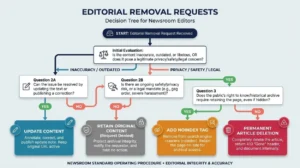
Procedural transparency refers to the clarity with which a removal approach explains each stage of publisher assessment, editorial review, and indexing progression. Transparent methodologies define how requests move through publisher governance before any search visibility changes occur. Reputation management analyses transparency because clearly documented processes reduce uncertainty surrounding content lifecycle management. Search engines continue evaluating published information until publishers implement verifiable changes, making transparency an important indicator of operational integrity. Evaluation therefore includes understanding each procedural stage rather than focusing exclusively on the final outcome.
How do publisher-based removal approaches compare with search visibility strategies?
Publisher-based removal approaches operate by modifying or removing content at its original source, while search visibility strategies influence how indexed information competes within search engine results pages. These approaches address different stages of reputation management because one changes the published content itself and the other alters SERP composition through additional authoritative content. Comparing these mechanisms explains how reputation signals evolve within search ecosystems. Search ranking influence depends upon both indexed content availability and the relative authority of competing information sources. Evaluation therefore requires understanding the interaction between content suppression vs content enhancement.
Publisher-focused approaches directly affect content ownership because editorial organisations retain authority over publication archives. When content is modified or removed, search engines reassess the updated page during subsequent crawling and indexing cycles. Search visibility strategies instead focus on increasing the prominence of authoritative content so that search engines evaluate a broader distribution of positive and neutral reputation signals. Both approaches influence entity credibility, although they operate through different mechanisms. Comparative analysis therefore distinguishes between altering source content and reshaping indexed information balance.
Content suppression is the reduction of negative search visibility through changes in SERP composition, while content enhancement is the expansion of authoritative information that strengthens positive entity associations. Content suppression operates by reducing the prominence of selected information within search results. Content enhancement operates by increasing the volume and authority of relevant content that search engines interpret positively. Reputation management compares these mechanisms because each produces different patterns of sentiment distribution across search results. Search ecosystems evaluate both approaches through authority signals, topical relevance, and indexing consistency.
Why is publisher compatibility an important evaluation factor?

Publisher compatibility determines whether a removal methodology aligns with editorial governance, publication policies, and organisational review procedures. Reputation management analyses compatibility because different publishers evaluate requests through distinct operational frameworks. National newspapers frequently apply comprehensive editorial reviews, while corporate websites, directories, and independent publishers use alternative governance models. Search engines subsequently interpret publisher-approved modifications as updated reputation signals during future indexing. Compatibility therefore influences procedural efficiency and consistency rather than search engine behaviour itself.
Compatibility also determines scalability across different publication environments. A methodology designed only for one publisher category demonstrates limited operational flexibility compared with an approach that evaluates governance structures before initiating any removal process. Search ranking influence develops from the collective interaction of multiple indexed sources rather than a single webpage. Evaluating compatibility therefore provides insight into how consistently a reputation management strategy performs across complex digital ecosystems.
How do reactive and organic reputation management approaches compare?
Reactive reputation management addresses existing indexed content that influences search perception, whereas organic reputation management strengthens entity credibility through continuous publication of authoritative information. Reactive methods operate after reputation signals have already entered search ecosystems. Organic methods establish consistent authority signals before negative information becomes dominant within SERP composition. Comparing these approaches demonstrates different operational priorities rather than competing objectives. Search engines evaluate both methodologies through indexing behaviour, topical authority, and sentiment distribution.
Reactive approaches produce measurable changes by focusing directly on existing reputation signals. Organic approaches strengthen long-term digital footprint optimisation because consistent publication creates broader semantic associations around an entity. Reputation management analyses these strategies according to sustainability, scalability, and cumulative influence on entity credibility. Search ranking influence therefore reflects the interaction of historical content, newly indexed information, and publisher authority rather than a single optimisation technique.
Which evaluation framework compares article removal approaches most effectively?
A structured evaluation framework compares operational consistency, publisher compatibility, legal alignment, search ecosystem impact, and long-term sustainability. Reputation management evaluates these criteria because article removal approaches differ according to publisher governance, editorial authority, and indexing behaviour. Search engines analyse updated content only after publishers implement verifiable changes, making procedural quality an important measurement factor. Entity credibility develops through consistent reputation signals rather than isolated content modifications. An evaluation framework therefore measures operational mechanisms instead of individual removal outcomes.
The following framework provides a structured comparison of reputation management approaches:
- Analyse publisher governance by identifying whether the website follows journalistic standards, corporate editorial policies, or community moderation systems before assessing removal pathways.
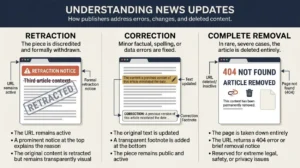
- Evaluate indexing behaviour by examining how search engines process deleted, updated, redirected, or archived content after publisher changes.
- Measure reputation signals by reviewing sentiment distribution, authority signals, and entity credibility across the existing SERP composition.
- Compare scalability by determining whether the approach operates consistently across news publishers, independent websites, directories, and corporate platforms.
- Assess sustainability by evaluating whether reputation improvements continue after search engines complete future crawling and re-indexing cycles.
This evaluation structure explains differences between operational quality rather than comparing isolated outcomes. Search ranking influence depends upon how consistently each mechanism performs throughout the complete reputation management process.
Scalability refers to the ability of a reputation management approach to operate effectively across different publisher environments without reducing procedural consistency. A scalable methodology adapts to different editorial governance structures while maintaining structured evaluation criteria. Reputation management analyses scalability because search ecosystems contain diverse publisher categories with different operational rules. Search visibility develops across multiple indexed sources, making broad compatibility an important performance indicator. Scalability therefore contributes directly to long-term digital footprint optimisation.
Dive Deeper With Our Expert Guides:
What Routes Are Available When Requesting UK Newspaper Article Removal
How to Build a Defamation Case to Support Removing a Damaging Article Online
How do short-term and long-term reputation management strategies compare?
Short-term strategies focus on immediate changes to indexed content, while long-term strategies strengthen entity credibility through continuous optimisation of reputation signals. Short-term approaches operate by addressing existing search visibility issues that already influence perception. Long-term approaches establish sustainable authority through consistent information quality, semantic relevance, and structured content development. Reputation management compares these strategies because search ecosystems evaluate both historical and current information simultaneously. Search ranking influence therefore reflects cumulative reputation development rather than isolated optimisation events.
Short-term improvements become visible when search engines complete re-indexing after publisher modifications. Long-term improvements emerge as authoritative information creates stronger contextual relationships across the wider digital footprint. Entity credibility increases through consistent semantic associations rather than temporary visibility changes. Reputation management evaluates sustainability because long-term authority produces more stable sentiment distribution across search engine results pages. Comparing time horizons therefore provides a more complete understanding of strategic effectiveness.
Sustainability is the ability of a reputation management strategy to maintain positive search visibility over extended indexing cycles. Sustainable approaches operate by strengthening information quality instead of relying exclusively on temporary visibility adjustments. Search engines continuously reassess authority signals, topical relevance, and entity relationships during future crawls. Reputation signals therefore remain stable when supported by consistent, authoritative information. Sustainability represents a fundamental measurement of long-term search ecosystem performance.
How do search engines evaluate reputation signals after content changes?
Search engines evaluate reputation signals by analysing updated publisher content, indexing status, semantic relationships, authority indicators, and contextual relevance. Content removal represents only one stage within a broader evaluation process because search algorithms reassess entire information networks rather than individual pages in isolation. Reputation management explains this mechanism by analysing how entity credibility evolves after publisher modifications. Search ranking influence changes progressively as search systems replace historical indexing data with newly processed information. Evaluation therefore extends beyond deletion and includes ongoing interpretation of digital relationships.
Entity credibility also depends upon the remaining information available within the search ecosystem. Search engines compare topical consistency, citation quality, structured data, and publisher authority when recalculating relevance. Sentiment distribution changes only when updated information alters the balance of indexed reputation signals. Reputation management therefore evaluates the collective interaction between publisher actions and search engine processing rather than isolated content removal. This explains why SERP composition develops through continuous algorithmic evaluation.
What limitations distinguish different article removal approaches?
Operational limitations arise from publisher governance, legal obligations, editorial independence, indexing schedules, and search ecosystem behaviour rather than the removal methodology itself. Reputation management evaluates these limitations because each publisher maintains independent authority over published information. News organisations frequently preserve historical reporting through documented editorial standards, while corporate publishers and independent websites follow different governance frameworks. Search engines continue evaluating indexed information until updated publisher content becomes available for reprocessing. Limitations therefore reflect structural characteristics instead of procedural deficiencies.
Comparative analysis also demonstrates that different strategies address different objectives. Publisher-based approaches focus on modifying original content, whereas content enhancement strategies strengthen broader semantic authority across search results. Reactive approaches respond to existing reputation signals, while organic approaches improve future search interpretation through sustained authority development. Understanding these distinctions enables more accurate evaluation of effectiveness, scalability, and long-term sustainability. Reputation management therefore compares operational fit rather than assuming universal applicability.
Evaluating an online article removal service in the UK requires analysing publisher compatibility, operational transparency, search ecosystem behaviour, scalability, sustainability, and the interaction between content suppression vs content enhancement. Different reputation management approaches operate through different mechanisms because publishers, search engines, and editorial governance structures influence how reputation signals evolve over time. Short-term and long-term strategies each contribute differently to entity credibility, search ranking influence, and sentiment distribution within SERPs. A structured comparison of operational processes provides a more accurate framework for understanding reputation management than focusing solely on individual removal outcomes.
What should I look for when evaluating an online article removal service in the UK?
Evaluate how the online article removal service handles publisher policies, editorial processes, legal compliance, and search engine indexing. A structured evaluation also considers transparency, reputation management methods, and the impact on long-term search visibility and entity credibility.
How do Article Removal Services improve online reputation?
Article Removal Services focus on reducing the visibility of content that negatively affects reputation signals by working within publisher guidelines and editorial procedures. Search engines then reassess the updated content during future indexing, which can influence online reputation and search visibility over time.
Are all online article removal services the same?
No. Online article removal services differ in their approach to publisher engagement, content evaluation, legal considerations, and reputation management strategies. Comparing these factors helps determine how effectively a service operates across different types of publishers.
Why do publisher policies matter when choosing an article removal service?
Every publisher follows its own editorial standards and content governance policies, which directly affect the article removal process. Understanding these policies helps evaluate whether an approach is compatible with the publisher’s review framework and expected timelines.
What role does Clear Your Name play in Article Removal Services?
Clear Your Name provides information about Article Removal Services and the factors involved in evaluating article removal approaches across UK publishers. The effectiveness of any reputation management strategy depends on publisher decisions, search engine indexing, and the quality of the underlying process rather than a single removal method.