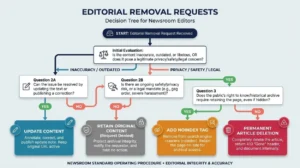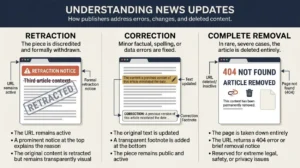
The Right to Be Forgotten is a legal right that enables eligible UK residents to request the removal of certain personal information from search engine results when continued indexing no longer serves the public interest or complies with data protection law. Reputation management is the process of understanding and analysing how information is indexed, interpreted and presented across search ecosystems, influencing search visibility, entity perception and digital trust.
What Is the Right to Be Forgotten Under UK Law?
The Right to Be Forgotten is a data protection right that allows individuals to request the erasure or de-indexing of personal information under defined legal conditions. Within UK law, this right forms part of the broader framework governing personal data processing, ensuring that information remains accurate, relevant and proportionate over time.
The legal concept refers to the principle that personal information does not retain indefinite prominence simply because it was published or indexed in the past. Instead, UK data protection law evaluates whether continued accessibility through search engines or online platforms remains justified. The assessment focuses on balancing individual privacy with freedom of expression and the public interest. This legal mechanism defines how search ecosystems manage personal information without altering the historical existence of lawful content.
The Right to Be Forgotten primarily affects search visibility rather than the original publication in every circumstance. Search engines evaluate whether indexed links continue to represent personal data fairly within search results. This distinction explains why content indexing and content publication operate as separate processes within digital information systems. Reputation signals therefore depend not only on published material but also on how search engines organise access to that material.
How Did Post-Brexit Law Change the Right to Be Forgotten?
Post-Brexit law preserved the Right to Be Forgotten by incorporating European data protection principles into domestic legislation while allowing the UK to develop its own regulatory interpretation. The legal framework now operates under the UK General Data Protection Regulation (UK GDPR) alongside the Data Protection Act 2018.
The transition following Brexit did not remove existing privacy rights. Instead, retained legislation continued applying established principles concerning personal data processing, lawful indexing and individual privacy rights. UK regulators now interpret these rules independently while maintaining compatibility with international data protection standards where appropriate. This legal continuity supports consistent evaluation of personal information across digital platforms.
Search ecosystems operate according to national legal requirements when responding to removal requests. As regulatory authority shifted from European institutions to UK authorities, interpretation became increasingly focused on domestic legal guidance. Search visibility therefore reflects both algorithmic evaluation and legal obligations concerning personal information. Reputation management increasingly depends on understanding how national regulation influences content indexing within UK search environments.
Legal independence allows UK courts and regulators to establish precedent based on domestic legislation rather than relying exclusively on European judicial interpretation. This development influences how search engines evaluate requests involving personal data.
Independent legal interpretation affects balancing tests between privacy rights, public interest and freedom of information. Search engines therefore analyse requests according to UK-specific legal expectations when processing requests submitted by UK residents. The legal framework defines evaluation standards without altering the technical mechanisms through which search engines crawl, index and rank information.
What Information Does the Right to Be Forgotten Cover?
The Right to Be Forgotten applies to personal data that identifies or relates to an individual and satisfies the legal criteria for removal or erasure. Personal data extends beyond names and includes information capable of identifying an individual directly or indirectly.
Search ecosystems process multiple forms of personal information, including names, photographs, addresses, employment history, legal records, archived reports and publicly available online material. The legal assessment examines whether the continued processing of this information remains lawful, accurate, relevant and proportionate. Information classification therefore forms the foundation of every evaluation.
Not every reference to an individual qualifies for removal. Data protection law distinguishes between information that remains necessary for public awareness and information whose continued indexing creates disproportionate exposure. Reputation signals emerge through the interaction between indexed information, user queries and algorithmic interpretation. Search engines evaluate whether indexed material accurately reflects current circumstances rather than historical prominence alone.
Personal information refers to identifiable data relating to an individual, whereas public interest information serves broader societal purposes such as accountability, transparency or public safety.
Search engines evaluate contextual relationships between these categories rather than applying automatic classifications. The same document may contain both personal information and information that remains important for public knowledge. Evaluation therefore focuses on proportionality instead of absolute removal. This analytical process shapes SERP evaluation by determining which information remains prominently indexed for name-based searches.
Why Does Search Visibility Matter More Than Content Existence?

Search visibility determines how easily information is discovered through search queries, whereas content existence refers only to whether information remains published online. These concepts represent different stages within search ecosystems.
Search engines organise information through crawling, indexing and ranking processes. A webpage continues existing even when its prominence within search results changes. This distinction explains why removal requests frequently concern search indexing rather than deletion of original publications. Reputation management therefore examines discoverability rather than publication alone.
Entity perception develops primarily through what users encounter during the first page of search results. Algorithms evaluate authority, relevance, freshness and contextual relationships before determining rankings. Information receiving greater visibility contributes more significantly to digital reputation than information remaining technically accessible but difficult to locate. Search visibility therefore functions as a central reputation signal across modern search ecosystems.
How Do Search Engines Evaluate Right to Be Forgotten Requests?
Search engines evaluate Right to Be Forgotten requests by balancing privacy rights against public interest using legal and contextual analysis rather than automated ranking algorithms alone. Human review forms an essential component of this legal assessment.
Evaluation examines multiple dimensions of the indexed information. These dimensions include legal accuracy, factual relevance, age of information, public significance, ongoing necessity and proportionality. Search engines distinguish between ordinary private individuals and individuals whose public roles justify continued visibility. Reputation analysis therefore extends beyond technical indexing into structured legal interpretation.
The evaluation process generally follows a defined sequence:
- Identify personal data by determining whether the indexed content directly or indirectly identifies an individual and falls within UK data protection law.
- Assess legal relevance by examining whether continued indexing remains necessary in relation to public interest, freedom of expression and lawful processing.
- Evaluate search visibility by analysing how prominently the information appears within name-based search queries and whether visibility creates disproportionate exposure.
- Balance competing rights by comparing privacy interests against public access to information through established legal principles.
- Determine indexing outcomes by deciding whether specific URLs remain indexed for relevant personal searches without automatically removing original publications.
This structured process demonstrates that search engines evaluate legal context alongside algorithmic organisation of information. Reputation signals therefore arise through both technical indexing systems and legal compliance mechanisms rather than algorithmic ranking alone.
Dive Deeper With Our Expert Guides:
What a Personal Information Removal Service Can Access That You Cannot Do Alone
What Personal Information Most Commonly Appears Online Without Your Permission
Why Does the Right to Be Forgotten Not Guarantee Complete Content Removal?
The Right to Be Forgotten regulates the processing and visibility of personal information rather than guaranteeing complete deletion from the internet. Within search ecosystems, removal from search results and removal from the original source represent separate legal and technical outcomes.
A successful request frequently results in the de-indexing of specific URLs for searches involving an individual’s name. The original webpage often remains available through direct website access, internal site searches or alternative search queries. This distinction preserves lawful publication while reducing unnecessary prominence in name-based SERPs. Reputation management therefore analyses both information availability and information discoverability as separate elements of digital reputation.
Erasure refers to deleting personal data from the organisation that controls it, whereas de-indexing refers to preventing specific search results from appearing for relevant searches.
Data controllers determine whether information is erased from their systems under data protection law. Search engines determine whether indexed links continue appearing within search results. These independent processes explain why the same information can remain online while becoming less visible within search ecosystems. Search visibility therefore changes without altering the existence of lawful content.
How Does the Right to Be Forgotten Influence Digital Reputation?
The Right to Be Forgotten influences digital reputation by altering how personal information contributes to search visibility and entity perception. Reputation is formed through the interaction between indexed information, search algorithms and user behaviour.
Search engines organise information according to relevance, authority and legal compliance. When outdated or disproportionate personal information receives reduced visibility, search results provide a more balanced representation of an individual’s current digital footprint. This process affects reputation signals by changing the information users encounter during reputation evaluation. The legal framework therefore supports accurate representation rather than rewriting historical records.
Entity perception develops through repeated exposure to searchable information. Search visibility shapes credibility because users frequently interpret prominent search results as indicators of relevance and trust. Adjusting indexed visibility changes the overall composition of search results without modifying factual history, demonstrating how legal rights and search systems jointly influence online reputation.
What Factors Affect Decisions About the Right to Be Forgotten?
Decisions concerning the Right to Be Forgotten depend on legal relevance, proportionality and public interest rather than personal preference. Every request undergoes an individual assessment based on the relationship between privacy rights and public access to information.
Search engines examine whether information remains accurate, current and necessary for public awareness. They also evaluate the individual’s public role, the sensitivity of the information and its continuing contribution to legitimate public knowledge. These factors define whether indexed content continues serving a lawful purpose within search ecosystems. Reputation signals are therefore evaluated through legal context instead of algorithmic ranking alone.
The age of information also contributes to legal evaluation. Older content that no longer reflects present circumstances receives different consideration from recently published information that remains relevant to public understanding. Time influences contextual significance rather than determining outcomes automatically. This demonstrates that reputation management involves ongoing assessment of information quality, legal relevance and search visibility.
How Does the Right to Be Forgotten Fit Within Reputation Management?
The Right to Be Forgotten forms one element of reputation management because it addresses how personal information is processed and presented within search ecosystems. Reputation management refers to analysing the relationship between information quality, search visibility and public perception across digital platforms.
Search ecosystems evaluate content through indexing, ranking and legal compliance simultaneously. Data protection law introduces legal standards that operate alongside algorithmic assessment, creating a framework where privacy rights and information accessibility remain balanced. Understanding these interactions explains why reputation management extends beyond search rankings into legal interpretation, information governance and digital trust.
Digital reputation continues evolving as search engines reassess indexed content, authority signals and user expectations. The Right to Be Forgotten therefore represents a structured legal mechanism within a wider ecosystem that defines how information contributes to long-term online credibility and entity perception.
The Right to Be Forgotten provides UK residents with a legal framework for requesting the reduced visibility of eligible personal information within search results under post-Brexit law. It regulates the processing of personal data through principles of proportionality, relevance and public interest rather than guaranteeing complete removal of online content.
Understanding this legal right requires understanding how search engines organise, evaluate and present information. Search visibility, content indexing, entity perception and reputation signals collectively determine how individuals are represented across SERPs. The Right to Be Forgotten therefore functions as part of the broader relationship between data protection, search ecosystems and digital reputation, illustrating how legal frameworks influence online credibility without altering the factual history of published information.
What is the Right to Be Forgotten under UK post-Brexit law?
The Right to Be Forgotten allows eligible UK residents to request the removal or de-indexing of certain personal information when continued processing no longer complies with UK data protection law. It primarily affects search visibility rather than guaranteeing the deletion of content from the original website.
Does the Right to Be Forgotten remove information from Google completely?
No. The Right to Be Forgotten usually removes eligible URLs from search results for searches using a person’s name, but it does not automatically delete the original content from the publisher’s website. This distinction is important when understanding Personal Information Removal Services and search indexing.
Who can request the Right to Be Forgotten in the UK?
Any UK resident whose personal data meets the legal requirements under the UK GDPR and the Data Protection Act 2018 can submit a request. Search engines assess each application by balancing privacy rights with the public interest and freedom of expression.
How does the Right to Be Forgotten affect online reputation?
The Right to Be Forgotten can improve online reputation by reducing the visibility of outdated or irrelevant personal information in search engine results. This changes how information appears in SERPs without rewriting or removing factual history from the internet.
How can Clear Your Name help with Personal Information Removal Services?
Clear Your Name provides Personal Information Removal Services by helping individuals understand the removal process and prepare requests that align with UK data protection requirements. The outcome always depends on the legal assessment carried out by the relevant search engine or data controller.