Content suppression strategies work best when they strengthen authoritative, relevant content that search engines evaluate as more valuable than negative search results. Their effectiveness depends on search ranking influence, entity credibility, reputation signals, and the ability to reshape SERP composition over time rather than removing existing content.
Reputation management strategies differ based on the origin of negative content, the authority of indexed sources, and the mechanisms available for influencing search visibility. Online reputation control methods are evaluated through their impact on search ranking influence, entity credibility, sentiment distribution, and long-term SERP stability. Suppression strategies operate by improving the competitive strength of positive, authoritative content rather than altering existing publications. Understanding how these mechanisms interact allows a structured comparison of suppression approaches and their influence on digital trust.
Which Content Suppression Strategy Produces the Strongest Search Ranking Influence?
Authoritative content enhancement produces the strongest search ranking influence because it increases the quantity and quality of reputation signals available to search engines.
Content enhancement is a reputation management strategy that strengthens existing or newly created authoritative resources across relevant digital properties. Search engines compare indexed pages according to semantic relevance, topical depth, authority signals, and entity relationships before assigning rankings. Stronger authoritative content attracts greater search ranking influence because algorithms interpret it as more valuable for satisfying search intent. This mechanism gradually reshapes visible SERP composition while preserving the integrity of the original search ecosystem.
Compared with reactive suppression techniques, authoritative content enhancement provides greater sustainability. Reactive approaches focus on reducing the visibility of individual search results after reputational issues emerge, whereas proactive enhancement continuously develops stronger reputation signals before additional negative content gains ranking prominence. Reputation management therefore evaluates enhancement as a long-term strategy capable of supporting stable entity credibility and consistent online perception.
How Does Content Suppression Compare With Content Removal?
Content suppression and content removal address different stages of reputation management and produce different outcomes within search ecosystems.
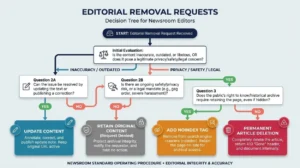
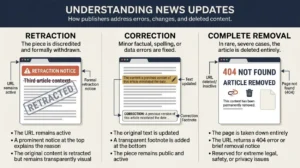
Content removal operates by eliminating information from the original publishing source. Search engines update their indexes after subsequent crawling, reducing the availability of that information across future search results. This approach directly changes the digital footprint because the publication itself no longer contributes reputation signals or search ranking influence. Removal therefore provides the greatest impact when publishers modify or delete original content.
Content suppression operates through competitive ranking dynamics rather than source modification. Search engines continue indexing the existing publication, but stronger authoritative content earns higher positions through improved semantic relevance, authority signals, and entity credibility. This mechanism changes search visibility instead of publication availability. Reputation management compares these strategies according to sustainability, scalability, and long-term influence on SERP composition rather than treating either approach as universally superior.
Which Organic Suppression Methods Build Long-Term Reputation Signals?
Organic suppression methods build long-term reputation signals because they continuously strengthen entity credibility through authoritative information rather than immediate visibility adjustments.
Authoritative Content Development
Authoritative content development refers to the creation and optimisation of comprehensive resources covering relevant topics with semantic depth and factual consistency. Search engines evaluate this content using authority indicators, entity relationships, and topical expertise. Strong authority signals improve ranking performance while supporting sustainable search visibility.
Entity Optimisation
Entity optimisation refers to improving the consistency of identifiable information associated with an individual, organisation, or subject across authoritative platforms. Search ecosystems compare entity references during indexing and SERP evaluation. Greater consistency strengthens entity credibility and improves confidence in ranking decisions.
Digital Asset Optimisation
Digital asset optimisation involves improving the quality and visibility of owned digital properties, including websites, profiles, media assets, and structured content. Search engines analyse these assets collectively when evaluating reputation signals. Strong optimisation contributes to broader search ranking influence while supporting positive sentiment distribution across indexed content.
How Do Reactive Suppression Strategies Compare With Organic Approaches?
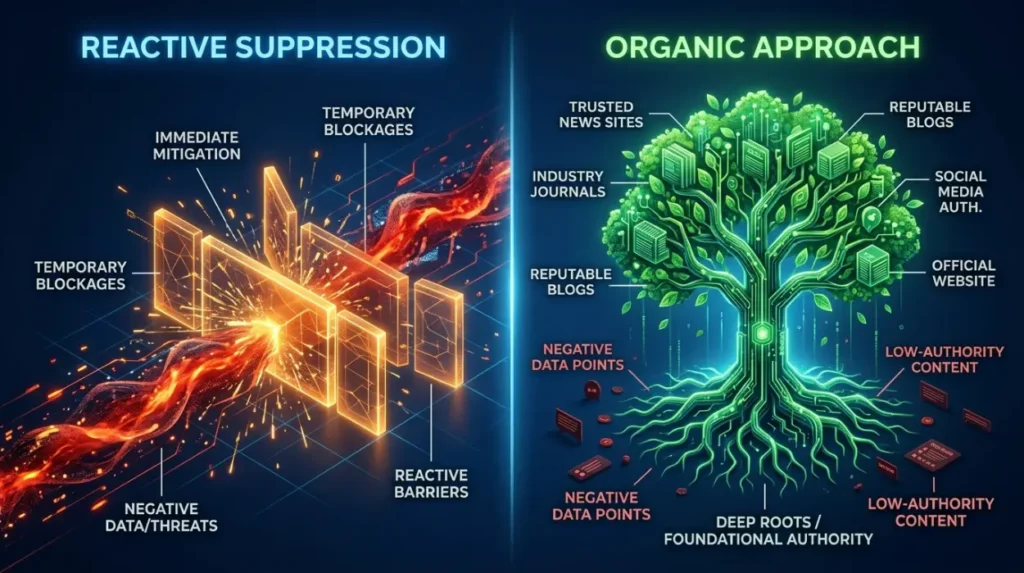
Reactive suppression strategies address existing visibility challenges, while organic approaches strengthen long-term reputation signals before future ranking competition develops.
Reactive methods operate after negative content has already gained search visibility. These strategies analyse indexed results, authority levels, semantic relevance, and competing content before implementing targeted improvements. Their primary advantage lies in responding quickly to visible reputation concerns. However, reactive strategies rely on existing search conditions and therefore depend heavily on the authority of competing content and the characteristics of established search rankings.
Organic approaches operate continuously through the development of authoritative digital assets and semantic consistency. Search engines interpret these cumulative reputation signals over repeated indexing cycles, allowing stronger entity credibility to emerge naturally within search ecosystems. Reputation management evaluates organic suppression as more sustainable because it builds long-term authority rather than relying solely on corrective interventions after visibility issues appear.
Which Reputation Signals Have the Greatest Impact on Suppression Effectiveness?
Authority signals, semantic relevance, entity credibility, and sentiment distribution collectively produce the greatest influence on suppression effectiveness.
Search engines evaluate reputation signals simultaneously rather than independently. Authority signals establish trust, semantic relevance demonstrates topical expertise, and entity credibility strengthens confidence in identifiable subjects. Sentiment distribution contributes contextual understanding by influencing how positive, neutral, and negative information appears across search ecosystems. Together, these signals shape search ranking influence and determine which content receives greater visibility during SERP evaluation.
Suppression strategies therefore achieve stronger results when they improve multiple reputation signals at the same time. Strengthening only one ranking factor provides limited competitive advantage because search engines compare comprehensive quality indicators rather than isolated metrics. This integrated evaluation explains why sustainable suppression depends upon coordinated reputation management rather than single-action optimisation techniques.
How Does Content Suppression vs Content Enhancement Affect SERP Composition?
Content suppression vs content enhancement represents two complementary reputation management mechanisms that influence SERP composition through different operational processes.
Content suppression operates by reducing the relative visibility of negative search results through stronger competing pages. Search engines continue indexing the original content but assign higher ranking positions to pages demonstrating greater authority, semantic relevance, and entity credibility. This mechanism changes search perception without altering the source publication, making it suitable where removal is unavailable or impractical.
Content enhancement operates by expanding the quantity and quality of authoritative information available within search ecosystems. Comprehensive articles, optimised digital assets, structured entity references, and trusted publications strengthen reputation signals over successive indexing cycles. Reputation management evaluates enhancement as the foundation supporting suppression because stronger authoritative content creates the competitive advantage required to influence search ranking distribution. The comparison demonstrates that suppression changes relative visibility, whereas enhancement strengthens the assets responsible for achieving that visibility.
Dive Deeper With Our Expert Guides:
How a Google Images Privacy Removal Request Differs From a Standard DMCA Notice
What Options Exist to Reduce Your Visibility in Reverse Image Search Results
Which Factors Determine the Scalability of a Suppression Strategy?
Scalability depends on the authority of digital assets, the consistency of reputation signals, and the ability to strengthen entity credibility across multiple indexed environments.
Search engines evaluate information from numerous domains simultaneously, requiring suppression strategies to operate beyond individual webpages. Strategies supported by authoritative websites, semantically rich content, and consistent entity relationships scale more effectively because they generate reputation signals recognised across different search queries. This broad influence improves search ranking stability while reducing dependence on isolated optimisation efforts.
A structured evaluation framework includes:
- Assess the authority of existing digital assets to determine competitive strength.
- Compare entity consistency across authoritative platforms to identify credibility gaps.
- Strengthen semantically relevant content that improves search ranking influence.
- Measure changes in SERP composition through ongoing indexing and visibility analysis.
This framework demonstrates that scalable suppression depends upon coordinated reputation management rather than isolated ranking adjustments.
How Should Suppression Strategies Be Evaluated Before Implementation?
Suppression strategies should be evaluated through measurable indicators including effectiveness, sustainability, scalability, and risk exposure.
Effectiveness measures how successfully authoritative content influences search ranking positions relative to negative results. Sustainability analyses whether strengthened reputation signals continue supporting long-term visibility after repeated search engine evaluations. Scalability examines whether the strategy improves search perception across multiple search queries instead of individual keywords. Risk exposure evaluates the possibility of reputation fluctuations caused by algorithm updates, changing authority signals, or emerging competing content.
Comparative analysis also considers resource allocation and implementation complexity. Strategies requiring continuous optimisation deliver stronger long-term outcomes when supported by stable authority signals and consistent entity relationships. Reputation management therefore evaluates suppression through measurable search ecosystem performance rather than isolated ranking improvements, ensuring that strategic decisions remain aligned with long-term online credibility objectives.
Content suppression strategies achieve the strongest results when they strengthen authoritative content, improve entity credibility, and expand reputation signals recognised by search engines. Content removal changes information availability, whereas suppression reshapes search visibility by influencing competitive ranking dynamics within SERPs. Organic approaches provide greater long-term sustainability through continuous authority development, while reactive approaches address existing visibility challenges more directly. Evaluating suppression strategies through effectiveness, scalability, sustainability, and risk exposure provides a structured framework for understanding how reputation management influences digital trust and online perception across modern search ecosystems.
Readers seeking a deeper understanding of practical implementation methods can continue exploring Suppress Negative Content on Google UK to examine how long-term suppression strategies influence search visibility and reputation signals.
Which suppression strategies work best for pushing down negative Google content?
The most effective suppression strategies strengthen authoritative content, improve entity credibility, and increase positive reputation signals across trusted websites. Search engines reward relevant, high-quality content with greater search visibility, helping negative results move lower in SERPs.
How does content suppression differ from content removal?
Content suppression changes the visibility of negative search results by promoting stronger competing content, while content removal deletes information from the original source when possible. Both approaches influence online reputation through different mechanisms within search ecosystems.
Can Google Image Removal Services support content suppression strategies?
Google Image Removal Services focus on reducing the visibility or removing eligible images from search results, while content suppression improves the ranking of authoritative content. Clear Your Name explains how these approaches contribute to broader reputation management and search perception.
How long does it take for content suppression strategies to influence Google search results?
The timeframe depends on content indexing, crawl frequency, website authority, and search ranking competition. Search engines gradually update SERPs as they evaluate new reputation signals and reassess entity credibility.
Why are reputation signals important for content suppression?
Reputation signals help search engines evaluate trust, authority, and relevance when ranking webpages. Strong authority signals, semantic relevance, and consistent entity credibility improve search visibility and support long-term suppression of negative Google content.