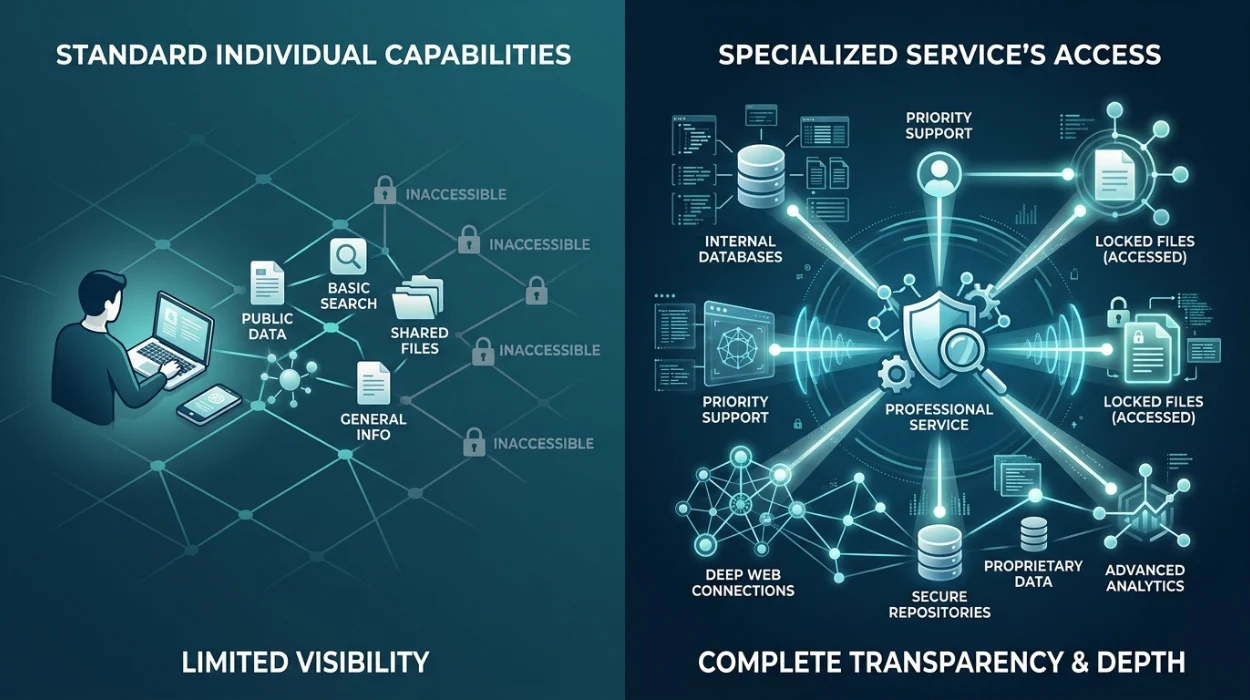
A personal information removal service can often access structured monitoring systems, data broker relationships, and regulatory processes that individuals do not routinely use themselves. These services analyse information ecosystems, identify data exposure pathways, and assess removal mechanisms that affect online reputation and search visibility.
Reputation management is the process of understanding how information shapes public perception within digital environments. Online reputation refers to the collection of searchable content, personal data, and reputation signals that influence how an individual or entity is interpreted across search ecosystems.
What is a personal information removal service within reputation management?
A personal information removal service is a process designed to identify, assess, and reduce the visibility of personal data that exists across digital platforms. The process focuses on information exposure, content indexing, and the persistence of personal data within search environments.
Personal information forms part of a digital footprint. Names, addresses, contact details, photographs, and historical records contribute to online identity and influence entity perception. Search engines and data aggregators interpret this information as signals that help create a searchable representation of an individual.
The existence of publicly accessible information affects reputation signals because users often evaluate trust and credibility based on what appears in search results. Consequently, personal information management is closely connected to search visibility and online reputation.
Dive Deeper With Our Expert Guides:
What Personal Information Most Commonly Appears Online Without Your Permission
Why does personal information remain visible online?
Personal information remains visible because digital ecosystems continuously collect, store, and distribute data. Information often exists across multiple websites, archives, databases, and search indexes simultaneously.
Content indexing allows search engines to discover and organise information from publicly accessible sources. Once information enters these systems, it can remain available even after it is modified or removed from the original source. This persistence contributes to long-term digital footprints and influences public perception.
The continued visibility of personal information also affects search evaluation. Search users frequently interpret available data as current and accurate, regardless of when it was originally published.
What types of information can removal processes identify?
Removal processes identify information that contributes to digital exposure and online visibility. The focus is not limited to search engines but extends to databases, directories, archives, and data-sharing networks.
Which categories of information are commonly identified?
- Locate contact information by identifying publicly accessible telephone numbers and email addresses.
- Identify address information by examining databases and directory listings that contain residential details.
- Detect personal records by analysing references to names, photographs, and historical information.
- Assess data broker listings by evaluating websites that collect and distribute personal information.
These categories demonstrate that information exposure extends beyond individual websites and often involves interconnected information ecosystems.
How do search engines interpret personal information?

Search engines interpret personal information as entity-related data that contributes to identity understanding and search relevance. Search systems evaluate names, associated content, contextual information, and authority signals to construct searchable profiles.
Entity perception develops when information from multiple sources creates a consistent representation of an individual. Search engines use available information to establish relationships between names, locations, images, and online activities.
This process affects reputation because search users frequently rely on search engine results pages to evaluate credibility and trust. The information that appears within search results contributes directly to online perception.
Why do data brokers influence online reputation?
Data brokers are organisations that collect, aggregate, and distribute personal information from publicly available and commercial sources. Their activities contribute significantly to digital footprints because they centralise information and make it easily discoverable.
Data broker listings often appear prominently within search environments and contribute to reputation signals. The accessibility of personal information can influence perceptions of privacy, security, and credibility.
Because data brokers distribute information across extensive networks, their activities also contribute to information persistence. A single piece of personal data can become visible on multiple platforms and remain accessible for extended periods.
What information ecosystems exist beyond search engines?
Information ecosystems extend beyond traditional search engines and include archives, people-search websites, public records databases, and content aggregation services. These systems create additional pathways through which personal information becomes visible.
Search visibility is influenced by the interaction between these platforms and search engines. Information stored in secondary databases frequently becomes indexed and contributes to broader search results.
Understanding these ecosystems is important because online reputation is shaped by all available information, not solely by content appearing directly within search engine indexes.
How does personal information affect entity perception?
Entity perception refers to how individuals are interpreted based on available information. Personal data contributes to this process by creating associations that influence trust, credibility, and reputation signals.
Personal information that remains highly visible often becomes part of an individual’s digital identity. Search users frequently evaluate available information to form opinions about reliability, professionalism, and authenticity.
Because search engines continuously process and reorganise information, the visibility of personal data contributes to long-term perceptions and affects the broader interpretation of online credibility.
Why does personal information create digital footprint risks?
A digital footprint is the collection of information that exists about an individual across online environments. Personal information contributes directly to this footprint because it remains searchable, indexable, and capable of influencing public perception.
Information persistence creates risks because personal data can continue appearing long after its original purpose has expired. Search ecosystems operate independently of individual expectations regarding privacy and information lifespan.
This persistence affects reputation management because visible personal information can alter search perception and contribute to inaccurate or outdated impressions.
How do regulatory frameworks influence information removal?
Regulatory frameworks establish legal principles that govern the collection, processing, and removal of personal information. These frameworks influence how organisations manage data and determine the conditions under which information can be erased or restricted.
Legal rights relating to privacy and data protection create mechanisms that affect information visibility and digital footprints. Individuals exploring the relationship between privacy rights and information removal frequently examine How the GDPR Right to Erasure Applies When Removing Personal Information Online because data protection principles influence how personal information is managed across digital ecosystems.
The interaction between legal frameworks and search systems demonstrates that online reputation is shaped by both technological processes and regulatory obligations.
Personal information removal processes involve more than deleting individual pieces of data. They focus on understanding how information is collected, indexed, distributed, and interpreted across search ecosystems and digital networks.
Personal data contributes directly to reputation signals, entity perception, and online credibility because search users rely on available information to form impressions. Understanding information persistence, data brokers, search indexing, and regulatory frameworks provides a clearer understanding of why personal information remains visible and how it influences long-term online reputation.
What does a personal information removal service do?
A personal information removal service identifies and assesses personal data that appears across search engines, data broker websites, and public databases. The process focuses on reducing unnecessary exposure and understanding available removal mechanisms.
Can I remove my personal information from the internet by myself?
Individuals can request the removal of some information themselves, but personal data often exists across multiple platforms and databases. Personal Information Removal Services help identify additional sources of exposure that are not always easy to locate independently.
What types of personal information can appear in search results?
Search results can contain names, addresses, telephone numbers, email addresses, photographs, and references from public records or directory websites. This information contributes to an individual’s digital footprint and online reputation.
Why does my personal information keep appearing online after I remove it?
Personal information can persist because search engines and data brokers maintain indexed records and cached copies of information. Data may also exist on multiple websites, allowing it to reappear even after removal from one source.
What are Personal Information Removal Services used for?
Personal Information Removal Services are used to identify where personal data is available online and assess options for reducing its visibility. Services such as those offered by Clear Your Name focus on understanding information exposure, privacy concerns, and digital reputation risks.