Self-service removal requests rely on individuals submitting complaints directly to publishers, platforms or search engines, whereas professional takedown services apply structured assessment, evidence management and escalation procedures.
Reputation management strategies differ based on the nature of the disputed content, the authority responsible for it and the remedy available under applicable policies or legislation.
What distinguishes self-service removal requests from professional takedown services?
Self-service removal is an individual-led process for requesting the correction, deletion or de-indexing of online material. It operates through the reporting mechanisms provided by website owners, hosting platforms, review websites and search engines. Professional takedown services use a more structured approach to assess the content, identify the relevant decision-maker and prepare a case for review. Both approaches seek an outcome that addresses the underlying reputation issue, but their processes, resource requirements and risk exposure differ. The appropriate comparison depends on the type of content, the evidence available and the specific outcome being pursued.
Self-service requests offer direct control over communication and case submission. Individuals can identify the disputed URL, explain the alleged policy breach and provide supporting evidence without involving an external service provider. This approach is straightforward when a website publishes an incorrect fact, exposes personal information in breach of a relevant policy or contains material covered by an established removal procedure. Its effectiveness depends on selecting the correct reporting route and meeting the relevant evidential requirements. An incomplete complaint or an incorrectly classified issue reduces the likelihood of a useful response.
Professional takedown services organise the same underlying activities through a defined assessment and case-management process. Their work involves categorising the content, reviewing applicable rules, evaluating supporting documentation and selecting an appropriate route for escalation. This structure provides consistency across cases involving multiple URLs, publishers or platforms. It also introduces additional costs and a requirement to assess the provider’s competence, methods and transparency. Professional involvement does not transfer the final decision from the publisher, platform or search engine to the service provider.
How do removal strategies compare with content creation and suppression?
Content removal addresses the source material or its visibility within a particular digital system, while content creation develops additional information that contributes to the search results for a person, organisation or topic. Removal operates through publisher decisions, platform policies, legal remedies or search engine de-indexing processes. Content creation operates by publishing useful, accurate and distinctive material that search engines can discover, index and evaluate for relevant queries. The two approaches therefore affect different parts of the search ecosystem. Their comparative effectiveness depends on whether the disputed material qualifies for removal and whether credible alternative content exists.
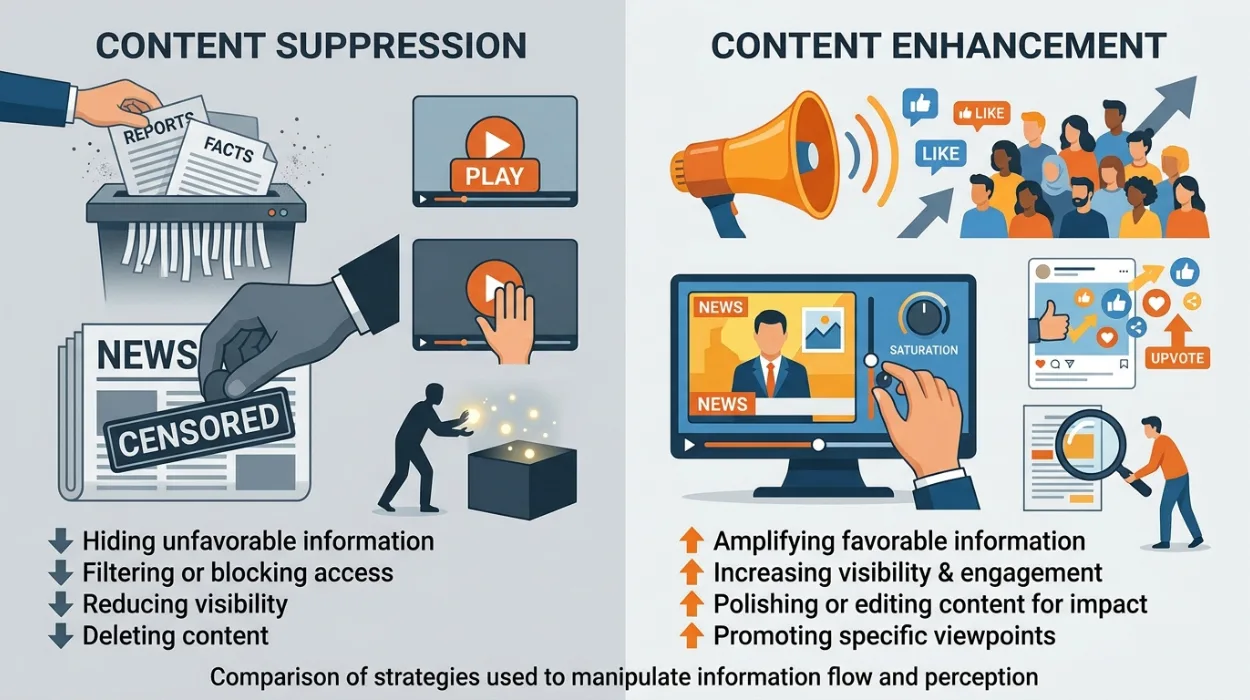
Content suppression describes an attempt to reduce the prominence of unwanted material by strengthening the visibility of relevant, legitimate pages. It does not necessarily remove the original URL or invalidate its claims. Content enhancement focuses on improving the quality, relevance and usefulness of existing or newly published information, including accurate company profiles, professional biographies and authoritative website pages. These methods contribute to SERP composition by increasing the range of relevant sources available for a search query. However, their influence depends on competition, search intent, technical accessibility, content quality and the authority of competing pages.
A removal strategy provides a direct remedy when the source content breaches a relevant policy or legal requirement. Successful deletion eliminates the material from its original location, while de-indexing restricts its appearance in specified search results without necessarily deleting the source page. Content creation provides a different response when negative material remains online but does not qualify for removal. It expands the available information and improves the representation of an entity through relevant, verifiable sources. A balanced evaluation distinguishes between correcting an underlying content problem and changing the distribution of information visible in search results.
How do search engines interpret reputation signals and entity credibility?
Search engines evaluate pages using systems that assess relevance, quality, context and other signals associated with a query. Reputation signals are indicators that contribute to the information available about an individual, organisation or other identifiable entity. These include the accuracy and consistency of published information, the relevance of sources, the context of references and the relationships between related pages. Entity credibility describes how consistently an entity is represented through identifiable, relevant and trustworthy information sources. Neither concept represents a single score that guarantees favourable rankings or establishes the truth of every published statement.
Self-service removal requests influence search visibility through a more direct but conditional mechanism. A publisher’s acceptance of a complaint can lead to a correction, deletion or modification of the source page. A successful search engine request can also remove an eligible URL from particular results, depending on the applicable criteria. These outcomes change the set of pages available to users and therefore alter SERP composition. Rejected requests leave the existing content in place unless another valid route produces a change. Search ranking influence is consequently different from the authority to determine whether content remains published.
Content enhancement influences the search ecosystem by improving the availability of useful information about the entity. Detailed service pages, accurate biographies, original research and well-maintained corporate information provide context for relevant searches. Their value depends on satisfying user intent rather than merely repeating a name or publishing large volumes of similar material. Search engines assess individual pages and the wider competitive environment, so additional content does not automatically displace an established negative result. Sustainable visibility requires relevance, accessibility, factual accuracy and continued maintenance.
Dive Deeper With Our Expert Guides:
How Web Hosts and Search Engines Evaluate Online Takedown Requests
Content Removal vs. Search Engine Suppression: Choosing the Right Strategy
When is a self-service request more effective than professional assistance?
Self-service requests are generally more efficient when the issue is clearly defined, the correct reporting channel is available and the supporting evidence is straightforward. A single outdated page, a demonstrable factual error or a clear breach of a platform’s published rules provides a relatively contained case. The individual can identify the affected URL, select the applicable policy and submit a focused explanation. This reduces intermediary costs and keeps the evidence and communication under direct control. The outcome still depends on the decision-maker’s assessment and the strength of the submission.
Professional assistance becomes more relevant when the case requires extensive evidence organisation, cross-platform analysis or coordination between different decision-makers. A reputation issue involving multiple URLs, several publishers or different types of alleged violations creates a more complex administrative task. A structured review separates claims that require publisher contact from issues suitable for platform reporting, search engine removal or formal legal advice. The process also helps maintain consistent records of submissions, responses and deadlines. Its value depends on the complexity of the case rather than the assumption that professional involvement produces a higher removal rate.
A neutral assessment compares the expected workload, evidence requirements, procedural complexity and available remedies before selecting an approach. Individuals can evaluate whether the platform provides a clear reporting process and whether the issue fits its stated criteria. They can also assess whether the case involves disputed facts, privacy concerns, defamation allegations or another distinct legal question. Where legal rights are in question, qualified legal advice remains separate from general reputation management support. The most appropriate route is the one that addresses the actual issue through a relevant and proportionate process.
How do organic and reactive reputation management approaches differ?
Reactive reputation management begins after a specific item, review or search result creates a concern. Its activities include identifying the source, recording the relevant evidence, submitting a complaint and monitoring the decision. This approach concentrates resources on a known problem and provides a clear basis for measuring progress. Its limitation is that the response begins after the material becomes visible or attracts attention. Reactive work therefore focuses on resolving an existing issue rather than building broader resilience in advance.
Organic reputation management is an ongoing process of publishing accurate information, maintaining authoritative profiles and improving the usefulness of relevant digital assets. It operates by establishing a consistent information environment before a particular search result becomes the centre of attention. Examples include maintaining accurate leadership biographies, updating corporate information and publishing evidence-based material about products, services or expertise. These activities support discoverability and provide additional context for branded searches. Their results develop over time and remain subject to changing search demand, competitor activity and search engine systems.
The two approaches address different stages of reputation risk and are not mutually exclusive. Reactive intervention evaluates whether a specific item qualifies for correction or removal, while organic development improves the wider information landscape. Combining them requires clear separation between legitimate reputation improvement and attempts to manipulate search results through misleading or repetitive content. An effective evaluation measures case outcomes alongside changes in search visibility, content accuracy and the diversity of relevant sources. This avoids treating ranking movement as proof that the underlying reputation issue has been resolved.
Which approach offers greater scalability and lower risk exposure?

Scalability depends on the number of affected URLs, the diversity of platforms and the amount of evidence required for each case. Self-service processes remain manageable when requests follow a consistent procedure and involve a limited number of decision-makers. The workload increases when each platform uses different eligibility rules, documentation requirements and response procedures. Professional case management provides a repeatable structure for organising these differences, although coordination still requires time and resources. Neither approach removes the need to assess every item against the relevant rules.
Risk exposure includes rejected complaints, inaccurate allegations, unnecessary disclosure of personal information and inappropriate escalation. Self-service requests place responsibility for classification, evidence selection and communication directly on the individual submitting the complaint. Professional assistance introduces additional considerations, including provider competence, confidentiality, contractual terms and the reliability of claims about likely outcomes. A provider that guarantees removal without explaining the applicable criteria presents a significant credibility concern. A transparent process documents limitations, distinguishes substantiated breaches from disagreement and records the basis for each proposed action.
Risk management also requires attention to the distinction between negative content and actionable content. Unfavourable opinions, critical reviews and lawful reporting do not automatically qualify for deletion because they damage an organisation’s reputation. A valid complaint requires an appropriate basis under the publisher’s rules, applicable law or another recognised removal mechanism. Misrepresenting the facts or submitting repeated unsupported complaints creates further exposure without resolving the original issue. A proportionate approach prioritises accurate evidence, relevant procedures and realistic expectations.
How should short-term outcomes be measured against long-term sustainability?
Short-term performance is measured through specific case outcomes, including publisher responses, corrections, successful deletions and eligible de-indexing decisions. These measures establish whether the selected procedure addressed the immediate issue. Response time, completeness of documentation and the number of unresolved URLs also help assess operational efficiency. Search visibility metrics provide additional information about how results appear for defined queries, but they do not independently establish whether the underlying content is accurate. Measurement therefore separates procedural success from changes in public perception.
Long-term sustainability concerns the continued accuracy, relevance and credibility of the wider digital footprint. A deleted page can resolve a specific content problem, but references, cached information or duplicate publications require separate consideration where they remain accessible. A successful de-indexing request also differs from source deletion because the original page can remain available through other routes. Organic content development requires regular updates and factual consistency to remain useful as information changes. Long-term evaluation considers whether the original issue has been resolved and whether the remaining search results provide a reliable representation of the entity.
The scope of a content removal case audit illustrates the distinction between assessing a particular item and evaluating an entire reputation strategy. A case-level assessment examines the source, evidence, applicable rules and available routes, while a wider review considers search result patterns, existing content and ongoing information risks. These activities answer related but different questions. The first determines which intervention is appropriate for the disputed material; the second evaluates how that intervention fits into the broader digital footprint. Separating these objectives produces clearer performance measures and reduces the risk of treating every reputation concern as a removal problem.
What evaluation framework helps determine the appropriate approach?
A consistent evaluation framework compares the nature of the content, the available evidence, the relevant decision-maker and the intended outcome. This prevents the choice of method from being driven solely by cost or by the assumption that a particular provider is inherently more effective. The framework also distinguishes source-level remedies from changes to search visibility and long-term reputation development. Each route requires a different measure of success, so a single ranking metric is insufficient for evaluating the whole process. The following steps provide a practical basis for comparison.
- Identify the exact URLs and classify each item as a factual error, policy breach, privacy concern, disputed opinion or lawful criticism.
- Verify the supporting evidence by checking original sources, publication dates, relevant documentation and the context in which the material appears.
- Match the issue to the appropriate route, such as a publisher correction, platform complaint, eligible search engine request or qualified legal advice.
- Compare the workload, costs, confidentiality requirements and procedural complexity of managing the case independently or with professional assistance.
- Measure the outcome through documented decisions, source changes, search visibility and the accuracy of the remaining information environment.
This framework supports decisions based on evidence and procedural suitability rather than assumed removal success. It also creates a record of why a particular method was selected and what outcome it was intended to achieve. Where the facts or applicable rules remain disputed, the assessment must distinguish established evidence from allegations. Where content does not qualify for removal, accurate information development remains a separate option rather than a substitute for a valid complaint. The final decision rests on the relationship between the issue, the available remedy and the resources required to pursue it.
What are the main differences between self-service and professional takedown approaches?
Self-service removal requests offer direct control, lower intermediary costs and a practical route for clearly defined issues supported by straightforward evidence. Professional takedown services provide structured assessment and case coordination for situations involving multiple sources, complex documentation or different reporting routes. Neither approach guarantees a favourable decision, because publishers, platforms, search engines and relevant legal authorities retain their own decision-making responsibilities. Content creation and suppression address a different objective by improving the availability and prominence of relevant information rather than necessarily removing the original material. These methods therefore require separate evaluation criteria.
The strategic choice depends on evidence quality, procedural complexity, risk exposure, scalability and the intended timescale. Reactive action addresses a defined problem, while organic reputation development supports a more sustained and accurate digital presence. Search ranking changes are useful indicators of visibility, but they do not independently establish the truth of content or the credibility of an entity. A sound comparison distinguishes removal from de-indexing, suppression from enhancement, and immediate case resolution from long-term reputation management. This distinction provides a neutral basis for selecting and evaluating an approach without assuming that one method suits every situation.
What is the difference between self-service removal requests and professional takedown services?
Self-service removal requests involve contacting publishers, platforms or search engines directly to report disputed content. Professional takedown services provide structured case assessment, evidence organisation and guidance on appropriate reporting or escalation routes.
Are professional content removal services more effective than self-service requests?
Effectiveness depends on the evidence, the applicable platform policies and the nature of the disputed content. Professional support can help organise complex cases, but neither approach guarantees removal because the relevant publisher or platform makes the final decision.
How can I request the removal of negative content from Google?
Identify the exact URL, review the relevant website’s policies and submit a complaint to the publisher if the content contains a factual error or breaches its rules. Google also accepts eligible removal requests, but de-indexing a result does not necessarily delete the original webpage.
When should a business use professional takedown services instead of handling removal requests itself?
Professional assistance is useful when a business needs to assess multiple URLs, organise substantial evidence or navigate different platform reporting procedures. A straightforward issue with clear evidence and an established reporting process is often manageable through a self-service request.
Can content removal improve a business’s online reputation and search visibility?
Successful content removal can reduce the visibility or availability of material that qualifies for removal, while search engine de-indexing can prevent eligible URLs from appearing in specified results. Long-term reputation management also involves maintaining accurate information and credible content because removing one result does not automatically improve every search ranking.