
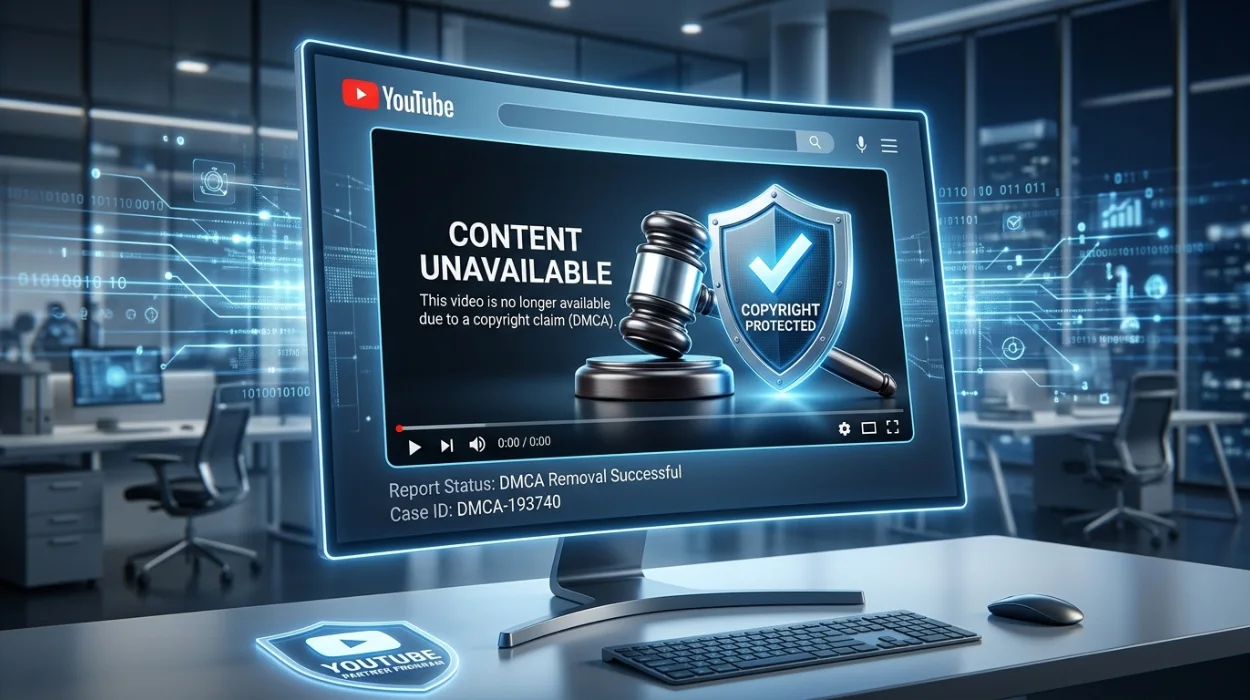
DMCA content removal refers to the legal framework that enables copyright holders to request the removal of unauthorised copyrighted material from online platforms such as YouTube. Reputation management is the process of understanding how digital information is published, indexed and interpreted across search ecosystems to influence search visibility and online credibility.
Online reputation refers to the collection of digital assets that shape entity perception across search engines, video platforms and websites. Videos indexed in search results contribute to digital footprints because search engines evaluate visual content alongside webpages and other online resources. Understanding how the DMCA framework operates explains how copyright enforcement influences content indexing, search visibility and trust signals within modern search ecosystems.
What is DMCA content removal for YouTube videos?
DMCA content removal is a legal process established under copyright law that enables rights holders to request the removal of infringing content from online platforms. Within search ecosystems, it provides a recognised governance mechanism for addressing unauthorised use of protected creative works.
The process operates through formal notice procedures submitted to the hosting platform. The platform evaluates whether the request satisfies the required copyright criteria before determining whether the content qualifies for removal. This governance system differs from reputation-based reporting because it focuses on copyright ownership rather than public perception.
From a reputation management perspective, copyright enforcement influences digital footprints by changing the availability of indexed video content. Search visibility is therefore affected through lawful content governance rather than algorithmic preference alone.
How does YouTube process DMCA removal requests?
YouTube processes DMCA requests by reviewing whether the submitted notice complies with copyright requirements and identifies the allegedly infringing material with sufficient accuracy. The platform applies its own review procedures before determining the appropriate outcome.
A valid request normally identifies the copyrighted work, the location of the disputed video and the basis for the ownership claim. YouTube evaluates the submission against copyright law and platform procedures before taking action. This structured process supports consistency and procedural fairness within content governance.
Search visibility changes after platform action because removed or restricted content influences future indexing and search engine evaluation. Platform moderation therefore contributes indirectly to search perception by affecting publicly accessible information.
How does copyright influence online reputation?
Copyright influences online reputation because ownership rights determine whether creative content remains publicly available within search ecosystems. Authorised publication contributes to digital trust, while copyright disputes alter the visibility of affected content.
Search engines evaluate available information rather than ownership claims alone. When copyrighted material is removed following a valid notice, search systems eventually update indexed results after subsequent crawling and content processing cycles. This relationship demonstrates how legal governance influences content indexing without directly changing search algorithms.
Copyright therefore forms one component of broader reputation management. It defines lawful publication standards that contribute to authority signals and digital credibility across search environments.
Why do search engines continue indexing some videos?

Search engines continue indexing some videos because indexing decisions depend on technical accessibility and content availability at the time of crawling. Publicly accessible videos remain eligible for inclusion unless platform actions or recognised governance mechanisms change their status.
Search algorithms evaluate relevance, authority and accessibility rather than independently determining copyright ownership. If a video remains available through the hosting platform, it continues contributing to search visibility until updated information becomes available during future indexing cycles.
This distinction explains why search engines and hosting platforms perform separate functions. Platforms govern publication, while search engines organise discoverable information across the web.
How do legal frameworks affect content indexing?
Legal frameworks affect content indexing by determining whether online platforms remove copyrighted material that search engines subsequently evaluate during future crawling cycles. The legal process influences the availability of content rather than the ranking algorithm itself.
Several governance principles shape how copyrighted material enters or leaves search ecosystems.
- Define copyright ownership by identifying the legal rights attached to original creative works.
- Establish infringement claims through evidence demonstrating unauthorised use of protected material.
- Evaluate platform compliance by comparing submitted notices with recognised copyright procedures.
- Update content indexing after removed material is reflected during subsequent search engine crawling.
Each principle demonstrates how legal governance supports structured content management without altering the technical operation of search algorithms.
How do removed videos influence search visibility?
Removed videos influence search visibility because unavailable content eventually disappears from searchable indexes after search engines detect changes made by the hosting platform. The timing depends on crawling frequency and indexing updates rather than immediate removal decisions.
Changes in indexed video content affect entity perception because search results present different combinations of available digital assets over time. This process demonstrates how reputation signals evolve according to publicly accessible information rather than historical publication alone.
Dive Deeper With Our Expert Guides:
Legal Content Takedown Services for Online Platforms
How to Remove Copyright Violations from Google
How do copyright removal and reputation management strategies differ?
Copyright removal and reputation management strategies differ because they address separate aspects of digital information control. Copyright removal focuses on legal ownership and unauthorised use, while reputation management analyses how available information influences search visibility and entity perception.
A copyright process operates through legal frameworks that determine whether protected material remains publicly available. Reputation management evaluates broader reputation signals, including content quality, authority and the overall digital footprint presented across search results.
These approaches interact within search ecosystems because copyright decisions influence the information available for search engine evaluation. However, copyright removal does not directly control rankings, while reputation management examines how different digital assets contribute to public perception.
How do authority and trust signals affect YouTube content visibility?
Authority and trust signals affect YouTube content visibility by influencing how platforms and search engines interpret the quality, relevance and reliability of available information. These signals are generated through factors such as publisher credibility, content relationships and user engagement patterns.
Search engines evaluate content relationships across multiple sources when creating search results. A video connected to authoritative information and consistent metadata creates stronger contextual signals within content indexing systems.
Copyright enforcement also contributes to trust evaluation because legitimate ownership claims demonstrate structured governance over digital assets. This relationship shows how legal compliance, platform policies and search visibility operate together within online information systems.
What role does content indexing play after a YouTube video removal?
Content indexing plays an important role after a YouTube video removal because search engines must recognise changes made to publicly available information. Removal from a platform does not instantly erase every reference because search systems update through scheduled crawling and processing activities.
Once search engines identify that a video is unavailable, indexing systems adjust the information displayed in search results. This process affects SERP evaluation because previously available video results no longer contribute to search visibility.
The relationship between removal and indexing demonstrates that search ecosystems depend on continuous information updates. Content availability, platform governance and search engine processing work together to determine how digital assets appear online.
How can legal, copyright and content takedown routes be evaluated?
Legal, copyright and content takedown routes are evaluated by analysing the authority responsible for the content, the evidence available and the governance framework that applies. Each route operates through different mechanisms and produces different outcomes within digital environments.
A structured evaluation considers whether the issue relates to copyright ownership, platform policy compliance or broader legal rights. This approach improves accuracy because removal requests are directed towards the authority with control over the relevant content.
Understanding these differences helps explain why content removal requires more than reporting a video. The effectiveness of a removal pathway depends on the relationship between evidence, governance standards and the platform responsible for publication.
Which factors determine the sustainability of content removal outcomes?
The sustainability of content removal outcomes depends on whether the removal is supported by valid legal grounds, accurate evidence and compliance with platform procedures. Sustainable outcomes result from addressing the underlying governance issue rather than relying on temporary visibility changes.
Which elements support long-term digital reputation stability?
Long-term stability is influenced by several measurable factors:
- Maintain copyright documentation by preserving ownership records that support future content protection decisions.
- Monitor indexed content by evaluating how search results change after platform-level removal actions.
- Analyse digital footprints by reviewing how remaining online assets influence entity perception.
- Strengthen authoritative information by maintaining accurate digital resources that support trust signals.
These factors demonstrate that reputation management involves continuous evaluation of digital information rather than a single removal event.
How does professional content takedown knowledge support decision-making?
Professional understanding of content takedown frameworks supports decision-making by improving the accuracy of route selection and evidence evaluation. Copyright, platform policies and search indexing systems each require different forms of analysis.
A structured approach examines whether the issue requires legal enforcement, platform moderation or another recognised governance process. This reduces confusion between copyright disputes and general reputation concerns.
For readers seeking deeper analysis of the available legal pathways, Legal, Copyright & Content Takedown explains how evidence, governance frameworks and removal procedures interact within digital content management systems.
DMCA content removal for YouTube videos operates through a structured copyright framework that influences content availability, indexing and search visibility. Understanding this process requires analysing the relationship between legal ownership, platform governance and search engine evaluation.
Copyright removal, platform moderation and reputation management each address different parts of the digital ecosystem. Copyright frameworks determine whether protected material remains available, while search systems evaluate accessible information and form reputation signals through indexed content.
A clear understanding of these mechanisms helps explain how online credibility, digital footprints and entity perception develop across search environments. Content governance, legal compliance and accurate information management remain central factors in maintaining reliable digital visibility.
What are DMCA Content Removal Services for YouTube videos?
DMCA Content Removal Services help copyright owners address unauthorised use of protected material on YouTube through formal copyright removal procedures. These services involve evaluating ownership evidence, preparing notices and following platform-specific takedown requirements.
How can a YouTube video be removed under the DMCA?
A YouTube video can be removed under the DMCA when a valid copyright complaint demonstrates that protected content is being used without permission. The request must include accurate ownership details, the location of the content and the required legal statements.
What evidence is required for a DMCA YouTube removal request?
Evidence for a DMCA YouTube removal request typically includes proof of copyright ownership, details of the original work and information showing how the content has been used without authorisation. Strong evidence helps platforms evaluate whether the removal request meets copyright requirements.
How long does DMCA content removal take on YouTube?
The timeframe for DMCA content removal depends on YouTube’s review process, the accuracy of the submission and whether the request meets legal requirements. Platform decisions vary based on the complexity of the copyright claim and available evidence.
Can DMCA removal improve online reputation and search visibility?
DMCA removal can influence online reputation by reducing the visibility of unauthorised content that affects a digital footprint. When removed content is no longer available, search engines gradually update indexed results based on new content availability.