
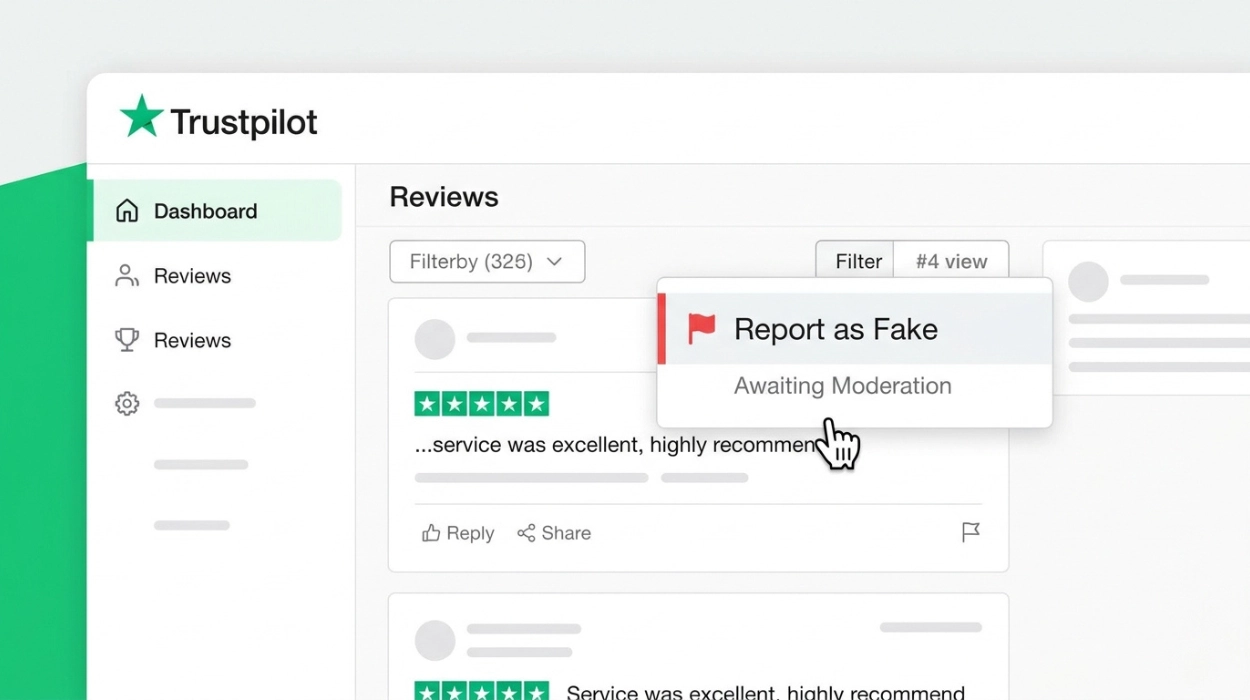
Trustpilot handles fake review reports by evaluating submitted evidence against its moderation policies, verification processes, and content integrity standards before deciding whether a review violates platform rules. Reputation management is the process of analysing and managing how digital information shapes public perception across search ecosystems through review credibility, reputation signals, and content evaluation.
Online reputation refers to the collective perception created by reviews, search visibility, and publicly accessible digital content. Review platforms contribute to entity perception because search engines evaluate user-generated content alongside website authority, topical relevance, and trust signals when determining search result composition.
What Is a Fake Review Within Reputation Management?
A fake review is content that misrepresents a genuine customer experience through fabricated, misleading, or manipulated information. Within search ecosystems, fake reviews reduce information quality by introducing inaccurate reputation signals that influence both user perception and algorithmic evaluation. Reputation management analyses fake reviews because they affect entity credibility, sentiment distribution, and search visibility across digital platforms.
Search engines evaluate review content as part of broader reputation analysis rather than treating reviews as isolated information. Review authenticity contributes to trust signals that influence how entities are interpreted across search engine results pages (SERPs). When inaccurate reviews remain publicly accessible, they distort the balance of positive, neutral, and negative sentiment associated with an organisation or individual. This changes how users interpret credibility before engaging with other forms of online content.
Fake reviews also influence digital footprint development because review platforms are frequently indexed by search engines. Indexed review pages become part of an entity’s searchable history, meaning inaccurate reviews contribute to long-term reputation signals until moderation systems evaluate them.
How Does Trustpilot Evaluate Fake Review Reports?
Trustpilot evaluates fake review reports through a structured moderation process that analyses reported content against its platform rules and verification requirements. The review itself is assessed together with supporting evidence to determine whether it represents an authentic consumer experience or violates platform standards.
The evaluation process examines multiple indicators of authenticity rather than relying on a single factor. Moderation systems analyse account activity, review consistency, submission patterns, policy compliance, and evidence supporting the reported concern. Each element contributes to the overall assessment of whether the review accurately reflects a legitimate interaction.
Within reputation management, this evaluation process demonstrates that moderation focuses on evidence rather than opinion. Search ecosystems rely on reliable information to maintain content quality, making verification an essential component of reputation signal assessment. This systematic approach improves confidence in review integrity while reducing inaccurate content that influences search perception.
What Types of Reviews Are Commonly Considered Violations?
Platform violations are defined by content that conflicts with published moderation standards and authenticity requirements. Fake reviews represent one category of policy violations because they undermine the reliability of review ecosystems and distort public perception.
Common categories include:
- Submit fabricated experiences that describe interactions which never occurred, preventing accurate representation of genuine customer feedback.
- Publish impersonated reviews using another person’s identity or account credentials, creating misleading reputation signals.
- Coordinate manipulated review campaigns that artificially influence review scores through organised posting behaviour.
- Duplicate identical review content across multiple accounts or business profiles, reducing content authenticity.
- Include prohibited promotional material that transforms review content into advertising instead of genuine consumer feedback.
Each violation affects review credibility differently, yet all reduce the accuracy of publicly available reputation information. Search engines evaluate review quality as one component of entity assessment, making moderation policies relevant to broader search visibility.
Why Do Fake Reviews Influence Search Visibility?
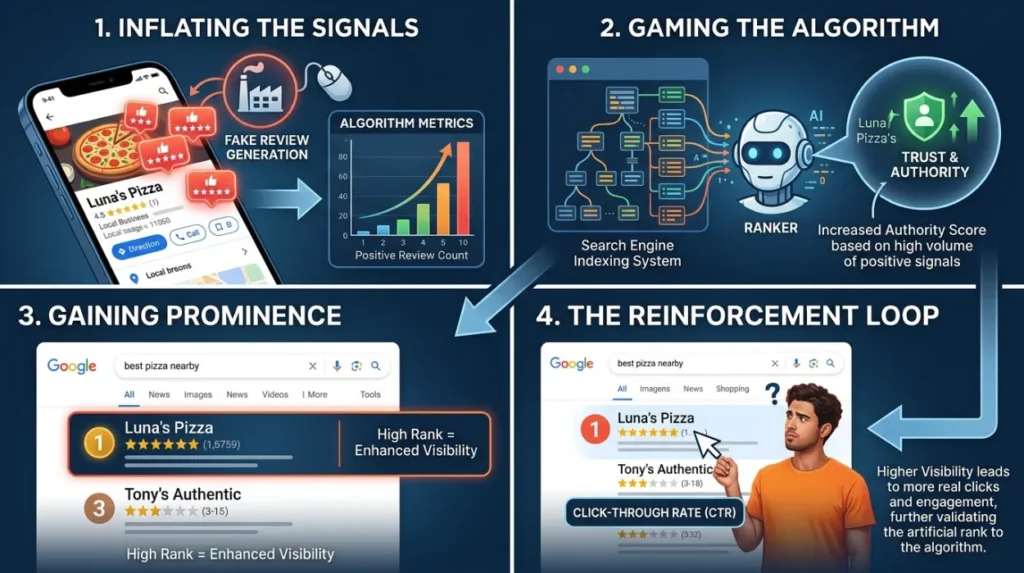
Fake reviews influence search visibility because review content contributes to reputation signals that search engines analyse when evaluating entities. Reviews provide contextual information regarding trust, credibility, and user satisfaction, allowing search systems to build a more complete understanding of organisations and individuals.
Search visibility depends on cumulative quality signals rather than isolated webpages. Review platforms frequently appear within branded search results, local search results, and knowledge panels, extending their influence beyond the review platform itself. As a result, inaccurate reviews contribute to entity perception across multiple search environments.
Review sentiment also affects how users interpret search results before visiting a website. Negative or misleading reviews alter perception even when users do not read the complete review text. Reputation management therefore evaluates review quality because perception develops from both content visibility and content interpretation.
How Does Review Moderation Support Online Credibility?
Review moderation is the process of maintaining content accuracy by identifying, evaluating, and removing information that violates platform rules. Online credibility depends on reliable public information, making moderation an important component of digital trust systems.
Moderation protects review ecosystems by ensuring that published feedback represents authentic consumer experiences. Accurate reviews strengthen reputation signals because search engines associate trustworthy review environments with higher information quality. Conversely, unverified or manipulated reviews weaken confidence in publicly indexed information.
Entity credibility develops through consistency between review content, business information, website quality, and external references. Review moderation contributes to this consistency by reducing misleading content that disrupts reputation evaluation. As moderation improves information accuracy, users gain greater confidence when interpreting publicly available reputation signals.
How Do Search Engines Interpret Review Signals?
Search engines interpret review signals by combining review information with broader indicators of authority, expertise, relevance, and trust. Reviews contribute contextual information rather than acting as independent ranking factors. Algorithms evaluate review sentiment alongside content quality, website authority, structured information, and entity relationships to produce balanced search results.
Review signals include sentiment distribution, review frequency, authenticity indicators, source credibility, and consistency across multiple platforms. These elements help search engines understand how an entity is perceived within the digital ecosystem. The evaluation focuses on patterns rather than individual reviews because cumulative evidence provides a more reliable representation of reputation.
Search systems also distinguish between organic reputation development and manipulated activity. Unnatural review behaviour creates inconsistencies that moderation systems and algorithms analyse during content evaluation. This relationship between review authenticity and search interpretation demonstrates why reputation management extends beyond simply responding to individual reviews.
Why Is Evidence Important When Reporting Fake Reviews?
Evidence is the foundation of review verification because moderation decisions depend on objective information rather than personal disagreement. Fake review reporting requires supporting material that demonstrates why a review conflicts with platform policies or fails authenticity standards.
Evidence improves moderation accuracy by allowing reviewers to compare reported content with documented facts, account activity, or verification records. Objective documentation reduces ambiguity during the evaluation process and strengthens confidence in moderation outcomes. This systematic approach improves the reliability of reputation signals across review platforms.
Within reputation management, evidence-based reporting also protects content integrity. Removing inaccurate reviews without verification would reduce confidence in moderation systems. Consequently, verification procedures balance reputation protection with fair content evaluation to preserve trustworthy review environments.
Dive Deeper With Our Expert Guides:
Where Fake Online Reviews Come From and How to Recognise Them Reliably
How Fake Reviews Are Defined Across Major UK Platforms in 2026
How Does Review Authenticity Affect Digital Footprint?
Review authenticity directly influences a digital footprint because reviews become part of the publicly indexed information associated with an entity. A digital footprint refers to the collection of searchable content that contributes to long-term online reputation across search ecosystems. Authentic reviews strengthen information quality by reflecting genuine consumer experiences, while fake reviews introduce misleading reputation signals that remain visible until moderation processes resolve them.
Search engines continuously evaluate indexed review content alongside websites, news articles, directories, and social profiles. This broader evaluation creates entity relationships that influence search perception over time. When fake reviews remain indexed, they contribute inaccurate sentiment distribution and alter how search systems interpret credibility. Maintaining authentic review environments therefore improves both online credibility and search visibility.
What Reputation Signals Help Search Engines Evaluate Trust?
Reputation signals are measurable indicators that search engines use to assess credibility, authority, and reliability across digital platforms. These signals extend beyond review ratings and include consistency, authenticity, structured information, user engagement, and content quality.
The primary reputation signals include:
- Evaluate authentic reviews to measure genuine consumer experiences and sentiment consistency.
- Analyse entity consistency by comparing business information across multiple indexed sources.
- Assess content quality through relevance, originality, and factual accuracy.
- Measure authority signals using trusted references, citations, and reliable information sources.
- Interpret sentiment distribution by evaluating the balance of positive, neutral, and negative feedback.
Together, these signals help search engines develop a comprehensive understanding of online credibility. Reputation management analyses these relationships because search visibility depends on cumulative evidence rather than isolated content.
How Does Fake Review Reporting Support Search Perception?
Fake review reporting supports search perception by improving the accuracy of publicly available information. Search perception refers to how users interpret an organisation or individual based on the information presented across search engine results pages. When inaccurate reviews are identified and evaluated through moderation processes, the overall quality of searchable information improves.
Search engines prioritise reliable information because accurate search results strengthen user confidence. Review moderation contributes to this objective by reducing misleading content that distorts entity perception. As review quality improves, search ecosystems gain stronger reputation signals for evaluating trust and credibility.
This process also benefits long-term reputation stability. Consistent moderation prevents inaccurate review content from becoming a permanent part of an entity’s digital footprint, supporting more balanced search evaluation over time.
Why Does Reputation Management Extend Beyond Review Platforms?
Reputation management extends beyond review platforms because search engines evaluate information from multiple interconnected sources. Reviews represent only one component of a broader reputation ecosystem that includes websites, directories, media coverage, social profiles, and structured business information.
Entity perception develops through the interaction of these information sources rather than a single platform. Search algorithms compare content consistency, authority signals, topical relevance, and trust indicators across the entire digital footprint. Consequently, review authenticity contributes to reputation management, but it operates alongside other indexed information that collectively shapes online credibility.
Understanding this broader perspective explains why reputation management focuses on systems rather than individual pieces of content. Every indexed source contributes to search visibility and influences how users evaluate trust before making decisions.
How Does Review Moderation Contribute to Long-Term Online Credibility?
Review moderation contributes to long-term online credibility by preserving accurate and trustworthy information within public review ecosystems. Consistent moderation reduces the visibility of content that violates authenticity standards while maintaining confidence in genuine customer feedback.
Online credibility develops through repeated exposure to reliable information. Search engines reinforce this process by rewarding environments that demonstrate consistent quality and authentic reputation signals. Review moderation therefore supports both user trust and algorithmic evaluation by improving the overall reliability of indexed content.
As moderation systems continue verifying review authenticity, digital footprints become more accurate representations of real-world experiences. This alignment strengthens entity credibility and improves the quality of information available across search ecosystems.
Trustpilot’s approach to fake review reports is based on structured moderation, evidence evaluation, and content integrity rather than subjective opinion. Fake reviews influence search visibility because review content contributes to reputation signals, entity perception, and digital trust across search ecosystems.
Understanding how review moderation operates provides valuable insight into the relationship between review authenticity, search visibility, and online credibility. Reputation management analyses these systems to explain how search engines interpret trust signals, evaluate sentiment distribution, and develop entity perception over time. Accurate review environments ultimately strengthen digital footprints by supporting reliable information throughout search engine results pages.
How does Trustpilot handle fake review reports?
Trustpilot reviews fake review reports by assessing the reported content against its moderation policies, verification standards, and supporting evidence. A review is only removed if it is found to violate the platform’s content or authenticity guidelines.
What does Trustpilot consider a fake review?
A fake review is feedback that does not represent a genuine customer experience or breaches Trustpilot’s review policies. Examples include fabricated experiences, impersonation, coordinated review manipulation, and misleading promotional content.
What evidence is needed to report a fake review on Trustpilot?
Effective fake review reports include evidence that demonstrates the review is inaccurate, fabricated, or violates Trustpilot’s guidelines. Supporting documentation helps moderators verify the claim and make an evidence-based decision.
Can fake Trustpilot reviews affect online reputation and search visibility?
Yes. Fake reviews can influence public perception, reputation signals, and search visibility because review platforms are indexed by search engines. Inaccurate reviews can affect entity credibility until they are reviewed and, where appropriate, removed.
How does Clear Your Name help with fake review concerns?
Clear Your Name provides guidance on understanding fake review reporting processes and reputation management principles. It also explains how evidence, moderation standards, and search reputation systems influence the evaluation of review disputes.