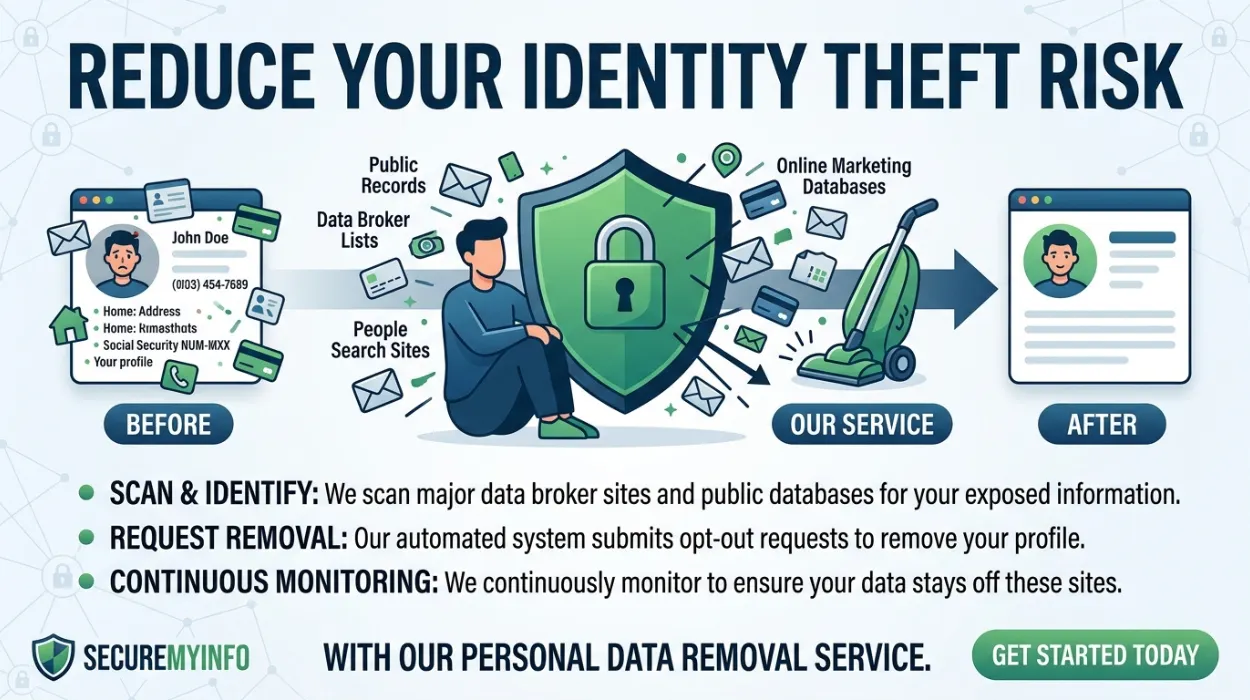
Reducing identity theft risk requires more than securing accounts; it requires controlling how personal information remains exposed across websites, directories, search engines, and public databases.
Clear Your Name provides structured personal information removal focused on reducing unnecessary search visibility, strengthening privacy, and protecting the reputation signals associated with an individual’s digital identity.
Which Personal Information Removal Approach Delivers the Strongest Risk Reduction?
A structured personal information removal approach delivers stronger risk reduction because it identifies exposed data, evaluates its visibility, prioritises high-risk sources, and applies the appropriate removal mechanism. Personal information such as residential addresses, private telephone numbers, personal email addresses, and identity-linked records can create additional exposure when publicly accessible. Search engines can index these sources and connect them with name-based queries. This makes privacy exposure relevant to both identity theft prevention and search perception. A professional process therefore evaluates the complete digital footprint rather than addressing one webpage in isolation.
Clear Your Name uses an evidence-led assessment to establish where personal information appears and how easily it can be discovered. The process distinguishes direct identifiers from contextual information and assesses how different sources connect to the same individual. High-visibility pages receive greater attention because prominent search results create greater practical exposure. Duplicate information is also identified because removing one source does not automatically remove every copy. This creates a clearer risk profile before removal activity begins.
The value of this approach lies in process control rather than unsupported promises. Website operators and search engines retain control over their own systems and decisions. A reliable removal strategy therefore focuses on controllable actions, including evidence quality, accurate requests, source identification, monitoring, and follow-up. These mechanisms reduce unnecessary exposure while maintaining realistic expectations. The result is a structured privacy process rather than an isolated removal attempt.
How Does Professional Personal Information Removal Reduce Identity Theft Risk?
Professional personal information removal reduces identity theft risk by decreasing the amount of publicly accessible information available for identification, targeting, and data aggregation. Data aggregation occurs when separate information sources combine to create a more complete profile of an individual. A public name, address, telephone number, workplace, and social profile can collectively provide substantially more information than any individual source. Reducing unnecessary public references limits these connections. This creates a direct privacy benefit while also improving control over the digital footprint.
Personal Information Removal Services operate by identifying relevant sources and determining the appropriate mechanism for addressing exposed information. Depending on the source, this can involve privacy requests, platform procedures, website-specific removal processes, or other legitimate routes. Evidence supports each request by establishing what information appears, where it appears, and why its continued public availability creates a relevant concern. This improves process clarity and reduces inconsistent intervention. Monitoring then determines whether the original source remains accessible.
The approach also distinguishes privacy protection from indiscriminate content suppression. Not every negative or inconvenient result qualifies for removal, and legitimate public information can remain accessible. The objective is to address unnecessary personal exposure through appropriate mechanisms. This distinction protects credibility because the process remains based on identifiable privacy considerations. It also reduces the risk of making unsupported removal requests.
Why Is Search Visibility Control Important When Protecting Personal Data?
Search visibility control is important because publicly accessible information becomes more discoverable when search engines index and rank the relevant webpages. Search visibility refers to how prominently information appears for relevant queries. A personal address hidden within an obscure webpage presents a different exposure level from the same address appearing prominently when an individual’s full name is searched. Search engines therefore influence the practical accessibility of personal information. Controlling unnecessary visibility forms an important component of digital privacy management.
Search engines independently determine rankings through their own systems and signals. No legitimate reputation management service controls organic rankings directly. However, professional information removal can address the underlying source of exposure where a valid removal route exists. Search monitoring then measures whether the information remains visible after intervention. This creates a measurable connection between source-level action and search-level outcomes.
Search perception also influences trust. When users encounter private information, outdated records, or irrelevant personal details alongside an individual’s name, the search environment becomes less controlled. Accurate professional information provides stronger context and improves entity credibility. Reducing unnecessary personal exposure helps maintain a clearer distinction between relevant public identity information and private data. This strengthens the overall information environment without manipulating search systems.
How Does the Removal Process Work From Initial Audit to Ongoing Monitoring?
A defined removal process delivers greater reliability because every stage has a specific purpose and measurable output. The initial audit identifies exposed information, source websites, search visibility, duplication, and the relationship between separate data points. Classification then determines which information presents the highest privacy priority. Evidence is organised before requests are submitted. Monitoring follows intervention to establish whether exposure has actually changed.
A structured process includes:
- Audit exposed information by recording URLs, page details, search visibility, data types, and associated identity references.
- Classify each source according to privacy relevance, accessibility, duplication, authority, and potential identity exposure.
- Prioritise high-risk information by assessing direct identifiers, public accessibility, search prominence, and data relationships.
- Submit appropriate removal requests using evidence that directly supports the applicable privacy or platform basis.
- Monitor search results and source pages to identify continuing exposure, duplicate content, or newly indexed references.
- Review outcomes by comparing visibility, accessibility, and the wider digital footprint against the original baseline.
This structure improves accountability because each action connects to a specific risk. It also prevents the process from becoming dependent on assumptions about whether a request succeeded. Search monitoring provides evidence after intervention. Additional sources can then be assessed without restarting the entire strategy. This creates a scalable framework for continuing privacy protection.
Is Personal Data Removal More Effective Than Simply Monitoring Search Results?
Personal data removal provides direct intervention, while monitoring provides measurement and detection. Removal attempts to reduce accessibility at the source, whereas monitoring identifies where personal information remains visible. Monitoring alone does not remove exposed data. Removal without monitoring also provides incomplete evidence because duplicate or newly indexed sources can continue appearing. Combining both approaches therefore delivers stronger control.
The distinction becomes particularly important when information exists across multiple websites. Removing an address from one directory does not necessarily remove the same address from another directory or social profile. Search monitoring identifies these additional references. A broader digital footprint assessment then determines which sources require further action. This creates a continuous feedback mechanism between removal and monitoring.
The short-term and long-term effects also differ. Successful removal can create a direct reduction in public accessibility. Monitoring provides long-term visibility into whether that reduction remains effective. Together, these mechanisms improve sustainability because the process responds to changes in the information environment. This reduces dependence on one-time interventions.
How Does Personal Information Exposure Affect Reputation Signals and Entity Credibility?
Personal information exposure affects reputation signals by changing the information users encounter when researching an individual. Reputation signals include the information, references, profiles, publications, reviews, and other digital assets that contribute to perceptions of an entity. Private or irrelevant information can distract from accurate professional information and alter the context surrounding an individual’s search results. This creates a reputation issue alongside the underlying privacy concern. Managing the digital footprint therefore supports both privacy and entity credibility.
Entity credibility depends partly on the consistency and quality of information associated with an individual. Professional profiles, authoritative publications, legitimate organisational references, and accurate biographical information provide useful context. Unnecessary personal data can introduce ambiguity when it becomes highly visible alongside these sources. Removing inappropriate exposure helps maintain clearer separation between private information and relevant public identity. This improves the overall structure of the search environment.
The relationship between privacy and reputation also explains why information removal requires careful prioritisation. Removing every reference to an individual is neither realistic nor desirable. The objective is to reduce unnecessary personal exposure while preserving legitimate and useful information. This approach strengthens trust because the information environment remains accurate and relevant. It also supports sustainable reputation management.
Which Information Removal Strategy Provides the Best Long-Term Value?
A combined removal and monitoring strategy provides stronger long-term value because it addresses existing exposure while detecting future risks. Reactive removal focuses on known information that already appears publicly. Proactive monitoring identifies new directories, duplicate records, indexed pages, and other sources before they become established within the digital footprint. These approaches operate at different points in the exposure lifecycle. Combining them creates broader and more sustainable protection.
The financial value of personal information removal also needs to be assessed against the cost of uncontrolled exposure. Publicly accessible personal data can contribute to identity targeting, unwanted contact, impersonation attempts, and privacy intrusion. High search visibility increases discoverability and makes the information easier to associate with an individual. Reducing unnecessary exposure therefore delivers value through risk reduction rather than simply through the number of pages addressed. The correct evaluation focuses on measurable changes in accessibility and visibility.
Long-term value also depends on repeatability. A process that successfully addresses one source but lacks ongoing monitoring provides limited resilience. A repeatable audit framework allows new exposure to be identified and classified consistently. This reduces operational uncertainty and supports continuing privacy management. Sustainable results therefore depend on maintaining control of the digital footprint over time.
Dive Deeper With Our Expert Guides:
Remove Old Address History From the Internet With Our UK Team
Limit Public Access to Your Land Registry Details With Our Help
How Quickly Can Personal Information Removal Improve Online Visibility?
Visibility improvements begin when exposed information becomes less accessible, but search engines require independent processing before their results reflect changes. Removing or restricting access to a source changes the underlying information environment. Search engines then determine how and when their indexes reflect that change. This means source-level removal and search-result changes operate on different timelines. Professional monitoring measures both stages separately.
Speed also depends on the nature and distribution of the exposed information. A single source with clear removal procedures presents a different process from information reproduced across directories, archives, and independent websites. Duplicate sources require separate assessment and potentially separate intervention. Search visibility also depends on the authority and indexing status of each page. A structured audit therefore establishes realistic expectations before removal activity begins.
The most important early outcome is improved control over the exposure process. Evidence identifies priority sources, removal requests create direct intervention, and monitoring measures subsequent visibility. This produces measurable progress even when search systems require additional time to update. The process remains focused on controllable mechanisms rather than guaranteed ranking changes. That distinction is essential for reliable privacy management.
Does Personal Information Removal Provide Sustainable Identity Theft Protection?
Personal information removal provides stronger sustainable protection when combined with account security, monitoring, and ongoing digital footprint management. Removing exposed data reduces the amount of publicly accessible information available for discovery and aggregation. Account security addresses direct access risks that removal alone cannot resolve. Monitoring identifies future exposure. Together, these mechanisms establish layered protection.
A sustainable privacy strategy focuses on prevention as well as response. Regular digital footprint reviews identify information that becomes publicly available after the initial removal process. Search monitoring identifies changes in SERP composition and newly indexed references. New sources can then be evaluated using the same evidence-based framework. This creates an ongoing cycle of assessment, intervention, and measurement.
Sustainability also depends on maintaining accurate information. Relevant professional and public references help establish entity credibility while unnecessary personal information remains limited. This creates a balanced digital footprint rather than an information vacuum. The objective is controlled exposure, not the elimination of legitimate online identity. This distinction makes the strategy more practical and defensible over time.
How Does Clear Your Name Provide a Reliable Personal Data Removal Solution?
Clear Your Name provides a structured personal data removal solution by combining exposure auditing, source identification, evidence-based removal, search monitoring, and ongoing digital footprint analysis. The process focuses on information that creates unnecessary privacy exposure rather than attempting indiscriminate content suppression. Each source is assessed according to its accessibility, relevance, duplication, and potential risk. This creates a transparent basis for prioritising intervention. The approach connects privacy protection with search visibility control and entity credibility.
Reliability comes from disciplined execution rather than claims of guaranteed outcomes. Website operators control their own content decisions, while search engines independently determine indexing and rankings. A credible removal strategy therefore focuses on controllable actions such as evidence quality, accurate requests, policy compliance, source assessment, and monitoring. This reduces risk while maintaining realistic expectations. The process strengthens trust because outcomes are evaluated through identifiable mechanisms rather than unsupported promises.
For individuals concerned about how exposed information affects identity security, the wider relationship between privacy and digital exposure is explained through how exposed personal information increases identity theft risk. Understanding this connection helps establish why source-level removal and search monitoring form complementary parts of a broader risk-reduction strategy.
The next stage involves evaluating practical response options after exposure has already occurred. Reviewing steps to reduce identity theft risk after a personal data leak provides additional context around account security, information removal, monitoring, and longer-term digital footprint management. These considerations help distinguish immediate risk reduction from sustainable privacy protection.
What Outcomes Can a Personal Data Removal Strategy Deliver?
A structured personal data removal strategy delivers measurable outcomes across privacy, search visibility, entity credibility, and risk management. The primary outcome is reduced accessibility of unnecessary personal information where legitimate removal mechanisms succeed. Secondary outcomes involve improved visibility control, stronger monitoring coverage, and clearer separation between private information and relevant public identity. These outcomes provide a more complete measurement framework than counting removal requests alone.
Key outcomes include:
- Reduce public exposure by addressing unnecessary personal information at identifiable source websites.
- Improve search visibility control by monitoring changes in indexed pages and identity-related SERPs.
- Strengthen entity credibility by maintaining accurate professional and relevant public information.
- Limit data aggregation by reducing connections between names, addresses, contact details, and other identifying attributes.
- Monitor long-term risk by detecting duplicate pages, new sources, and recurring exposure after initial intervention.
These outcomes demonstrate why privacy protection requires more than a single removal action. Each mechanism addresses a different stage of the exposure lifecycle. Source-level intervention reduces accessibility, while monitoring measures whether exposure remains. Digital footprint management provides ongoing awareness. The combined approach creates stronger control over the information environment.
Why Is Professional Personal Data Removal a Reliable Risk-Reduction Strategy?
Professional personal data removal provides a structured method for reducing unnecessary public exposure while maintaining control over the wider digital footprint. The strongest approach combines evidence-based source identification, targeted removal, search monitoring, and ongoing privacy assessment. These mechanisms reduce the amount of information available for identity aggregation and improve visibility control. They also protect the distinction between legitimate public information and unnecessary personal exposure.
Clear Your Name positions its process around reliability, transparency, and measurable mechanisms. The strategy does not depend on guarantees about third-party websites or search rankings. Instead, it focuses on actions that remain controllable: identifying exposed data, documenting evidence, submitting appropriate requests, monitoring outcomes, and reviewing new exposure. This creates a clear framework for managing privacy risk.
For individuals seeking sustainable protection, the objective extends beyond removing a single address, phone number, or email address. Effective management reduces unnecessary data accessibility, strengthens search perception, protects entity credibility, and establishes ongoing monitoring. This combination delivers a more complete privacy strategy and provides a defensible approach to reducing identity theft risk through professional personal data removal.
How can personal data removal reduce identity theft risk?
Personal data removal reduces the amount of publicly accessible information that can support identity targeting and data aggregation. Removing exposed addresses, phone numbers, email addresses and other private details also reduces unnecessary digital footprint exposure.
What information can personal data removal services remove?
Personal Information Removal Services can target exposed details such as home addresses, personal phone numbers, email addresses and information listed on public directories. The available removal route depends on the website, applicable privacy rules and the type of information published.
How does Clear Your Name remove personal information from the internet?
Clear Your Name can identify exposed personal information, assess the relevant sources and use appropriate removal procedures for eligible content. Ongoing monitoring helps identify duplicate listings or continued exposure after initial removal activity.
Does removing personal information from Google prevent identity theft?
Removing personal information from search results can reduce discoverability, but it does not eliminate all identity theft risks. Effective protection combines information removal with account security, breach monitoring and ongoing digital footprint management.
How long does personal information removal take?
The timeframe depends on the source website, the removal procedure and whether the information appears across duplicate pages or directories. Search engines also require independent processing before changes in source availability appear consistently in search results.