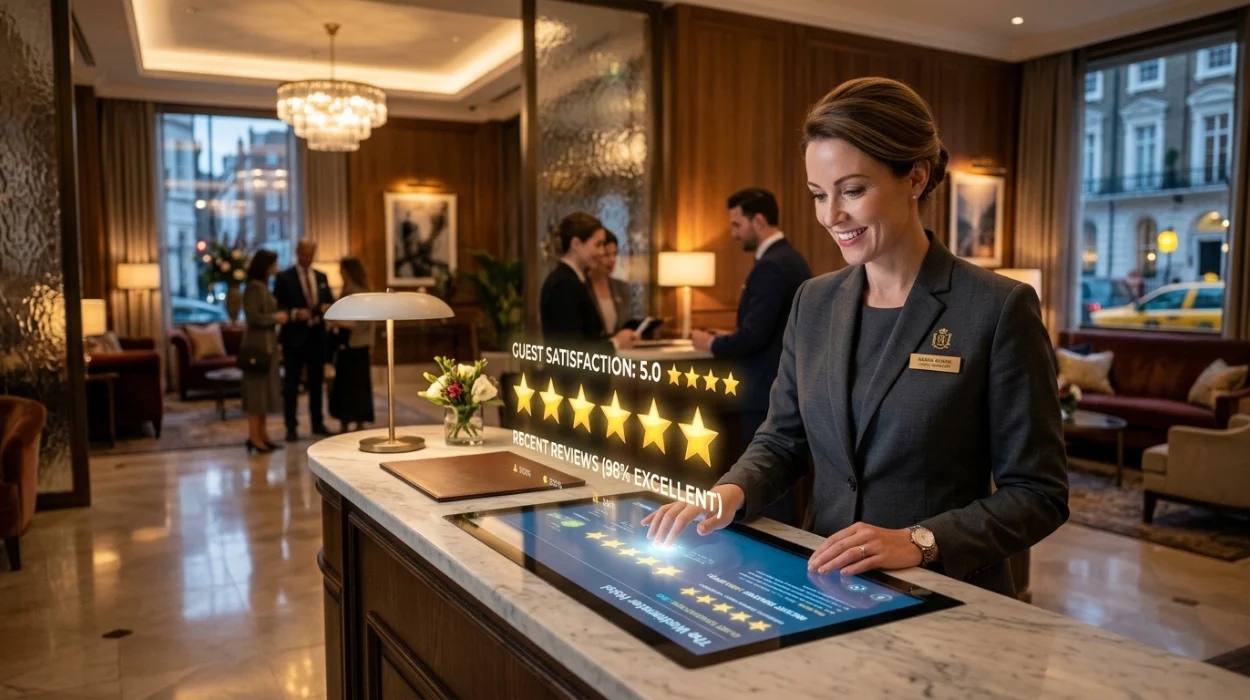
Negative TripAdvisor reviews reduce booking conversions, weaken trust signals, and limit control over how potential guests evaluate your hotel online. A structured review removal strategy restores search visibility control, strengthens reputation signals, and protects revenue from perception-based booking losses.
Search engines and travel platforms evaluate reputation signals as indicators of quality, credibility, and customer satisfaction. When negative reviews dominate visibility, they influence booking decisions, reduce entity credibility, and weaken overall search perception influence across the hospitality sector. This is why many hotels seek to Remove Negative TripAdvisor Reviews for Hotels to protect brand reputation, improve trust signals, and maintain stronger booking performance.
Why does removing negative TripAdvisor reviews deliver stronger booking performance for UK hotels?
Removing eligible negative TripAdvisor reviews delivers measurable improvements in trust perception, conversion rates, and digital reputation stability. Hotels depend heavily on review-driven purchasing behaviour, making review visibility a direct commercial factor rather than a simple feedback mechanism.
Guests frequently compare review sentiment before making accommodation decisions. A highly visible negative review creates friction during the decision-making process, particularly when prospective guests assess service quality, cleanliness, facilities, or customer experience. Negative sentiment becomes part of the hotel’s visible reputation ecosystem and influences booking intent before direct interaction occurs.
A professional TripAdvisor Reviews Removal Services strategy focuses on identifying guideline violations, analysing platform policies, preparing supporting evidence, and pursuing removal through compliant channels. This process improves SERP control by reducing the visibility of harmful content that distorts genuine business performance.
Hotels that actively manage reputation signals strengthen consumer confidence, improve brand perception, and reduce revenue leakage caused by unmanaged public criticism. Effective review management ensures that customer acquisition efforts are supported rather than undermined by visible negative content.
Which negative TripAdvisor reviews qualify for removal under platform guidelines?
Reviews that violate TripAdvisor policies represent the strongest candidates for successful removal action. The outcome depends on evidence quality, policy alignment, and procedural accuracy.
Identify policy violations that weaken review legitimacy
TripAdvisor maintains content standards designed to preserve review authenticity. Reviews containing false allegations, conflicts of interest, fraudulent claims, harassment, discrimination, or prohibited promotional content frequently trigger policy assessment procedures.
A structured review audit evaluates whether the review breaches published guidelines rather than focusing solely on dissatisfaction. This distinction increases efficiency and ensures removal requests align with platform enforcement standards.
Collect evidence that supports removal eligibility
Evidence-driven submissions strengthen review assessment outcomes. Documentation establishes credibility and enables a clear demonstration of factual inaccuracies or policy breaches.
Key evidence categories include:
- Gather booking records that verify guest authenticity.
- Present communication logs that establish factual inconsistencies.
- Document policy violations that breach platform guidelines.
- Compile operational records that contradict false allegations.
- Demonstrate conflicts of interest affecting review integrity.
This evidence framework improves procedural accuracy and strengthens the legitimacy of removal requests.
How does a professional review removal service reduce risk compared to handling disputes internally?
Professional reputation management services reduce procedural errors, improve policy alignment, and increase operational efficiency throughout the review removal process. Internal teams often lack specialised knowledge of platform enforcement mechanisms and review moderation frameworks.
Reputation specialists evaluate review eligibility before submission. This structured assessment prevents unnecessary escalation and focuses resources on reviews with identifiable policy violations. The result is a more efficient process with stronger documentation and greater strategic consistency.
Clear Your Name applies evidence-based reputation management methodologies that prioritise compliance, transparency, and outcome-focused execution. This structured approach improves review dispute management while protecting the hotel’s broader reputation ecosystem.
Professional oversight also reduces the risk of emotional responses that can damage public perception. Every action remains aligned with reputation preservation objectives, ensuring that corrective measures strengthen rather than weaken brand credibility.

What routes are available for removing a negative TripAdvisor review for hotels?
Multiple removal pathways exist depending on review characteristics, platform policies, and available evidence. The most effective strategy begins with eligibility assessment rather than immediate escalation.
Hotels seeking deeper insight into removing negative TripAdvisor reviews for hotels can benefit from understanding the procedural options available before initiating formal action.
Submit platform-based policy violation reports
Platform reporting remains the primary removal route. Reviews that violate published standards can undergo moderation and enforcement review.
This route focuses on:
- Identify guideline breaches affecting review legitimacy.
- Submit evidence supporting policy violation claims.
- Monitor moderation outcomes and escalation requirements.
- Track review status changes and enforcement decisions.
When executed correctly, this process delivers structured review assessment based on platform rules rather than subjective disagreement.
Pursue reputation-focused visibility management
Not every negative review qualifies for removal. In these cases, reputation management strategies focus on reducing visibility dominance and strengthening positive reputation signals.
Negative content suppression works by increasing the prominence of accurate, trusted, and reputation-enhancing content. This approach improves search perception influence and restores narrative balance without violating platform requirements.
Implement strategic response management
Public responses influence future guest perception. A professionally structured response demonstrates accountability, transparency, and operational professionalism.
Well-crafted responses:
- Address concerns with factual clarity.
- Reinforce service quality standards.
- Demonstrate active issue resolution.
- Strengthen public trust perception.
This approach ensures that visible content supports credibility rather than amplifying reputational damage.
How do negative TripAdvisor reviews affect hotel visibility and booking decisions?
Negative reviews influence both platform behaviour and consumer evaluation processes. Their impact extends beyond guest sentiment into measurable commercial performance indicators.
Research across hospitality booking behaviour consistently shows that review quality affects conversion likelihood. Travellers evaluate ratings, sentiment trends, and review credibility before committing to accommodation purchases.
For a deeper understanding of negative TripAdvisor reviews impact on hotel bookings, it is important to recognise how reputation signals influence user behaviour throughout the booking journey.
A visible concentration of negative reviews reduces trust, increases perceived risk, and encourages comparison with competing hotels. These outcomes weaken conversion efficiency and increase customer acquisition costs.
Negative reviews also affect entity credibility. Search ecosystems evaluate brand signals across multiple sources, meaning reputation issues influence broader digital perception rather than remaining isolated to a single platform.
Which reputation management outcomes create long-term value for hotels?
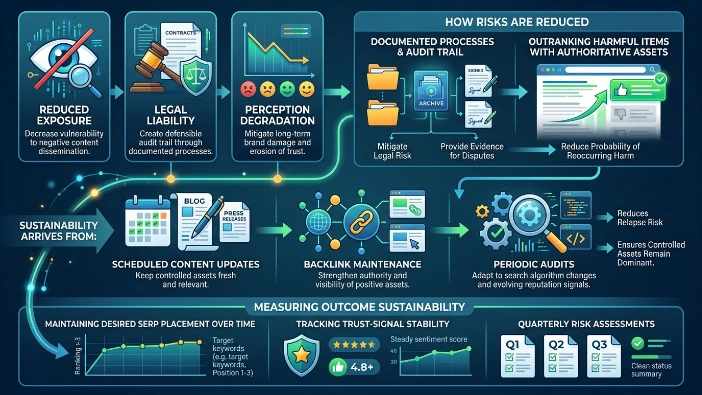
Long-term value emerges from reputation stability, trust preservation, and sustained visibility control. Effective reputation management addresses immediate risks while strengthening future resilience.
The strongest outcomes include:
- Improve trust signals that influence booking behaviour.
- Strengthen entity credibility across search ecosystems.
- Increase positive content visibility within search results.
- Reduce risk from recurring reputation attacks.
- Stabilise public perception through narrative control.
- Enhance conversion performance through trust restoration.
These outcomes support revenue generation, customer retention, and competitive positioning within increasingly review-driven hospitality markets.
A reputation management strategy becomes a long-term business asset because it protects visibility, strengthens authority, and improves the quality of publicly available information associated with the hotel brand.
Dive Deeper With Our Expert Guides:
Challenge a TripAdvisor Review That Violates Guidelines With Our UK Support
Remove Fake TripAdvisor Reviews and Restore Your Business Rating With UK Help
How quickly can reputation management influence public perception?
Perception shifts begin as soon as corrective actions enter the public ecosystem. However, different reputation management activities operate on different timelines.
Review assessment procedures depend on platform moderation workflows. Visibility management initiatives develop progressively as reputation signals strengthen and negative content influence decreases.
Search perception influence improves through sustained optimisation activity. Positive signals gain authority when supported by high-quality content, trusted citations, customer feedback, and strategic reputation management execution.
The key advantage lies in creating a structured process rather than relying on isolated actions. Consistency ensures that reputation improvements continue delivering value long after the initial intervention period.
Clear Your Name focuses on measurable reputation outcomes by combining review assessment, negative content suppression, and visibility enhancement strategies within a unified framework. This integrated methodology strengthens trust restoration and improves long-term perception control.
Why is the cost of professional review removal justified by long-term commercial value?
Professional review removal creates value by protecting revenue, improving conversion performance, and reducing perception-based booking losses. The financial impact of unmanaged reputation damage often exceeds the investment required for corrective action.
A single highly visible negative review can influence hundreds of prospective booking decisions. When reputation signals weaken, hotels experience lower trust, reduced conversion efficiency, and increased customer acquisition costs.
Professional intervention delivers value through:
- Protect revenue by reducing perception-driven booking abandonment.
- Improve trust metrics that influence purchasing behaviour.
- Strengthen search visibility through reputation optimization.
- Reduce operational inefficiencies associated with unmanaged disputes.
- Preserve long-term brand credibility across digital channels.
The commercial justification therefore extends beyond review removal itself. It includes broader protection of reputation equity, customer confidence, and market competitiveness.
Which reputation management solution delivers the most reliable outcome for UK hotels?
The most reliable solution combines review eligibility assessment, evidence-based removal procedures, negative content suppression, and strategic visibility management. A single tactic cannot address every reputation challenge because online perception develops across interconnected digital platforms.
Hotels require a structured methodology that evaluates risk, identifies opportunities, and strengthens reputation signals through measurable actions. This approach improves SERP control, reinforces entity credibility, and supports sustainable trust restoration.
Clear Your Name provides a process-driven reputation management framework designed to help hotels regain visibility control, reduce the influence of harmful content, and strengthen public confidence. Through professional TripAdvisor Reviews Removal Services, hotels gain a reliable pathway for protecting reputation, improving perception, and supporting long-term commercial performance.
A clear process, evidence-led execution, and reputation-focused strategy deliver the strongest outcomes. When reputation signals accurately reflect service quality, hotels strengthen booking confidence, stabilise perception, and maintain a competitive position within the UK hospitality market.
Can a hotel remove a negative TripAdvisor review?
A hotel can request removal if the review violates TripAdvisor guidelines, such as containing false information, conflicts of interest, harassment, or fraudulent content. Removal decisions depend on policy compliance and supporting evidence provided during the review process.
How long does it take to remove a negative TripAdvisor review?
The timeframe varies based on TripAdvisor’s moderation process and the complexity of the review assessment. Cases involving clear policy violations and strong evidence are generally resolved more efficiently than disputed factual complaints.
What are the most common reasons TripAdvisor removes reviews?
TripAdvisor may remove reviews that contain fake claims, promotional content, threats, discriminatory language, conflicts of interest, or violations of platform policies. Reviews that fail authenticity standards are also subject to removal review.
What should a hotel do if a negative TripAdvisor review cannot be removed?
If removal is not possible, hotels can focus on reputation management strategies such as professional responses, positive review generation, and negative content suppression. These actions help improve reputation signals and reduce the visibility impact of negative feedback.
How do negative TripAdvisor reviews affect hotel bookings?
Negative TripAdvisor reviews can reduce guest trust, influence booking decisions, and weaken online reputation signals. Poor review visibility often increases perceived risk for potential guests and can lower conversion rates across hotel booking channels.