
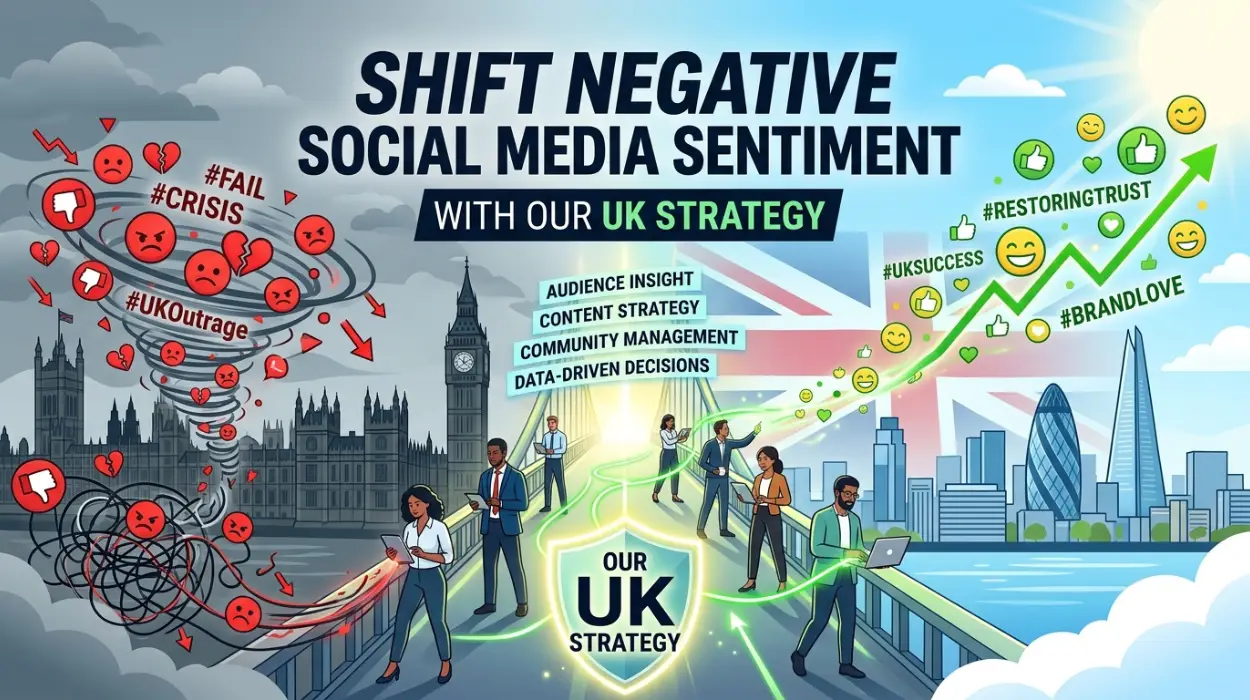
Controlling negative social media sentiment requires disciplined search visibility control and a strategy built around measurable reputation signals.
A structured reputation management service strengthens entity credibility, improves content visibility and gives decision-makers a clearer, more balanced view of the organisation online.
Which Reputation Management Strategy Delivers Reliable Sentiment Control?
A structured reputation management strategy delivers reliable sentiment control by combining negative content suppression, positive reputation development and continuous search monitoring. Social media sentiment does not exist independently from search behaviour because public discussions, posts, reviews and platform content frequently become discoverable through branded searches. When negative material dominates these environments, it influences how prospects interpret credibility before making a decision. Effective reputation management therefore focuses on changing the visibility balance rather than simply reacting to individual comments. This approach gives businesses a measurable framework for improving search perception influence while reducing exposure to persistent negative narratives.
A professional Social Media Content Removal Services strategy also addresses content that qualifies for legitimate removal through platform policies, privacy rights, copyright mechanisms or other applicable grounds. Removal provides a direct solution when content violates established rules, while search optimisation addresses material that remains legitimately published but receives disproportionate visibility. Combining these mechanisms creates stronger SERP control because the strategy responds to the actual source of reputation risk. The result is a clearer information environment in which accurate and authoritative content receives greater opportunity to represent the entity.
How Does Our UK Strategy Improve Search Visibility?
Our UK strategy improves search visibility by analysing the content, authority and relevance signals influencing branded searches and social perception. Search engines evaluate pages according to factors such as relevance, content quality, authority, links and user interaction, creating an environment where established negative pages can remain visible when they satisfy search intent. Reputation management addresses this imbalance by developing and strengthening legitimate content that supports the entity’s accurate narrative. The process does not depend on deleting every unfavourable reference. Instead, it establishes stronger reputation signals around the organisation so search results present a more complete and credible information landscape.
Search visibility control also requires monitoring changes over time. Rankings fluctuate as search engines recrawl pages, new content appears and existing documents gain or lose authority. A reliable strategy therefore measures branded queries, ranking positions, negative-result visibility and the growth of relevant supporting content. This provides evidence of progress rather than relying on subjective impressions of whether sentiment feels better. For organisations making a purchasing decision, that measurement framework provides greater transparency around performance and ongoing risk.
Which Reputation Signals Strengthen Public Trust?
Strong reputation signals strengthen public trust when they consistently demonstrate accuracy, authority and relevance across the digital ecosystem. A business represented by authoritative websites, credible profiles, accurate company information, genuine customer experiences and useful expert content creates a stronger entity footprint. These signals provide context when users encounter criticism or negative social media discussions. Reputation management strengthens this context by ensuring that credible information does not remain buried beneath isolated or highly visible negative narratives.
Entity credibility becomes particularly important when users conduct branded searches before contacting a company, accepting an offer or entering a professional relationship. Searchers rarely evaluate one page in isolation. They compare websites, social profiles, reviews, media references and other sources to construct an overall perception of the entity. A reputation strategy therefore focuses on the combined information environment rather than a single URL. This improves trust restoration by creating a more consistent and verifiable representation across relevant search and social channels.
Can Negative Social Media Content Be Removed When It Creates Reputation Risk?
Legitimate removal provides the fastest route when negative social media content breaches a platform rule or an applicable legal or privacy basis. Content removal services assess the nature of the material, identify the relevant policy or legal mechanism and prepare evidence that supports the request. This process reduces risk because every action is connected to a defined basis rather than an unsupported demand for deletion. Where removal is unavailable, the strategy moves towards visibility management, reputation signal development and negative content suppression. That distinction is essential for maintaining a compliant and sustainable reputation programme.
Content removal also requires accurate classification. A defamatory allegation, copyright infringement, exposure of personal information, impersonation issue and ordinary criticism each involve different considerations. Treating every negative comment as removable creates unnecessary risk and weakens the credibility of the process. A professional assessment instead determines whether removal, response, suppression or contextualisation represents the appropriate route. This creates process clarity while protecting the organisation from aggressive tactics that generate additional reputation problems.
How Does Organic Engagement Support Negative Sentiment Reduction?
Organic engagement supports negative sentiment reduction by increasing the volume and relevance of authentic positive interactions around an entity. Genuine customer discussions, useful social content, expert contributions and credible responses create additional reputation signals that provide context around negative commentary. The objective is not to manufacture sentiment or manipulate audiences. It is to establish a stronger information ecosystem in which accurate experiences and useful content receive appropriate visibility.
This strategy connects directly with the analysis of organic engagement tactics for reducing negative comments, because engagement becomes more valuable when it contributes to a broader reputation architecture. Consistent publishing, genuine customer interaction and relevant community participation create assets that remain useful beyond a single reputation incident. Over time, these assets support search perception influence by giving users additional evidence when evaluating the organisation. Organic engagement therefore functions as a complementary component of reputation management rather than a replacement for legitimate content removal.
Which Approach Provides Better Long-Term Value: Removal or Suppression?
Long-term reputation value comes from selecting the correct mechanism for each type of negative content rather than relying exclusively on removal or suppression. Removal directly eliminates qualifying material from a platform or search environment, producing an immediate reduction in visibility when the request succeeds. Suppression focuses on strengthening relevant, authoritative content so harmful results lose relative prominence within search results. Content enhancement provides a broader long-term foundation because newly created reputation assets continue supporting entity credibility after an individual incident.
The financial value of reputation management therefore extends beyond the initial campaign. A persistent negative result can influence prospective customers, employees, investors and professional partners every time it appears for a relevant search query. Addressing the visibility problem reduces the repeated exposure associated with that result. At the same time, developing authoritative assets creates a reusable digital footprint that supports future search perception. The investment becomes a risk-control measure rather than a one-off response to a reputational event.
How Quickly Can Reputation Management Produce Measurable Impact?

Measurable impact begins with diagnosis and monitoring, while ranking movement depends on the authority, relevance and competitive strength of the pages involved. Reputation management campaigns first establish baseline rankings, identify negative assets and map the reputation signals surrounding the entity. This creates measurable reference points for evaluating subsequent changes. Search engines then process new and updated information through crawling, indexing and ranking systems, meaning progress is assessed through observable visibility changes rather than arbitrary promises of instant results.
A professional campaign prioritises controllable milestones throughout this process. These include identifying harmful URLs, documenting removal opportunities, strengthening relevant content, improving authoritative profiles and monitoring branded search results. Each milestone contributes to the wider objective of improving SERP control. This approach gives clients a transparent understanding of what is being executed and how each activity connects to the desired reputation outcome.
How Does Our Process Reduce Reputation Risk?
Our process reduces reputation risk by separating diagnosis, evidence collection, action and monitoring into defined stages. The first stage identifies the source of negative sentiment, the visibility of affected content and the search queries associated with the reputation issue. It also evaluates organic engagement and social media sentiment to understand how genuine audience interactions influence the wider reputation environment. The next stage evaluates whether removal, suppression, content enhancement or a combined approach provides the strongest legitimate route. Execution then focuses on the selected mechanism while monitoring changes across relevant search and social environments. This structured sequence reduces unnecessary intervention and creates an auditable basis for strategic decisions.
The process also prevents reputation management from becoming a purely reactive activity. Continuous monitoring identifies emerging negative content before it becomes deeply established across search results and social conversations. Early detection improves response efficiency because the organisation can assess the content while its authority and visibility are still developing. Risk reduction therefore comes from both corrective action and ongoing visibility intelligence. This creates a sustainable framework for protecting search perception rather than repeatedly responding to isolated incidents.
Why Choose Clear Your Name for Search Perception Influence?
Clear Your Name provides a structured reputation management approach centred on search visibility, reputation signals and measurable content movement. The strategy connects social sentiment with the wider search ecosystem instead of treating social media as an isolated channel. Each reputation issue is assessed according to content type, visibility, authority, relevance and the available route for legitimate intervention. This creates a clearer decision framework for businesses dealing with negative social content and search exposure.
The value of the service comes from process discipline rather than exaggerated promises. Reputation management requires accurate diagnosis, compliant execution and continuous evaluation because search environments change over time. Clear Your Name integrates these elements to strengthen entity credibility and stabilise perception across relevant digital touchpoints. Businesses therefore receive a structured route from reputation-risk identification to improved search visibility and stronger public-facing trust signals.
What Outcomes Can a Structured Reputation Strategy Deliver?
A structured reputation strategy delivers measurable outcomes by connecting individual actions to broader visibility and credibility objectives.
- Improve search visibility by strengthening relevant authoritative content around priority branded queries.
- Reduce negative exposure by pursuing legitimate removal opportunities and suppressing harmful results through stronger competing assets.
- Strengthen entity credibility by developing consistent, accurate and authoritative information across relevant digital properties.
- Stabilise public perception by increasing the visibility of genuine positive experiences and credible organisational information.
- Improve SERP control by monitoring ranking positions, negative-result visibility and changes within the branded search landscape.
- Reduce future risk by continuously tracking emerging negative content and reputation signals before they become entrenched.
These outcomes provide a more meaningful basis for evaluating reputation management than follower counts or isolated engagement metrics. The relevant question is whether the organisation gains greater control over how it is discovered, evaluated and interpreted online. Search visibility, sentiment distribution and entity credibility provide measurable indicators for that assessment. A structured campaign connects those indicators to practical actions and ongoing monitoring.
Dive Deeper With Our Expert Guides:
Start Real-Time Social Media Monitoring With Our UK Service
Get a Rapid Response Plan for Your Social Media Crisis
How Does a Reliable Service Create Sustainable Reputation Recovery?
Sustainable reputation recovery comes from building a stronger digital information environment rather than pursuing temporary changes. Negative content suppression becomes more durable when authoritative supporting content continues to demonstrate relevance and credibility. Removal actions provide direct risk reduction where legitimate grounds exist, while content enhancement strengthens the wider reputation ecosystem. Continuous monitoring then identifies ranking changes and emerging risks before they undermine the progress achieved.
This approach creates sustainability because reputation signals accumulate across the digital footprint. Accurate profiles, authoritative publications, genuine engagement and relevant content continue contributing to entity credibility after an individual negative incident has been addressed. The organisation consequently becomes less dependent on one-off interventions. Sustainable reputation recovery is therefore based on a repeatable system of diagnosis, execution, measurement and refinement.
Why Is Search Visibility Control the Right Decision for Negative Sentiment?
Search visibility control is the right decision when negative social sentiment affects how users discover and evaluate an organisation. A reputation issue becomes commercially significant when harmful narratives occupy prominent search positions or dominate conversations that prospective customers use during due diligence. Reputation management addresses this exposure through legitimate content removal, negative content suppression, reputation signal development and continuous monitoring. The strategy improves the balance between harmful information and credible evidence without relying on artificial sentiment manipulation.
Clear Your Name applies this structured approach to reputation management by connecting search perception influence with measurable execution and risk reduction. The emphasis remains on accurate diagnosis, legitimate intervention, stronger reputation signals and sustained monitoring. This gives organisations a reliable route towards improved search results, stronger entity credibility and greater control over their public-facing narrative. When online perception influences real-world decisions, disciplined search visibility control provides the foundation for long-term reputation stability.
How can reputation management shift negative social media sentiment?
Reputation management shifts negative sentiment by improving the visibility of credible content, strengthening reputation signals and addressing harmful content through legitimate removal or suppression methods. This creates a more balanced information environment for users evaluating a business online.
Can negative social media content be removed from search results?
Negative social media content can be removed when it meets applicable platform, legal, privacy or copyright requirements. Where removal is unavailable, negative content suppression and stronger authoritative content can reduce its prominence in relevant searches.
How long does it take to improve negative social media sentiment?
The timeframe depends on content authority, search competition, platform policies and the strength of existing reputation signals. Initial progress is measured through changes in content visibility, branded search rankings and sentiment distribution.
Does social media reputation affect search visibility?
Social media activity can influence search perception indirectly when posts, discussions, profiles and references become publicly discoverable and contribute to an entity’s online information environment. Stronger reputation signals help provide users with more credible context around negative content.
What are Social Media Content Removal Services used for?
Social Media Content Removal Services identify negative content that qualifies for removal under relevant platform policies, privacy rules, copyright mechanisms or other legitimate grounds. Content that cannot be removed is assessed for alternative reputation management approaches, including visibility monitoring and negative content suppression.