
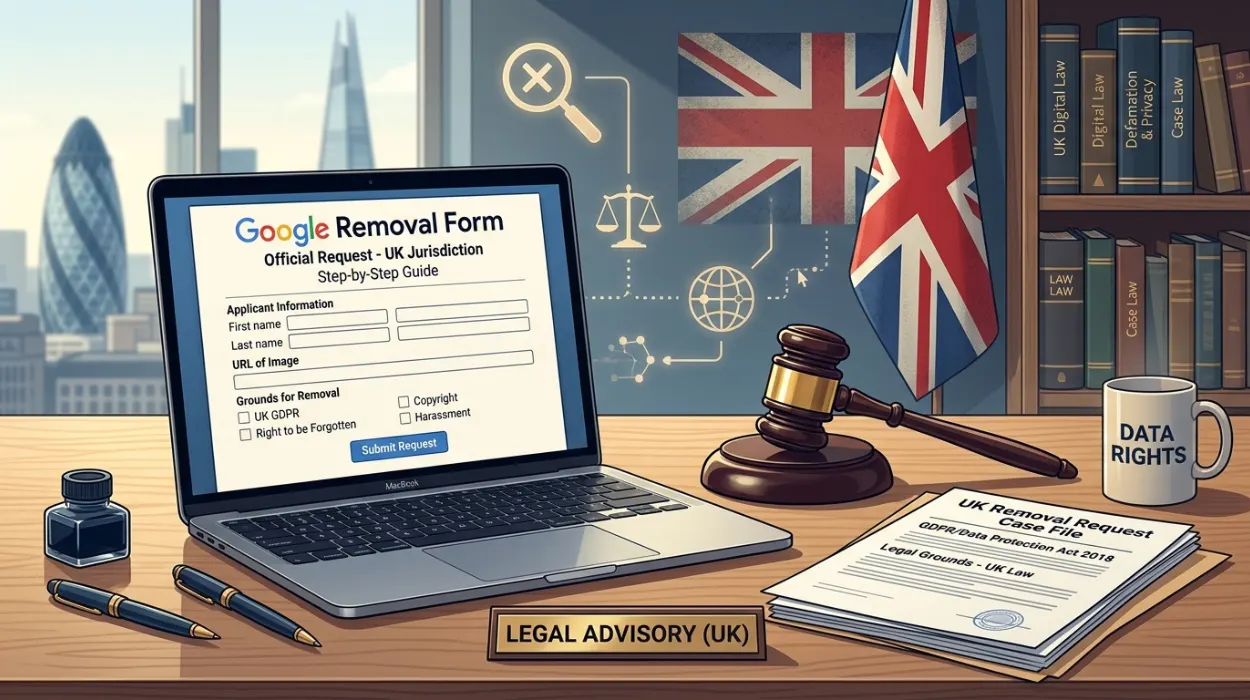
Several routes are available to request Google image removal in the UK, including privacy-based requests, copyright claims, policy violation reports, and removal of outdated or sensitive information. The appropriate route depends on the nature of the image, the legal basis for removal, and the relationship between the image and public interest.
Reputation management strategies differ based on the type of content involved, the authority of the publishing source, and the impact on search visibility. Online reputation control methods are evaluated through their influence on reputation signals, entity credibility, and the long-term composition of search engine results pages.
Which Types of Images Can Be Considered for Removal in the UK?
Images become candidates for removal when their continued visibility conflicts with legal rights, privacy expectations, or platform policies. Search engines and websites evaluate removal requests according to defined standards rather than reputational concerns alone.
Images generally fall into several categories:
- Identify privacy-related images that expose sensitive personal information or create disproportionate privacy impacts.
- Assess copyright-protected images that have been published without authorisation.
- Evaluate policy-violating images that involve explicit, harmful, or prohibited material.
- Review outdated images that no longer serve a legitimate public interest.
Each category follows a different evaluation process and produces different outcomes for search visibility and digital reputation.
How Does Removing an Image From Google Differ From Removing It From a Website?
Removing an image from Google and removing it from a website represent separate reputation management approaches. Both methods influence search visibility, but they operate through different mechanisms.
Website removal eliminates the image at its original source. Search engines eventually recognise the absence of the image and update their indexes accordingly. This approach often produces long-term reductions in visibility.
Google image removal changes the accessibility of visual content within search results without necessarily affecting the original publication. The image remains available on the source website but becomes less discoverable through search queries.
The distinction is important because each approach creates different levels of control over reputation signals and online visibility.
How Do Privacy-Based Removal Requests Operate?
Privacy-based requests operate by evaluating whether an image creates unnecessary or disproportionate harm to personal privacy. These requests rely on legal frameworks and platform policies that recognise the importance of protecting personal information.
Privacy concerns often involve photographs containing sensitive information, personal identifiers, or content that creates an unreasonable intrusion into private life. Search engines examine whether continued indexing remains justified and proportionate.
This route can significantly influence search perception because reducing the visibility of sensitive images alters how users encounter information within search ecosystems.
The effectiveness of privacy-based requests depends on the characteristics of the image and the balance between privacy rights and public interest.
How Do Copyright Claims Compare With Privacy Requests?

Copyright claims and privacy requests represent different legal mechanisms for addressing image visibility. Each approach follows distinct evidential standards and produces different outcomes.
Copyright protection is based on ownership and authorisation. An image creator can challenge the publication of content that has been reproduced without permission.
Privacy requests focus on the rights of the individual depicted or affected by the image. The assessment examines whether continued accessibility remains necessary and proportionate.
Copyright claims frequently produce more direct outcomes because they rely on clear ownership rights. Privacy requests involve broader balancing exercises and therefore depend heavily on context and public interest considerations.
How Do Search Engines Evaluate Image Removal Requests?
Search engines evaluate removal requests by examining legal obligations, policy standards, and the informational value of content. They do not remove images simply because they create reputational concerns.
Search ranking influence is determined by authority, relevance, and engagement signals. Removal requests introduce additional considerations by assessing whether the image remains appropriate for continued indexing.
The evaluation process generally includes:
- Examine the nature of the image by determining whether it violates policies or legal rights.
- Assess public interest by evaluating the informational value of the content.
- Review contextual relevance by considering the relationship between the image and associated content.
- Measure proportionality by balancing accessibility against privacy concerns.
This process demonstrates that image removal decisions involve structured analysis rather than subjective judgements.
How Does Image Removal Compare With Content Suppression Strategies?
Image removal and content suppression represent different methods of managing online reputation. Each approach affects SERP composition and search perception through separate mechanisms.
Image removal directly reduces the visibility of specific content. Successful removal changes search results and decreases the prominence of unwanted visual information.
Content suppression vs content enhancement operates by introducing additional information that competes with existing search results. This strategy seeks to redistribute attention rather than eliminate content.
Removal strategies can produce more immediate changes to image visibility, while suppression strategies depend on sustained authority building and content creation. Their effectiveness therefore varies according to the nature of the reputational issue.
How Does Public Interest Influence Image Removal Decisions?
Public interest is a central factor in determining whether images remain accessible within search ecosystems. Search engines and publishers evaluate whether the image contributes to legitimate public knowledge or accountability.
Images associated with journalism, public records, or significant events often receive greater protection because of their informational value. The existence of reputational consequences alone does not outweigh these considerations.
Public interest assessments therefore create limitations on removal strategies. They explain why some images remain visible despite privacy concerns or reputational impact.
This balancing exercise highlights the complexity of managing visual information within modern search environments.
Which Reputation Management Approach Produces the Most Sustainable Outcome?
Sustainability depends on the relationship between the image, its authority signals, and the long-term objectives of reputation management.
Removal strategies create direct reductions in visibility when successful. They offer long-term benefits because they change the availability or accessibility of the image itself.
Visibility management strategies operate by influencing sentiment distribution and SERP composition. They require ongoing effort because search ecosystems continually reassess authority and relevance signals.
The most sustainable approach therefore depends on the characteristics of the image and the legal or policy routes available for addressing it.
How Do Harmful Images Influence Entity Credibility?
Entity credibility refers to the trust and reliability associated with an individual or organisation within search ecosystems. Images contribute significantly to this perception because visual content receives immediate attention and often shapes first impressions.
A harmful image can become a persistent reputation signal if it consistently appears in search results. The prominence of visual content means that users frequently form opinions before engaging with text-based information.
Search ecosystems therefore treat images as influential components of digital identity. Managing image visibility becomes an important consideration for preserving online credibility and controlling search perception.
Discussions surrounding Remove a Harmful Image From Google UK With Our Image Takedown Service often arise because image visibility can have lasting effects on digital reputation and information accessibility.
How Should Different Removal Routes Be Evaluated?
Different removal routes should be evaluated according to effectiveness, scalability, and sustainability. Each mechanism operates within different legal and technical frameworks.
A structured evaluation generally involves:
- Determine the legal basis by identifying privacy rights, copyright interests, or policy violations.
- Measure reputational impact by assessing how prominently the image influences search perception.
- Compare strategic options by analysing direct removal against visibility management approaches.
- Evaluate long-term outcomes by considering sustainability and future search visibility.
This framework allows reputation management strategies to be assessed according to measurable outcomes rather than assumptions.
Multiple routes exist for requesting Google image removal in the UK, including privacy claims, copyright mechanisms, and policy-based requests. Each approach operates through distinct processes and produces different effects on search visibility and online reputation.
Image removal strategies directly influence SERP composition, while visibility management methods focus on changing sentiment distribution and search perception over time. Understanding these differences is essential when evaluating how visual content contributes to entity credibility and long-term digital reputation.
What are the main ways to request Google image removal in the UK?
Google image removal requests can be made for privacy concerns, copyright infringement, explicit content, or policy violations. The appropriate route depends on why the image appears in search results and whether legal grounds for removal exist.
Can an image be removed from Google without deleting it from the original website?
Yes, an image can be de-indexed from Google Search while remaining on the website where it was originally published. This process reduces search visibility but does not remove the source content itself.
Can privacy laws help remove unwanted images from Google?
UK privacy and data protection laws can support the removal of certain images if they contain sensitive personal information or create a disproportionate impact on an individual’s privacy. Each request is assessed according to its specific circumstances.
How do Google Image Removal Services assess removal eligibility?
Google Image Removal Services review whether an image breaches privacy rights, copyright rules, or Google’s content policies. Companies such as Clear Your Name evaluate how unwanted images affect online reputation and search visibility before identifying possible removal routes.
Why do harmful images remain visible in Google search results?
Harmful images can remain visible because search engines prioritise relevance, authority, and user interest rather than reputational impact. Unless an image violates policies or qualifies for removal under applicable laws, it can continue appearing in search results.