
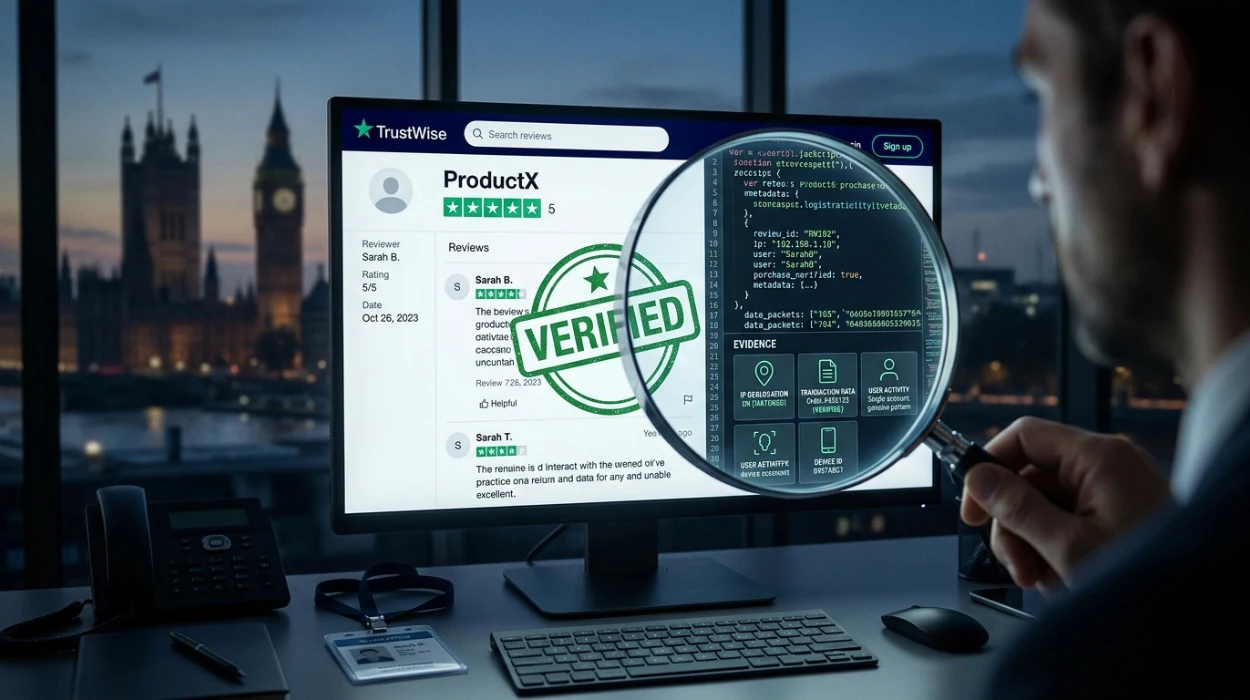
Trustpilot requires evidence that a review breaches its policies before considering removal or restriction. Allegations that a review is fake are insufficient without information that demonstrates policy violations or the absence of a genuine customer experience.
Reputation management strategies differ based on the type of review issue, the source of the information and the effect on digital trust signals. Online reputation control methods are evaluated through their influence on sentiment distribution, search ranking influence and long-term entity credibility.
What Does Trustpilot Consider a Fake Review?
A fake review is a review that does not represent a genuine service or buying experience and breaches the platform’s authenticity requirements. Trustpilot evaluates reviews according to policy standards rather than subjective disagreements between reviewers and businesses.
The platform distinguishes between genuine negative feedback and fabricated content. A critical review can remain visible if it reflects an authentic customer experience, even when the reviewed organisation disputes its accuracy. By contrast, reviews that involve impersonation, fabricated transactions or misleading identities can fall within policy violation categories.
This distinction is important because review removal depends on evidence and policy alignment rather than dissatisfaction with the content of the review itself.
What Evidence Does Trustpilot Require Before Removing a Review?
Trustpilot requires evidence that demonstrates a review breaches its guidelines or lacks authenticity. The platform evaluates information that can establish whether a reviewer had a legitimate interaction with the business.
Evidence frequently includes:
- Provide transaction records that demonstrate no customer relationship existed.
- Present communication histories that show discrepancies between the review and documented interactions.
- Submit identity information that indicates the reviewer used false or misleading details.
- Demonstrate policy violations by identifying prohibited behaviour such as promotional manipulation or coordinated review activity.
Evidence-based assessments strengthen review integrity because they reduce the risk of legitimate customer opinions being removed without justification.
How Does Evidence Compare With Suspicion When Reporting Fake Reviews?
Evidence operates as an objective measure, whereas suspicion reflects an assumption based on observation. Review platforms rely on evidence because reputation systems require consistent and verifiable standards.
Suspicion alone does not establish that a review is fabricated. A review can appear unusual, contain limited detail or express strong criticism while still representing a genuine experience. Trustpilot therefore measures authenticity through available information rather than through perceived intentions.
This approach protects review ecosystems from arbitrary moderation and ensures that reputation signals remain connected to demonstrable information rather than unsupported claims.
How Does Trustpilot’s Review Process Compare With Search Engine Evaluation?

Trustpilot and search engines evaluate information through different mechanisms.
Trustpilot focuses on policy compliance and review authenticity. The platform analyses user behaviour, evidence and guideline adherence to determine whether content remains appropriate for publication.
Search engines evaluate accessibility, authority and relevance. Reviews appearing on major platforms can influence search visibility because review pages often rank for branded searches and contribute to digital footprints.
The distinction is significant because a review removed from a platform can alter search visibility over time, whereas a review that remains online continues influencing entity credibility and sentiment distribution.
Which Types of Reviews Face the Highest Risk of Removal?
Reviews face the highest risk of removal when they demonstrate characteristics associated with policy violations or inauthentic activity.
Reviews Without Evidence of a Customer Relationship
Reviews submitted by individuals who cannot demonstrate a genuine interaction often receive additional scrutiny. Platforms frequently request verification when customer relationships cannot be established.
Reviews Using Misleading Identities
Reviews submitted under false names or impersonated identities create concerns regarding authenticity and policy compliance.
Reviews Linked to Coordinated Behaviour
Unusual review patterns, duplicated wording and organised review campaigns often trigger investigations because they can distort reputation signals and sentiment distribution.
These categories demonstrate that review removal decisions depend on evidence and policy standards rather than review sentiment.
How Do Fake Reviews Influence Search Visibility?
Fake reviews influence search visibility because review platforms contribute directly to search perception and entity credibility. Search engines frequently display review information within branded search results, local listings and knowledge panels.
Negative fabricated reviews can alter public perception by introducing misleading trust signals into search ecosystems. Positive fabricated reviews can create artificial credibility and distort the representation of customer satisfaction.
The visibility of reviews means that even a small amount of fabricated content can influence digital identity. Search ranking influence therefore extends beyond the review platform itself and affects broader reputation management considerations.
How Does Review Removal Compare With Content Suppression Strategies?
Review removal and content suppression address reputation issues through different mechanisms.
Review removal focuses on eliminating information that violates policies or lacks authenticity. Successful removal reduces both accessibility and the long-term effect of the content on digital footprints.
Content suppression vs content enhancement represents a different strategy. Suppression changes SERP composition by reducing the prominence of negative information through the increased visibility of alternative content. It does not remove the original review.
Removal strategies generally produce direct outcomes when policy violations are established, whereas suppression strategies require ongoing management because rankings and search behaviour continuously evolve.
Dive Deeper With Our Expert Guides:
How to Remove Your Data From People Search Sites in the UK Using GDPR Rights
How the UK’s New Fake Review Laws Affect What Businesses Can Have Removed
What Limitations Exist When Reporting Fake Reviews?
Reporting fake reviews involves limitations because evidence standards are intentionally high.
The first limitation is evidential burden. Platforms require objective information that demonstrates policy violations rather than assumptions or dissatisfaction.
The second limitation is access to information. Businesses often possess limited data regarding anonymous reviewers, making verification more difficult.
The third limitation is policy interpretation. A review can contain inaccuracies or opinions that an organisation disputes while remaining compliant with platform rules.
These limitations explain why review disputes often require detailed analysis of authenticity indicators and evidence.
How Do Reputation Management Methods Differ for Fake Review Issues?
Reputation management methods differ according to the characteristics of the review and the desired outcome.
Reactive methods focus on addressing existing reviews through reporting, evidence collection and policy evaluation. Their effectiveness depends on the strength of available information and the nature of the alleged violation.
Organic methods focus on improving overall sentiment distribution and strengthening entity credibility over time. They influence perception by increasing the visibility of authentic and balanced information.
The comparison demonstrates that review-related reputation management requires both immediate responses and long-term strategies that address broader trust signals.
Which Factors Determine the Long-Term Impact of Fake Reviews?
Long-term impact depends on the visibility, authority and persistence of the review content.
Reviews that remain visible on high-authority platforms often influence entity perception for extended periods because users continue encountering them during branded searches. The prominence of these platforms increases their effect on trust signals.
Persistence also affects digital footprints. Search engines continue indexing accessible review content, allowing information to shape perceptions over time. The longer fabricated content remains visible, the greater its potential influence on credibility and public interpretation.
Understanding these factors helps explain why review authenticity and evidence-based moderation are important components of online reputation management.
Why Is Policy Alignment Important in Fake Review Removal?
Policy alignment refers to demonstrating that content breaches the specific rules governing the platform on which it appears. Review removal processes depend on this alignment because platforms enforce guidelines rather than subjective preferences.
Evidence that directly corresponds with policy requirements creates stronger removal arguments than general complaints regarding unfairness or reputational damage. Platforms evaluate whether behaviour violates defined standards rather than whether a review is inconvenient or harmful.
This framework contributes to consistency and fairness within review ecosystems. It also demonstrates why successful review disputes depend on understanding both platform policies and evidence requirements.
Trustpilot requires objective evidence before removing a fake review submitted in the UK. The platform evaluates authenticity through policy standards, behavioural indicators and information that demonstrates whether a review reflects a genuine customer experience.
Review removal differs from broader reputation management strategies because it focuses on policy compliance rather than sentiment alone. The interaction between review platforms, search visibility and digital trust signals demonstrates that fake reviews can influence entity credibility and online perception for extended periods.
Understanding evidence requirements, policy alignment and the limitations of review reporting provides a clearer framework for evaluating fake review disputes and their impact on online reputation.
What evidence does Trustpilot require to remove a fake review?
Trustpilot generally requires evidence showing that the review breaches its guidelines or does not come from a genuine customer experience. This can include transaction records, communication histories or information proving the reviewer had no relationship with the business.
Can I remove a fake Trustpilot review just because it is negative?
No. Negative reviews are not removed simply because they are critical. Trustpilot evaluates whether the review violates its policies or contains misleading or inauthentic information.
How do I report a fake review on Trustpilot in the UK?
A review can be reported through Trustpilot’s reporting process by identifying the relevant policy concern and providing supporting evidence. The platform then reviews the information before deciding whether action is appropriate.
How long does Trustpilot take to review a fake review report?
Review times vary depending on the complexity of the case and the evidence provided. Additional information or verification requests can extend the assessment process.
What are Fake Reviews Removal Services?
Fake Reviews Removal Services assess suspicious reviews, gather supporting evidence and evaluate whether content breaches platform policies. Companies such as Clear Your Name provide assistance with online reputation issues involving potentially fake or misleading reviews.