Cleaning up your name online and removing harmful content affecting your career requires a structured approach to reputation signals, SERP composition, and digital footprint management. Reputation management strategies differ based on how they address removal, suppression, and enhancement of reputation content.
Online reputation control methods are evaluated through their impact on search visibility, entity credibility, and user perception. This article compares different approaches, evaluating their effectiveness, risk exposure, and long-term impact on reputation signals.
How do reputation management methods compare?
Reputation management methods differ in how they address removal, suppression, and enhancement of reputation content. Each method operates within search ecosystems to influence how search engines rank and display content.
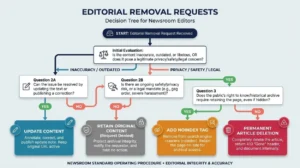
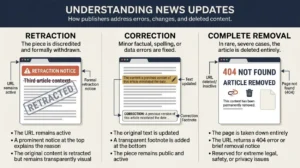
Removal focuses on deleting content that violates platform rules, such as defamatory or false information. This method directly reduces negative signals but depends on policy enforcement.
Suppression uses SEO techniques to push negative content down SERPs, replacing it with positive or neutral content. This method is scalable but requires ongoing effort to maintain top rankings.
Dive Deeper With Our Expert Guides and Related Blog Posts:
How Google ranks news articles and how to check what it shows about you
How to remove or suppress negative news articles and control search results effectively
Enhancement builds strong positive signals through content creation, reviews, and social proof. This method supports long-term reputation but is slower to show results.
Comparative analysis shows that removal offers immediate impact but limited scope. Suppression provides broad reach but requires continuous optimization. Enhancement builds sustainable credibility but depends on content quality and audience engagement.
How does online reputation control work in search ecosystems?
Online reputation control operates by aligning content with search engine ranking signals to influence how entities appear in SERPs. Search engines interpret reputation based on the volume, quality, and consistency of content, as well as user engagement metrics.
Search engines evaluate authority signals like domain expertise, backlinks, and site age. Trust signals, such as HTTPS, secure domains, and verified profiles, contribute to credibility. These signals shape how content is interpreted and ranked.
User behavior also influences reputation control. Click-through rates, dwell time, and social engagement are behavioral signals that search engines measure. Higher engagement increases content prominence, reinforcing reputation signals.
This mechanism allows reputation managers to strategically position content to control perception. However, it also exposes risks, such as over-optimization or non-compliance with platform rules.
Comparative evaluation shows that reputation control is effective when balanced with authenticity and policy adherence. Scalable strategies combine technical SEO with genuine content creation.
How do removal and suppression strategies differ?
Removal and suppression strategies differ in how they address negative content. Removal targets complete deletion, while suppression aims to reduce visibility without elimination.
Removal operates by leveraging platform policies, legal frameworks, or content policies to request deletion. This method is effective for clear violations but limited in scope.
Suppression operates by creating and optimizing positive content to rank higher for relevant queries. This includes blog posts, profiles, and social media to occupy SERP positions.
Strengths of removal include immediate impact and reduced risk exposure. Limitations include dependence on policy enforcement and inability to act on opinion-based content.
Strengths of suppression include scalability and adaptability. It works for opinion-based content and supports long-term reputation. Limitations include the need for ongoing optimization and potential over-optimization risks.
Comparative analysis shows that removal and suppression are complementary. Removal addresses acute issues, while suppression supports long-term reputation control.
How do short-term and long-term strategies compare?
Short-term and long-term reputation strategies differ in focus and impact. Short-term strategies address immediate issues, while long-term strategies build sustainable reputation.
Clean up your online reputation and remove negative articles to improve job prospects provides a comprehensive framework for evaluating reputation management approaches. Short-term strategies include content removal, public statements, and crisis response. These methods aim for rapid impact and are evaluated by speed and effectiveness.
Long-term strategies focus on content creation, relationship building, and consistent messaging. These methods build trust signals and sentiment distribution over time. Short-term strategies are effective for crisis management but can create dependency on reactive measures. Long-term strategies support resilience and adaptability but require sustained effort.
Comparative evaluation shows that short-term strategies are best for acute issues, while long-term strategies are essential for sustainable reputation. Strategic planning should integrate both approaches.
How does sentiment distribution affect reputation?
Sentiment distribution refers to how positive, negative, and neutral reputation signals are distributed across search ecosystems. This distribution shapes how search engines and users interpret reputation.
Search engines analyze sentiment through content analysis, user reviews, and social media. Positive sentiment distribution supports credibility and trust. Negative sentiment distribution signals risk.
Sentiment distribution is influenced by content creation, reviews, and social engagement. Each platform contributes to the overall sentiment balance.
Comparative analysis shows that sentiment distribution is critical for reputation management. A balanced distribution supports credibility, while skewed distribution indicates risk exposure.
How do Article Removal Services operate?
Article removal services operate by identifying harmful content, evaluating policy compliance, and requesting removal based on platform rules. These services focus on specific content removal without broader reputation management.
Article removal services evaluate content based on policy, legality, and platform rules. They submit removal requests and monitor enforcement.
Strengths include targeted impact and specialized expertise. Limitations include dependence on policy enforcement and inability to address broader reputation issues.
Comparative evaluation shows that article removal services complement broader reputation strategies. They are effective for specific content removal but limited in scope.
How can you evaluate reputation management approaches?
Evaluating reputation management approaches requires comparing effectiveness, risk exposure, and sustainability. Each method must be analyzed against these criteria.
Effectiveness measures impact on search visibility and user perception. Removal offers immediate impact, suppression provides broad reach, and enhancement builds sustainable credibility.
Risk exposure evaluates dependency on policy enforcement, compliance, and platform rules. Removal carries lower risk but limited scope. Suppression and enhancement require ongoing optimization.
Sustainability measures long-term impact. Suppression and enhancement support long-term reputation, while removal addresses acute issues.
Comparative analysis shows that strategic planning should integrate multiple methods. This approach ensures balanced, resilient reputation management.
FAQs:
How can I clean up my name online to protect my career?
Cleaning up your name online involves identifying harmful search results, managing or removing damaging content where possible, and reinforcing positive reputation signals through profiles, articles, and references. The process focuses on search visibility, reputation signals, and sentiment distribution around your name and role.
How do negative articles about me affect my job prospects?
Negative articles can reduce your search visibility for professional signals and shift employer perception toward risk, conduct issues, or controversy before they review your CV. If they appear in top positions of a name search, they often dominate first impressions in hiring decisions.
Can harmful content like bad reviews or news be removed from the internet?
Harmful content can sometimes be removed if it violates platform rules, copyright, privacy, or defamation‑style standards, or if it is removed through editorial policy or negotiation. Not all content qualifies for removal, so alternatives such as suppression and reputation enhancement often complement removal efforts.
What is the difference between removing content and suppressing it in search results?
Removing content eliminates the item from the indexing environment, while suppressing content pushes it further down in SERPs and under more positive signals. Suppression is more scalable and long‑term but does not delete the underlying page.
How does cleaning up my online reputation benefit long‑term career growth?
Cleaning up your online reputation improves the balance of reputation signals, SERP composition, and sentiment distribution around your name, which supports higher trust and lower perceived risk. Over time, that consistency in positive signals strengthens professional credibility in recruitment, promotions, and industry visibility.