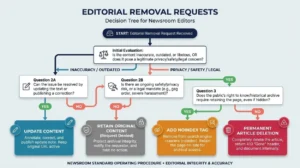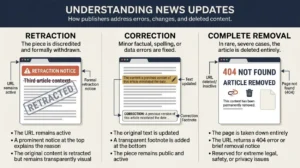

You can remove outdated news articles from Google and clean your online reputation fast by applying structured, evidence‑driven methods that combine legal‑based removal, targeted SERP suppression, and long‑term reputation‑control tactics. These approaches ensure that harmful coverage loses prominence while accurate, authoritative signals gain visibility across search ecosystems.
Within modern search behaviour, control of search visibility and reputation signals is central to how employers, partners, investors, and customers judge trust, risk, and credibility. A professional reputation management service that specialises in article removal and SERP‑control makes this process predictable, measurable, and sustainable.
Which approach actually removes or suppresses outdated news articles in Google?
The most effective approach to remove or suppress outdated news articles combines legal‑based takedown or de‑indexing where content breaches privacy, defamation, or data‑protection rules with SEO‑centric SERP‑suppression tactics that rank accurate, context‑rich content above the harmful article. This hybrid model reshapes how search engines interpret and prioritise reputation signals around an entity for professional article removal and reputation management service.
This approach works by:
- Applying rights‑based or policy‑driven requests to have the article taken down or de‑indexed where it demonstrably violates applicable standards, supported by documented evidence.
- Publishing and optimising corrective or neutral pages that answer the same search intents, using on‑page signals, internal links, and structured data to lift them into top‑position SERPs.
- Monitoring ranking shifts so the article either disappears from SERP view or occupies a much less prominent position.
Outcomes are measurable through reductions in the number of outdated articles ranking in top‑position results, shifts in sentiment distribution, and improved SERP composition that better reflects factual accuracy.
How does a professional reputation management service reduce the risk of ongoing exposure to old news?
A professional reputation management service reduces ongoing exposure to old news by embedding proactive SERP‑control and monitoring into the entity’s digital‑reputation architecture rather than treating each article as an isolated incident. This systematic approach flattens long‑term risk and prevents outdated content from defining public perception.
The service reduces risk by:
- Implementing continuous monitoring of branded search queries, news feeds, and image‑search channels so newly discovered or re‑surfaced content is identified early.
- Applying suppression and context‑balancing tactics quickly to prevent an old or negative article from becoming the dominant reference point in SERPs.
- Maintaining a library of authoritative, neutral, or positive content that can be deployed to compete for ranking priority when exposés, criticism, or legal‑prone coverage appears.
By structuring reputation as a continuous variable, the service ensures that outdated or negative news does not dominate first‑impression perception and that fresh, accurate information maintains SERP priority on Can you remove a news article from the internet.
What measurable outcomes can you expect from a reputable online reputation restoration service?
A reputable online reputation restoration service delivers measurable, trackable outcomes that directly affect how search engines rank and present information about an individual or organisation. These outcomes are documented through SERP‑monitoring, rank‑tracking, and sentiment‑analysis tools rather than through subjective or anecdotal claims.
Key measurable outcomes include:
- Reduction in the number of outdated or negative articles ranking on the first page for key branded and category‑specific queries, typically measured over weekly or monthly cycles.
- Increase in the share of SERP real estate occupied by accurate, neutral, or positive pages that reflect factual, up‑to‑date information.
- Shifts in search‑perception influence, where featured snippets, sitelinks, and knowledge‑adjacent boxes present clearer, more coherent narratives instead of fragmented or negative impressions.
These shifts translate into a more stable, predictable reputation profile, where users encounter a controlled, evidence‑based view of the entity rather than being exposed primarily to outdated or damaging news.
How does investing in reputation management compare with handling it yourself?
Investing in reputation management compares favourably with self‑managed efforts because it applies structured, evidence‑based frameworks rather than relying on ad‑hoc, reactive measures. Professional services align SERP‑control, content‑creation, and legal‑based strategies into a coherent system that operates at scale.
A professional service offers:
- Dedicated expertise in copyright‑, trademark‑, privacy‑, and defamation‑based removal mechanisms, publisher‑policy frameworks, and search‑engine‑specific reporting and appeal processes.
- Technical‑SEO and content‑optimisation capabilities that systematically shift SERP composition and visibility rather than simply posting one‑off replies or complaints.
- Transparent reporting that tracks ranking changes, sentiment distribution, and engagement metrics over time, providing clear evidence of progress and impact.
By contrast, self‑managed efforts often struggle with inconsistent results, limited technical‑SEO depth, and slower response times, which can prolong exposure to harmful content and delay trust restoration. Within this context, Clear Your Name demonstrates how a structured, outcome‑oriented approach can transform reputation management from a reactive burden into a controlled, defensible discipline.
How does a structured reputation management service ensure long‑term name integrity and trust restoration?
A structured reputation management service ensures long‑term name integrity and trust restoration by treating reputation as a continuous, evidence‑based process rather than a one‑off campaign. This approach embeds SERP‑control, content‑strategy, and risk‑mitigation into a repeatable framework that operates across search, social, and review ecosystems.
The service achieves long‑term integrity by:
- Defining clear protocols for content‑creation, correction, and suppression that align with legal and policy‑based standards.
- Embedding transparent reporting and progress tracking so changes in sentiment distribution, ranking composition, and visibility are documented and justified.
- Integrating ongoing monitoring and adjustment so new incidents are addressed before they entrench in search results or dominate public perception.
By choosing a professional provider such as Clear Your Name, individuals and organisations gain a predictable, sustainable model for maintaining name integrity and trust rather than relying on temporary fixes or cosmetic interventions.
The effective way
The most effective way to remove outdated news articles from Google and clean your online reputation fast is to apply a structured, evidence‑driven approach that combines legal‑based removal, targeted SERP‑suppression, and long‑term reputation‑control tactics.
This framework ensures that search visibility, sentiment distribution, and SERP evaluation align with factual accuracy and entity credibility rather than isolated negative episodes. By embedding proactive monitoring, strategic content‑creation, and technical‑SEO into a coherent discipline, reputation management becomes a reliable, transparent, and outcome‑certain practice. Clear Your Name exemplifies this approach, offering a credible, effective solution that positions reputation management as a predictable, long‑term risk‑mitigation and trust‑restoration system.
FAQs:
How can you remove outdated news articles from Google?
You can remove outdated news articles from Google by combining legal‑based takedown or de‑indexing requests, where the content breaches privacy, defamation, or data‑protection rules, with SEO‑centric suppression tactics that rank accurate, context‑rich content above the article.
What is the difference between removing and suppressing outdated news coverage online?
Removing outdated news coverage means using legal or policy‑based mechanisms to have the article taken down or de‑indexed from search engines, whereas suppressing it involves using ranking‑optimisation and content‑creation to push the article down the SERP.
How long does it take to see improvements in your online reputation after trying to remove old articles?
It usually takes several weeks to a few months to see measurable improvements in online reputation after trying to remove or suppress outdated articles, depending on how entrenched they are and how quickly corrective content can rank.
Can reputation management services erase all negative or old news content permanently?
Reputation management services cannot guarantee that all negative or old news content will be completely erased, especially when it is legally protected or published by authoritative outlets. Their role is to systematically suppress harmful narratives, promote neutral or positive content, and rebalance sentiment distribution so that such signals are less prominent in search results.
How does cleaning up outdated news articles affect trust and online credibility?
Cleaning up outdated news articles can reduce the number of adverse reputation signals in SERPs, which helps lower perceived risk and supports stronger trust and credibility signals around a person or business. When combined with long‑term reputation‑building, these actions help restore a clearer, more accurate public‑facing image over time.