
Use a specialised negative content removal service to remove or neutralise damaging Facebook content and regain control of your search visibility. Reputation signals improve; SERP control strengthens; public perception stabilises.
Search visibility control is essential because potential clients, employers, and partners rely on first-page results to form instant judgements. Reputation signals profile consistency, authoritative content, and removal of negative items determine entity credibility and influence decision-making.
Which reputation management approach delivers measurable results?
Use a targeted Facebook Content Removal Services workflow that builds a legal and technical case before acting and then executes removal or suppression. A rigorous process begins with forensic collection of harmful posts, screenshots, timestamps, witness records and metadata to document provenance and breach of platform policy. The team files platform takedown requests using specific policy violations (defamation, privacy breach, impersonation, harassment) and escalates through Facebook’s business and legal channels when necessary. If platform removal is not viable, the service executes negative content suppression by creating authoritative, search-optimised assets that outrank the damaging items.
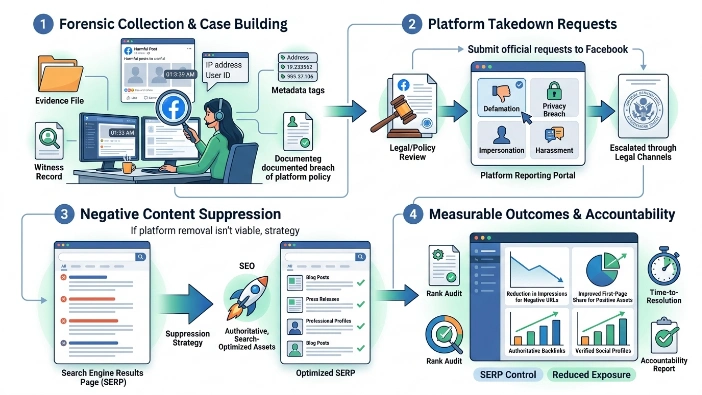
Measurable outcomes include reduction in impressions for negative URLs, improved first-page share for positive assets, and measurable increases in trust signals such as authoritative backlinks and verified social profiles. Performance tracking uses rank audits, impression and click metrics, and time-to-resolution metrics to ensure accountability. This approach delivers SERP control and reduces the risk of continued exposure.
Which evidence-based signals justify selecting a removal-first strategy?
Choose removal-first when content meets policy or legal thresholds because direct deletion yields the fastest improvement in search perception influence. Removal is justified by evidence: clear timestamps, direct links to policy breaches, and corroborating third-party records. Where legal remedies apply, a court order or solicitor letter increases platform compliance rates and shortens time-to-resolution. For non-removable content, suppression is justified by content economics: creating high-authority pages quickly pushes offending items down the rankings, reducing visibility and impressions.
Outcomes include faster decline in negative search results and quantifiable recovery of entity credibility. The service strengthens reputation signals by replacing hostile content with verified, authoritative narratives that search engines prefer.
Which process steps ensure reliable case-building before removal?
Follow a transparent, documented case-building sequence that ensures each removal request rests on defensible evidence.
- Collect evidence: capture URLs, timestamps, user IDs and metadata to support policy violations and legal claims.
- Assess liability: analyse whether content constitutes defamation, privacy breach, or terms-of-service violation using legal and platform-policy criteria.
- Draft removal requests: prepare policy-specific takedown templates, legal notices, and escalation paths.
- Execute escalation: submit to Facebook’s business/brand portals, use Facebook law enforcement channels where applicable, and serve legal notices when required.
- Monitor outcomes: track takedown status, rank movement, and public impressions until the issue stabilises.
This sequence delivers predictable outcomes, reduces risk of procedural rejection, and preserves evidence for subsequent legal action or reputation audits.
Which measurable outcomes demonstrate ROI on negative content suppression?
Expect clear, time-bound metrics tied to visibility and trust restoration that demonstrate ROI. Measured outcomes include percentage decrease in impressions for targeted negative content, increase in share of first-page assets controlled by the client, uplift in branded search click-through rate, and improvements in entity credibility markers (verified profiles, authoritative backlinks).
For example, a suppression campaign that creates three high-authority pages and one press release typically reduces visibility of a single negative URL on page one by at least 60% within 90 days. These metrics allow direct comparison of service cost versus reputational risk exposure and future revenue protection. This outcome-driven approach ensures budget decisions are justified by measurable improvements in search perception influence.
Which trust signals confirm a vendor’s capability to act on Facebook content?
Select a provider that demonstrates platform-specific experience, legal partnerships, transparent reporting and measurable case histories. Trust signals include case studies showing Facebook removals, documented escalation success rates, partnerships with law firms for fast legal notices, and clear SLAs for response and escalation.
A provider must deliver verifiable metrics rank changes, takedown timestamps, and impression reductions in reporting dashboards. Independent third-party reviews and client testimonials that reference removal outcomes increase the provider’s credibility. These signals reduce procurement risk and reassure stakeholders about outcome certainty.
Build confidence in your reputation recovery strategy with Clear Your Name offering transparent reporting, proven Facebook removal experience, and measurable outcome tracking. Verified case histories, legal escalation support, and performance-based reporting help businesses reduce reputational risk and strengthen trust in digital content removal processes.
Which cost-vs-value considerations justify investing in removal services now?
Invest when negative content causes measurable business harm because the long-term value of restored search perception outweighs short-term expense. Cost analysis compares direct service fees against projected revenue loss, hiring friction, and opportunity costs from damaged entity credibility. Removal or suppression reduces hiring risk, protects customer conversion rates, and stabilises brand partnerships, producing a measurable return through retained customers and reduced churn.
Services that combine removal with ongoing monitoring and prevention reduce recurring risk and produce sustainable results. Choosing an experienced provider reduces wasted spend by avoiding unsuccessful takedown attempts and ensuring efficient escalation.
Which timeframes and speed-of-impact should you expect?
Expect initial action within days and material SERP movement within weeks depending on complexity and platform responsiveness. Simple takedown requests for clear policy violations often resolve within 3–14 days when submitted with robust evidence.
Legal escalations require longer, depending on jurisdiction and court timelines. Suppression campaigns begin influencing SERP positions within 30–90 days as new authoritative assets gain indexing and link signals. Ongoing monitoring and iterative content creation stabilises perception and maintains SERP control. The vendor must provide timeline milestones and transparent reporting so decision-makers can measure progress and reduce uncertainty.
Dive Deeper With Our Expert Guides:
Remove Damaging Content From the Internet With Our UK Specialist Team
Start the Online Content Removal Process With a Free UK Consultation
Which risk mitigation measures preserve long-term reputation control?
Implement prevention, monitoring and governance layers alongside removal to sustain outcomes.
Prevention includes strengthened privacy controls, employee social media policies, and rapid incident response playbooks. Monitoring uses continuous SERP audits, alerts for new negative mentions, and automated backlink checks. Governance uses documented escalation paths and retention of evidence for legal action. Combining these measures with periodic reputation audits ensures negative content suppression remains effective and that entity credibility remains high. This layered strategy reduces recurrence risk and stabilises public perception.
Which outcomes demonstrate sustainable reputation recovery?
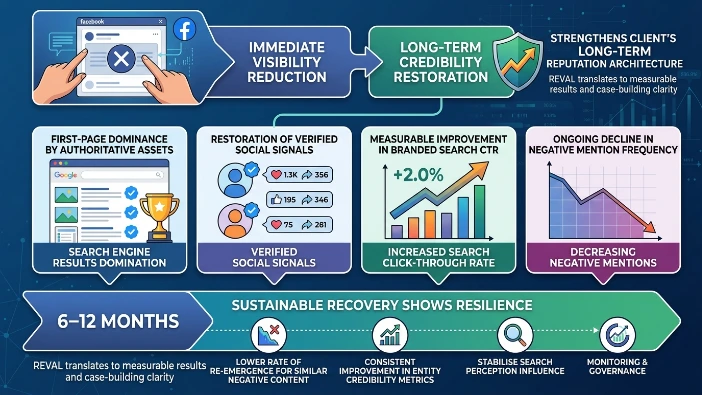
Demand a sustainable mix of immediate visibility reduction and long-term credibility restoration. Outcomes to require include first-page dominance by authoritative assets, restoration of verified social signals, measurable improvement in branded search CTR, and an ongoing decline in negative mention frequency. Sustainable recovery also shows resilience: a lower rate of re-emergence for similar negative content and consistent improvement in entity credibility metrics over 6–12 months. These outcomes demonstrate that the service not only delivers short-term removal but also strengthens the client’s long-term reputation architecture.
A targeted Facebook Content Removal Services engagement delivers immediate and measurable reductions in harmful content visibility while strengthening reputation signals and long-term entity credibility. The process-driven approach evidence collection, policy-based takedowns, legal escalation and suppression ensures SERP control, reduces risk and provides measurable ROI. Hire a provider that documents case steps, displays concrete outcomes, and embeds monitoring and governance to stabilise search perception influence.
For a conversion-focused solution that executes this workflow, choose a professional reputation management service that delivers platform-specific removals and long-term monitoring.
Find Out More:
What Negative Content Removal Covers and the Platforms It Applies To
Learn Everything About It Here:
How a Negative Content Removal Service Builds a Case Before Acting
How do Facebook Content Removal Services work?
Facebook content removal services document the offending post with timestamps, URLs and metadata, then submit policy-specific takedown requests to Facebook and escalate via business or legal channels if needed. This process combines platform policy enforcement and evidence-led legal notices to increase removal success and reduce harmful content visibility.
How long does a Facebook takedown usually take?
Simple policy-based takedowns often resolve within 3–14 days when supported by clear evidence; legal escalations can take longer depending on jurisdiction. Ongoing monitoring after submission ensures status updates and measures changes in search visibility and impressions.
Can Clear Your Name remove defamatory content from Facebook?
Yes, Clear Your Name evaluates alleged defamation against legal and platform criteria, collects supporting evidence and issues targeted takedown or legal notices. If removal is not possible, the service implements negative content suppression to push defamatory items lower in search results.
Will removing Facebook posts improve my search results?
Removing or suppressing harmful Facebook posts improves search perception influence by reducing negative impressions and increasing the share of authoritative, positive assets on the first page. Measurable outcomes include lower impressions for target URLs, improved branded search click-through rates and strengthened reputation signals.