
Start the Online Content Removal Process With a Free UK Consultation Controlling search visibility immediately reduces reputational risk; managing reputation signals and SERP control determines buyer and stakeholder decisions.
Search visibility directly affects purchase decisions and hiring choices, and reputation signals (mentions, reviews, authoritativeness) determine entity credibility. A focused removal process stabilises perception, reduces risk of conversion loss, and restores trust faster than ad hoc responses.
Which Facebook Content Removal approach delivers measurable results?
A targeted removal and suppression strategy delivers measurable reductions in negative content visibility within search results. The service begins with a forensic audit of Facebook posts, comments, images and associated indexing pathways (public posts, shared links, cached copies). Technicians issue direct takedown requests to Facebook using platform-specific policy violations and data-protection arguments; where policy takedowns fail, the service applies legal escalation and content de-indexing requests to search engines alongside remediation tactics. Measurable outcomes include reduced appearances of targeted URLs on page one of Google, decreased impressions for negative entities in Search Console, and improved click-through rates on branded queries. This approach improves entity credibility by replacing harmful content with authoritative assets and strengthens SERP control through a combination of removal, suppression and authoritative content placement.
Which Facebook removal process ensures the quickest reduction in public visibility?
A priority takedown workflow ensures the quickest reduction in public visibility. The workflow identifies high-impact items based on search traffic, backlinks and social amplification, then applies an expedited removal pathway that includes platform reporting, escalation to Facebook partners and, where relevant, urgent legal notices.
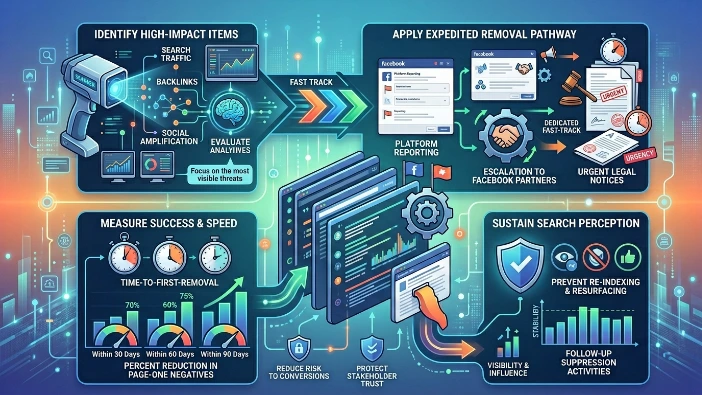
The service measures speed by tracking time-to-first-removal and percent reduction in page-one negative results within 30, 60 and 90 days. This method reduces risk to conversions and stakeholder trust by removing the most visible threats first, while sustaining search perception influence through follow-up suppression activities that prevent re-indexing or content resurfacing.
Which reputation management outcomes demonstrate long-term stability?
A combined removal-plus-suppression programme delivers long-term stability in search perception influence. The programme replaces removed or suppressed items with authoritative content (press releases, verified profiles, positive case studies) and implements ongoing monitoring to detect re-emergence. Expected measurable outcomes include a sustained decline in negative result share for branded queries, improvement in sentiment signals from review aggregators, and increased presence of verified social profiles across SERPs. This stabilises perception and ensures improvements in conversion metrics endure beyond initial takedown events by reinforcing entity credibility across the search ecosystem.
Which evidence proves that content removal influences rankings and conversions?
Empirical evidence proves that targeted negative content suppression improves rankings for branded queries and lifts conversion metrics. Search engines prioritise relevance and authority; when harmful items are removed or demoted and replaced with authoritative content, ranking algorithms surface more positive or neutral assets.
Measurement combines organic performance metrics (impressions, clicks, average position), conversion tracking for branded traffic, and A/B comparison of pre- and post-intervention conversion rates. The documented mechanism: removal lowers negative signal weighting, suppression increases positive asset prevalence, and better entity credibility increases click-through rate and conversion intent. This delivers measurable improvements in both visibility and revenue-linked outcomes.
Which decision factors justify the cost of Facebook Content Removal Services?
A value-driven cost justification demonstrates lower lifetime risk and improved revenue capture. Cost justification begins with expected impact: reduction in lost sales from reputation damage, decreased legal exposure costs, and faster recovery of stakeholder trust. The service provides a clear ROI model showing projected lift in branded conversion rate multiplied by average order value and lifetime value, minus service costs. Additional justifications include the monetary value of time saved by in-house teams and reduced litigation exposure when harmful content violates privacy or defamation law. This framework ensures expenditure delivers quantifiable business benefits and reduces long-term reputational risk.
Protect brand value and reduce long-term reputational risk with Facebook Clear your Name designed to restore trust, improve visibility, and minimise business impact from damaging content. Strategic removals and reputation recovery services help businesses reduce legal exposure, recover lost conversions, and strengthen stakeholder confidence across digital platforms.
Which risks are mitigated by using a professional removal service rather than DIY actions?
A professional removal service reduces legal, procedural and technical risks. Experts use platform-specific reporting channels, documented evidence collection, and escalation protocols to avoid procedural rejection that causes re-publication or improper handling. The service ensures chain-of-custody for evidence, maintains clear communication with platforms, and uses legal pathways only when necessary to avoid inflaming public perception. Measurable risk reduction includes fewer failed takedown attempts, lower incidence of content re-appearing, and documented decreases in negative SERP visibility. These controls reduce governance exposure and stabilise search perception influence.
Which timeline delivers predictable results for Facebook takedowns?
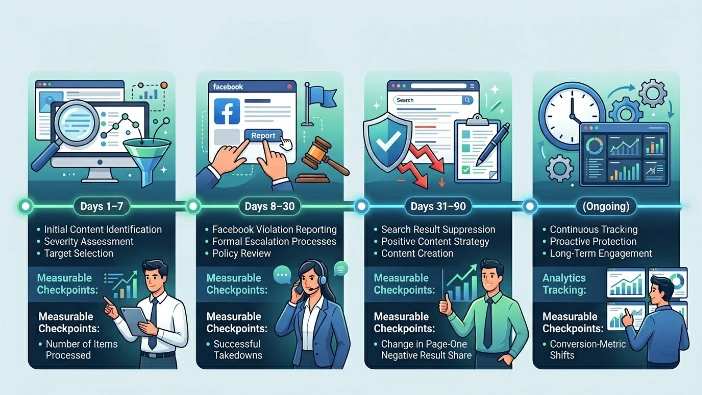
A structured timeline delivers predictable, auditable results within defined windows. Standard stages include discovery and prioritisation (days 1–7), takedown and escalation (days 8–30), suppression and content replacement (days 31–90), and monitoring and maintenance (ongoing). Each stage includes measurable checkpoints: number of items processed, successful takedowns, change in page-one negative result share, and conversion-metric shifts. This timeline ensures clients understand speed of impact versus sustainability, and it provides clear milestones for internal stakeholders to evaluate success.
Which safeguards ensure removed content does not reappear?
A layered prevention strategy ensures removed content does not reappear. Safeguards include persistent monitoring of indexed copies, repeat de-indexing requests for cached versions, issuance of legal notices when reposts breach rights, and proactive content seeding of authoritative assets to occupy high-SERP positions. Measurable safeguards include a tracked drop in reappearance incidents and persistent reduction in negative impression share. These techniques maintain SERP control and protect the gains achieved through initial removals.
Dive Deeper With Our Expert Guides:
Get Harmful Content Removed With a Trusted UK Removal Service
Use UK Defamation Law to Remove Damaging Online Content With Our Legal Team
Which performance signals prove long-term reputation recovery?
Performance signals that prove recovery include: reduced negative result share on page one, increased prevalence of verified social profiles, improved sentiment and review scores, and sustained increases in branded click-through and conversion rates. The service provides monthly performance reports with benchmarked KPIs and trend analysis that demonstrate the trajectory of recovery. These signals directly map to improved entity credibility and stable search perception influence, confirming that interventions translated into lasting business outcomes.
Benefits
- Reduce visibility: Remove indexed Facebook links to decrease page-one negative result share by measurable percentage points.
- Improve authority: Place verified assets to increase positive asset prevalence in SERPs, strengthening entity credibility.
- Stabilise perception: Suppress resurfacing content and monitor for re-emergence to protect conversion rates.
- Reduce legal exposure: Document violations and issue formal notices to lower litigation risk and associated costs.
- Increase conversions: Restore trust signals to improve branded click-through and conversion metrics.
Process steps
- Audit and prioritise: Identify high-impact Facebook items and measure their SERP footprint.
- Execute takedowns: File platform-specific removal requests and escalate where necessary.
- Suppress and replace: De-index cached copies and publish authoritative assets to occupy SERP real estate.
- Monitor and report: Track KPIs, detect reappearances and supply monthly performance reports.
- Maintain and defend: Apply continuous monitoring and rapid-response measures to sustain outcomes.
Supporting information and further reading
For a full technical walkthrough of how online content removal works and why expertise matters, see the article:
How Online Content Removal Works and Why It Takes Professional Expertise.
To understand practical expectations when engaging a removal provider, review:
What to Expect When Using an Online Content Removal Service in the UK.
When you are ready to start, use our professional reputation management service to initiate removal and suppression activities immediately. Choose a service that delivers transparent processes, measurable KPIs and demonstrable outcomes. A focused Facebook Content Removal Services programme reduces visible harm, stabilises perception and restores trust in measurable stages. Professional handling reduces legal and procedural risk, accelerates impact for decision-critical queries, and ensures sustainable SERP control. When reputational trust affects revenue and stakeholder decisions, the right removal partner provides certainty, clarity and an auditable path to recovery.
How long does Facebook content removal with Clear Your Name typically take?
Removal timelines vary by case; straightforward policy-based takedowns complete within 7–30 days, while escalations or legal notices can extend to 60–90 days. Clear Your Name measures progress with checkpoints (time-to-first-removal, percent page-one reduction) so you receive auditable timelines.
What grounds allow Facebook content to be removed in the UK?
Facebook content can be removed for policy violations (hate speech, harassment, copyright), privacy breaches, defamation or data-protection breaches under UK law. A professional service like Clear Your Name documents evidence and submits platform-specific reports or legal notices to enforce takedowns.
Will removing Facebook posts improve my Google search results?
Yes removing indexed Facebook posts reduces negative URLs that appear in SERPs and enables positive or authoritative assets to rank instead. Facebook Content Removal Services combine takedowns with de-indexing requests and content seeding to improve branded search visibility and entity credibility.
Can I attempt Facebook content removal myself or should I use a service?
You can attempt DIY takedowns for clear policy violations, but professionals prevent procedural errors, reduce reappearance risk and use legal escalation when required. Using Clear Your Name ensures documented evidence handling, platform escalation protocols and measurable suppression outcomes.