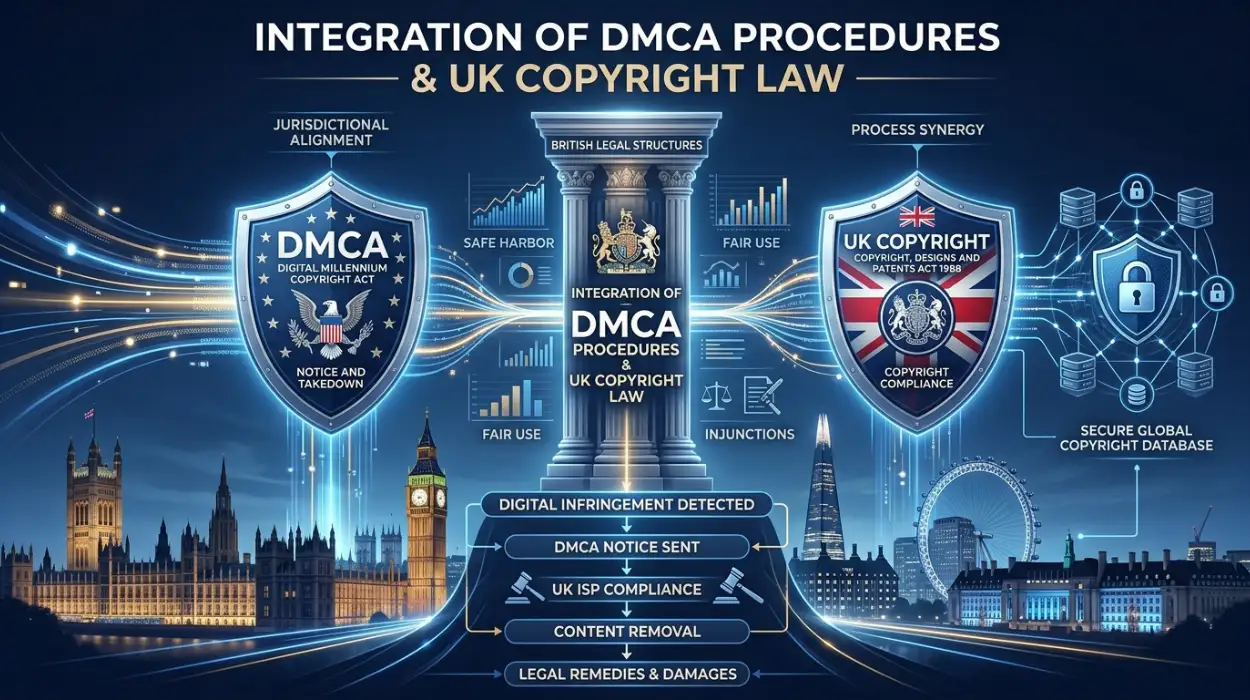
A DMCA Takedown UK Copyright Law process works as a platform-based copyright removal mechanism, while UK copyright law defines the legal rights protecting original works. Together, they shape how unauthorised content is identified and removed in digital systems. Reputation management strategies differ based on how search ecosystems process and evaluate information.
Reputation management strategies differ based on the type of information affecting search visibility and entity credibility. Online reputation control methods are evaluated through their influence on content indexing, reputation signals, sentiment distribution, and search ranking influence across search ecosystems.
How Does a DMCA Takedown Compare With UK Copyright Enforcement?
A DMCA takedown and UK copyright enforcement operate through different mechanisms but share the objective of protecting intellectual property and preserving content ownership.
A DMCA takedown is a procedural framework used by digital platforms and search engines that follow United States copyright compliance standards. It operates by allowing rights holders to report infringing content directly to a platform, triggering a review process that can result in content removal or de-indexing. The mechanism focuses on platform governance rather than judicial enforcement. Search engines interpret successful takedown requests as legal compliance signals that influence content indexing and visibility.
UK copyright enforcement is a statutory legal framework that defines ownership rights, infringement criteria, and legal remedies within the United Kingdom. It operates through legislation, legal claims, and judicial processes that establish enforceable protections for creators and rights holders. Unlike a DMCA notice, UK copyright law addresses ownership disputes and infringement liability through legal standards rather than platform moderation systems.
From a reputation management perspective, a DMCA takedown offers faster influence over search visibility because it directly affects platform-hosted content. UK copyright enforcement provides stronger legal authority but often requires more extensive procedural steps. This distinction demonstrates the difference between reactive content removal mechanisms and formal legal enforcement structures.
Which Approach Has Greater Influence on Search Visibility?
Search visibility is affected more directly by platform-level takedown mechanisms, while legal copyright frameworks influence visibility indirectly through compliance requirements.
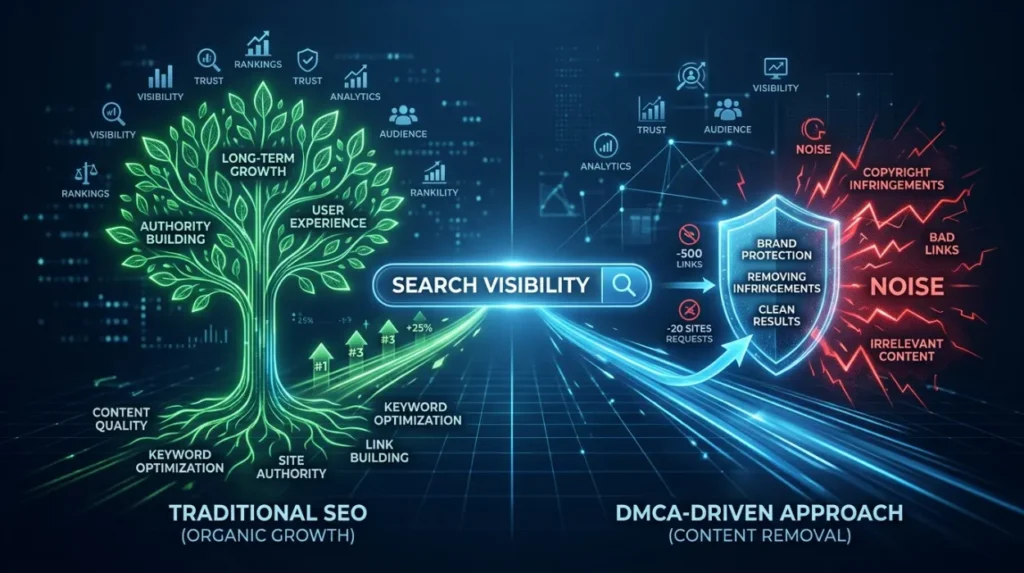
Search engines evaluate indexed content based on availability, relevance, authority, and trust indicators. A successful DMCA notice alters content availability by reducing the presence of infringing material within search results. This change affects SERP composition immediately because removed URLs no longer contribute to ranking calculations.
UK copyright law influences search visibility through a different route. Legal rights establish the basis for enforcement actions, creating the authority that supports content removal requests and dispute resolution processes. The law itself does not modify search rankings, but it provides the foundation that enables enforcement mechanisms to operate.
The comparison highlights a distinction between operational effectiveness and legal authority. DMCA procedures affect discoverability at the platform level, whereas UK copyright law provides the framework that validates ownership claims. Search ranking influence therefore emerges from the interaction between legal rights and platform enforcement systems.
How Do Search Engines Interpret Copyright Related Reputation Signals?
Search engines interpret copyright-related reputation signals as indicators of authenticity, ownership, and content legitimacy.
Reputation signals are measurable indicators that help search systems evaluate trustworthiness and authority. Copyright ownership functions as a credibility signal because it establishes a verifiable connection between a creator and published content. Search engines analyse these relationships when evaluating entity credibility and content quality.
When duplicate or stolen content appears across multiple domains, search systems assess source authority, publication history, and indexing patterns. This evaluation determines which version receives greater visibility and ranking priority. Content ownership therefore becomes a significant factor within broader search ranking influence calculations.
The existence of a valid copyright claim also affects trust signals associated with a digital entity. Platforms that remove infringing content reinforce attribution accuracy, allowing search engines to evaluate content authenticity more effectively. This process contributes to stronger entity credibility and more accurate sentiment distribution across search ecosystems.
Dive Deeper With Our Expert Guides:
How to Use UK Copyright Law to Support a Content Removal Request Online
How Does Content Removal Compare With Content Enhancement Strategies?
Content removal and content enhancement represent two distinct reputation management methods that influence SERP composition through different mechanisms.
What Is Content Removal?
Content removal is a reactive reputation management approach focused on reducing the visibility of undesirable or unauthorised information. It operates through legal notices, platform reporting procedures, policy violations, and copyright enforcement mechanisms.
The primary advantage of content removal lies in its direct impact on information availability. When content is removed or de-indexed, its ability to influence perception declines significantly. This makes removal strategies particularly effective when dealing with copyright infringement, impersonation, or policy-violating material.
The limitation of content removal is scalability. Not every form of negative or undesirable content qualifies for removal under platform rules or legal standards. As a result, removal effectiveness depends heavily on the nature of the content and the applicable enforcement framework.
What Is Content Enhancement?
Content enhancement is a proactive reputation management strategy that focuses on improving the visibility of authoritative and relevant information. It operates by creating, optimising, and distributing content that strengthens reputation signals and entity credibility.
Unlike removal strategies, content enhancement does not reduce existing content visibility directly. Instead, it influences SERP composition by increasing the prominence of positive, authoritative, or accurate information. Search engines interpret strong content quality signals as indicators of relevance and trustworthiness.
The comparative advantage of content enhancement is long-term sustainability. The limitation is speed, as search ranking influence develops gradually through indexing, authority accumulation, and engagement signals. This creates a clear distinction between short-term reactive interventions and long-term reputation development methods.
Which Method Provides Better Long Term Reputation Protection?
Long-term reputation protection is achieved through sustainable authority building supported by effective enforcement mechanisms.
Reactive strategies address immediate visibility concerns by reducing exposure to infringing or harmful content. Proactive strategies strengthen entity credibility through the development of authoritative information assets. Search ecosystems evaluate both approaches differently because each influences reputation signals through separate mechanisms.
A balanced evaluation demonstrates that content suppression vs content enhancement is not a direct replacement relationship. Removal strategies improve information accuracy by eliminating problematic content, while enhancement strategies improve information quality through increased authority and relevance.
As search engines continue refining trust evaluation systems, long-term reputation stability increasingly depends on consistent ownership signals, authentic content attribution, and sustainable entity credibility.
The comparison between removal strategies and broader reputation management approaches demonstrates how different mechanisms influence search visibility, entity credibility, and sentiment distribution. Organisations evaluating enforcement options often analyse procedural requirements before deciding whether to File a DMCA Takedown in the UK and Remove Stolen Content With Expert Help as part of a broader copyright protection strategy.
A DMCA takedown in the UK and UK copyright law represent complementary mechanisms within digital reputation management and content protection. One functions through platform-based enforcement, while the other establishes the legal rights that support ownership and infringement claims.
The comparison between removal strategies and broader reputation management approaches demonstrates how different mechanisms influence search visibility, entity credibility, and sentiment distribution. Understanding these distinctions provides a clearer framework for evaluating copyright-related reputation signals within modern search ecosystems.
How does a DMCA takedown work alongside UK copyright law?
A DMCA takedown provides a platform-based process for removing infringing content, while UK copyright law establishes the legal ownership rights behind the claim. Together, they help copyright owners address unauthorised content and protect digital assets online.
Can a DMCA takedown remove copyrighted content from search results in the UK?
Yes, a successful DMCA takedown can lead to the removal of infringing URLs from search engine results on platforms that follow DMCA procedures. This reduces search visibility for stolen content and improves content attribution accuracy.
What is the difference between a DMCA notice and UK copyright enforcement?
A DMCA notice is a content removal request submitted to websites, hosting providers, or search engines, whereas UK copyright enforcement relies on legal rights established under UK law. Both approaches support copyright protection but operate through different mechanisms.
Does a DMCA takedown improve online reputation management?
A DMCA takedown can improve online reputation management by reducing the visibility of unauthorised or stolen content. This helps preserve reputation signals, strengthen entity credibility, and maintain accurate search perception.
When should copyright owners use a DMCA takedown instead of legal action?
A DMCA takedown is commonly used when infringing content appears on platforms that accept copyright removal requests. Legal action addresses broader copyright disputes, while a DMCA notice focuses on faster content removal and search visibility control.